
Recommended Free Tools
TrueNAS can be an excellent choice if you want control over your storage and are comfortable choosing hardware, setting up the system, and maintaining it. But free software is not a free, ready-to-use NAS: you still need a host, drives, setup time, and a plan for troubleshooting. Whether it is the right choice depends on those trade-offs—not on the software’s price alone.
What “free” TrueNAS does—and does not—include
TrueNAS Community Edition is a software offering, not a complete NAS appliance. You provide the computer or server, boot device, and storage drives, then configure and maintain the system. The installation guide describes user-supplied hardware requirements; the official feature table also distinguishes Community Edition from Enterprise.
That distinction matters if you are evaluating TrueNAS for work or another setting where downtime has a significant cost. The July 2025 feature table lists community support for Community Edition, including forums, documentation, release notes, bug ticketing, and an AI bot. It lists professional support for Enterprise, up to 24/7×365, alongside additional Enterprise features. This describes different offerings; it does not establish a price or mean every organization needs Enterprise.
What hardware does a TrueNAS build require?
Minimums vary by documentation version. The TrueNAS 25.04 stable hardware guide lists these baseline requirements:
Free tools Windows power users keep installed
One-click scans. No signup required.
#1 Best Overall
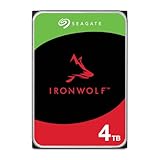
- IronWolf internal hard drives are the ideal solution for up to 8-bay, multi-user NAS environments craving powerhouse performance
- Store more and work faster with a NAS-optimized hard drive providing ultra-high capacity up to 16TB and cache of up to 256MB
- Purpose built for NAS enclosures, IronWolf delivers less wear and tear, little to no noise/vibration, no lags or down time, increased file-sharing performance, and much more
- Easily monitor the health of drives using the integrated IronWolf Health Management system and enjoy long-term reliability with 1M hours MTBF
- Three-year limited warranty protection plan included and three year Rescue Data Recovery Services included
- A 2-core Intel 64-bit or AMD x86_64 CPU.
- 8 GB of RAM.
- A 16 GB SSD boot device.
- Two identically sized devices for one storage pool.
The newer general installation guide specifies 8 GB of RAM and a 20 GB boot device. Follow the requirements for the version you plan to install rather than combining figures from different guides. These are stated minimums, not a promise of good performance for every workload; your capacity, pool design, and intended use affect what hardware makes sense.
Choose drives with ZFS in mind
TrueNAS’s 25.04 hardware guide does not recommend SMR drives with TrueNAS/ZFS. It warns that slower write and overwrite performance can cause problems, including instability or data loss during resilvering. Check the recording technology in the manufacturer’s specifications for the exact drive rather than relying on a product category or label. If you are shopping for CMR NAS hard drives, treat CMR as a specification to verify—not a guarantee that a particular model fits your pool or workload.
Rank #2

- Store more, compute faster, and do it confidently with the proven reliability of BarraCuda internal hard drives
- Build a power house gaming computer or desktop setup with a variety of capacities and form factors
- The go to SATA hard drive solution for nearly every PC application from music to video to photo editing to PC gaming. Ax. Sustained transfer rate OD: 190MB/s
- Confidently rely on internal hard drive technology backed by 20 years of innovation
- Frustration Free Packaging - This is just an anti-static bag. No cables, no box.
Which TrueNAS version are you considering?
TrueNAS CORE and current Linux-based TrueNAS versions are not on the same development path. TrueNAS documentation says CORE entered a “sustaining engineering phase within the TrueNAS project,” quoting the TrueNAS team’s March 20, 2024 announcement. The documentation says stability and security fixes continue on TrueNAS 13.0, while “New feature development and component improvement continues on Linux-based TrueNAS versions.” The final 13.3 train release, 13.3-U1.2, was released April 29, 2025.
That does not mean CORE is already unsupported or that every CORE user must migrate immediately. It does mean that someone choosing a platform for new feature development should account for the difference between CORE’s sustaining phase and the Linux-based versions’ ongoing development.
Crashes, No Sound, or Screen Glitches?
Random freezes, missing sound and display glitches usually trace back to one bad driver. Find and replace yours safely.Free scan · under a minuteWindows Errors? Fix Them Before They Spread
Repair common Windows errors and clear accumulated junk for a smoother, more stable PC - no reinstall needed.Free scan · no reinstallRank #3

- IronWolf internal hard drives are the ideal solution for up to 8-bay, multi-user NAS environments craving powerhouse performance.date transfer rate:6.0 gigabits_per_second
- Store more and work faster with a NAS-optimized hard drive providing 8TB and cache of up to 256MB
- Purpose built for NAS enclosures, IronWolf delivers less wear and tear, little to no noise/vibration, no lags or down time, increased file-sharing performance, and much more
- Easily monitor the health of drives using the integrated IronWolf Health Management system and enjoy long-term reliability with 1M hours MTBF
- Three-year limited product warranty protection plan and three year Rescue Data Recovery Services included
CORE migration has a clean-install constraint
For users moving from CORE to TrueNAS 24.10 or later, the migration documentation requires a clean install; a direct migration through the user interface to those versions is unsupported. Enterprise appliance users are advised to consult support before migrating. If you already have a CORE system, include the installation and transition work in your decision rather than treating the move as an ordinary in-place update.
How to decide whether TrueNAS suits your NAS
Compare the work and flexibility you want with the convenience and support you expect. The available evidence does not establish which prebuilt NAS or competing platform is cheaper, faster, or easier, so the best choice depends on your situation.
Rank #4

- Available in capacities ranging from 2 to 22TB(1) | (1) 1GB = 1 billion bytes and 1TB = 1 trillion bytes. Actual user capacity may be less depending on operating environment.
- For RAID-optimized NAS systems with unlimited number of bays
- Rated for 550TB/yr workload rate(2) | (2) Annualized Workload Rate = TB transferred x (8760 / recorded power-on hours). The maximum rated workload is specified for operating at typical temperature of 40C. Workload Rate will vary depending on your hardware and software components and configurations.
- Designed to handle the demands of high-intensity 24x7 multi-user NAS environments
- Western Digital partners with a wide range of NAS system vendors for extensive testing to ensure compatibility with most NAS enclosures
- Hardware: Can you reuse a suitable computer, or would you need to buy and assemble a host and drives? Compare the full hardware requirement, not just the software price.
- Setup and upkeep: Are you willing to configure storage and handle system maintenance and troubleshooting, or would you rather have a vendor-supplied appliance?
- Storage needs: Decide how much capacity you need, how you want to arrange the pool, and how you expect to expand it. Choose drive count and size around those requirements.
- Workloads: Consider whether you need apps, virtual machines, or containers, and whether the platform and hardware you choose meet those needs.
- Support and downtime: Decide how much help you need and what it would mean if the system stopped working. Community support and Enterprise professional support are distinct offerings.
- Existing CORE system: Account for the clean-install requirement when moving to 24.10 or later, and consult support first if you use an Enterprise appliance.
When I would—and would not—recommend TrueNAS by default
I would recommend considering TrueNAS when you want a self-managed system, value control over its hardware and configuration, and are prepared to maintain it. It can also make sense when you already have suitable hardware and want to build around your own storage requirements.
I would not recommend it by default to someone who primarily wants a ready-to-use NAS and does not want to choose components or manage the system. That is a reason to compare it with prebuilt appliances, not proof that an appliance is always cheaper or better. The practical question is whether the control TrueNAS offers is worth the hardware selection and administration it asks of you.
Quick Recap
Product prices and availability are accurate as of the date/time indicated and are subject to change. Any price and availability information displayed on Amazon at the time of purchase will apply.

