
PC Slower Than It Used to Be?
A free scan shows the junk files, broken settings and background clutter dragging Windows down - then fixes them in one click.Free scan · Windows 10 & 11Crashes, No Sound, or Screen Glitches?
Random freezes, missing sound and display glitches usually trace back to one bad driver. Find and replace yours safely.Free scan · under a minuteThere is no single best 5G chipset for every device. Qualcomm’s X105, X85 and X75 stand out for premium modem-RF capabilities; MediaTek’s MT8893 and T830 are aimed at IoT and CPE designs; and UNISOC’s V620 and V510 address broadband devices, modules and gateways. HiSilicon’s Balong 5000 and Balong 5G01 are useful historical reference points, not straightforward current buying choices.
This is a use-case comparison, not a universal speed ranking. A chip’s peak rate does not establish what a finished phone or router will achieve: network availability, supported bands, antenna design, certification and the host device all matter.
How the 10 platforms compare
The figures and capabilities below are claims on the manufacturers’ product pages or announcements. Peak rates are stated maximums, not expected everyday speeds. Where a cited manufacturer page does not state a capability, it is marked as not stated rather than inferred.
| Platform | Release and network modes | Radio coverage and aggregation | Peak rate stated by manufacturer | Integration and target devices | Lifecycle or availability note |
|---|---|---|---|---|---|
| Qualcomm X105 | 3GPP Release 19-ready; SA/NSA not stated (Qualcomm, 2026 announcement) | Integrated NR-NTN; band coverage and aggregation details not stated (Qualcomm, 2026 announcement) | 14.8 Gbps downlink and 4.2 Gbps uplink peak (Qualcomm, 2026 announcement) | Modem-RF system with fifth-generation AI processor; target device classes not stated in the supplied product details | Announced March 2, 2026 |
| Qualcomm X85 | 5G Advanced; exact 3GPP release and SA/NSA modes not stated (Qualcomm product page) | 400 MHz sub-6 GHz downlink carrier aggregation; mmWave coverage not stated (Qualcomm product page) | Not stated (Qualcomm product page) | Integrated AI processing; smartphones, mobile broadband, FWA, compute, industrial IoT and private networks (Qualcomm product page) | Supply horizon not stated |
| Snapdragon X75 | 3GPP Releases 17 and 18; SA/NSA modes not stated (Qualcomm product page) | 10-component-carrier mmWave aggregation and 5-component-carrier sub-6 GHz aggregation (Qualcomm product page) | 10 Gbps peak download (Qualcomm product specification) | Dedicated AI tensor accelerator; target device classes not stated in the supplied product details | Supply horizon not stated |
| Snapdragon X55 | SA and NSA; LTE and legacy modes (Qualcomm product page) | 5G mmWave and sub-6 GHz; TDD/FDD and spectrum sharing (Qualcomm product page) | Not stated (Qualcomm product page) | Global multimode modem-RF reference; target device classes not stated in the supplied product details | Prior-generation reference; supply horizon not stated |
| MediaTek MT8893 | Release 16; SA/NSA not stated (MediaTek product page) | 5G band coverage and aggregation details not stated (MediaTek product page) | Not stated (MediaTek product page) | 4 nm IoT platform; Wi-Fi 7, Bluetooth 5.3, multi-band GNSS, PCIe 3.0/4.0 and 48 TOPS NPU (MediaTek product page) | MediaTek states supply through 2031 |
| MediaTek T830 | Release 16; SA/NSA not stated (MediaTek product page) | Sub-6 GHz; aggregation details not stated (MediaTek product page) | Not stated (MediaTek product page) | CPE platform integrating modem, quad-core Arm CPU, network-processing acceleration, FR1 transceivers, GNSS, PMICs, PCIe, USB and up to 10 Gbps USXGMII Ethernet (MediaTek product page) | Supply horizon not stated |
| UNISOC V620 | Release 16 broadband IoT; SA/NSA modes not stated (UNISOC product page) | UNISOC states support for more than 70 bands and over 1,000 carrier-aggregation/dual-connectivity combinations (UNISOC product page) | Not stated (UNISOC product page) | FWA, handheld terminals, 5G modules, laptops and gateways (UNISOC product page) | Supply horizon not stated |
| UNISOC V510 | 2G/3G/4G/5G; SA and NSA; VoNR and VoLTE (UNISOC product page) | Sub-6 GHz; band and aggregation counts not stated (UNISOC product page) | 2.3 Gbps downlink and 1.15 Gbps uplink peak (UNISOC product page) | Baseband for smartphones, household CPE, MiFi and IoT terminals (UNISOC product page) | UNISOC describes it as globally mass-produced; a specific supply horizon is not stated |
| HiSilicon Balong 5000 | SA and NSA; full NR TDD/FDD spectrum (HiSilicon product page) | Sub-6 GHz and mmWave; NR plus LTE aggregation (HiSilicon product page) | Up to 4.6 Gbps sub-6 GHz download, 6.5 Gbps mmWave download and 7.5 Gbps NR+LTE download (HiSilicon product page) | Multimode chipset; integration details and target device classes not stated in the supplied product details | Historical reference; cited page does not establish current retail availability |
| HiSilicon Balong 5G01 | 3GPP-compliant; SA and NSA (HiSilicon product page) | Sub-6 GHz and mmWave; aggregation details not stated (HiSilicon product page) | 2.3 Gbps theoretical downlink (HiSilicon product page) | Early commercial 5G chipset; integration details and target device classes not stated in the supplied product details | Historical reference, not a current buying recommendation |
Which platform fits each use case?
Premium phones and high-end mobile broadband
The X105, X85 and X75 are the most relevant choices in this group, but the available specifications answer different questions. X105 has the strongest stated peak-rate figures and calls out NR-NTN. X85 emphasizes sub-6 GHz aggregation and a wide set of intended device classes. X75 gives specific Release 17/18 and carrier-aggregation details. Those distinctions do not establish which finished device will be fastest on a particular operator’s network.
Free tools Windows power users keep installed
One-click scans. No signup required.
#1 Best Overall

- 【Lightning-fast Qualcomm SDX62 5G Modem inside】The RM520N 5G NR SA NSA AX3000 WiFi 6 CPE Router delivers 5G cellular speeds up to 3.4 Gbps (5G SIM), bringing reliable, high-speed internet to rural/remote locations where wired broadband isn’t available or as an alternative to urban broadband.
- 【Fast Wi-Fi 6 Cellular Router】The RM520N 5G NR router provides reliable high-speed internet with up to 574Mbps (2.4GHz) + 2402Mbps (5GHz) Wi-Fi speeds. Support 128 WiFi users connect simultaneously!
- 【9 Detachable High Gain Antennas】The RM520N 5G Sim Card router provides 4 x 5dBi cellular antennas and 5x5dBi WiFi antennas to improve the signal quality of 5G NR and Wi-Fi in different place. If you want to use an outdoor cellular antenna, the SMA connector also provides the possibility of an external cellular antenna.
- 【Multiple VPN Clients】With built-in PPTP/ L2TP / GRE/WireGuard / Zerotier VPN, this 5G Sim card router can easily establish a connection to the VPN server to transport all your online data and traffic, securing it with its encryption at the same time. Compatible with 20 more DDNS providers, convenient to manage your remote cameras.
- 【Reliable & Uninterrupted Internet】The RM520N 5G Cellular Router with multi-WAN technology lets users utilize multiple connection methods, including Ethernet, Repeater, Cellular, and Tethering; Load-balancing capabilities let users distribute bandwidth by custom proportion among multiple connection methods; Supports Network Failover and the option to configure Failover priorities among multiple connection methods.
Routers, fixed wireless access and CPE
For a router or home gateway design, start with the intended radio region and device architecture rather than the highest headline speed. MediaTek T830 is explicitly built for CPE and combines modem functions with host-side processing and wired networking components. UNISOC names gateways and FWA among V620’s use cases, while V510 is positioned for household CPE and MiFi. Qualcomm lists FWA and mobile broadband among X85’s target applications.
Industrial IoT and long-lived designs
MT8893 is a plausible fit when an IoT design needs 5G alongside substantial on-device computing and connectivity peripherals; its manufacturer-stated supply through 2031 is a concrete lifecycle consideration. V620 is explicitly positioned for broadband IoT, while the X85 page also names industrial IoT and private networks. Confirm product availability, support commitments and regional certifications directly with the manufacturer or module supplier before committing a design.
Rank #2
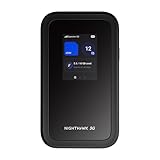
- WIFI 7 SPEEDS UP TO 3.6 GBPS, ANYWHERE YOU GO: Powered by a 5G or 4G cellular connection, M7 delivers fast, reliable WiFi 7 performance. Real-world speeds depend on carrier network, signal strength, location, and connected devices
- GLOBAL COVERAGE WITH NETGEAR eSIM IN 140+ COUNTRIES: Purchase 5G or 4G data plans from the Nighthawk app with no contracts. Requires free NETGEAR account. Coverage and speeds vary by country and carrier
- US CARRIER SUPPORT: The M7 is certified for AT&T and T-Mobile, unlocked for flexible use across compatible carriers. For US local carrier eSIM or SIM activation and data plan details, contact your carrier directly
- POWERFUL BUILT IN SECURITY - includes firewall protection, WPA3 encryption, and automatic firmware updates help protect your data when using public WiFi
- CONNECT UP TO 32 DEVICES AND FREE UP YOUR PHONE: A dedicated hotspot outperforms phone tethering. Connect laptops, tablets, and smart devices simultaneously while keeping your phone free
Global band coverage and legacy-network compatibility
V620 has the clearest stated breadth of band and carrier-combination support among the listed platforms, but a band count does not tell you whether a specific module supports every band required in your country. V510 explicitly supports SA/NSA and multiple legacy generations. X55 is a useful multimode reference for SA/NSA, LTE, TDD/FDD and spectrum sharing. For all three, verify the exact product variant and regional operator requirements rather than relying on the platform name alone.
Historical comparisons
Balong 5000 and Balong 5G01 show how early 5G platforms handled SA/NSA and sub-6 GHz/mmWave support. Their listed rates may help explain the evolution of 5G modem capabilities, but the cited manufacturer pages do not establish current retail availability. They should not be treated as current alternatives to buy without independent confirmation of a complete, supported product.
Rank #3
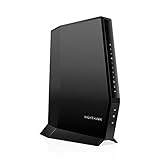
- MAXIMIZE YOUR CABLE INTERNET AND WHOLE-HOME WIFI: A cable modem and WiFi router in one device unlocks the full potential of your home internet with faster downloads, smoother WiFi for gaming and video calls, and reliable coverage in every room.
- APPROVED FOR YOUR PROVIDER AND PLAN: Works with Xfinity internet plans up to 800Mbps, Spectrum up to 1Gbps, and Cox up to 1Gbps. Not compatible with Verizon, AT&T, CenturyLink, DirecTV, DISH, or bundled voice plans. ISP activation required after setup.
- MULTI-GIG DOCSIS 3.1 SPEEDS: Get Gigabit+ cable download speeds on today's fastest plans, with headroom for the upgrades ahead. Real-world speeds depend on your plan and ISP network.
- WIFI 6 COVERAGE FOR THE WHOLE HOME: Stay connected in every room with dual-band AX2700 WiFi 6 covering up to 2,000 sq ft and capacity for 25+ connected devices. Real-world coverage depends on home size, layout, and building materials.
- WIRED CONNECTIONS FOR YOUR FASTEST DEVICES: Four Gigabit Ethernet ports keep gaming consoles, desktops, and streaming devices hardwired for the lowest latency and the most stable connection in your home.
Chip, modem, module and platform: what are you buying?
A 5G modem is the part of a system that handles cellular communication. A chipset or platform may combine that modem with other radio-frequency components, processing, memory interfaces or connectivity features. A 5G modem module is a packaged component intended to be integrated into a host device; it is more likely than a bare chipset to be sold as a physical item, but the module still has to match the host, network and region.
The names in this comparison are not interchangeable retail products. Several are manufacturer platforms for OEM or design-in use. The manufacturer descriptions identify V620 for use in modules and gateways and V510 for CPE and MiFi, but the cited product details do not establish a particular retail module’s form factor, firmware, certification or compatibility.
Rank #4

- BLAZING HIGH DOWNLOAD SPEED - The download speeds up to 2.5Gbps, enabling seamless streaming of high-definition content, fast downloads of large files, video conferencing, and online gaming. The high-quality USB Type C 3.1 cable provides optimal 5G data throughput, making it the ultimate solution for enhancing advanced security and work productivity. Simply plug and play for direct high-speed 5G internet. Special Note: VOS does not support Video Conferencing on macOS, iPadOS.
- SECURE PRIVATE INTERNET ACCESS - TRI CASCADE VOS 5G solution provides optimal data security, delivering secure and private internet access. Whether traveling, on a business trip, or in public spaces, there's no necessity to connect to a public Wi-Fi network or your mobile hotspot for internet access. A SSID (service set identifier) is not broadcasted, preventing vulnerability to Wi-Fi hacking apps.
- EFFORTLESS SETUP AND SEAMLESS COMPATIBILITY - Activate online with no store visit or driver downloads. Package includes a T-Mobile 5G SIM and activation guide. Supports Windows 10/11, macOS (for MacBook), Linux, and iPadOS (iPad). For iPads (10th-gen, 2022 and after. Not applicable to iPad air 3rd generation or below), Surface Pro (7th-gen) tablets, laptops, and personal computers. Also works as a Wi-Fi hotspot for Windows 11 and MacBook. Friendly Reminder: Not applicable to Android Pads.
- THREE 5G GLOBAL DATA PLANS WITH ONLINE ACTIVATION - Choose from three data plans offering unlimited roaming for as low as $20 per month with auto-pay. Simply scan the QR code from a phone or computer to activate online. You do not need to visit a telecom store. A T-Mobile SIM card is included. Ideal for anyone requiring secure wireless connectivity wherever you need a secure private internet connection. Data Plan Services are provided by T-Mobile and is subject to T Mobile Terms and Conditions.
- PORTABLE AND CONVENIENT ADAPTER - The TRI CASCADE VOS 5G USB-C network adapter is a pocket-size dongle – compact and easy to carry – making it an ideal companion for travelers and those constantly on the move. Stay connected effortlessly while enjoying the freedom and security of wireless connectivity. Provides a 1-Year Warranty and online technology support; simply write to us, and we’re willing to assist you.
What to check before buying a 5G modem module
Use the module’s own technical documentation and the host-device requirements, not only the underlying chipset name. Confirm each of these points before ordering:
- Network mode: Check whether the module supports the operator’s required 5G SA, NSA or both, and whether it includes any necessary fallback modes.
- Exact frequency bands: Match the module’s supported NR bands to the countries and carriers where it will be used. A platform-level statement about many bands is not a substitute for the module’s band list.
- Carrier certification and regional legality: Verify the exact module and intended host are accepted by the carrier and permitted for the intended market.
- Host interface and form factor: Confirm the physical dimensions, connector and interface supported by the host. The manufacturer details summarized here do not establish an M.2 form factor for these platforms.
- Antenna connections: Check the required number and type of antenna connectors, supported radio chains and antenna arrangement. These details were not established for the listed platforms.
- Firmware and drivers: Confirm that firmware updates, operating-system drivers and the host’s power-management support are available for your specific configuration.
- Supply and support: For a product expected to remain in service for years, verify availability, lifecycle commitments and technical support for the actual module or finished device.
Buying a module based only on the chipset’s peak throughput or a generic “global 5G” claim can leave you with hardware that cannot connect to your carrier, fit your host or run with its firmware and drivers.
Quick wins for a faster PC:
Fix the driver behind crashes, sound loss and screen glitchesFind Drivers →Clear out junk files and repair common Windows errorsFree Scan →Quick Recap
How to choose without treating peak speed as a ranking
- Choose the device class first. A smartphone, home router, industrial gateway and embedded IoT product have different integration, thermal, antenna and support requirements.
- Filter by network compatibility. Identify the required bands and SA/NSA mode for the actual market and operator. Eliminate platforms or modules whose specifications do not confirm them.
- Compare integration needs. Look at the host interfaces, compute, peripheral connectivity and Ethernet support that the product design requires. For example, the T830’s stated CPE integration is more relevant to a router design than a smartphone-oriented feature set.
- Check lifecycle and procurement. Obtain current availability, certification and support details from the supplier. MT8893’s stated supply-through-2031 horizon is useful, but does not itself guarantee availability of every board or module built around it.
- Use peak rates as a ceiling, not a promise. The stated maximums do not show performance under a particular network load, carrier configuration or device design. Compare real-world tests only when they match the same conditions and finished product.
Product prices and availability are accurate as of the date/time indicated and are subject to change. Any price and availability information displayed on Amazon at the time of purchase will apply.

