
iTechGuides is reader-supported. When you buy through links on our site, we may earn an affiliate commission. As an Amazon Associate I earn from qualifying purchases. Learn more
Time tracking records attendance, hours worked, or time spent on tasks and projects. Accurate records can support payroll, overtime reviews, client billing, and better project planning—but they do not automatically make people more productive. The value depends on reliable data, useful reporting, appropriate setup, and employee trust.
Why is time tracking important?
Time tracking gives an organization a record of when work happened and, when needed, what that work involved. These are related but distinct purposes: an attendance record shows presence or hours worked, while task and project tracking assigns time to particular work, clients, or budgets. A system should capture only the detail the organization actually needs.
That record can make payroll and staffing decisions easier to review, help service businesses support invoices, and give project teams a clearer view of effort and capacity. It is an input to decisions, not a complete measure of an employee’s performance.
What’s actually slowing this PC down?
Pick the symptom - the matching free tool is one click away.
What are the benefits of tracking employee hours?
Payroll and overtime review
Consistent time records can support payroll calculations and make it easier to check regular hours, absences, and overtime. Digital workflows may reduce repeated manual entry or transfers into payroll, which can reduce opportunities for error; they cannot guarantee error-free pay. Giving employees access to their recorded hours can also help them identify discrepancies before or after a pay period.
#1 Best Overall
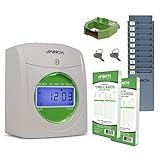
- Complete Solution - Includes HN3000 AutoAlign time clock, 100 time cards, rack, ribbon, and keys for instant tracking.
- Precise Punching - AutoAlign technology ensures accurate alignment for error-free payroll records.
- Robust Warranty - Two-year warranty with unlimited customer support (Monday–Friday) guarantees reliable performance.
- Simple Setup - Plug-and-play design with clear instructions enables tracking in minutes.
- Clear Printing - High-quality uPunch ribbons deliver legible, consistent punch punches.
Labor cost and workload visibility
Reports on hours, absences, overtime, and labor costs can help managers review staffing levels and workload patterns. These figures are useful context for decisions, but they need interpretation: an unusually high number of hours may reflect scheduling, demand, or a recording issue rather than an individual productivity problem.
Project planning and resource allocation
Recording time against tasks and projects can show where effort is going, help teams estimate future work, and inform decisions about priorities and capacity. A 2017 Atlassian/Tempo white paper describes project prioritization, resource allocation, progress visibility, project finances, and customer billable time as use cases. That is vendor-published rationale, not independent evidence that tracking itself improves project outcomes.
Client billing
For service work billed by time, records associated with clients or engagements can support more accurate and timely invoices. This benefit depends on capturing the right work consistently and reviewing entries before they are used for billing.
Do these 3 things before closing this tab:
1Scan for outdated or missing drivers - takes under a minute2Clear out junk files and repair common Windows errors3Fix the driver behind crashes, sound loss and screen glitchesCompliance support
Organized records and audit trails can assist employers in reviewing hours, breaks, and overtime against applicable rules. A time tracking system does not itself make an organization compliant: requirements vary by jurisdiction and work arrangement, and settings and practices must reflect the rules that apply.
Rank #2

- 𝗣𝗥𝗘𝗖𝗜𝗦𝗘 𝗔𝗧𝗧𝗘𝗡𝗗𝗔𝗡𝗖𝗘 𝗧𝗥𝗔𝗖𝗞𝗜𝗡𝗚: Our Punch Card Attendance Machine comes with a large 4" LED screen for clear visibility. Track your employees' start times, break times, lunch periods, and weekly work hours with precision, up to 6 entries per day. Each card holds 15 days of records per side, just flip for continuous tracking. Supports Dual-color printing, black for normal attendance, red for late or early departure, and a built-in speaker provide clear alerts, ensuring seamless and efficient workforce track & time management.
- 𝗙𝗨𝗟𝗟 𝗨.𝗦. 𝗧𝗜𝗠𝗘 𝗭𝗢𝗡𝗘 𝗖𝗢𝗩𝗘𝗥𝗔𝗚𝗘: This attendance machine supports 6 major U.S. time zones: Eastern, Central, Mountain, Pacific, Alaska, and Hawaii. Employees across different regions can be tracked accurately without confusion. Perfect for offices with multi-location teams.
- 𝗔𝗨𝗧𝗢𝗠𝗔𝗧𝗜𝗖 𝗗𝗔𝗬𝗟𝗜𝗚𝗛𝗧 𝗦𝗔𝗩𝗜𝗡𝗚 𝗔𝗗𝗝𝗨𝗦𝗧𝗠𝗘𝗡𝗧: The employee time clock automatically switches between Daylight Saving Time and Standard Time. It handles spring forward and fall back changes seamlessly. This ensures precise timekeeping year-round without manual adjustments.
- 𝗔𝗣𝗣 𝗦𝗨𝗣𝗣𝗢𝗥𝗧𝗘𝗗: This attendance machine comes with an easy-to-operate app for smarter management. The app also allows you to change between 6 major U.S. time zones, set Working Time, set Password, Print Format, Setup Paper, DST Setting, Music Time Setting, and other necessary attributes. NOTE: To calculate total workdays, late entries, leaves, and salary summaries, you need to do it manually from the punch card.
- 𝗛𝗜𝗚𝗛-𝗤𝗨𝗔𝗟𝗜𝗧𝗬 𝗕𝗨𝗜𝗟𝗗 & 𝗟𝗢𝗡𝗚𝗘𝗩𝗜𝗧𝗬: Made of durable ABS material, this compact punch card time recorder withstands daily use. Equipped with a premium-grade print head rated for millions of strikes, it ensures long-lasting, reliable printing with a smooth, fade-resistant surface. Ideal for offices, shops, and small businesses.
How does time tracking improve productivity?
It can improve planning by making workloads and time commitments more visible—for example, a team may use project records to see that a specialist is already allocated across several projects before assigning more work. It can also reveal recurring bottlenecks or help compare estimated and actual effort.
Those are ways tracking may inform productivity, not proof that monitoring causes higher output. Time spent is not the same as value produced, and detailed tracking can create administrative work or encourage attention to logged hours instead of outcomes. Treat records as one source of operational information, check them for errors, and use them alongside quality, results, and employee context.
How do I track employee hours?
Choose a method based on what you need to record, where employees work, and how records will be used. Options include paper timesheets, paper or digital spreadsheets, web-based timesheets, mobile apps, point-of-sale (POS) devices, and physical time clocks.
| Method | Useful when | Considerations |
|---|---|---|
| Paper timesheets or spreadsheets | A team needs a simple way to submit hours and has limited requirements. | Manual entry and transfer can create errors; define who checks entries and how corrections are recorded. |
| Web-based timesheets | Employees need to enter time remotely or assign hours to tasks, clients, or projects. | Check whether the tool supports the needed approvals, reports, and payroll or project integrations. |
| Mobile apps | Employees need to submit time away from a desk or shared clock. | Review whether the app collects location or other data, and configure collection to match the stated purpose. |
| POS devices | Time capture needs to fit an on-site point-of-sale workflow. | Confirm that the resulting records can be reviewed and transferred to the systems that need them. |
| Physical time clocks | Employees clock in and out at a shared worksite. | Consider reliability, access, correction procedures, and how clock records reach payroll. |
- Define the record you need. Decide whether the purpose is attendance, payroll, overtime review, job costing, project planning, or billable client work. Avoid collecting task or location detail that is not needed.
- Map the work setting and workflow. Determine whether staff need a shared on-site clock, remote access, mobile entry, or project-level timesheets. Identify who submits, approves, corrects, and exports records.
- Check system fit. Assess integration with payroll, HR, accounting, or project systems; local policy and jurisdiction configuration; auditability; cost; technical reliability; and employee training and support.
- Explain the policy and access. Tell employees what is recorded, why it is needed, who can see it, how long records are retained, and how to report or correct an error. Provide practical training before relying on the data.
- Review records before acting on them. Check missing punches, inconsistent entries, overtime, and project allocations. Establish a correction trail and use reports as records to verify, not as a perfect account of productivity.
What is the best way to track time on projects?
For project work, use a method that lets employees assign time to the relevant task, client, or project without adding more detail than managers need. Agree on a consistent level of categorization—for example, project and task—then make sure reporting answers concrete questions such as how much effort remains, where capacity is committed, or which client work is billable.
Rank #3

- VERSATILE 2-IN-1 SOLUTION: Includes uPunch CR1000 Digital Time Clock and Date Stamp, 50 time cards, one ribbon & 2 keys - perfect for small business time and document management.
- ACCURATE DIGITAL TIMEKEEPING: Eliminate manual errors in employee time tracking with this precise digital clock in machine for employees, easily monitoring arrival, break, lunch, and departure times.
- ADVANCED DATE STAMPING: Simplify document organization with built-in date stamp functionality, featuring preset messages and 3-way printing for efficient proof of receipt and processing.
- USER-FRIENDLY DESIGN: Strategically placed window in the cover allows for easy loading of time cards and documents, enhancing efficiency in daily operations.
- RELIABLE SUPPORT: Enjoy peace of mind with uPunch's commitment to quality, including warranty protection and dedicated customer support for all your time clock needs.
Before choosing a tool, verify that project records can flow into the systems used for planning, accounting, or invoicing. If teams use inconsistent categories or enter time long after the work, reports may look precise while being unreliable. Review estimates against actual entries as a planning aid, not as a universal productivity score.
Is employee time tracking an invasion of privacy?
Not necessarily, but the impact depends on what is collected and how it is used. Recording start and end times is different from continuously collecting location or monitoring activity. Explain the purpose, limit collection to what is necessary, restrict access, and provide a clear process for employees to inspect and challenge records.
The European Commission’s 2023 report, An overview of the most popular monitoring software, cautions: “In this case, the relative benefits of tracking geographical location or working time must be carefully balanced with the employee’s right to privacy.” The appropriate legal and policy requirements depend on location and work arrangement, so organizations should check applicable rules rather than assume a tool’s defaults are suitable.
Quick Recap
What can make time tracking fail?
- Unclear purpose: Teams collect detailed data without knowing which decision it should support.
- Inaccurate or inconsistent use: Late entries, missed punches, and different coding habits undermine reports.
- Poor system fit: Missing integrations, unreliable devices, or difficult correction workflows create extra work.
- Insufficient training and support: Employees and managers may use the system differently or fail to resolve errors.
- Privacy concerns: Excessive location or activity monitoring can damage trust and may be inappropriate for the stated need.
- Overstated conclusions: Hours recorded do not, by themselves, show the quality or value of work.
Product prices and availability are accurate as of the date/time indicated and are subject to change. Any price and availability information displayed on Amazon at the time of purchase will apply.

