
The Tool Desk
Outbyte PC Repair FREERepair Windows errors before they cause bigger problemsFix Now →Outbyte Driver Updater FREEFix the driver behind crashes, sound loss and screen glitchesFind Drivers →AI agents are designed to do more than produce a response: they can take a goal, plan steps, use software tools, check what happens, and continue—or ask a person for help. That shift from answering to acting is real, but consumer agents are still early, usually limited in scope, and often require confirmation before important actions.
What does “doing” mean for AI?
An AI agent is not just a chatbot with a new label. Anthropic defines an agent as “an AI model that directs its own processes and tool use when accomplishing a task.” Rather than receiving a fixed sequence of steps, the system decides how to pursue a goal using the tools and permissions available to it.
That usually means a loop: plan an action, use a tool, observe the result, adjust, and repeat until the task is complete or human input is needed. The agent’s model, instructions and guardrails, tools, and access to a particular environment all shape what it can do.
| System | How it approaches a task | Example |
|---|---|---|
| Chatbot | Responds to a prompt with information or generated content. | Explains how to submit an expense. |
| Traditional automation | Follows predefined rules and steps. | Moves a receipt through a fixed form workflow. |
| AI agent | Pursues a goal, chooses or sequences tool use, reacts to results, and may ask for help. | Reads a receipt, extracts the vendor and amount, categorizes it, submits it, and pauses if a policy limit blocks submission. |
The boundaries are not absolute: an agent may rely on fixed rules, and its autonomy varies. The UK Department for Business and Trade notes that agentic AI is a combination of capabilities, not one defining technical feature. It also describes consumer-facing deployments as early, commonly narrow, and often confirmation-based.
Quick wins for a faster PC:
Repair Windows errors before they cause bigger problemsFix Now →Scan for outdated or missing drivers - takes under a minuteDriver Scan →Clear out junk files and repair common Windows errorsFree Scan →#1 Best Overall
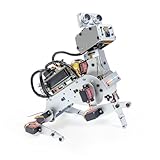
- AI-Powered Raspberry Pi Robot Dog — PiDog: Powered by Raspberry Pi (5/4B/3B+/3B/Zero 2W), OpenClaw, and multi-LLMs like ChatGPT, Gemini, Grok, DeepSeek, Qwen & Ollama. With 12 servos, camera, gyroscope, hearing & touch sensors, PiDog can see, listen, talk, move, and interact intelligently. Supports OpenCV, MediaPipe, TTS & STT, app control, FPV & Python. A great STEM robotics gift for students, makers & tech enthusiasts—perfect for birthdays and holidays. (Raspberry Pi not included)
- Realistic Dog-like Movements: PiDog's 12 powerful servos enable 32 dog-like actions, including walking, sitting, standing, shaking its head, wagging its tail, and performing playful tricks, closely mimicking a real dog and providing an engaging experience. This is an AI development robot product designed for engineers, suitable for ages 15 and above
- Rich Sensor Suite for Interactive Experiences: PiDog features ultrasonic, touch, gyroscope, sound, camera, speaker and microphone. These provide it with advanced hearing, vision, and touch, enabling it to see, detect obstacles, respond to touch, and recognize sounds, making interactions highly engaging
- AI-Powered Interactions with OpenClaw & Multi-LLMs. PiDog combines voice, vision, and gesture recognition for immersive AI experiences. Powered by OpenClaw and multi-LLMs like ChatGPT, Gemini, Grok, DeepSeek, Qwen, Doubao, and Ollama (local LLMs), it can understand questions, respond naturally through TTS & STT, recognize math problems, interpret hand gestures, and hold smart conversations. OpenClaw also enables customizable AI behaviors and personalized robotics development, helping users create their own intelligent robotic companion
- Comprehensive Learning Resources and Support: PiDog offers detailed online documentation, video tutorials, prompt technical support, and an active forum community, ensuring beginners can easily complete all projects and enjoy a great experience
What can an AI agent actually do?
Official examples show agents writing and running code, managing files, working across applications, and using a browser to do things such as order groceries or book reservations. Businesses are also exploring bounded workflows in customer operations, commerce, software and IT, and internal process automation.
These examples show categories of possible work—not proof that an agent can reliably complete any arbitrary task from start to finish. A demo, a limited workflow, and a dependable end-to-end service are different things. Current consumer agents may search or compare options and initiate simple actions, often with confirmation.
Rank #2
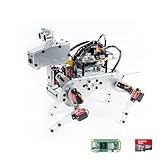
- Raspberry Pi AI Robot: powered by Raspberry Pi (5/4B/3B+/3B/Zero 2W), features 12 servos and sensors for vision, hearing, and touch. Integrated with ChatGPT-4o, it responds to complex queries. With app control and FPV, users can manage and see its view in real-time. It supports Python programming
- Realistic Movements: 12 powerful servos enable 32 actions, including walking, sitting, standing, shaking its head, wagging its tail, and performing playful tricks, closely mimicking a real and providing an engaging experience
- Rich Sensor Suite for Interactive Experiences: features ultrasonic, touch, gyroscope, sound, camera, speaker and microphone. These provide it with advanced hearing, vision, and touch, enabling it to see, detect obstacles, respond to touch, and recognize sounds, making interactions highly engaging
- Engaging Interactions with ChatGPT-4o: with ChatGPT-4o enables voice interactions and visual recognition, making it smarter and more responsive. Users can have natural conversations, solve math problems via the camera, and interpret gestures, creating diverse and fun interactions
- Comprehensive Learning Resources and Support: offers detailed online documentation, video tutorials, prompt technical support, and an active forum community, ensuring beginners can easily complete all projects and enjoy a great experience
Why does acting change the stakes?
A generated answer can be wrong; an agent with access to tools can also change something. It might misunderstand a request, expose private data, follow malicious instructions embedded in content it reads, or make a transaction the user did not intend. Some actions—such as deleting information or sending a message—may be difficult to reverse.
OpenAI describes prompt injection as untrusted text or data that attempts to override an agent’s instructions. A webpage, document, or other input the agent encounters can therefore become part of the attack surface. OpenAI’s Operator system card draws a practical distinction between reversible information lookups and higher-consequence actions such as purchases, emails, financial transactions, or deletion.
Rank #3

- AI-Powered Raspberry Pi Smart Car — PiCar-X: PiCar-X brings AI learning to life — powered by Openclaw and multi-LLMs including ChatGPT, Gemini, Grok, DeepSeek, Qwen, Doubao, Ollama (Local LLMs), and compatible with many more AI platforms. Featuring OpenCV, MediaPipe, TTS & STT, PiCar-X enables true AI vision and voice interaction — it can see, listen, talk, drive and think like an intelligent companion. Ideal for students (10+), educators, and engineers, PiCar-X is the perfect gateway to explore AI, robotics, and machine learning on Raspberry Pi 5/4/3B+/3B/Zero 2W (Raspberry Pi not included)
- Engaging Interactions with Multi-LLMs: PiCar-X, powered by Openclaw and multi-LLMs — including ChatGPT, Gemini, Grok, DeepSeek, Qwen, Doubao, and Ollama (Local LLMs) — and compatible with many other AI platforms, supports voice interaction and visual recognition to make the robot smarter and more responsive. Users can enjoy natural AI conversations, solve math problems through the camera, and interpret gestures, unlocking a world of diverse and fun AI-driven interactions
- Feature-rich and Adaptable: PiCar-X offers engaging applications like line following and obstacle avoidance, supports TTS (Text-to-Speech) and STT (Speech-to-Text) for interactive voice control, and includes a camera for video and vision recognition. It also comes with various sensors, while its customizable design enables a wide range of creative AI and robotics projects
- Versatile Programming Options: Catering to users of all skill levels, PiCar-X supports both Python and Scratch programming languages, allowing for flexible learning and skill development
- Simplified Assembly & Support: PiCar-X is perfect for beginners, yet learning with experienced users is recommended for best results. It comes with easy assembly instructions and forum support for smooth project completion
In its January 23, 2025 Operator system card, OpenAI reported that Operator refused 97% of tasks on an internal evaluation set involving new agentic harms. That result applies to that specific evaluation; it is not a real-world safety rate or a guarantee of performance on other tasks. The system card itself cautions that evaluation results do not ensure real-world performance.
Independent reader supportYour contribution helps us test, update, and keep practical guides available for everyone.What safeguards should an agent have?
Human review is one safeguard, not proof that a system is safe. Good controls limit what an agent can access and do, make its activity visible, and add stronger checks as the consequences rise.
Rank #4

- BUILD, CODE & DRIVE YOUR OWN ROBOT CAR: Turn coding, electronics and engineering into a working programmable robot car you can assemble, program and drive; ideal for weekend family projects, STEM classrooms, coding clubs, robotics lessons and maker challenges
- EXPLORE FPV, LINE TRACKING & OBSTACLE AVOIDANCE: Control the robot with the ELEGOO app or IR remote, view live FPV video through the onboard camera, follow black lines, avoid obstacles with the ultrasonic sensor and explore multiple interactive driving modes
- BEGINNER-FRIENDLY BUILD WITH GUIDED WIRING: Keyed XH2.54 connectors help reduce wiring mistakes, while the illustrated tutorial and example programs guide beginners step by step from chassis assembly and module connection to programming and the first successful run
- GO BEYOND ASSEMBLY WITH CREATIVE CODING: Program with Arduino IDE to explore movement, sensors and control logic, then modify example code to create custom routes, reactions and robotics experiments that develop coding, problem-solving and engineering skills
- COMPLETE RECHARGEABLE STEM ROBOTICS KIT: Includes an ELEGOO UNO R3 controller board, ESP32-WROVER-based camera and Wi-Fi module, line-tracking and ultrasonic sensors, motors, IR remote and a 2000 mAh rechargeable lithium-ion battery; recommended for ages 8+ with adult guidance for first-time builders
- Limit permissions and actions. Give an agent access only to the data and tools needed for its task, and constrain what it can change.
- Require approval for consequential steps. Keep a person in the loop for high-risk or hard-to-reverse actions, such as a purchase, external message, financial transaction, or deletion.
- Keep untrusted content separate from privileged instructions. OpenAI recommends controls such as structured outputs and input guardrails to constrain data flow and reduce the chance that malicious content redirects an agent.
- Show plans and progress. Microsoft recommends visibility into what an agent intends to do, reliable pause or stop controls, and records of actions and outcomes.
- Evaluate the actual workflow. Review traces and test the tasks the agent is meant to perform. Safeguards reduce exposure, but agents can still make mistakes or be tricked.
How to judge an agent before relying on it
Do not judge a system only by whether it can perform an impressive demonstration. Evaluate it against the job you would actually delegate, including what happens when a step fails or the agent encounters unexpected information.
- Scope: What can it change, and are those changes reversible?
- Access: Which applications, tools, and data can it reach?
- Approval: Which actions require confirmation, and at what point?
- Visibility: Can you see its plan and progress while it works?
- Control and records: Can you pause or stop it, and review what it did afterward?
- Evidence: How has it been evaluated on this task, and under what conditions?
The potential benefit is less coordination and follow-through: delegating a multi-step task rather than receiving instructions and doing every step yourself. But the result depends on the agent’s reliability and how responsibly it is deployed. Current evidence does not establish a general productivity gain or a broadly comparable measure of reliable task completion.
Do these 3 things before closing this tab:
1Fix the driver behind crashes, sound loss and screen glitches2Repair Windows errors before they cause bigger problems3Scan for outdated or missing drivers - takes under a minuteWhat this shift does—and does not—mean
AI is moving toward systems that can pursue goals through tools, rather than only generate answers. That direction matters because useful work often involves follow-through across steps and software. It does not mean consumer AI has already become a generally reliable autonomous worker. As the UK Department for Business and Trade puts it, agents “do not merely assist, they sense (perceive their environment), decide and act”—but what they can safely accomplish still depends on their boundaries, permissions, and oversight.
Quick Recap
Product prices and availability are accurate as of the date/time indicated and are subject to change. Any price and availability information displayed on Amazon at the time of purchase will apply.

