
iTechGuides is reader-supported. When you buy through links on our site, we may earn an affiliate commission. As an Amazon Associate I earn from qualifying purchases. Learn more
Mirrorless cameras are the better default for most people buying a new interchangeable-lens camera in 2026 because current development centers on mirrorless autofocus, video, stabilization, and electronic previews. DSLRs remain excellent for still photography and can be the smarter choice for optical-viewfinder users, existing lens owners, long-battery users, and used-market shoppers.
The practical choice is not good image quality versus bad image quality. It is a choice between a newer system with modern electronic features and a mature system that may offer better value, familiar handling, longer battery life, or compatibility with equipment you already own.
Key takeaways
- Mirrorless cameras accounted for 5,612,205 of 6,609,813 interchangeable-lens camera shipments in 2024—about 85%—according to CIPA’s 2024 global shipment report.
- Modern mirrorless cameras generally lead in subject-recognition autofocus, video autofocus, exposure preview, stabilization options, and electronic-shutter shooting, but model quality varies.
- DSLRs still offer an optical viewfinder, generally longer battery life, mature lens catalogs, substantial grips, and unusually strong value on the used market.
- A smaller mirrorless body does not guarantee a smaller kit; body, lens, adapter, battery, and accessories determine the equipment’s real size and weight.
- Existing Canon EF/EF-S or Nikon F lenses can make staying with a DSLR—or adapting those lenses to mirrorless—the financially sensible decision.
What is the difference between a mirrorless camera and a DSLR?
A DSLR uses a mirror and optical path to send light from the lens to an optical viewfinder. The mirror moves out of the way when the camera takes a picture. A mirrorless camera sends light directly to its imaging sensor; the camera displays the sensor’s output on an electronic viewfinder or rear screen.
Quick wins for a faster PC:
Clear out junk files and repair common Windows errorsFree Scan →Fix the driver behind crashes, sound loss and screen glitchesFind Drivers →The two designs can otherwise share most of the important photographic fundamentals. Both can use interchangeable lenses, APS-C, full-frame, Micro Four Thirds, or other sensor sizes, as well as mechanical shutters, electronic shutters, phase-detection or hybrid autofocus, image stabilization, and high-quality still-image and video formats.
Popular on Amazon
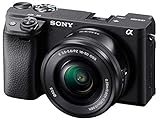
- 20.1MP stacked back illuminated 1" Exmor RS CMOS sensor w/ DRAM, large aperture 24-70mm1 F1.8-2.8 ZEISS Vario-Sonnar T lens
- Enhanced subject capture: wide 425 Phase/ 425 contrast detection points over 84 percent of the sensor
- Fast and accurate: Up to 11Fps continuous shooting at 24.2 MP raw with crisp, clear natural colors
- Multiple movie functions: Make time lapse movies or slow/quick motion videos without post processing
- Tiltable LCD screen: customizable for vlogging, still photography or recording a professional film
The mirror itself does not determine image quality. Sensor generation, sensor size, lens quality, image processing, autofocus accuracy, stabilization, exposure, and photographer technique usually matter more than whether a camera contains a mirror.
| Decision factor | Mirrorless cameras | DSLRs |
|---|---|---|
| Viewfinder | Electronic viewfinder or rear screen; can preview exposure, white balance, focus aids, and video | Optical viewfinder; direct view through the lens with no electronic refresh |
| Autofocus | Modern bodies generally offer stronger subject detection, eye tracking, and video AF | High-end viewfinder AF remains very capable; live-view and video AF vary widely |
| Burst shooting | Can shoot without mirror movement and may reduce blackout | Mirror and shutter movement can add blackout, sound, and mechanical limits |
| Electronic shutter | Commonly available, but rolling shutter, banding, and flash restrictions can occur | Available on some models, but less central to the design |
| Video | Usually the stronger choice for continuous AF, codecs, stabilization, and monitoring | Some models produce excellent video, but the category is less video-oriented |
| Battery life | Usually lower because the EVF, screen, stabilization, and sensor remain active | Generally better when composing through the optical viewfinder |
| Body size | Generally smaller because the mirror box and optical prism are omitted | Generally larger and heavier, but often balances well with long lenses |
| Lens market | Current optical development is concentrated on newer mirrorless mounts | Mature, extensive new-old-stock, used, and third-party lens supply |
| Used value | Older models can be good bargains, but newer bodies and native lenses may cost more | Often the cheapest route to a large sensor and professional-quality stills |
| Long-term system direction | Manufacturers are concentrating new body and lens development here | Existing systems remain usable, but new development and retail attention are limited |
Why are mirrorless cameras usually better for new buyers?
Mirrorless is usually the better starting point for a buyer who has no existing lens collection because the newest cameras combine modern autofocus, video functions, stabilization, and exposure-preview tools in one system. A buyer planning to purchase additional lenses over the next five years also has a strong reason to favor a currently developed mirrorless mount.
Autofocus and subject tracking
Modern mirrorless cameras generally lead in eye and face detection, animal and vehicle recognition, continuous autofocus during video, and tracking across more of the frame. Nikon describes newer Z-series cameras as using deep-learning-based subject detection and tracking while noting that DSLRs historically held an autofocus advantage; its mirrorless-versus-DSLR comparison provides the manufacturer’s explanation.
Mirrorless autofocus is not automatically better than every DSLR autofocus system. A professional DSLR can outperform an inexpensive mirrorless body in responsiveness, ergonomics, buffer behavior, or reliability. Compare specific camera models, lenses, autofocus modes, and shooting conditions rather than treating “mirrorless autofocus” as one uniform feature.
Also separate viewfinder autofocus from live-view autofocus on a DSLR. Single-shot autofocus, continuous tracking, human or animal recognition, and low-light focusing are different capabilities. Subject detection that works well in good light may be less dependable when a subject is backlit, obstructed, or moving against a confusing background.
Exposure preview and electronic viewing
An electronic viewfinder shows a sensor-generated image, so a mirrorless camera can preview exposure, white balance, picture style, and depth-of-field effects before the shutter is released. The EVF can also display a histogram, focus peaking, zebras, a level, and other overlays. In a dark scene, the camera can brighten the preview enough to make composition and manual focusing easier.
An optical viewfinder shows the scene directly through the lens. The optical viewfinder has no electronic refresh, display noise, or EVF lag, and it does not need to continuously power a display while the photographer composes. Many photographers prefer the natural, immediate view of an OVF, especially in bright conditions or when they do not want a processed interpretation of the scene.
The Tool Desk
Outbyte PC Repair FREEClear out junk files and repair common Windows errorsFree Scan →Outbyte Driver Updater FREEScan for outdated or missing drivers - takes under a minuteDriver Scan →An EVF is not automatically superior. Resolution, refresh rate, brightness, lag, blackout behavior, processing, and battery condition all affect the experience. An OVF is not automatically more accurate either: an OVF shows the scene, not necessarily the exposure or white balance that the camera will record.
Video and hybrid shooting
Mirrorless is usually the clear choice for serious video because the sensor is already being used for live electronic viewing and continuous autofocus. Current mirrorless systems generally offer more video-oriented bodies and accessories, stronger video autofocus, advanced codecs and frame rates, log profiles, high-resolution oversampled video, in-body stabilization on many models, and easier integration with external monitors and microphones.
Canon’s camera buying guide describes mirrorless cameras as offering a smaller footprint and positions the EOS R system strongly for video and hybrid use. That does not mean every mirrorless body is a good filmmaking camera. Entry-level models may have limited controls, small buffers, cropped video modes, or restrictions during long recordings.
Some DSLRs can produce excellent video. Nikon’s D780, for example, combines DSLR handling with advanced live-view and video capabilities; Nikon’s D780 specifications and D780 announcement document those capabilities. Nevertheless, a DSLR is generally a poor recommendation for a buyer whose main goal is talking-head video, gimbal work, dependable continuous autofocus video, high-frame-rate video, or a long-term photo-video system.
Do these 3 things before closing this tab:
1Scan for outdated or missing drivers - takes under a minute2Clear out junk files and repair common Windows errors3Fix the driver behind crashes, sound loss and screen glitchesSize, stabilization, and shooting convenience
Mirrorless bodies are generally smaller and lighter because they omit the DSLR mirror box and optical prism. Mirrorless cameras also make live-view operation, articulated-screen composition, focus aids, and electronic stabilization controls central to the shooting experience.
System weight matters more than body weight. A fast full-frame mirrorless lens can be large and heavy, and the complete kit may include a battery, charger, adapter, external recorder, microphone, or tripod collar. A DSLR with a compact prime lens may be more portable than a small mirrorless body carrying a professional zoom. Compare the body-plus-lens combination you will actually carry.
When is a DSLR still the better camera?
A DSLR remains rational when its defining advantages solve a real problem: you prefer an optical viewfinder, need maximum battery endurance, already own compatible lenses, want a substantial grip for large lenses, or can buy a lightly used professional body at a price a comparable mirrorless system cannot match.
Optical viewfinder preference
The optical viewfinder is not merely an old technology waiting to be replaced. An OVF provides a direct optical view with no electronic lag or refresh behavior and uses little power while composing. Photographers who find EVFs distracting, tiring, or visually unnatural may focus and react more confidently with a DSLR.
Also popular on Amazon

- Beginner-Friendly Mirrorless Power: The Canon EOS R100 offers an accessible entry into mirrorless photography with a 24.1MP APS-C CMOS sensor and DIGIC 8 image processor, delivering vibrant, detailed images and smooth video. Designed for everyday shooters and first-time DSLR users, this compact camera balances quality and ease-of-use, providing auto scene modes and simplified menu navigation for a seamless learning curve.
- Versatile RF-S 18-45mm Lens Included: This kit comes with the Canon RF-S 18-45mm f/4.5-6.3 IS STM lens, perfect for general-purpose shooting. From family portraits and daily snapshots to travel landscapes and vlogs, this zoom lens delivers sharp results and smooth autofocus. Built-in image stabilization helps reduce shake, making handheld photography more stable and enjoyable.
- Dual Pixel CMOS Autofocus for Sharp Results: Canon’s reliable Dual Pixel CMOS AF ensures fast and accurate focusing, especially when tracking people, faces, or stationary subjects. The system covers a wide portion of the frame and adjusts effortlessly between stills and video—ideal for capturing life’s moments as they happen, without missing a beat.
- Key Features: 24.2MP APS-C CMOS Sensor, DIGIC 8 Image Processor, 4K 24p Video with Crop, Full HD 60p, Dual Pixel CMOS AF with 143 AF Zones, 6.5 fps Electronic Shutter, 2.36m-Dot OLED EVF, 3" 1.04m-Dot LCD Screen, Wi-Fi and Bluetooth with SD Card Slot, RF-S 18-45mm f/4.5-6.3 IS STM Lens,
That preference matters. A theoretically more advanced camera is a poor purchase if the photographer dislikes looking through it, avoids carrying it, or works less comfortably with its controls.
Battery life and long assignments
DSLRs generally retain a battery-life advantage because composing through an optical viewfinder does not continuously power an electronic display. Nikon explicitly identifies battery life as an area where DSLRs continue to have an edge, while also noting that mirrorless efficiency has improved.
Mirrorless battery performance depends heavily on EVF and rear-screen use, continuous autofocus, subject detection, stabilization, wireless connectivity, video, cold weather, and display brightness. A CIPA shot rating is a standardized comparison aid, not a guarantee of the number of photographs one person will obtain. A photographer who chooses mirrorless for demanding work should budget for spare batteries, USB charging, or a battery grip rather than treating battery life as an automatic disqualifier.
Ergonomics and large lenses
Many DSLRs provide deep grips, dedicated physical controls, large batteries, and a body shape that balances naturally with a long telephoto lens. A smaller camera body is not automatically more ergonomic. Photographers with large hands, gloves, or heavy lenses may prefer a larger DSLR-style body.
High-end mirrorless cameras can provide equally substantial grips and professional controls, so ergonomics must be evaluated model by model. The useful comparison is the camera, lens, battery grip, and support equipment as a working package—not the body silhouette alone.
Used-market value
A used DSLR can provide a large sensor, professional construction, mature lenses, excellent battery endurance, and high-quality still images for substantially less than a new system. The format is not intrinsically inferior for still photography. A well-maintained DSLR paired with a good lens can remain an excellent portrait, landscape, event, or wildlife camera.
The market direction is nevertheless clear. According to CIPA’s 2024 global interchangeable-lens shipment data, mirrorless cameras represented 5,612,205 shipments out of 6,609,813, or about 85%, while SLR shipments fell to 997,608. Those figures describe global shipments in 2024—not retail sales, ownership share, or a forecast—and they explain why current manufacturer development is concentrated on mirrorless.
DSLRs are therefore increasingly a used-market, refurbished, remaining-stock, and existing-owner purchase. That does not make existing DSLRs unusable. Canon continues to present DSLR-related categories and refurbished equipment alongside its mirrorless offerings, as reflected in its U.S. camera listings.
What’s actually slowing this PC down?
Pick the symptom - the matching free tool is one click away.
Do mirrorless cameras take better pictures than DSLRs?
Mirrorless cameras do not automatically take better pictures than DSLRs. Image quality depends on sensor generation, sensor size, resolution, dynamic range, high-ISO performance, lens design, image processing, raw workflow, exposure, and focusing accuracy.
A new APS-C mirrorless camera may not outperform an older full-frame DSLR in every image-quality comparison. A modern full-frame mirrorless camera may nevertheless offer a substantial advantage in resolution, dynamic range, autofocus accuracy, stabilization, or video over an older DSLR. The defensible generalization is that mirrorless more often combines strong image quality with newer features, while DSLRs remain capable of professional-quality still images.
How do electronic and mechanical shutters change the decision?
Mirrorless cameras can shoot rapidly without moving a physical mirror between frames. Reduced viewfinder blackout can make it easier to follow an erratic subject, and electronic shutters can offer quiet operation in situations where shutter noise is disruptive.
Electronic shutters are not universally better or truly silent in every practical sense. Fast movement or camera motion can produce rolling-shutter distortion; artificial lighting can cause flicker or banding; flash synchronization may be restricted; and rotating propellers, golf clubs, or fast pans can appear unnaturally bent. Autofocus motors, aperture mechanisms, image stabilization, and external sounds may still be audible.
Mechanical capture on a DSLR can be louder and slower, but it may be more predictable for fast movement, flash, and difficult artificial lighting. Check the specific camera’s electronic-shutter readout behavior, flash limits, anti-flicker tools, and silent-mode restrictions before choosing it for sports, stage, or event work.
Can Canon EF and Nikon F lenses move to mirrorless?
Canon EF and EF-S lenses can be used on compatible Canon EOS R mirrorless bodies through an adapter, while Nikon F lenses can be adapted to Nikon Z bodies. Adaptation can preserve a valuable lens investment, but “compatible” does not always mean identical to using a native lens.
| Existing lens collection | Mirrorless path | What to verify |
|---|---|---|
| Canon EF or EF-S | Compatible EOS R body plus an EF-to-RF adapter | Autofocus mode, lens corrections, stabilization, firmware, balance, and crop behavior for EF-S lenses |
| Nikon electronically communicating F lenses | Nikon Z body plus FTZ II adapter | Exact lens category, autofocus support, stabilization, metering, firmware, and tripod or grip clearance |
| Nikon AF-D or fully manual F lenses | Possible physical use, but often with reduced functions | Whether autofocus, aperture control, metering, and EXIF communication remain available |
| Mixed or third-party legacy lenses | Adapter-dependent use | Brand, mount, firmware, electronic communication, and support documentation |
Nikon says its FTZ II adapter supports up to 360 DSLR lenses with either full or limited compatibility, according to Nikon’s mount-adaptation guidance. The phrase “full or limited” is important: older AF-D and fully manual lenses should not be assumed to autofocus like native Z lenses, while electronically communicating AF-S, AF-P, and later lenses may retain more functions.
Also popular on Amazon

- Go Beyond Your Phone: Capture lifelike colors and incredible details from dawn to dusk thanks to a superior 20.9-megapixel DX format (APS-C size) sensor several times larger than that of a typical smartphone, but still lightweight and compact enough to fit in a small bag.
- Find Your Aesthetic: At the press of the Picture Control button, choose from 31 built-in presets designed to make your photos and videos stand out. Create and save your own Picture Control presets or download bespoke Cloud Picture Controls directly to your Z50II from Nikon Imaging Cloud. Play with results in real-time as you shoot and open up a world of creative possibilities.
- Focus with Confidence: People, dogs, cats, birds and vehicles—the Z50II can automatically detect and accurately track nine distinct subjects. Plus dedicated bird and airplane modes for even greater autofocus accuracy.
- Powerful Video: Capture the scene with incredible quality and detail with 4K UHD/60p, in-camera 120p slow-motion in Full HD, built-in electronic VR and product review mode.
- Built-in Flash: Get beautifully balanced photos indoors and at night. Use Night Portrait mode to create natural-looking slow-shutter flash portraits. Share in a snap: Send photos and video to your smart device in seconds using the free Nikon SnapBridge app. Includes the NIKKOR Z DX 16-50mm f/3.5-6.3 VR lens and NIKKOR Z DX 50-250mm f/4.5-6.3 VR lens
Canon’s electronic EF-to-RF communication is generally designed to be seamless, but performance still depends on the exact body, adapter, lens, and firmware. Possible limitations with any adapted lens include weaker or inconsistent continuous autofocus, missing subject-recognition behavior, absent lens corrections, reduced burst performance, different stabilization behavior, or awkward balance.
Recommended Free Tools
For an existing owner, calculate the value of the lenses before calculating the value of a new body. Keeping a satisfactory DSLR may be cheaper than adapting every lens and then replacing the lenses whose autofocus or handling does not meet expectations. Switching becomes more compelling when mirrorless tracking, video, stabilization, or electronic preview solves a problem the DSLR cannot solve.
How much does a new mirrorless system cost?
Prices and bundles change frequently, so the following U.S. figures are dated signals rather than permanent prices. Canon listings checked on August 18, 2026 showed promotional mirrorless prices including an EOS R100 with RF-S 18–45mm kit at $499.99, an EOS R100 two-lens kit at $699.99, an EOS R50 body at $799.99, an EOS R50 with 18–45mm kit at $799.99, and an EOS R50 V creator-kit listing at $949.00. Canon also displayed regular prices of $679.99, $929.99, $899.99, $899.99, and $1,129.00 respectively for those displayed configurations; inventory and promotion status must be rechecked on the official Canon U.S. mirrorless page.
Nikon’s U.S. mirrorless shop displayed the Z5II from $1,599.95 and the Z7II from $1,899.95 when crawled. Those are U.S. starting-price signals, not universal worldwide prices or guarantees of current availability; confirm the listing on Nikon’s U.S. mirrorless camera page.
| Example | Displayed U.S. price signal | Best interpreted as |
|---|---|---|
| Canon EOS R100 with RF-S 18–45mm kit | $499.99 promotional listing; $679.99 regular price shown | Low-cost entry into Canon’s current RF mirrorless system |
| Canon EOS R100 two-lens kit | $699.99 promotional listing; $929.99 regular price shown | Entry kit with more reach, subject to bundle contents |
| Canon EOS R50 body or 18–45mm kit | $799.99 displayed; $899.99 regular price shown | More capable APS-C general-purpose starting point |
| Canon EOS R50 V creator configuration | $949.00 displayed for one listed configuration; another creator-kit listing showed $799.99 promotional pricing | Creator-oriented option; verify the exact bundle before comparing |
| Nikon Z5II | From $1,599.95 when crawled | Full-frame Nikon Z entry point |
| Nikon Z7II | From $1,899.95 when crawled | Higher-resolution full-frame Nikon Z option |
The true cost includes a lens, batteries, charger, memory card, bag, adapter, microphone, tripod, or telephoto support as appropriate. A body-only bargain is not a complete beginner package, and a premium body paired with an unsuitable kit lens may fail to solve the buyer’s actual need.
Free tools Windows power users keep installed
One-click scans. No signup required.
Should you buy a new mirrorless camera or a used DSLR?
Buy a new mirrorless camera when you want current autofocus, video, electronic preview, stabilization, a long upgrade path, or a system you will expand with new lenses. Buy a used DSLR when still photography is the priority, the price difference funds a better lens, you value an optical viewfinder, or the DSLR’s ergonomics and battery life fit your work better.
Used DSLR inspection checklist
- Check the shutter count: treat it as evidence of use, not a complete health certificate. Mechanical wear varies by model and maintenance history.
- Inspect the sensor: look for scratches, unusual marks, persistent dust, and signs of careless cleaning.
- Inspect lenses: check for fungus, haze, scratches, loose zoom or focus rings, sticky aperture blades, and noisy or inaccurate autofocus.
- Test every control: verify the dials, buttons, card slot, flash, hot shoe, ports, screen, viewfinder, autofocus modes, and image stabilization where fitted.
- Evaluate batteries and chargers: old batteries may have lost capacity, and proprietary chargers or replacement parts may be harder to find.
- Check cards and workflow: confirm that the camera’s memory-card format and transfer process suit your computer and shooting volume.
- Investigate serviceability: verify whether repairs, batteries, accessories, and replacement parts remain available in your country.
- Calculate future cost: include the lenses you will later need and the possibility of replacing the body sooner if autofocus or video becomes limiting.
A cheap DSLR is poor value if the buyer will soon replace the body, lenses, and accessories to obtain modern tracking or video performance. Conversely, an older DSLR plus a strong lens may produce better photographs than a new entry-level mirrorless kit with an unsuitable lens.
Which camera type fits each photographer?
| Photographer or situation | Recommended default | Reason and qualification |
|---|---|---|
| First interchangeable-lens camera | Mirrorless | Current systems provide exposure preview, newer autofocus, and a clearer upgrade path |
| Mostly video or vlogging | Mirrorless | Better fit for live-view AF, video formats, screens, stabilization, microphones, and monitors |
| Wildlife or sports, starting from scratch | Mirrorless | Tracking, subject recognition, high burst rates, and reduced blackout are valuable; compare body class and lens cost |
| Existing Canon EF/EF-S owner | Depends | Keep the DSLR if it works; consider EOS R plus adapter when AF, video, or stabilization benefits justify the transition |
| Existing Nikon F-mount owner | Depends | FTZ II may preserve many lenses, but compatibility varies and native Z lenses may still be worthwhile |
| Optical-viewfinder specialist | DSLR | The direct OVF experience is a legitimate working preference |
| Maximum battery endurance | DSLR | Optical composition generally consumes less power; demanding mirrorless users can carry spares |
| Lowest-cost route to high-quality stills | Used DSLR | Mature bodies and lenses can be heavily discounted; inspect condition and future costs |
| Travel and everyday carry | Usually mirrorless | Small bodies and newer compact lenses can help, but compare the complete kit |
| Large telephoto lenses | Depends | A large DSLR may balance better, while high-end mirrorless bodies can offer better tracking and stabilization |
| Silent photography | Mirrorless, with qualifications | Electronic shutters can be quiet, but rolling shutter, banding, flash limits, and lens noise remain concerns |
| Long-term new-system investment | Mirrorless | Current body and lens development is concentrated on mirrorless mounts |
When should an existing DSLR owner not upgrade?
Do not upgrade merely because mirrorless is newer. Keep a good DSLR when the camera produces the image quality you need, the optical viewfinder suits you, your lenses cover your work, and you do not need improved video, subject recognition, stabilization, or live exposure preview.
A switch becomes justified when a specific limitation costs you photographs or time. Examples include unreliable live-view video autofocus, difficulty tracking people or animals, a lack of in-body stabilization, inadequate low-light focusing, poor video controls, or the need to see exposure before pressing the shutter. An existing owner with thousands of dollars in excellent lenses should compare the cost of an adapter and selective native-lens purchases against the cost of replacing the whole system.
Crashes, No Sound, or Screen Glitches?
Random freezes, missing sound and display glitches usually trace back to one bad driver. Find and replace yours safely.Free scan · under a minutePC Slower Than It Used to Be?
A free scan shows the junk files, broken settings and background clutter dragging Windows down - then fixes them in one click.Free scan · Windows 10 & 11What should you check before choosing a specific model?
Format-level advice narrows the choice, but the final purchase must be model-specific. Check these points before ordering:
- Sensor and crop: compare APS-C, full-frame, Micro Four Thirds, or another format according to low-light, depth-of-field, reach, and lens-size priorities.
- Autofocus behavior: test the actual subject-recognition modes, continuous AF, low-light performance, lens compatibility, and tracking limits.
- Viewfinder: evaluate OVF clarity or EVF resolution, refresh, lag, blackout, brightness, and overlay options.
- Shutter modes: check mechanical and electronic shutter restrictions, rolling-shutter behavior, flicker control, and flash synchronization.
- Video: verify resolution, frame rates, crop, overheating limits, autofocus, log profiles, stabilization, microphone input, headphone monitoring, and recording duration.
- Handling: hold the body with the intended lens. Check grip depth, button placement, screen articulation, glove use, and tripod or battery-grip compatibility.
- System cost: price the body, a useful lens, spare batteries, memory cards, adapter, bag, and support equipment together.
- Support: check weather sealing, dual-card slots, flash compatibility, firmware, repair options, and parts availability for the exact model and region.
How do you decide between mirrorless and DSLR?
- Do you already own several compatible lenses? If yes, calculate switching and adaptation costs before comparing bodies. If no, mirrorless is usually the better default for a new system.
- Do you primarily shoot video? If yes, choose mirrorless unless a specific DSLR has a documented feature set that meets your needs.
- Do you require an optical viewfinder or exceptional battery endurance? If yes, a DSLR remains viable and may be preferable.
- Is your budget focused on used still photography? If yes, compare a used DSLR and better lens against an entry-level mirrorless kit rather than comparing bodies alone.
- Will you buy more lenses over the next five years? If yes, favor a currently developed mirrorless mount unless a specific DSLR system is clearly the better ergonomic or financial fit.
The most practical verdict is straightforward: buy mirrorless when starting a new system, keep a capable DSLR when it already meets the job, and switch only when the mirrorless benefits solve a real problem. Mirrorless is the industry’s direction; DSLR remains a useful photographic tool.
Frequently Asked Questions
Are DSLRs obsolete in 2026?
DSLRs are no longer the main focus of new interchangeable-lens camera development, but DSLRs are not obsolete as cameras. Existing and used DSLRs can still produce professional-quality still images, offer optical viewfinders and long battery life, and provide excellent value when paired with good lenses.
Is mirrorless autofocus always better than DSLR autofocus?
Modern mirrorless cameras generally offer better subject recognition, eye tracking, and video autofocus, but autofocus performance is model-specific. A professional DSLR can outperform an entry-level mirrorless camera in responsiveness, ergonomics, buffer behavior, or reliability.
Can I use Canon EF or Nikon F lenses on a mirrorless camera?
Many Canon EF/EF-S lenses can be used on compatible Canon EOS R bodies with an EF-to-RF adapter, and many Nikon F lenses can be used on Nikon Z bodies with an FTZ II adapter. Compatibility and performance vary by lens, adapter, camera body, and firmware; adapted lenses may lose autofocus, corrections, burst performance, or native-like handling.
Is a used DSLR a good camera for a beginner?
A used DSLR can be an excellent beginner camera for still photography when the body and lens are in good condition and the buyer values low cost, an optical viewfinder, and long battery life. A new mirrorless camera is usually the safer choice for a beginner who expects to prioritize video, subject tracking, or a long-term new lens system.
The Bottom Line
Bottom line: Choose mirrorless for a new system, especially for video, tracking autofocus, exposure preview, stabilization, and future lens development. Choose or keep a DSLR when an optical viewfinder, battery endurance, familiar ergonomics, existing lenses, or used-market value matters more. The right decision is the system that fits your actual subjects, lenses, budget, and working style—not the format with the newest reputation.

