
Outdated Drivers Are Slowing You Down
One free scan finds every outdated or missing driver and matches the right update for your exact hardware.Free scan · exact hardware matchPC Slower Than It Used to Be?
A free scan shows the junk files, broken settings and background clutter dragging Windows down - then fixes them in one click.Free scan · Windows 10 & 11High availability (HA) has evolved from keeping spare components ready to survive failures into a system-wide discipline: services are spread across independent failure domains, monitored, recovered automatically where possible, and tested under failure. The goal is not simply to own redundant servers. It is to keep a service usable when part of its infrastructure fails, while meeting defined recovery, data-loss, and operational targets.
What high availability means—and what it does not
High availability is a service objective: users should be able to use a service with little or no interruption. Achieving it depends on the whole path that serves a request, including compute, storage, networking, data replication, health detection, traffic routing, and the people and procedures that operate the system.
| # | Preview | Product | Price | |
|---|---|---|---|---|
| 1 |
|
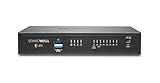
SonicWall TZ370 TotalSecure 1YR Advanced Edition + Rackmount.IT Rackmount Kit RM-SW-T10 (02-SSC-6819... | $1,121.44 | Buy on Amazon |
| 2 |

|
HP 24-Port Switch, Managed (J9782A#ABA) | $139.99 | Buy on Amazon |
Availability is often expressed as a percentage of time. A target is meaningful only when its measurement period, exclusions, and scope are clear. An internal availability objective is not the same as a provider’s contractual service-level agreement (SLA), and neither one guarantees that every dependency in an application meets the same target.
High availability, fault tolerance, and disaster recovery
| Term | What it is designed to do | What to clarify |
|---|---|---|
| High availability | Reduce service interruption through redundancy, failure detection, failover, and effective operations. | Which failures are covered, what interruption is acceptable, and how the objective is measured. |
| Fault tolerance | Continue operating through a subsystem failure, potentially without interrupting the service. AWS defines it as withstanding subsystem failure while maintaining availability within an established SLA. | Which subsystem failures are tolerated and whether the design preserves service behavior, not just process uptime. |
| Disaster recovery (DR) | Restore service and data after a disruptive event that exceeds the normal HA design, such as a major site or regional outage. | The recovery time objective (RTO)—how long restoration may take—and recovery point objective (RPO)—how much data loss is acceptable. |
These approaches overlap, but they are not interchangeable. A system can fail over quickly and still lose recent writes; it can preserve data but take hours to restore service. HA usually focuses on limiting interruptions during expected component and infrastructure failures. DR plans for larger events and may accept a longer recovery time or a different operating mode.
Recommended Free Tools
#1 Best Overall
- The latest SonicWall TZ370 series, are the first desktop form factor nextgeneration firewalls (NGFW) with 10 or 5 Gigabit Ethernet interfaces. The series consist of a wide range of products to suit a variety of use cases.
- Reduce complexity and get the business running without relying on IT personnel with easy onboarding using SonicExpress App and Zero-Touch Deployment, and easy management through a single pane of glass
- Drive business growth by investing in next-gen appliances with multi-gigabit and advanced security features, to future-proof against the changing network and security landscape
- SonicWall Advanced Gateway Security Suite keeps your network safe from zero-day attacks, viruses, intrusions, botnets, spyware, Trojans, worms and other malicious attacks. Examine suspicious files at the gateway in a cloud-based multi-layered sandbox for inspection to keep your network safe from unknown threats. As soon as new threats are identified and often before software vendors can patch their software, SonicWall firewalls and Cloud AV database are automatically updated with signatures.
- Hardware: Operating system: SonicOS 7.0 | Interfaces: 8x1GbE, 2 USB 3.0, 1 Console | Management: Network Security Manager, CLI, SSH, Web UI, GMS, REST APIs | VLAN Interfaces: 128 | Access points supported (maximum): 16
How high availability evolved
The progression is best understood as a widening of the failure boundary that a design can withstand, accompanied by more coordinated detection and recovery. These stages are an architectural history, not a precise chronology: no single invention date or product marks the beginning of commercial HA.
1. Redundant components and standby nodes
The basic strategy was to remove a single point of failure by adding a spare or duplicate subsystem. If one component failed, another could take over its work. AWS’s description of fault tolerance captures this principle: redundant subsystems can assume the work of a failed subsystem while service remains within its established SLA. The key limitation is placement: a spare does not help if it shares the same power, network, storage, or physical failure as the component it is meant to replace.
2. Failover clusters and coordinated recovery
Clusters joined multiple servers into a coordinated system. They added mechanisms for checking node health, deciding which node should own a workload, and moving work after a failure. Quorum and witness arrangements help a cluster decide which members may act; without sound membership decisions, competing nodes can create split-brain behavior or corrupt shared state.
Microsoft’s failover-clustering guidance covers topologies ranging from simpler clusters to stretched and multi-cluster designs, with choices shaped by fault domains and business requirements. A survey of HA clusters likewise organizes the subject around topology, failure detection, recovery, consistency, data integrity, and synchronization. That reflects the deeper challenge: failover is not merely starting a service elsewhere; the replacement must have a safe and sufficiently current view of the state it is taking over.
3. Pooled and distributed infrastructure
Virtualized and distributed infrastructure shifted planning beyond an individual server. A workload might be protected against a host failure but remain vulnerable to a shared chassis, rack, or site. Microsoft’s clustering guidance explicitly treats chassis, rack, and site as fault domains. The relevant question became whether the primary and its replacement can fail independently—and how quickly traffic and state can move between them.
4. Multi-zone and multi-region cloud designs
Cloud platforms make zones and regions explicit placement choices. Google Cloud recommends distributing and replicating services across multiple zones and regions, with health checks, load balancing, and automatic failover. Its 2024 guidance gives the following illustrative availability targets and estimates for a 30-day month:
| Deployment scope | Illustrative target in Google Cloud 2024 guidance | Estimated maximum downtime in a 30-day month |
|---|---|---|
| One zone | 99.9% | 43.2 minutes |
| Multiple zones | 99.99% | 4.3 minutes |
| Multiple regions | 99.999% | 26 seconds |
These are illustrative design targets, not a promise that a particular application will achieve them or the terms of a provider SLA. A multi-region design can reduce exposure to a regional outage, but only if the application’s data, dependencies, routing, and operational procedures support that recovery. Replication also introduces choices about consistency and the possibility of losing or delaying recent writes.
Rank #2
- Cost-effective, reliable, and secure fully managed Layer 2 switches
- ACLs, EEE, and IPv4/IPv6 host support
- Enclosure Type: Desktop, rack-mountable, wall-mountable 1U
- Cost-effective, reliable, and secure fully managed Layer 2 switches
- ACLs, EEE, and IPv4/IPv6 host support
5. Cloud-native resilience and operational automation
Modern reliability guidance treats availability as an ongoing operating practice, not a one-time topology choice. Google Cloud’s reliability principles include observability, graceful degradation, horizontal scaling, automated recovery, and learning from incidents. AWS Well-Architected guidance similarly emphasizes fault isolation, automatic recovery, explicit RTO and RPO planning, and testing recovery procedures. Regularly simulating zone or region failures helps establish whether replication and failover work as intended.
6. Multi-cloud and resilience frameworks
As organizations use combinations of cloud providers, private infrastructure, and interconnected services, resilience planning must address dependencies across organizational as well as technical boundaries. ISO/IEC 5140:2024 provides foundational concepts for multi-cloud, hybrid-cloud, inter-cloud, and federated-cloud services. IEEE P3454 is an active project proposing an operational-resilience framework for cloud providers, customers, and partners; it is a project, not a completed standard.
Independent reader supportYour contribution helps us test, update, and keep practical guides available for everyone.How to choose an HA architecture
Start with the failures the business needs to survive, then choose placement and recovery behavior that meet the service and data objectives. “More nines” is not a complete design requirement: it can increase replication, networking, licensing, and staffing costs, while adding consistency and operational complexity.
- Define the service objective. Specify the availability target, measurement window, what counts as downtime, and whether the target is an internal objective or a provider SLA.
- Map the failure domains. Decide whether protection must cover a process, node, rack, zone, region, or provider. Identify shared dependencies that could defeat otherwise separate replicas.
- Set RTO and RPO. State how long recovery may take and how much data loss is acceptable. Different services and datasets may need different values.
- Choose a recovery model. Determine whether failover should be automatic, supervised, or manual. Define health checks, routing behavior, ownership of state, and how the system avoids conflicting writers.
- Account for consistency and dependencies. Decide how replicas stay synchronized and what users see during degraded operation. Include databases, identity, DNS, networking, external APIs, and deployment systems in the design.
- Estimate cost and operating burden. Include duplicated capacity, replication and network charges, licensing, on-call coverage, runbooks, and the skill needed to operate the design safely.
- Test the recovery path. Monitor the service, rehearse recovery, and simulate the failures the architecture claims to handle. Measure actual recovery behavior and revise the plan when tests or incidents expose a gap.
A single-zone design may be appropriate when the business accepts its failure exposure and the service objective is modest. Multi-zone placement is a common step when the service must withstand a zone-level event. Multi-region or multi-provider designs are justified when regional or provider loss is within the threat model and the organization can operate the added complexity. None is automatically the right answer without service-specific objectives and tested recovery.
What a sound HA design must prove
Architecture diagrams show intended redundancy; operational evidence shows whether it works. Treat HA as a set of claims to validate rather than a label to attach to a deployment.
- Independent placement: replicas do not all depend on the same failure domain or critical shared service.
- Correct detection and routing: health checks distinguish a failed component from a slow one, and traffic can move without sending users to an unhealthy target.
- Safe state handling: failover preserves the required data integrity and consistency, with clear controls against split brain.
- Usable degraded modes: the service can shed optional work or reduce functionality rather than fail completely when capacity or dependencies are impaired.
- Observable recovery: alerts, dashboards, and logs reveal both the failure and whether recovery met the intended RTO and RPO.
- Rehearsed procedures: automated actions and human runbooks have been tested, including rollback or failback where appropriate.
Google Cloud recommends regular failure simulations—comparable to a fire drill—to validate replication and failover. AWS’s Well-Architected guidance is similarly direct: “Test recovery procedures.” The useful result is not merely a successful exercise; it is evidence about recovery time, data state, dependencies, and the changes needed before the next failure.
Quick Recap
Product prices and availability are accurate as of the date/time indicated and are subject to change. Any price and availability information displayed on Amazon at the time of purchase will apply.

