
Texas Instruments did not launch a single consumer IoT gadget in April 2014. It launched an open ecosystem of third-party cloud providers designed to work with TI connectivity chips, microcontrollers, sensors and development hardware, so manufacturers could move connected products from device data to cloud applications more quickly.
What Texas Instruments launched
On April 10, 2014, Texas Instruments announced an IoT cloud ecosystem built around services from outside companies. The idea was to give manufacturers a choice of cloud platforms that could run with TI-based IoT solutions rather than requiring every product team to build its own backend.
TI described the ecosystem as supporting several parts of a connected-product stack:
- Moving device data into business processes
- Data analytics
- Customizable user portals
- Smartphone applications
- Compatibility with multiple wireless technologies
The intended markets included industrial equipment, home automation, health and fitness devices, automotive systems and other connected products. TI also cited a 2014 forecast of 50 billion connected devices by 2020; that figure was a forecast at the time, not a current measurement.
Quick wins for a faster PC:
Scan for outdated or missing drivers - takes under a minuteDriver Scan →Repair Windows errors before they cause bigger problemsFix Now →#1 Best Overall

- Ultra-Low Power Consumption: Ideal for battery-powered applications, this development kit features an ultra-low power MSP430FR6989 MCU, ensuring extended battery life
- 128 KB Embedded FRAM: Non-volatile memory offers high endurance, high speed write access, and ultra-low power consumption for reliable data storage
- On-Board Emulation & Energy Measurements: Seamless programming, debugging, and energy measurements with built-in emulation tools
- LCD Display & User Interface: Integrated LCD display and on-board buttons/LEDs enable quick user interface integration
- Expandable with BoosterPacks: Add features like wireless connectivity, graphical displays, and environmental sensing using compatible BoosterPacks
Which companies were in the ecosystem?
Initial members announced in April 2014
| Participant | Role in the announced ecosystem |
|---|---|
| 2lemetry | Cloud service provider |
| ARM | Technology ecosystem participant |
| Arrayent | Cloud service provider |
| Exosite | Cloud service provider |
| IBM | Cloud and IoT service provider |
| LogMeIn | Cloud and remote-connectivity provider |
| Spark | Cloud-connected hardware and software platform |
| Thingsquare | IoT cloud connecting wireless devices with smartphone applications |
TI’s announcement described these eight organizations as the initial ecosystem members. The launch was therefore a partner framework around TI hardware, not a TI-operated cloud product that replaced those services.
Expansion reported in December 2014
In a December 9, 2014 update, TI said the ecosystem had grown to 18 companies after adding 10 members. The update named the following additions:
- Intamac
- Kynesim
- Keen IO
- Technical Machine
- Micrium
- Octoblu
- PTC
- PubNub
- Temboo
- Weaved
The paired names in the announcement account for the 10 added companies while being presented as eight grouped entries. The expansion broadened the available cloud, messaging, software and development integrations.
Rank #2
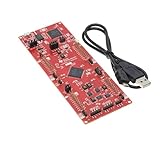
- This Launchpad Is Compatible with Various Plug-Ins BoosterPack.
- Operating Supply Voltage: 5 V
- Launchpad Provides a Standardized and Easy-to-Use Platform for Developing Your next Application.
- F280049C: 100MHz C28x CPU, with FPU and TMU,256KB Flash Memory
- Includes breadboard and jumper wires
How Energia fit into the platform
TI’s December update also highlighted Energia, its development environment for TI boards. Energia included pre-packaged support for cloud partners such as IBM’s IoT Foundation, Temboo and PubNub. That packaging reduced the need for developers to download and import each partner’s libraries manually.
Do these 3 things before closing this tab:
1Clear out junk files and repair common Windows errors2Scan for outdated or missing drivers - takes under a minute3Repair Windows errors before they cause bigger problemsEnergia support was a developer-experience improvement, not evidence that every cloud service was interchangeable. A project still had to use the appropriate board software, network configuration, service credentials and application programming interface for its chosen provider.
What hardware supported the IoT story?
TI positioned the ecosystem on top of a broad hardware portfolio covering wireless connectivity, microcontrollers, processors, sensors, analog signal-chain components and power-management solutions.
Rank #3

- 1 Pcs EK TM4C123GXL LaunchPad Evaluation Kit EK-TM4C123GXL
| Hardware layer | TI’s stated contribution | Why it mattered for IoT development |
|---|---|---|
| Wireless connectivity | Wireless solutions, including the later SimpleLink Wi-Fi family | Provided the network connection needed to send device data to cloud services |
| Processing | Microcontrollers and processors | Ran embedded application logic and communications software |
| Sensing | TI sensors and analog signal-chain products | Captured and conditioned physical-world measurements |
| Power | TI power solutions | Supported the electrical requirements of connected devices |
SimpleLink CC3100 and CC3200
On June 16, 2014, TI announced the SimpleLink Wi-Fi CC3100 and CC3200 platforms. The related CC3200 LaunchPad was presented as an evaluation kit for the low-power Wi-Fi solution and as a practical way to prototype connected products.
The CC3200 LaunchPad included a temperature sensor and an accelerometer. TI also offered BoosterPack plug-in boards so developers could add more sensors while experimenting with a design.
Can a CC3200 LaunchPad connect sensors to the cloud?
Yes, it was intended for that kind of connected-device prototype, but the board alone was not a complete cloud service. A typical prototype would combine the LaunchPad’s sensors and Wi-Fi connection with embedded code, one of the supported cloud platforms and an application that displayed or processed the resulting data.
Rank #4

- Kit Contents: 1 x Paper Circuits Launchpad Sketchbook (1st Edition, English), 5 x White Launchpad LEDs, 5 x Color Launchpad LEDs (Red, Yellow, Green, Blue, Rainbow Fade), 2 x Launchpad Batteries (safer than coin cells), 4 x Micro Binder Clips, 2 x Sheets Yellow Tape Stickers (40 Stickers Total), 1 x Sheet Conductive Fabric Tape Strips (8 Strips, 4mm x 125mm Each), 1 x Conductive Fabric Tape Spool
- Recommended Age: 8+
- Comprehensive Kit
- Beginner-Friendly Paper Circuits Introduction
- Launchpad Sketchbook: 10 Core Paper Circuit Concepts & Hands-On Activities
- Attach the required sensors, either those on the LaunchPad or compatible BoosterPack boards.
- Develop firmware for the CC3200 and configure its Wi-Fi connection.
- Choose a compatible cloud provider from the ecosystem.
- Use the provider’s integration libraries or the pre-packaged Energia support where available.
- Send sensor readings to the service and build the portal, analytics workflow or smartphone application that consumes them.
The 2014 announcements establish the hardware, cloud-partner model and development integrations. They do not establish a single universal setup procedure, guaranteed support for every sensor or a current cloud-service compatibility list.
Independent reader supportYour contribution helps us test, update, and keep practical guides available for everyone.Why the ecosystem model mattered
More than a chip announcement
TI was connecting several normally separate decisions: which wireless technology to use, which embedded processor should run the product, how sensors would be integrated and which cloud service would handle data and applications. That gave manufacturers a path from prototype hardware to a connected product without tying every project to one proprietary backend.
Choice across industries
The same general model could serve industrial monitoring, home controls, health and fitness devices, automotive systems and other products, even though each application would have different power, networking, security and data requirements.
Free tools Windows power users keep installed
One-click scans. No signup required.
Best Value

- 1 Pcs LAUNCHXL-CC1350-4 Dualband 433MHz/2.4GHz Applications
Partner statements
“We are excited to be a part of TI’s new cloud ecosystem, and are looking forward to playing an important role in enabling customer innovation with TI-based IoT solutions.” — Kyle Roche, CEO of 2lemetry
“At ARM, we believe that the Internet of Things will transform every business model on the planet.” — Adam Gould, vice president, IOTBU, ARM
“The Spark Cloud is fully integrated with TI’s hardware from prototype to production so we’re especially excited to officially be part of TI’s IoT cloud ecosystem and look forward to providing numerous companies with comprehensive solutions for getting their products online.” — Zach Supalla, CEO of Spark
“Thingsquare’s IoT cloud connects wireless devices with smartphone apps.” — Adam Dunkels, CEO and co-founder of Thingsquare
PC Slower Than It Used to Be?
A free scan shows the junk files, broken settings and background clutter dragging Windows down - then fixes them in one click.Free scan · Windows 10 & 11Outdated Drivers Are Slowing You Down
One free scan finds every outdated or missing driver and matches the right update for your exact hardware.Free scan · exact hardware matchSpecial offer. See more information about Outbyte and uninstall instructions. Please review EULA and Privacy policy.
What the 2014 launch does not tell you
- It does not establish current prices for the CC3100, CC3200 or LaunchPad boards.
- It does not establish whether every named partner or product remains available today.
- It does not provide a current lifecycle, replacement or support commitment for the hardware.
- It does not prove that all 18 participants offered identical services or identical APIs.
Those details require checking current TI product pages and the present documentation of any cloud provider being considered. The historical announcement is most useful for understanding the ecosystem’s architecture and the role of the CC3200 LaunchPad in early TI IoT prototyping.
Bottom line for developers and product teams
Texas Instruments’ 2014 IoT initiative was an open partner ecosystem surrounding TI hardware. Its initial eight members grew to a reported 18 companies by December, while Energia integrations and the CC3200 LaunchPad aimed to shorten the path from sensor prototype to cloud-connected application. The launch’s lasting significance is the combination of selectable cloud services, TI connectivity and processing hardware, and tools intended to make that combination easier to develop.
Quick Recap
Product prices and availability are accurate as of the date/time indicated and are subject to change. Any price and availability information displayed on Amazon at the time of purchase will apply.

