
Quick wins for a faster PC:
Clear out junk files and repair common Windows errorsFree Scan →Fix the driver behind crashes, sound loss and screen glitchesFind Drivers →iTechGuides is reader-supported. When you buy through links on our site, we may earn an affiliate commission. As an Amazon Associate I earn from qualifying purchases. Learn more
Elon Musk unveiled Tesla’s Cybercab prototype on October 10, 2024—not in 2026—and Tesla’s first real Robotaxi service began in Austin on June 22, 2025. As of August 10, 2026, Tesla has moved beyond demonstrations: it operates a limited, paid autonomous ride service in selected areas of Texas and Florida. But the vehicles currently carrying passengers are primarily Model Y cars, not the purpose-built Cybercab shown at the We, Robot event.
That distinction is the key to understanding Tesla’s progress. The company has a real but tightly geofenced service, including limited unsupervised rides, yet it has not delivered the nationwide autonomous fleet Musk predicted in 2019 or made a sub-$30,000 Cybercab available to buy. Tesla’s next test is whether it can scale from a small, regulated pilot into a safe, reliable, economically viable network.
The short version: Tesla’s robotaxi arrived in stages
Tesla’s robotaxi story now has three separate milestones:
What’s actually slowing this PC down?
Pick the symptom - the matching free tool is one click away.
- October 10, 2024: Tesla revealed the Cybercab, a steering-wheel-free, pedal-free two-seat concept, alongside the Robovan and a demonstration of Optimus humanoid robots.
- June 22, 2025: Tesla began offering paid Robotaxi rides in Austin, initially using modified Model Y vehicles with human safety monitors inside.
- January–July 2026: Tesla began limited unsupervised Austin rides, expanded unsupervised operations to Dallas and Houston, and added Miami, Orlando, and Tampa to its listed service footprint.
The live service and the Cybercab are related, but they are not the same product. The Model Y is Tesla’s current operating platform; the Cybercab is a future purpose-built vehicle intended to make autonomous ride-hailing cheaper and more efficient.
#1 Best Overall

- 2-in-1 Transforming Design:Switch between a fast RC car and a cool robot with just one click—double the fun in one toy!
- Smart Interactive Play:Gesture-sensing transformation, automatic demonstrations mode, and dynamic LED lights with music for an immersive experience.
- Multiplayer Fun Without Interference:2.4GHz remote control allows multiple kids to play together—race or battle with no signal clashes!
- Long-Lasting Dual Battery Power:Two rechargeable batteries provide up to 60 minutes of continuous playtime.
- Perfect Gift for Kids:An exciting and innovative toy that sparks creativity—ideal for birthdays, holidays, and special occasions!
Tesla management said during the company’s July 22, 2026 earnings call that it had accumulated more than 380,000 unsupervised Robotaxi miles across six cities in two states with “zero notable incidents.” That is an important company-reported milestone, but it is not an independent safety certification, and it does not prove that Tesla has solved autonomous driving in every environment. Tesla’s webcast and the accompanying earnings-call transcript should be read as the source of that claim.
What Elon Musk unveiled at the 2024 “We, Robot” event
Tesla staged the We, Robot event at Warner Bros. Studios in Burbank, California, on October 10, 2024. The presentation was less a conventional vehicle launch than a statement of Tesla’s intended future: transportation powered by artificial intelligence, autonomous vehicles with high utilization, and a broader robotics business.
Cybercab
The centerpiece was the Cybercab, a compact, two-seat autonomous vehicle shown without a steering wheel or pedals. Its layout was designed around the idea that the passenger—not a driver—would control the trip through the vehicle’s autonomous system.
Recommended Free Tools
Musk said the Cybercab would cost less than $30,000, and Tesla said it expected production to begin in 2026. Those are announced targets, not a confirmed retail price or delivery schedule. Tesla has not published a complete production specification, a normal consumer ordering path, a final range figure, charging specification, or a verified volume-production plan comparable to those for its established vehicles. The Associated Press reported the price target and design details, while Tesla’s second-quarter 2025 filing identified 2026 as the planned start of Cybercab volume production.
Robovan
Tesla also showed the Robovan, a larger autonomous vehicle concept intended to carry groups of people or goods. Musk described a capacity of approximately 20 people. Tesla has not turned that concept into a publicly orderable commercial vehicle either.
Optimus and the broader robotics strategy
The event also featured Optimus, Tesla’s humanoid robot. Its inclusion was meant to connect the robotaxi project with Tesla’s wider ambitions in artificial intelligence, neural-network training, robotics, onboard computing, and manufacturing.
Tesla’s official event recap presents autonomy as a way to improve vehicle utilization, reduce parking demand, lower transportation costs, and potentially make rides cheaper than conventional public transportation. These are strategic aspirations, not results that Tesla has already demonstrated at network scale.
Why the robotaxi was “long-awaited”
The unveiling followed years of increasingly ambitious autonomy promises. At Tesla’s 2019 Autonomy Day, Musk predicted that Tesla would have more than one million autonomous robotaxis operating by 2020. Tesla’s 2019 SEC filing also described a future ride-hailing network in which Tesla could operate its own cars and owners could earn money by allowing their vehicles to participate. CBS documented the 2019 prediction, and Tesla’s 2019 10-Q described the proposed network.
That timetable did not materialize. Tesla announced an August 2024 robotaxi reveal, later delayed it, and finally presented the Cybercab in October. The first paid customer rides did not begin until June 2025, and the initial service depended on human safety monitors.
| Date | Development | What it means |
|---|---|---|
| April 2019 | Musk predicts more than one million robotaxis by 2020 | An ambitious forecast that was not met |
| July 2024 | Tesla announces an August robotaxi reveal | The reveal is subsequently delayed |
| October 10, 2024 | Cybercab and Robovan unveiled at We, Robot | Product concepts, not a public ride-hailing service |
| June 22, 2025 | Paid Robotaxi rides begin in Austin | Tesla’s first tangible commercial robotaxi service |
| January 22, 2026 | Some Austin rides begin without an in-vehicle safety monitor | The first meaningful driver-out step |
| April 2026 | Tesla says unsupervised rides have launched in Dallas and Houston | Expansion beyond Austin |
| July 2026 | Miami, Orlando, and Tampa appear in Tesla’s live service footprint | Six named Texas and Florida markets are listed by Tesla support |
| August 10, 2026 | Model Y-based operations continue while Cybercab remains a future product | Deployment is real, but mass autonomy has not arrived |
Sources for the later milestones include Tesla’s 2025 annual filing, its first-quarter 2026 filing, and its second-quarter 2026 results webcast.
What Tesla’s Robotaxi service actually offers today
Tesla’s current Robotaxi support page lists service in limited areas of Austin, Dallas, and Houston, Texas, and Miami, Orlando, and Tampa, Florida. Tesla’s separate Robotaxi marketing page lists fewer cities, so the company’s first-party pages are not fully synchronized. The service map shown in the app—not a state-wide or city-wide assumption—should be treated as the operational source of truth.
Availability is limited by geography and operating hours. A customer in one of the named metropolitan areas may still be outside the active service zone or unable to request a ride at a particular time.
Rank #2

- Transforming Remote Control Car Has Lights, Music, Vapor Spray | Performs 360° Spins
- Kids RC Robot Truck Is Easy To Control | Inductive Deformation Transforms Robot With A Hand
- Gift For Boys Ages 8-13 Years | Fun and Cool Transforming Kids RC Toy Car Robot
- RC Truck Dimensions: - 14" x 5" x 6" | RC Robot - 8.75" x 5" x 10.5" | 1:12 Scale
- Boys RC Robot Car Includes 3.7V Rechargeable Battery | RC Requires 2 AA Batteries (Not Included) | Includes USB Charging Cable
How to book a ride
- Download the Robotaxi app for iOS or Android.
- Sign in with a Tesla Account.
- Enter a destination within the displayed service area.
- Review the estimated fare and wait time.
- Confirm the ride.
- Match the vehicle’s license plate with the details shown in the app.
- Enter the vehicle, fasten the seat belt, and tap Start Ride.
The vehicle waits at the pickup point for seven minutes before the ride may be canceled. The fare is shown before confirmation, but Tesla says pricing can change.
Current passenger restrictions and practical limitations
- The initial fleet consists of Model Y vehicles rather than Cybercabs.
- Passengers cannot sit in the front-left seat.
- A mobile device is required.
- Customers cannot currently book a ride for someone else.
- Additional stops cannot be added at present.
- Children under eight are not permitted.
- Passengers aged eight through 17 must be accompanied by an adult.
- Pets are not allowed, except service animals.
- The Robotaxi fleet does not currently provide wheelchair-accessible rides directly. Tesla directs customers to third-party providers in the listed cities.
- Riders can request Pull Over through the app or vehicle touchscreen.
- Passengers can contact Tesla support through the vehicle’s microphone and speakers.
- Recovered lost property is stored for only 10 days.
These details matter because a ride service is more than the driving system. Availability, accessibility, passenger support, vehicle recovery, cleaning, charging, and unusual situations all affect whether a robotaxi network is genuinely useful.
Is Tesla’s Robotaxi fully autonomous?
Sometimes the service operates without a human safety monitor inside the vehicle, but the answer depends on the product, market, and date. “Autonomous” is too broad a label unless those conditions are specified.
Do these 3 things before closing this tab:
1Clear out junk files and repair common Windows errors2Fix the driver behind crashes, sound loss and screen glitches3Repair Windows errors before they cause bigger problemsFSD (Supervised) is not driverless
Tesla’s consumer Full Self-Driving (Supervised) system is a driver-assistance product. Tesla explicitly says that it requires an attentive driver who remains responsible for the vehicle. It does not make a Tesla autonomous or replace the driver. Tesla’s U.S. support page currently lists the subscription at $99 per month, subject to changes in price and availability. See Tesla’s FSD (Supervised) support page for the current wording.
An ordinary privately owned Tesla using FSD (Supervised) must therefore not be described as a driverless vehicle. The brand name “Full Self-Driving” does not change Tesla’s stated supervision requirement.
The initial Robotaxi service used safety monitors
Tesla’s first Austin rides in June 2025 used Model Y vehicles with human safety monitors inside. That was a commercial ride-hailing operation, but it was not equivalent to a rider-only Level 4 service. A human fallback inside the car changes both the economics and the risk profile.
Unsupervised rides are limited and geofenced
Tesla began removing the in-vehicle safety monitor from a limited number of Austin rides in January 2026. It later announced unsupervised operations in Dallas and Houston, with Tesla’s 2026 customer materials listing additional Florida markets.
The most accurate description is that Tesla offers limited unsupervised or driverless commercial rides within defined operating areas in parts of Texas and Florida. That does not mean every Tesla can drive without supervision, that the service works everywhere in those states, or that the Cybercab is already operating at scale.
California is a separate case
Tesla’s California activity should not be treated as equivalent to its Texas and Florida driver-out service. The California DMV permit list identifies Tesla Robotaxi LLC as authorized to test with a safety driver. On the cited page, updated in 2026, Tesla is not listed among entities authorized for driverless testing or deployment.
In practical terms, Tesla has offered ride-hailing operations in California with a safety driver, while its limited driverless commercial operations have been concentrated in Texas and Florida.
Free tools Windows power users keep installed
One-click scans. No signup required.
The technology behind Tesla’s autonomy strategy
Tesla’s strategy emphasizes cameras, neural-network software, onboard computing, fleet data, and over-the-air updates. This differs from the sensor-heavy architecture associated with competitors that use lidar alongside cameras and radar.
Rank #3
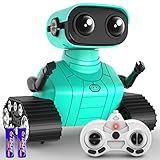
- Multifunctional Robot: LED eyes can light up once you turn on the robot, you can also make it blink or closed by the controller. Smart Voice - turn on the robot it will start talking, he can also sing different songs which can be switched by remote; the track of the tank allows the robot to move forward backward left, and right flexibly. Under demo mode, it will begin 360-degree spins, dancing with flexible arms and heads.
- Fantastic Unique Appearance: This cute and funny robot is designed in 3 parts. The upper part is a cute robot with a pair of LED eyes and the head and arms are flexible. The bottom part is designed as a continuous track of a tank, so cool! Songs singing will absorb your baby. Combining a cute appearance, beautiful big eyes, flexible limbs, and a smart voice function, your baby will love this toy robot.
- Easy to Operate: Equipped with tracks of tanks, 6 wheels, and a 2.4GHz remote controller, the RC robot can move and dance under the control of the child, ideal for the child's entry-level remote-control toys. One-click demonstration of automatic dancing will provide hours of fun to children. 2.4G Hz no interference controller makes several robots can run at the same time.
- Entertaining and Educational: For children who have just formed a cognition of the world, this easy-to-operate robot can help them begin to exercise their operational skills and imagination. The joyful singing will greatly stimulate the children's language communication potential, and the cute shapes will bring happiness to children and promote physical and mentally healthy. Excellent girls boys toys age 4-5.
- Ultimate Robot Toys Ideas: Are you looking for an ideal and exciting present for a birthday, Christmas, or festival? Choose this, and children will love it!! It is as entertaining as it is educational, a better choice than a robot dog. We adopt exquisite packaging for this robot, what you get in the box: 1 remote-controlled robot, 1 remote control, 1 Type C charge cable, 1 screwdriver, 1 user manual, and batteries for the controller.
What is established
- Tesla vehicles use onboard cameras and neural-network software in their autonomy program.
- Tesla collects driving data from its customer fleet and uses that data to train and improve its systems.
- Onboard computing performs perception and driving decisions.
- Tesla distributes software improvements through over-the-air updates.
What Tesla argues
Tesla’s position is that a large real-world fleet, extensive training data, and a camera-first system can eventually deliver autonomy without the more expensive sensor suites used by some rivals. Tesla’s We, Robot materials describe data generated by millions of vehicles and quote Musk predicting that the system could eventually be 10, 20, or 30 times safer than a human driver.
That prediction is not a measured current result. Tesla has also not publicly supplied a complete, independently verifiable production Cybercab sensor architecture, redundancy design, operational-design-domain specification, or safety case.
The sensible conclusion is not that camera-first autonomy has been proved superior or inferior in every environment. It is a strategic trade-off: less specialized hardware may reduce cost and simplify manufacturing, but it places greater pressure on perception software, training data, validation, redundancy, and performance in difficult visibility conditions.
The Tool Desk
Outbyte Driver Updater FREEFix the driver behind crashes, sound loss and screen glitchesFind Drivers →Outbyte PC Repair FREEClear out junk files and repair common Windows errorsFree Scan →Tesla’s safety evidence versus Waymo’s
Tesla’s most prominent current safety claim is the July 2026 management statement that more than 380,000 unsupervised Robotaxi miles had been driven across six cities in two states with “zero notable incidents.” That should be reported with all of its qualifiers:
- It is a statement from Tesla management, not an independent certification.
- The mileage is small compared with the exposure accumulated by established autonomous fleets.
- It may not represent all weather, road types, traffic conditions, times of day, or service areas.
- “Zero notable incidents” does not necessarily mean zero collisions, zero interventions, or zero reportable events.
- Tesla did not, in the cited statement, provide a complete independently audited incident database, fleet count, ride count, or mileage breakdown by city.
Waymo provides useful context but not a simple apples-to-apples benchmark. In June 2026, Waymo said its latest analysis covered more than 220 million fully autonomous miles through March 2026. The company reported fewer crashes involving serious or fatal injuries, airbag deployment, and reported injury than its human-driver benchmarks. Waymo also said its fleet was driving more than four million miles per week. Those are Waymo’s own analyses and benchmarks, conducted across a different fleet, operating area, reporting system, and deployment history. See Waymo’s safety analysis and its explanation of remote assistance.
Government crash data also requires caution. The National Highway Traffic Safety Administration’s automated-vehicle reporting page warns that reports can contain duplicates, incomplete information, unverified initial submissions, confidential redactions, and no normalization for fleet size or miles traveled. Counting raw incidents without exposure data can produce a misleading comparison.
Regulators are watching the difficult cases
Reduced visibility and FSD investigations
NHTSA opened a preliminary evaluation into Tesla FSD collisions in reduced-visibility conditions, including glare, fog, and dust. The review involved four reported crashes, including one fatal pedestrian crash and one crash involving a reported injury. NHTSA closed that particular investigation on March 18, 2026, but the closing document did not establish that no safety defect exists. The relevant documents are the investigation summary and closing document.
The issue illustrates why a robotaxi cannot be judged only by smooth demonstrations in familiar conditions. Glare, fog, dust, heavy rain, construction zones, blocked roads, unusual lane markings, and temporary traffic control can turn a routine route into a difficult operational problem.
First responders
In July 2026, NHTSA warned automated-vehicle developers about vehicles interfering with first responders. A driverless car must be able to recognize and respond appropriately to emergency scenes, ambulances, fire trucks, police vehicles, lights, flares, smoke, fire, cones, and other temporary controls.
This is a major operational requirement, not a minor edge case. A vehicle that can follow ordinary routes but cannot safely handle an emergency scene is not ready for unrestricted deployment. See NHTSA’s July 8, 2026 warning.
California’s permit structure
California has a more formal autonomous-vehicle regulatory path than Texas’s historical approach. Tesla’s listed permit status in California is associated with testing with a safety driver, not the driverless deployment described for selected Texas and Florida operations.
California also acted against Tesla’s use of “Autopilot” and “Full Self-Driving” terminology. In February 2026, the California DMV said Tesla had stopped using “Autopilot” in California marketing and modified its “Full Self-Driving” language to clarify that supervision is required. The DMV corrective-action notice is the relevant source.
Rank #4
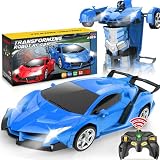
- Enhanced 2.4GHz Remote Control: This transforming RC car toys for ages 5-7 boasts a 2.4GHz remote controller, delivering lightning-fast response times and a robust control range of up to 50 meters
- Effortless One Touch Transformation: This remote controlled transforming car boys toys 6-8 years old seamlessly shifts from a vehicle to a robot with a single button press. Kids can seamlessly alternate between forms
- 360° Spins & High-Speed Action: This transforming car kids toys executes smooth 360° rotations between car and robot modes. Its unique omnidirectional wheel design enables thrilling 360° spins and drifts, allowing it to pull off amazing stunts
- Safe & Sturdy Construction: This transforming car toys for ages 5-7 boys. It features smooth edges and robust materials. Rest assured, your kid will have a long-lasting and joy-filled experience with this dependable toy
- Idear Gift for Age 3-12: This RC transforming car boy toys is a gift for kids. It combines safety, durability and advanced 2.4GHz technology with awesome stunts and transforming, delivering an exciting and engaging playtime experience
Texas authorization
Texas established a statewide commercial automated-vehicle authorization framework under Senate Bill 2807. The Texas Department of Motor Vehicles said that, as of May 28, 2026, companies commercially operating automated motor vehicles in the state must maintain active authorization. The department also launched a public complaint process. Details are available in the TxDMV announcement.
Why Tesla wants a purpose-built Cybercab
A modified Model Y lets Tesla begin operating with a vehicle already in production. A dedicated Cybercab could be more efficient for a high-utilization fleet because it is designed around passengers rather than a conventional driver. Removing the steering wheel and pedals could free interior space and reduce some hardware and maintenance requirements.
The proposed economics depend on several assumptions:
Crashes, No Sound, or Screen Glitches?
Random freezes, missing sound and display glitches usually trace back to one bad driver. Find and replace yours safely.Free scan · under a minuteWindows Errors? Fix Them Before They Spread
Repair common Windows errors and clear accumulated junk for a smoother, more stable PC - no reinstall needed.Free scan · no reinstall- High vehicle utilization throughout the day.
- No human driver or in-car safety monitor for ordinary rides.
- Low energy, maintenance, cleaning, insurance, and repair costs.
- Reliable charging and fleet management.
- Enough demand to keep cars moving without excessive waiting.
- Software capable of handling routes without frequent human intervention or costly recovery.
But the dedicated vehicle also introduces new challenges. Tesla must validate its crashworthiness, passenger restraint systems, door operation, emergency access, repairability, charging process, accessibility configuration, insurance model, and regulatory approval. A low purchase price alone would not prove that the vehicle is inexpensive to operate.
What remains unknown about Cybercab
As of August 10, 2026, Tesla has not publicly established all of the details a buyer or fleet operator would need:
- Final retail price or confirmed MSRP.
- Production volume and sustained manufacturing rate.
- Customer delivery date and ordering process.
- EPA range or validated real-world range.
- Charging connector, charging time, and fleet-charging requirements.
- Maintenance and battery-replacement costs.
- Insurance and liability arrangements.
- Accessibility options, including wheelchair accommodation.
- Regulatory approvals for broad commercial deployment.
- Whether the production vehicle will match every feature shown in the prototype.
Later 2026 reporting and Tesla management disclosures indicate that production activity had begun, but initial production or ramping should not be confused with high-volume manufacturing, customer delivery, or broad public availability. Tesla’s Q2 2026 earnings webcast is the appropriate source for management’s current production comments.
Independent reader supportYour contribution helps us test, update, and keep practical guides available for everyone.Tesla’s proposed robotaxi business model
Tesla’s long-term vision has several layers:
- Tesla-operated fleet: The current Robotaxi service, using Tesla-controlled vehicles in selected markets.
- Purpose-built Cybercab: A dedicated autonomous vehicle intended to lower the cost of each ride and increase utilization.
- Owner-supplied vehicles: The earlier proposal that Tesla owners could place their cars into a shared ride-hailing network when they were not using them.
- Software revenue: FSD subscriptions and potentially autonomous-mobility services.
- Manufacturing and data scale: Tesla argues that its factories, installed customer base, onboard computing, and fleet data could provide an advantage.
- Broader robotics: The same AI, compute, and manufacturing capabilities are intended to support Optimus and other products.
The owner-participation model remains a long-term vision, not a current consumer capability documented on Tesla’s live Robotaxi support materials. Ordinary Tesla owners should not assume that they can already enroll their cars in Tesla’s commercial network.
Outdated Drivers Are Slowing You Down
One free scan finds every outdated or missing driver and matches the right update for your exact hardware.Free scan · exact hardware matchWindows Errors? Fix Them Before They Spread
Repair common Windows errors and clear accumulated junk for a smoother, more stable PC - no reinstall needed.Free scan · no reinstallThere is also no reliable public evidence that Tesla’s Robotaxi operation is profitable. Ride availability does not establish profitability. The meaningful financial questions are cost per mile, paid rides per vehicle, utilization, fares, support and recovery costs, insurance, charging, maintenance, and the capital required to build and operate the fleet.
How to judge whether Tesla’s strategy is working
Launch videos and executive forecasts are less useful than operating data. The following metrics will determine whether Tesla has built a viable business rather than a limited demonstration:
| Metric | Why it matters |
|---|---|
| Unsupervised miles by city | Shows how much driver-out exposure Tesla is actually accumulating |
| Paid rides and completed trips | Separates commercial demand from testing mileage |
| Miles per vehicle per day | Indicates fleet utilization and potential economics |
| Active vehicle count | Shows whether the network is scaling beyond a small pilot |
| Coverage area and wait times | Measures practical usefulness for customers |
| Cancellation and pickup-failure rates | Reveals operational reliability outside the driving task |
| Weather and nighttime limits | Defines the actual operational-design domain |
| Collision and intervention rates normalized by miles | Allows more meaningful safety comparisons |
| Remote-assistance and support events | Shows how often vehicles need help or human guidance |
| Fare revenue and cost per mile | Tests whether the network can become economically sustainable |
| Cybercab production and deliveries | Shows whether the dedicated vehicle is moving from concept to fleet |
| Privately owned vehicles enrolled | Tests the owner-participation vision |
| Regulatory approvals | Determines whether expansion is legally possible |
| Accessible-vehicle coverage | Measures whether the service works for passengers with mobility needs |
The main trade-offs and failure modes
Camera-first simplicity versus sensor redundancy
A camera-first design may reduce hardware cost and simplify manufacturing, but it places greater pressure on software, training data, validation, and performance in glare, fog, dust, rain, and other difficult conditions. The public evidence does not establish that Tesla’s approach is safer than lidar-based systems across all environments.
Geofenced safety versus broad usefulness
A tightly geofenced service can be easier to validate and monitor. The trade-off is that it is not equivalent to a vehicle that can drive autonomously anywhere. The relevant question is always: autonomous under which conditions, on which roads, in which weather, and within what service boundary?
Human monitors versus driver-out economics
Safety monitors provide a fallback but add labor cost and make the service less autonomous. Removing them improves the potential economics while increasing the importance of remote assistance, emergency response, vehicle recovery, and fail-safe behavior.
Best Value

- 【𝐏𝐫𝐨𝐠𝐫𝐚𝐦𝐦𝐚𝐛𝐥𝐞】The programmable robot supports up to 50 motion combinations programming, which can help develop your kid's creativity. And the one-key demo can demonstrate a set of dance with music to bring your kids a fun time with the smart robot.
- 【𝐆𝐞𝐬𝐭𝐮𝐫𝐞 𝐚𝐧𝐝 𝐑𝐞𝐦𝐨𝐭𝐞 𝐂𝐨𝐧𝐭𝐫𝐨𝐥】Simple hand gestures move the robot forward, backward, left, or right, while the multi-button remote unlocks dances, demos, and more exciting play—bringing nonstop fun and laughter to kids.
- 【𝐒𝐢𝐧𝐠 & 𝐃𝐚𝐧𝐜𝐞】Ruko robot toy can not only walk, slide but also have the function of singing and dancing. Dynamic music and dance will bring fun to children. There is a volume control on the remote, you can adjust as needed.
- 【𝐄𝐚𝐬𝐲 𝐂𝐡𝐚𝐫𝐠𝐢𝐧𝐠, 𝟏𝟐𝟎𝐦𝐢𝐧𝐬 𝐅𝐮𝐧 𝐓𝐢𝐦𝐞】Powered by built-in rechargeable batteries, the robot toy easily charges via USB—whether from a power bank, adapter, or computer. A quick 2-hour charge brings up to 120 minutes of exciting playtime.
- 【Flexible & Safe Design】Built with sturdy ABS material and flexible joints for smooth, natural movements, this remote control robot ensures safe, enjoyable play, making it a reliable companion for kids ages 3–6.
Likely operational failure modes
As Tesla expands, investigators and customers should pay attention to more than headline collision counts. Important failure modes include:
- A vehicle stopping or becoming unable to proceed.
- Incorrect lane selection or an illegal maneuver.
- Erratic braking near emergency vehicles.
- Failure to identify police, fire, ambulance, flares, cones, smoke, or blocked roads.
- Difficulty with construction zones and temporary traffic controls.
- Poor performance in glare, fog, dust, heavy rain, or other reduced-visibility conditions.
- Pickup at an unsafe, inaccessible, or confusing location.
- A passenger being unable to open a door or reach support.
- A medical emergency inside the vehicle.
- Passenger misconduct, vandalism, or a vehicle requiring cleaning or recovery.
- Remote-support delays or an inability to resolve a deadlock.
- Charging, maintenance, cleaning, and fleet-recovery bottlenecks.
- A collision involving a vehicle with no human fallback inside.
Tesla’s Robotaxi privacy notice is also relevant to anyone assessing the service. Autonomous ride-hailing involves vehicle, trip, support, and potentially in-cabin data, so privacy should be considered alongside safety and economics.
What Tesla has—and has not—proved
Tesla has now proved that it can operate a limited commercial robotaxi service and, in selected Texas and Florida locations, remove the in-vehicle safety monitor for some rides. That is a meaningful change from the company’s earlier promise-only phase.
Do these 3 things before closing this tab:
1Scan for outdated or missing drivers - takes under a minute2Clear out junk files and repair common Windows errors3Fix the driver behind crashes, sound loss and screen glitchesIt has not yet proved that:
- The Cybercab is ready for mass production and broad customer delivery.
- A sub-$30,000 vehicle will actually reach buyers at meaningful volume.
- Current consumer FSD (Supervised) can operate without an attentive driver.
- Every Tesla can join the Robotaxi network.
- The service is safe and reliable across all weather, roads, cities, and emergency situations.
- Tesla’s reported incident rate is directly comparable with Waymo’s much larger autonomous-mile record.
- The Robotaxi network is profitable.
- Tesla has a nationwide rollout.
The company’s progress is therefore best described as real deployment, not solved autonomy. The Cybercab remains the product that must eventually make the vision scalable; the Model Y-based service is the experiment currently testing whether that vision works in the real world.
Frequently Asked Questions
Did Tesla just unveil its robotaxi?
No. Elon Musk unveiled the Cybercab prototype at Tesla’s We, Robot event on October 10, 2024. Tesla began paid Robotaxi rides in Austin on June 22, 2025, and had limited unsupervised operations in selected Texas and Florida markets by 2026.
Is the current Tesla Robotaxi the Cybercab?
No. Tesla’s current customer-facing Robotaxi fleet initially consists of Model Y vehicles. The Cybercab is a separate purpose-built, two-seat vehicle shown without a steering wheel or pedals and intended for future deployment.
Is Tesla FSD fully autonomous?
No. Tesla says FSD (Supervised) requires an attentive driver who remains responsible for the vehicle. It should not be described as a driverless system.
Quick wins for a faster PC:
Repair Windows errors before they cause bigger problemsFix Now →Scan for outdated or missing drivers - takes under a minuteDriver Scan →Clear out junk files and repair common Windows errorsFree Scan →Where can Tesla Robotaxi rides be requested?
Tesla’s current support page lists limited areas of Austin, Dallas, and Houston in Texas, and Miami, Orlando, and Tampa in Florida. Availability varies by service boundary and operating hours, so the app’s live map is the best source for whether a specific trip is possible.
Does the Cybercab cost less than $30,000?
That was Elon Musk’s announced target price, not a confirmed current retail price. Tesla has not published a complete production specification or consumer ordering path establishing the final price, delivery date, range, or production volume.
The Bottom Line
Bottom line: Tesla’s robotaxi is finally real, but it arrived as a limited Model Y-based service rather than the mass-produced Cybercab imagined at the 2024 reveal. By August 2026, selected customers in parts of Texas and Florida can request rides that operate without an in-vehicle safety monitor, while California remains a separate safety-driver and permitting story.
The decisive evidence will come from sustained operating data: unsupervised miles, completed paid rides, coverage, wait times, interventions, safety performance normalized by exposure, accessibility, operating cost, and Cybercab production. Until Tesla publishes stronger evidence on those measures, the fairest conclusion is that it has crossed from promise to pilot—but has not yet demonstrated the ubiquitous, low-cost autonomous network Musk has long described.
What’s actually slowing this PC down?
Pick the symptom - the matching free tool is one click away.

