
Stock prediction software estimates possible future prices, returns, or market direction from data such as historical prices, company information, news, or online discussion. Its output is a model estimate—not a guaranteed result, personalized recommendation, or proof that a trade will be profitable. The right tool depends on what it actually produces, how it was evaluated, and whether its assumptions fit your intended use.
What is stock prediction software?
“Stock prediction software” is an umbrella term, not a single kind of product. Depending on the service, it may provide a numerical price or return forecast, a directional probability, a rating, a sentiment score, an alert, a backtest, or automated trading. Those functions are different: an alert is not a forecast, a simulated strategy is not a live result, and an automated order is not the same thing as investment advice.


Tools in this category may use historical prices and technical measures, company fundamentals, analyst estimates, volatility, news, or online discussion. Those are category-level possibilities, not verified specifications for any particular vendor. A useful first question is therefore not simply “What does it predict?” but “What output does it produce, for which securities and time horizon, and under what assumptions?”
What is the best stock prediction software?
There is no substantiated universal “best” tool here. No product-level evidence establishes that a named commercial service reliably outperforms the market. Start with the job you need done, then compare products using evidence about their data, methods, validation, limitations, incentives, and fit. Treat a feature list or polished accuracy claim as a reason to ask questions, not as proof of predictive ability.
#1 Best Overall
Match the tool to the task
- Research or screening: Check whether the tool helps narrow a universe of stocks or supplies information for your own analysis, rather than presenting a screen as a recommendation.
- Short-term alerts: Confirm the alert’s trigger, data freshness, and intended horizon. A fast-moving signal can become stale quickly.
- Longer-horizon estimates: Look for the forecast period and the assumptions behind it; a short-term model may not answer a long-term investing question.
- Backtesting: Ask whether the simulation includes trading costs and slippage and whether it was tested on data not used to build the strategy.
- Automated orders: Determine what can trigger an order, what controls you can set, and how execution can be paused or limited.
Compare evidence, not just claims
| What to assess | Questions to ask |
|---|---|
| Use case and horizon | What does the tool estimate or do, and over what period? Does that match your intended use? |
| Data | Which markets and securities are covered? What are the sources and update cadence? How are corporate actions handled? Can you inspect news or social inputs? |
| Method and assumptions | What is being estimated? How is uncertainty represented? What conditions could make the output unreliable? |
| Validation | Was performance measured out of sample and across different market conditions? Does the evaluation include costs, slippage, and a meaningful baseline? Vendor-specific validation results are not established by the sources cited here. |
| Transparency and controls | Can you understand why a signal appeared? Are alerts configurable? If offered, can you test in paper trading or limit automated execution? Confirm any such features directly with the provider. |
| Costs and incentives | What subscription or trading-related fees apply? What are the cancellation terms? Does the provider receive sponsor compensation or limit its recommendations to affiliated products? |
| Provider status | If the service provides advice or executes trades, can you verify the relevant firm or professional registration and disciplinary history through official resources? |
The SEC and FINRA’s May 8, 2015 automated-tool alert advises investors to examine fees, assumptions, limitations, and compensation, and to understand that automated tools may use limited options or assumptions that do not adapt to market shifts or reflect a user’s full circumstances: Investor.gov: Automated Investment Tools.
Can AI predict stock prices?
AI systems can generate forecasts or other signals from financial data, but AI branding alone does not show that a system predicts prices accurately or safely. Any forecast is conditional on the data and assumptions used; actual market conditions can differ. Do not treat the use of machine learning or a large language model as evidence that a product will improve investment outcomes.
Rank #2

- As a day trader, you can live and work anywhere in the world. You can decide when to work and when not to work.
- You only answer to yourself. That is the life of the successful day trader. Many people aspire to it, but very few succeed. Day trading is not gambling or an online poker game.
- To be successful at day trading you need the right tools and you need to be motivated, to work hard, and to persevere.
Research papers have explored stock prediction with generative AI and whether ChatGPT can forecast stock-price movements. Their existence does not establish independent replication, durable commercial performance, or a market-wide benchmark for available software. A result reported in a paper should be understood in the context of that paper’s authors, data, methods, and test period—not generalized into a promise about commercial tools.
Is stock prediction software accurate?
Accuracy cannot be answered for the category as a whole. A tool’s performance depends on what it claims to predict, the securities and period covered, the data available, and the method used to evaluate it. Before relying on a result, find out whether the provider tested it on data separate from model development, across more than one market environment, and against a relevant baseline. For trading strategies, ask whether reported results account for costs and slippage.
Rank #3

- McGraw-Hill Books
- Great one for reading
- Easy to read text
Even a well-described historical result is not a guarantee of future performance. If a provider does not explain its methodology, test conditions, uncertainty, or limitations, you cannot judge the strength of its predictive claim from a score or success-rate headline alone.
What can go wrong with forecasts and sentiment signals?
Assumptions may not fit your circumstances
An automated output may omit information or use assumptions that do not reflect your time horizon, cash needs, risk tolerance, tax situation, or changing goals. The SEC and FINRA caution that a tool’s output depends on the information it collects and the information a user supplies; understand those inputs and limits before acting.
Social-media sentiment can be noisy or manipulated
Some products aggregate or analyze social-media posts and present sentiment or indications of possible security performance. A sentiment score describes material the tool analyzed; it is not proof of future price movement. Ask which sources are included, how stale or misleading material is handled, and whether manipulation is considered. The SEC and FINRA’s April 3, 2019 bulletin describes social-sentiment tools and cautions against relying solely on social-media recommendations: Investor.gov: Social Sentiment Investing Tools.
Guaranteed-return pitches are a warning sign
Claims of guaranteed returns, minimal risk, or an AI system that “can’t lose” are fraud red flags, not evidence of model quality. The SEC, NASAA, and FINRA’s January 25, 2024 alert warns about AI-related investment fraud claims and recommends checking registration and backgrounds: Investor.gov: Artificial Intelligence (AI) and Investment Fraud. A February 6, 2026 SEC alert also addresses stock scams promoted through social media: Investor.gov: Social Media Stock Scams. Verify a firm or professional through the appropriate regulator resources before depositing money or following a trading pitch.
Quick wins for a faster PC:
Scan for outdated or missing drivers - takes under a minuteDriver Scan →Clear out junk files and repair common Windows errorsFree Scan →Best Value
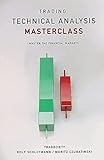
- Language: english
- Book - trading: technical analysis masterclass: master the financial markets
- It is made up of premium quality material.
What is the SEC’s position on predictive analytics?
On July 26, 2023, the SEC announced a proposed approach to conflicts of interest involving predictive data analytics and similar technologies used by broker-dealers and investment advisers. Commissioner Hester Peirce’s statement from that date discusses the proposal’s broad proposed definition of covered technology. These documents establish what was proposed at that time; they do not, by themselves, establish the proposal’s later status or current binding requirements. See the SEC proposal release and Commissioner Peirce’s statement.
The SEC staff’s 2020 report discusses algorithmic trading in U.S. markets. It provides market context, not evidence that a retail stock-prediction product can forecast reliably: SEC staff report on algorithmic trading.
Quick Recap
How should you use a prediction tool?
- Define the decision. Write down whether you need research, a screen, an alert, an estimate, a strategy simulation, or order automation—and the time horizon involved.
- Inspect the output and inputs. Find out what the tool estimates, which data it uses, how current the data is, and which assumptions or user-provided details shape the result.
- Check the evidence. Look for transparent out-of-sample evaluation, multiple market conditions, a relevant baseline, and realistic costs where applicable. If these are missing, do not infer that the tool is proven.
- Review incentives and provider status. Read the fee and cancellation terms, identify compensation or product limitations, and check relevant registrations and disciplinary history if the provider gives advice or executes trades.
- Set limits before acting. Treat the output as one input, not an instruction. If the service offers alerts or automation, understand the controls and how to stop them before enabling them.
Product prices and availability are accurate as of the date/time indicated and are subject to change. Any price and availability information displayed on Amazon at the time of purchase will apply.

