
Recommended Free Tools
Spain’s Don is a floating ocean thermal energy conversion (OTEC) prototype being tested at the PLOCAN site off Telde, Gran Canaria. Its designers aim to show that a floating platform can withstand severe marine conditions while using warm surface water and cold deep water to generate continuous electricity. PLOCAN reported that the hull had been deployed in October 2025; the announcement did not report measured power output or prove that the system can survive a hurricane.
What is Don, and how is it meant to generate power?
Don is the floating support structure for an OTEC demonstrator developed through the EU-funded PLOTEC project. It has a cylindrical hull, an intake pipe for cold deep water, and a dedicated connection point for that pipe. The test site is PLOCAN, the marine research and operations platform off Telde on Gran Canaria.
How ocean thermal conversion works
OTEC uses the temperature difference between warm water near the surface and colder water from depth to drive a thermodynamic cycle that produces electricity. Tropical surface waters remain warm throughout the year, so OTEC is intended to provide steady, round-the-clock generation rather than depend on wind or sunshine at a particular moment. That is the technology’s potential operating profile, not a reported result from Don.
Why make the platform storm-resistant?
Ocean-energy equipment must operate in exposed marine environments, where storms can threaten the platform and its connections. PLOTEC is testing a structure intended to remain operational through storms and hurricanes. A design objective, however, is not evidence of survival: the cited PLOCAN announcement did not document a named hurricane test or report storm-survival results.
Do these 3 things before closing this tab:
1Clear out junk files and repair common Windows errors2Fix the driver behind crashes, sound loss and screen glitches3Repair Windows errors before they cause bigger problems#1 Best Overall

- ✔ GROW 8 COLORFUL SEA CREATURES – Bring undersea animals to life by growing real crystals on paper jellyfish, whales, coral, and more. Kids will love watching crystals sparkle and begin to bloom in just 30 minutes! Crystals will continue to form for up to 8 hours.
- ✔ DIY SCIENCE + CREATIVE ART – Combine chemistry and creativity by coloring each sea creature before growing crystals. The crystal solution mixes with color from the markers to make colorful crystal formations.
- ✔ STEM LEARNING ACTIVITY – Teaches kids about crystal formation and scientific observation in a fun, hands-on format that’s perfect for budding chemists.
- ✔ COMPLETE 32-PIECE KIT – Includes everything you need to grow crystals on 8 creatures: crystal grow solution, stands, trays, markers, and easy instructions. No extra supplies required!
- ✔ DISPLAY OR GIFT YOUR CREATIONS – Once fully grown, kids can proudly display their crystal-covered creatures or give them as one-of-a-kind gifts. A great STEM activity for science fairs or after school fun.
What has been tested, and what remains unproven?
PLOCAN’s announcement of 28 October 2025 said that Don’s cylindrical hull had been deployed. At that point, the cold-water pipe still needed to be installed and connected; completing that connection was described as necessary for the full structural-testing system. The announcement said testing was expected to continue for several months and that performance data were expected in early 2026. That was a forecast, not a published test result.
The announcement did not give measured electricity generation, rated output, capacity factor, uptime, cost per megawatt-hour, or commercial-operation status. It also did not establish that Don had survived a hurricane. Dan Grech, founder and CEO of Global OTEC, described the work as “more than a test of the core technology, which has already been proven to work: it is a demonstration of resilience.” That is Grech’s characterization; it does not substitute for published performance or storm-survival measurements from Don.
Rank #2

- Epic Lab Ocean Discovery Treasure Craft Activity is perfect as a party or playtime craft activity.
- Ocean Explorer - Kids will feel like treasure hunters with this hands-on digging activity. Use the mallet and brushes to find 6 Ocean Creatures and a shell, plastic pearls and a sharks tooth.
- Dig up treaure and make your own jewelry with your findings! Kit includes everything needed to build both a sharktooth and pearl necklace!
- Ocean Kit Includes: 3 fossil digging tools, 6 Ocean Creatures, 24 Assorted Treasures, 2 Treasure Blocks, and Play Mat
- Craft play mat helps protect your table and play surfaces and contain the mess so cleanup is quick and easy!
For island communities, the distinction matters: OTEC’s potential to generate steadily could be useful where energy resilience is important, but the available project announcement establishes a prototype test, not reliable electricity supply during or after a storm.
How Don differs from Spain’s floating-wind projects
Don and floating wind share an offshore setting, but they use different energy sources and hardware. OTEC relies on a warm-to-cold ocean temperature gradient and requires a cold-water intake pipe. Floating wind uses a turbine mounted on a floating foundation and depends on wind conditions. Their headline capacities should not be treated as like-for-like performance comparisons, especially when one project is a prototype and another figure describes a turbine or proposed installation.
Quick wins for a faster PC:
Fix the driver behind crashes, sound loss and screen glitchesFind Drivers →Repair Windows errors before they cause bigger problemsFix Now →Rank #3

- COMPREHENSIVE, CURRICULUM-DRIVEN SCIENCE KIT: This state-of-the-art kit, designed for both classroom and home use, explores how renewable energy is generated and consumed through hands-on activities and projects.
- QUALITY COMPONENTS & MODULAR BUILDING SYSTEM: Durable plastic parts designed for long-term use and experimentation include a solar panel, wind turbine parts, and more, enabling kids to build several models such as a windmill, hand-crank generator, LED buzzer, electric car, and beyond. Easy-to-use system allows for pieces to be swapped, combined, and reconfigured in multiple ways.
- HANDS-ON, PROJECT-BASED LEARNING: Visualize and experience different types of energy generation through the models of real-life devices and machines and better understand the concepts related to alternative energy and sustainable living. Also compatible with micro:bit (sold separately) for ease of digital data collection.
- COMPATIBLE WITH NGSS: The 24 experiments align with several Next Generation Science Standards, cross-cutting concepts, and disciplinary core ideas for easy integration into at-home or classroom curricula.
- CLASSROOM RESOURCES AVAILABLE: In addition to the 32-page illustrated manual, printable worksheets to guide student learning are available online.
| Project or site | Technology and documented status | Reported details |
|---|---|---|
| Don / PLOTEC | Floating OTEC research demonstrator; hull deployment reported by PLOCAN on 28 October 2025. | The announcement said the cold-water pipe remained to be installed and connected. It did not state achieved power output or storm-survival results. |
| DemoSATH | Floating offshore wind. IDAE described it in 2020 as Spain’s first full-scale, grid-connected floating offshore-wind prototype. | IDAE reported a 2 MW turbine on a concrete floating foundation, 30 m wide and 67 m long, planned about two miles off the Basque coast in 85 m of water. |
| SATHScale | EU project scaling the SATH twin-hull floating-wind design, which uses concrete rather than steel and single-point mooring. | The project page records a 2 MW DemoSATH pilot and a two-year monitoring program. |
| WHEEL | Proposed floating-wind prototype by Esteyco. | A CNMC record dated 7 May 2026 concerns proposed authorization for a 6 MW prototype between Las Palmas de Gran Canaria and Telde. It is not an OTEC project. |
Where marine prototypes are tested
Spain has more than one setting for offshore-energy testing. PLOCAN provides the location and marine-operations platform for Don and PLOTEC. BiMEP, the Biscay Marine Energy Platform, offers open-sea, grid-connected testing for wave converters and floating-wind platforms in water depths of 50–90 m. These facilities support different technologies and tests; BiMEP’s stated remit should not be confused with Don’s PLOCAN test.
What Spain’s policy says about marine renewables
Spain’s Ministry for the Ecological Transition and the Demographic Challenge (MITECO) set 2030 objectives of up to 3 GW of offshore wind and up to 60 MW of other marine renewable technologies in its marine-renewables framework dated 24 September 2024. The ministry also identified 19 high-potential ZAPER zones covering 5,000 km², or 0.46% of Spanish waters.
Rank #4

- Join the race to save the planet with this award winning kit that includes 22 activities
- Discover what energy is, how we make it today and what choices await us in the future
- Winner of Dr.Toy's Top Ten Toys Award and a Creative Child Magazine Top Choice
- Includes a 48 page book and materials for your creations
- For ages 8 to 80 - everyone will enjoy this great kit
The framework allows certain innovative installations below 50 MW for wind and below 20 MW for other technologies to use an exceptional route rather than the general competitive procedure. Those thresholds describe a regulatory route, not a guarantee of authorization, construction, or grid connection for a particular prototype.
Independent reader supportYour contribution helps us test, update, and keep practical guides available for everyone.When will Don produce usable electricity?
The PLOCAN announcement said performance data were expected in early 2026, after installation and connection of the cold-water pipe and further testing. It did not give a date for delivering electricity to users or confirm commercial operation. Without a published output figure or operating results, Don’s practical contribution to an island electricity supply cannot yet be assessed from that announcement.
Free tools Windows power users keep installed
One-click scans. No signup required.
Quick Recap
Best Value
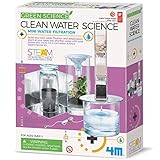
- This personal desalination kit demonstrates the scientific way to extract salt from sea water.
- The kit contains a plastic filter system, active carbon, sand, rock and filter paper.
- Perfect for young science enthusiasts, especially those with an interest in chemistry and the environment.
- Detailed instructions for use and care are included.
- Recommended for ages 8 years and up.
Product prices and availability are accurate as of the date/time indicated and are subject to change. Any price and availability information displayed on Amazon at the time of purchase will apply.

