
SpaceX says a maneuvering satellite operated by another organization was predicted to pass about 9,000 meters from a Starlink satellite in late 2025. The predicted distance changed as the encounter approached: SpaceX says its system still assessed the geometry as a safe miss, with zero collision probability, five hours before closest approach. That was a forecast—not a confirmed impact or a fixed, measured gap.
What SpaceX says about close approaches to Starlink
In a 2026 update about Stargaze, SpaceX reported that Starlink encountered conjunctions with about 650 unique maneuvering third-party satellites during 2026. The company said only about half of those satellites’ operators shared ephemeris—the predicted position and motion data used to assess an orbit.
SpaceX also described a late-2025 encounter in which the predicted separation was about 9,000 meters until five hours before closest approach. The company said the other operator was not sharing ephemeris and that Stargaze assessed the predicted geometry as a safe miss with zero collision probability at that point. The specific event and the 2026 count are company-reported; the available reporting does not independently verify them through an orbit reconstruction or audit.
What does a 9,000-meter prediction mean?
A conjunction is a predicted close approach between two orbital paths. It is not, by itself, evidence that a collision was imminent. The estimated miss distance describes where the two objects are expected to be relative to each other at closest approach, based on the trajectory data available at the time. That estimate can change as new tracking or orbit information arrives.
The Tool Desk
Outbyte Driver Updater FREEScan for outdated or missing drivers - takes under a minuteDriver Scan →Outbyte PC Repair FREERepair Windows errors before they cause bigger problemsFix Now →#1 Best Overall
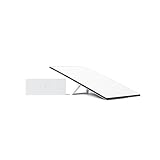
- Starlink provides reliable high-speed, low-latency, internet wherever you live
- Service plan required, activate STARLINK by selecting a service plan that is customized to meet your personal needs
- Select from plans suited for households or travel
- Get online in minutes, set up STARLINK with just 2-steps, plug it in and point at the sky
- STARLINK comes with everything needed to get online including a kickstand, gen 3-router, cables and power supply
A Conjunction Data Message (CDM) records a predicted close approach. Starlink’s technical documentation says CDMs can be generated using trajectory positions and covariance information, which describes uncertainty in those positions. A distance alone therefore does not tell the whole risk story.
- Miss distance is the predicted geometric separation at closest approach.
- Collision probability estimates the chance of an impact using the predicted geometry and uncertainty information.
- Covariance matters: Starlink says a CDM can have a null collision-probability field if required covariance data are missing or the calculation fails. A null value is not the same as a calculated probability of zero.
In the late-2025 example, SpaceX characterized its system’s result as zero collision probability. That company-reported assessment is distinct from a case in which a probability cannot be calculated.
Why there is no universal “safe distance”
Operators make maneuver decisions using predicted geometry, uncertainty, available tracking data, and their own alert and response policies. A conjunction alert can be triggered at different thresholds; the term does not mean every flagged encounter has the same risk.
NASA’s March 2025 account of its Starling 1.5 work says operators may request alerts at probability levels ranging from 1 in 10,000 to 1 in 1,000,000 or lower. Those are examples of operator notification thresholds, not a single rule applied across the satellite industry.
Starlink’s Progress 2024 report says its screening system commands a maneuver when collision probability exceeds 1e-6, or 1 in 1 million. Starlink describes that threshold as more than 1,000 times more conservative than the standard used by other operators. That comparison is Starlink’s characterization; it should not be read as proof that every other operator follows one shared standard.
How SpaceX’s reported maneuver thresholds changed
The thresholds reported in regulatory filings are tied to different dates and should not be treated as one timeless policy.
Rank #2

- Gen 3 Satellite Dish: Third-generation antenna delivers a stronger, more stable signal and faster performance.
- Wi-Fi 6 Router: Modern router technology supports faster speeds, increased device capacity, and better efficiency.
- Extra 150FT Cable Included: Extended reach for more flexible installation in large spaces or hard-to-access locations.
- High-Speed, Low-Latency Internet: Stream HD content, video conference, or work remotely with confidence.
- Ideal for Rural and Remote Areas: Perfect for homes, cabins, RVs, boats, and off-grid setups where wired internet isn’t available.
| Source and date | Reported threshold or requirement | What it establishes |
|---|---|---|
| FCC 22-91, 2022 | 0.00001, or 1 in 100,000 | An earlier SpaceX description of its Gen2 coordination practices and stated trigger. |
| Starlink Progress 2024 report | 1e-6, or 1 in 1 million | Starlink’s reported maneuver trigger for its screening system. |
| FCC DA 24-1193, 2024 | 1 in 1 million | The FCC’s record of SpaceX’s reported maneuver threshold. |
The filings describe SpaceX’s reported practices at those points in time; they do not establish that all operators use the same thresholds or that every close approach results in a maneuver.
Independent reader supportYour contribution helps us test, update, and keep practical guides available for everyone.How operators coordinate who moves
Assessing a conjunction is only part of avoiding a collision. Operators also need to exchange trajectory information, agree on which spacecraft will maneuver, and act on a timeline that can be short for missions requiring rapid adjustments.
Recommended Free Tools
NASA’s Starling 1.5 experiment offers a documented example of coordination with Starlink. NASA says its spacecraft used SpaceX’s screening service, accepted responsibility for the maneuver, and autonomously planned and executed it to resolve a close approach with a Starlink satellite. NASA Ames project manager Nathan Benz said: “For this experiment, NASA’s Starling accepted responsibility to move using the screening service, successfully tested our system’s performance, then autonomously planned and executed the maneuver for the NASA Starling satellite, resolving a close approach with a Starlink satellite.”
Benz also described the usual arrangement when another operator shares trajectory information: “Usually, SpaceX takes the responsibility to move out of the way when another operator shares their predicted trajectory information.” NASA program officer Lauri Newman said: “A fully automated system that is flexible and adaptable between satellite constellations is ideal for an environment of multiple satellite operators, all of whom have differing criteria for mitigating collision risks.” These statements concern coordination practices and the Starling experiment, not the separately reported late-2025 encounter.
What the FCC reporting requirement does—and does not—show
FCC DA 24-1193 requires SpaceX to submit semiannual reports for its Gen2 system covering conjunction events, satellites screened from deployment, reentries, and disposal failures. This is a regulatory reporting requirement; it does not mean the FCC publishes every conjunction event in real time or that the reported 2026 count is an independent inventory.
Quick Recap
Product prices and availability are accurate as of the date/time indicated and are subject to change. Any price and availability information displayed on Amazon at the time of purchase will apply.
What’s actually slowing this PC down?
Pick the symptom - the matching free tool is one click away.

