
SpaceX is reportedly considering making fiber-optic equipment for Starlink and potentially its data-center business, but the company has not confirmed the plan. The report describes a possible effort to bring another part of its supply chain in-house; SpaceX’s June 2026 prospectus provides context about its scale and vertical integration, not confirmation of a cable factory or procurement change.
What SpaceX is reportedly considering
On October 5, 2026, Wccftech reported that SpaceX was exploring in-house fiber-optic equipment for Starlink and potentially data centers, as well as alternate sourcing for optical transceivers amid U.S.–China supply concerns. The article attributes these details to an expert interview or post on WK Substack. Wccftech’s links to the underlying X posts were inaccessible, and no direct SpaceX statement confirming the idea was identified. Treat the proposal and its reported rationale as unconfirmed, attributed reporting—not announced company policy. Wccftech’s report
According to Wccftech’s account of the expert’s claims, Corning, Hengtong, and Yangtze Optical Fiber and Cable (YOFC) are current sources, with Hengtong and YOFC described as Chinese manufacturers of fiber and transceivers. The reviewed sources do not independently establish SpaceX contracts, supplier relationships, or procurement volumes, so these names should not be read as verified vendors.
What the prospectus confirms—and what it does not
SpaceX’s June 5, 2026 EU prospectus describes Starlink as a large connectivity business and vertical integration as part of the company’s operating approach. As of March 31, 2026, SpaceX reported approximately 9,600 Starlink broadband and mobile satellites and approximately 10.3 million subscribers across 164 countries, territories, and other markets. It also reported a median residential download speed of 225 Mbps during peak hours and median latency of approximately 25 milliseconds. These are company-reported figures, not independent measurements. SpaceX’s June 2026 prospectus
Recommended Free Tools
#1 Best Overall

- Function: can measure 8 standdard wavelengths 850/980/1300/1310/1490/ 1550/1625/1650nm , test range: -70dBm~+6dBm, Integrated OPM, VFL, and RJ45 Functions.
- Support lighting,Support automatic shutdown,Support backlight selection, Support wavelenghth memory function,Support user calibration.
- Support FC/SC/ST universal interface,Support RJ45 testing,Support simultaneous disply of linear mW and non-linear index dBm.
- Integrated OPM, VFL, and RJ45 Functions.Test precision, fine workmanship, easy to carry,completely replace the optical power meter and red pen 2 products. Come with English manual
- Notice:The product uses two pcs AA dry batteries, but they are not included in the packaging . Lifetime Friendly Customer Service,if have problem,pls contact us.
The prospectus also says SpaceX expected to begin deploying next-generation Starlink V3 satellites in the second half of 2026. The company describes each V3 satellite as designed for one terabit per second of downlink capacity and says a Starship launch could carry up to 60 V3 satellites. Those are stated plans and design claims; the prospectus does not establish that deployment or capacity has since materialized.
For AI, the prospectus describes compute infrastructure beginning on Earth, with a goal of extending to space. It does not confirm the reported fiber-equipment project or the data-center capacity figures in Wccftech’s account. Nor does SpaceX’s description of Starlink offering “fiber-like” download speeds mean the satellite service uses the specific terrestrial cables discussed in the report.
Rank #2

- 【Multi Testers Tool Sets】This fiber optic termination tool kit includes OPM, visual fault locator, fiber cleaning pen, fiber cleaner cassette, fiber cleaver, fiber stripper, Kevlar scissors, FC to LC adapter, cleaning core, liquid dispenser, fiber cleaning swabs, fiber cleaner wipes, fiber optic tool bag. This fiber optic tool kit is used for fiber stripping, cleaving, cleaning and testing. It provides the fiber optic tools you need to assemble mechanical splices and delivers greater work efficiency.
- 【Fiber Cleaning Kit】1.25mm & 2.5mm fiber optic cleaner pen & fiber optic cleaning box are used to clean LC/MU/SC/FC/ST/MTP/MPO/D4/DIN ferrule end face. The fiber cleaner can effectively clean stains and prevent dust from adhering to the ferrule again after cleaning.
- 【Visual Fault Locator Fiber Optic】Our fiber tester can intuitively and accurately detect and locate fiber breaks, poor connections, bends or cracks. It is designed for SC, FC, LC, ST interfaces both in circle and square shape of different fiber optic cables. The fiber optic tester has strong output power.
- 【Fiber Optic Meter with FC to LC Adapter】The fiber optic cable tester can measure 10 standdard wavelengths 850/980/1270/1300/1310/1490/1550/1577/1625/1650nm with a test range of -70dBm~+10dBm. The measurement error is less than ±0.2dB. Support simultaneous display of linear mW and nonlinear index dBm.
- 【Fiber Optic Cleaver】3-in-1 high precision fiber cleaver is used to cut bare fiber (0.25mm), pigtail (0.9mm) and leather cable. It has 16 cutting points, the cutting angle is about 0.5 degree, and it can cut about 36000 times.
How fiber cable and optical transceivers differ
Fiber-optic cable carries information as light through optical fiber. An optical transceiver is a separate component: it converts electrical signals into optical signals for transmission and converts received light back into electrical signals. Both can be part of communications infrastructure, but a cable and a transceiver are not interchangeable items.
Transceivers also have to work with the relevant network equipment. A separate industry report notes that modules require testing against network switches, digital signal processors (DSPs), and the wider network architecture. That makes compatibility and qualification important: producing a module is not simply a matter of manufacturing a generic cable. Wccftech’s optical-component supply-chain report
What’s actually slowing this PC down?
Pick the symptom - the matching free tool is one click away.
Rank #3

- 3 HOLE STRIPPER: 3 hole fiber optic stripper performs all common fiber stripping functions
- 250 MICRON STRIPPING: Strips the outside fiber jacket from the interior buffer coating and 250 micron coating all the way down to the glass fiber
- SAFETY LOCK: The safety lock allows the tool to be easily stored when not in use
- HIGH CARBON STEEL: The tool is made of strong high carbon steel and handle is made of TPR (Thermoplastic Rubber) for longer life and greater comfort
- FIBER PROTECTION: Angled jaw guides fiber into the 3rd hole to prevent accidental cutting of the fiber
Why bringing equipment in-house could matter
If the reported idea is accurate, it would fit a broader supply-control strategy, but the sources do not establish SpaceX’s specific motivation for considering it. The practical trade-offs are familiar: in-house production may give a company more control over supply, while demanding investment, manufacturing scale, and the ability to meet technical specifications. For transceivers in particular, system-level testing and compatibility add work beyond making the component itself.
- Scale and cost: An internal operation would need enough production volume and manufacturing capability to justify its cost.
- Supply control: Alternative sourcing or internal production could reduce exposure to supplier constraints or geopolitical and export restrictions, but no such outcome is confirmed here.
- Technical qualification: Components must function within the intended network; transceivers require compatibility testing with switches, DSPs, and network architecture.
- Execution: A proposed facility, a target capacity, and operating production are different stages. The reported cable idea is not evidence that equipment is already being manufactured.
Wccftech’s August 4, 2026 report names Coherent and Lumentum as U.S. optical-component manufacturers that could benefit from a possible industry supply-chain shift. It does not identify either company as a SpaceX supplier, and it does not establish that a regulatory change or commercial shift has occurred.
Rank #4
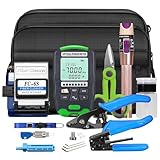
- 【Integrated professional solution for fiber optic work】This comprehensive kit includes the basic tools required for fiber optic installation, maintenance, and repair. From high-precision cutting of fiber optic cutters to precise signal testing of optical power meters and fiber testing pens, this equipment enables technicians to efficiently and professionally handle most tasks.
- 【Precision coring tools: pliers, power meter, testing pen】The core of this kit consists of key instruments: a mini optical power meter for measuring signal loss and intensity, a fiber optic test pen for identifying breaks and bends, and a fiber optic cutter for vertical end face cutting to ensure performance and low insertion loss.
- 【Portable, orderly, suitable for any work site】Place your tools in an orderly manner in the accompanying tote bag. The compact and portable design allows you to easily transport everything you need to data centers, telecom cabinets, or any remote installation location, saving time and ensuring you are always ready.
- 【Durable and professional preparation tools】Fiber optic cable strippers, wire strippers, and sturdy Kevlar scissors make preparing fiber optic cables easy. These tools can remove various coatings and strength components, such as aramid yarn, without damaging the internal fiber core.
- 【Ideal choice for technicians and network installers】This kit is an essential resource for telecommunications engineers, network installers, and IT professionals engaged in FTTH (Fiber to the Home), LAN/WAN networks, and general fiber splicing work. This is an economically efficient method that can equip oneself with essential tools to achieve reliable and efficient work.
How to read the reported data-center figures
Wccftech also cites a reported 10 GW data-center buildout and an expert estimate that 60% would serve SpaceX, xAI, and Tesla, with the remainder available to external AI companies. These are attributed figures from the report, not operational capacity figures confirmed in the prospectus. They should be understood as reported plans or estimates—not as proof that 10 GW is deployed or that the stated allocation is settled.
The distinction matters because the fiber-equipment story connects several different things: a reported manufacturing consideration, a broader AI infrastructure ambition in SpaceX’s prospectus, and capacity numbers attributed to an outside expert. The prospectus supports the existence of the company’s stated ambition; it does not independently validate the reported manufacturing proposal, supplier list, or capacity allocation.
Quick wins for a faster PC:
Repair Windows errors before they cause bigger problemsFix Now →Fix the driver behind crashes, sound loss and screen glitchesFind Drivers →Clear out junk files and repair common Windows errorsFree Scan →Quick Recap
Best Value

- Komshine Light Source With 2.5mm universal interface FC SC Adaptor; Typical output power: -5dB; Output Stability:±0.05dB/15mins; ±0.1dB
- KLS-35-MS Fiber Optic Light Source with Wavelengths : 850/1300nm+1310nm/1550nm Comes With LED backlight Function
- 7 calibrated wavelengths optic fiber power meter KomShine KPM-35 High Precision FTTH fiber cable test tool with SC Connector (Wavelengths: 850/980/1300/1310/1490/1550/1625nm)
- Fiber Optic Power Meter Measurement Range:-70+6dBm; Comes with Certificate of Qualified; Self Calibration Provided
- Waterproof key suitable for all kinds of outdoor environments; Silicone jacket, anti-drop 2m
Product prices and availability are accurate as of the date/time indicated and are subject to change. Any price and availability information displayed on Amazon at the time of purchase will apply.

