
To stop an AI agent from calling a tool that does not exist, resolve every model-emitted tool name by exact lookup in the active, application-controlled registry. Reject unknown names without dispatching them; for a match, validate arguments against that tool’s contract, then check authorization and any required approval before execution.
This is deterministic resolution, not tool selection. Selection is the model’s choice of which available capability might help. Resolution is the application’s check that the requested name binds to a real tool in the registry for this request, and that the call satisfies that tool’s declared interface. Selection can be poor even when it picks a real tool; resolution prevents an unregistered or incompatible call from reaching a handler.
What deterministic name resolution does—and does not do
A tool call is a structured request from the model for the application to perform an action. The application, not the model, runs the implementation and returns a result associated with that call. In OpenAI’s documented flow, for example, tool output refers to the initiating call with a call_id. The call should therefore be treated as untrusted input crossing an application boundary, not as permission to execute a function merely because it looks plausible. OpenAI’s function-calling guide describes this flow.
A reliable boundary separates three questions:
- Existence: Does the emitted name resolve to exactly one tool in the active registry?
- Contract: Do the arguments parse and satisfy that tool’s schema or signature?
- Permission: May this caller perform this operation on this target resource now?
The first two checks establish that a call maps to a known interface. They do not establish that the request is semantically sensible or authorized. A valid call can still be harmful, inappropriate, or aimed at a resource the user cannot access.
Do these 3 things before closing this tab:
1Scan for outdated or missing drivers - takes under a minute2Repair Windows errors before they cause bigger problems3Fix the driver behind crashes, sound loss and screen glitches#1 Best Overall

- Valued Carpenter Pencil Set: You will get 2 pcs solid carpenter pencils with 26 piece 2.8 mm refills, 1 replaceable sharpener, 1 plastic storage box.The complete carpenter pencils combination allows you to finish your work faster and more easily
- Deep Hole Marker Pencil: The deep-hole construction pencils adopts 45mm elongated tip design, which is more convenient to mark in the small hole or in other tight areas that other carpenter markers cannot reach
- Carpenter Pencils with Sharpener: The sharpener is screwed into the top of the work pencil, which won't get lost either. Built-in pencil sharpener that keep the lead with pointed and smooth to Improves line of sight in fine work
- Stronger Solid Lead: This work pencil is matched with a 2.8 mm thick lead , which is much thicker and stronger during the drawing process of construction work, it will not break or damage easily
- Marks on Various Surfaces: 3 colors solid construction pencil can marks on various surfaces,such as metal, plastic, wood, paper etc. Ideals for woodworkers, contractors, craftsmen, builders, merchants and masons
How to implement a deterministic resolver
1. Bind calls to a canonical, active registry
Maintain an application-controlled registry keyed by canonical tool name. Each entry should bind the public name presented to the model to one implementation, one input contract, and an explicit version. Record which registry snapshot was supplied for the current request or turn; otherwise, a correct lookup against a stale or unrelated catalog can still dispatch the wrong implementation.
This registry-and-signature arrangement is a practical architecture, not a format mandated by every tool-calling protocol. The essential property is that the resolver uses the same active definitions the application exposed for the call, rather than inferring a function from the name or searching a broader catalog at execution time.
2. Resolve the name exactly; fail closed
For every returned call, look up its name in that active registry. If there is no match, do not dispatch anything. Return a bounded error the model can use to recover, or ask it to choose from the tools actually available. Do not autocorrect a misspelling to the “closest” handler: a fuzzy match can silently turn an invalid request into a real side effect.
Rank #2

- Ergonomically Designed: Work in tight areas with a compact design that gets into tough spots
- Compact and Lightweight: Both tools are designed to fit into difficult to reach spaces. The 1/4" impact driver has a length of 5.55 in. and weighs just 2.8 lbs, while the 1/2" drill/driver measures only 7.5 in. and weighs 3.6 lbs
- Both the DEWALT impact driver and electric drill driver feature integrated LED work lights with a convenient 20-second delay, ensuring enhanced visibility in dimly lit or challenging work areas
- One-Handed Loading - Keep one hand free with a 1/4 in. hex chuck that accepts 1 in. bit tips
- Power drill cordless with 1/2" single sleeve ratcheting chuck provides tight bit gripping strength, making bit changes faster and more secure
If backward compatibility requires aliases, declare each alias explicitly and map it to exactly one canonical entry. Reject ambiguous aliases. The reviewed platform documentation does not establish a cross-platform alias convention, so alias behavior should be an application policy rather than an assumed provider feature. The closed-world approach of checking registry membership is also the central proposal in the 2026 preprint “Closed-World Resolution Against Tool Hallucination in LLM Agents.”
Quick wins for a faster PC:
Scan for outdated or missing drivers - takes under a minuteDriver Scan →Clear out junk files and repair common Windows errorsFree Scan →Fix the driver behind crashes, sound loss and screen glitchesFind Drivers →3. Validate arguments against the resolved tool
Only after resolving the name should the application parse the argument payload and validate it against that entry’s contract. Reject malformed JSON, missing required properties, incorrect types, and fields the contract does not allow. Pass the validated representation—not an unchecked raw payload—to the handler.
For example, suppose the active registry defines get_weather with a required string field location. A call named get_weathr fails existence checking, so no handler runs. A call named get_weather with no location, or with an undeclared field, fails contract validation. A well-formed call can still fail the permission check if the user is not allowed to query that location. These are distinct gates, not interchangeable validation errors.
Rank #3

- 【Great Compatibility】This Katerk 1/4 inch hex shank bit holder is specifically designed for 1/4 inch hex shank drill bits. It's compatible with most 1/4 fast hex handles, hex sockets, various electric screwdrivers, and handheld screwdrivers. The bit holder makes it a valuable addition for any handyman.
- 【Secure and Safe】Built with a secure backup nut design, each drill bit holder securely locks onto your bits, ensuring they stay firmly in place. Additionally, our bit holder incorporates a high-quality steel ball rolling design that holds up to several kilograms of weight, ensuring your various drill bits don't fall off.
- 【Easy One-Handed Operation】The bit holder for impact driver allows you to change bits single-handedly, simplifying your workflow. Its multi-color design further allows for quick identification of the drill bit you need.
- 【Compact and Convenient】Thanks to its compact size, this 1/4 inch bit holder is easy to carry around. The bit holder allows for easy attachment to various tools, making this a convenient addition to your construction accessories. The Katerk bit holder is cast from high-quality alloy material, promising a long product lifespan. Despite its rugged strength, the bit holder remains lightweight, making it portable.
- 【Cool Christmas Gift For Men Stocking Stuffers】 This screwdriver bit holder, driver bit holder, impact bit holder, can be given as a gift to your loved one, especially for anyone involved in construction or electrical work. It's a must-have for stocking stuffers for men and women, tools gifts for dad, tech gadgets for men, gifts for dad, gifts for him, gifts for husband, gifts for boyfriend, cool gadgets for men, and cool gifts for dad.
4. Authorize the user, target, and operation before effects
After resolution and schema validation, enforce identity, tenant, target-resource, and operation-level permissions in the handler or a trusted guardrail. Apply least-privilege credentials, require human approval where the product’s policy calls for it, and avoid returning secrets or unnecessary data to the model.
Microsoft’s Foundry guidance puts the security boundary plainly: “Treat tool arguments and tool outputs as untrusted input.” Validate and sanitize values and account for unintended side effects. The OpenAI Agents SDK also cautions that request-scoped tool visibility does not substitute for authorization based on arguments or the target resource; enforce those checks inside execution or guardrails. See Microsoft Foundry’s function-calling guidance and the OpenAI Agents SDK tools guide.
PC Slower Than It Used to Be?
A free scan shows the junk files, broken settings and background clutter dragging Windows down - then fixes them in one click.Free scan · Windows 10 & 11Crashes, No Sound, or Screen Glitches?
Random freezes, missing sound and display glitches usually trace back to one bad driver. Find and replace yours safely.Free scan · under a minute5. Correlate execution with the initiating call
Track the call identifier, resolved canonical name, registry or schema version, validation result, authorization result, approval outcome when relevant, and handler result. Return output associated with the initiating call identifier wherever the platform requires it. Both OpenAI’s tool-flow documentation and Microsoft’s example describe connecting the tool result to the preceding call; Microsoft specifically instructs developers to replace the response placeholder with that earlier response’s call_id.
Rank #4

- Long Nib and Deep Hole Marker: Our mechanical carpenter pencil with 45mm nib is designed for easy marking of deep holes or narrow areas. These construction pencils are the great choice for woodworking tools, construction tools, carpenter tools, contractor tools, wood carpentry tools and architect tools
- Extra Refills in 2 Colors for Versatile Marking: The construction mechanical pencil comes with 12 extra 2.8mm refills, including 6 red and 6 black refills. The black refill is suitable for light surfaces, while the red wax is perfect for dark surfaces. Our carpenter mechanical pencil makes sure that you'll have an ample supply for extended use
- Built-in Sharpener: Our construction pencil comes with a built-in sharpener to ensure the mechanical pencil tip is always sharp and ready for use. Never buy an extra pencil sharpener again. A great tool for any woodworker pencil, contractor pencils. The refill can easily be extended or retracted with a simple click of the pencils mechanical, allowing you to work more efficiently and accurately
- Portable Clip Design: Our deep hole construction pencil features a portable clip design, easy to carry and attach to your pocket or tool box, so that you can keep the carpenter pencils mechanical close at hand, making it a convenient tool to have on the go. Great gifts choice for carpenters
- Stronger Pencil Lead: The black refills are made of lead, sturdy and smooth. The red refills are made of wax, clear and light. These marking pencils are much thicker and stronger than normal pencils during the marking process of construction work, suitable for various surfaces, such as glasses, metal, boards, floors, walls, furniture, etc. The written marks can be easily wiped with a wet paper towel when needed
6. Report failures by class
Separate errors in logs and metrics so operators can distinguish a model or integration issue from an access decision or handler outage. Give the model only the bounded information needed to recover; do not reveal secrets or internal registry details.
- Unknown tool name
- Malformed argument encoding
- Schema or signature mismatch
- Authorization denied
- Approval required or denied
- Timeout or handler failure
- Successful execution
Microsoft’s troubleshooting guidance associates missing tools with an absent agent definition or poor naming, invalid JSON with schema mismatch or incorrect model output, and wrong parameters with ambiguous tool descriptions. Those are useful diagnostic leads, not replacements for the application-side checks above.
Independent reader supportYour contribution helps us test, update, and keep practical guides available for everyone.Where provider strict schemas fit
Provider-side structured-output enforcement can reduce malformed calls, but it does not replace the application’s binding of a returned name to its registered implementation or its permission checks. Schema behavior varies by provider, API surface, tool type, and configuration; confirm the exact behavior for the model and endpoint in use.
Best Value
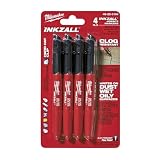
- Milwaukee Ink all Fine Point Marker, Black, 4 Per Pack
- 4 per pack Features Clog Resistant Marker Tip Writes through Dusty, Wet and Oily Surfaces Durable Marker Tip for Writing on Concrete, OSB and Rough Surfaces
- Clog resistant tip writes on dusty, wet and oily surfaces and is optimized for rough surfaces such as OSB, cinderblock and concrete
- Hard hat clip- attaches for easy access
- Quick dry time with reduced smearing and marking
OpenAI function calling
OpenAI recommends enabling strict mode for function calling. In its documented strict mode, each object must set additionalProperties to false, and all properties must be marked required; nullable types can represent values that are optional in practice. The guide says Responses attempts strict normalization when strict is omitted and falls back to best-effort non-strict calling if the schema cannot be made compatible. Chat Completions remains non-strict by default. These are documented platform behaviors, not universal rules for other APIs; check the current OpenAI function-calling documentation against your API surface and request configuration.
Anthropic tool validation
Anthropic’s tool reference documents a strict property for validating tool names and inputs for supported tool types, while listing exceptions for MCP, computer, and browser toolsets. Do not assume the same setting or guarantee applies to every tool category. Check the Anthropic tool reference for the exact type and API behavior you use.
SDK validation is configuration-specific
The OpenAI Agents SDK documents that supplying validation schemas enables strict mode by default and that its strict: false option enables fuzzy matching. That is an SDK-specific option, not a general function-calling standard. If using it, make a deliberate decision about whether fuzzy matching is appropriate at that boundary; it should not be mistaken for deterministic exact resolution.
How the controls compare
| Control | What it checks or provides | What to verify | What it does not guarantee |
|---|---|---|---|
| Application closed-world registry lookup | Whether the emitted name maps to an active registered tool | Canonical names, registry snapshot/version, aliases, unknown-name behavior, audit trail | That an existing call is authorized or semantically correct |
| Provider strict tool schema | Whether a call conforms to the declared name/input contract where supported | API surface, supported tool types and schema subset, strict default, rejection or fallback behavior | Uniform behavior across platforms, or resource-level authorization |
| SDK validation and guardrails | Input/output checks around handler execution | Validation timing, error shape, resource-aware authorization, approval support | Authorization merely because a tool was exposed for a request |
| Central agent or tool registry | Discovery and governance of registered components | Runtime coverage, automatic versus manual registration, policy integration, versioning | That every runtime call is authorized or uses a current definition |
| Deterministic schema compilation | How tool contracts are represented to a model | Model and catalog size, token use, accuracy under the benchmark conditions | Name existence or authorization by itself |
When comparing implementations, examine the source of truth for active tools, name and alias rules, snapshot consistency, schema coverage, unknown-name handling, resource-level security, approval and side-effect controls, recovery behavior, call/result correlation, telemetry, and provider dependence. A registry catalog may help govern components without automatically enforcing every runtime decision. Google Cloud’s Agent Registry documentation, for example, distinguishes agents, MCP servers, endpoints, and skills, and describes automatic and manual registration for different resources; see its Agent Registry data model.
Free tools Windows power users keep installed
One-click scans. No signup required.
What tool-hallucination studies establish
The 2026 preprint “Closed-World Resolution Against Tool Hallucination in LLM Agents” proposes a training-free “Resolution Rung”: check registry membership and then check the signature before downstream gating. It reports 322 tool hallucinations across ten hosted models and two invocation surfaces, and 154 on its live MCP surface. These are the authors’ benchmark counts, not estimates of how often production agents hallucinate. The paper also describes a residual class in which borrowed arguments are indistinguishable from a valid call under schema checking. Consequently, a matching name and valid shape cannot prove intent or permission.
A separate 2026 preprint, “TSCG: Deterministic Tool-Schema Compilation for Agentic LLM Deployments,” studies transforming JSON schemas into structured text. Its abstract reports benchmark improvements and token savings, but schema representation is a different problem from checking that an emitted name exists in the application registry. Treat its reported results as author-reported benchmark findings, not as independent confirmation that schema compilation resolves hallucinated names.
Quick Recap
Product prices and availability are accurate as of the date/time indicated and are subject to change. Any price and availability information displayed on Amazon at the time of purchase will apply.

