
Windows Errors? Fix Them Before They Spread
Repair common Windows errors and clear accumulated junk for a smoother, more stable PC - no reinstall needed.Free scan · no reinstallOutdated Drivers Are Slowing You Down
One free scan finds every outdated or missing driver and matches the right update for your exact hardware.Free scan · exact hardware matchELN workflow is an in-house collection of Claude Code plugins that its author says turns development standards into skills and workflow gates. In a September 2026 article, Masayoshi Uehara reported that the collection contained 165 skills. The number and capabilities are his account, not an independently audited catalog.
What ELN workflow is meant to do
In “Distribute discipline as skills, not documents — Introducing 165 skills of the ELN workflow,” Masayoshi Uehara, associated with EarthLink Network Co., Ltd., describes a system for applying development rules across projects. Rather than relying only on written standards, the approach packages procedures as Claude Code skills and places checks at points where work would otherwise move forward.
| # | Preview | Product | Price | |
|---|---|---|---|---|
| 1 |

|
NauticEd Coastal Navigation Training Pack | $42.00 | Buy on Amazon |
| 2 |

|
A Navigation Compendium | $21.94 | Buy on Amazon |
| 3 |

|
Behavior and Handling of Ships | $24.00 | Buy on Amazon |
| 4 |

|
Stability and Trim for the Ship’s Officer | $32.95 | Buy on Amazon |
| 5 |
|
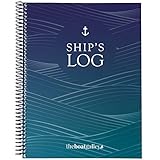
The Boat Galley Ship's Log: 5 Logs in 1 Book - Boat Travel and Maintenance Logbook, Great Boating... | $41.97 | Buy on Amazon |
The intended distinction is practical: a document describes a rule, while a workflow gate is designed to require a check before progression. Uehara’s rationale is that standards are more likely to be followed when compliance is built into the procedure. That is his argument, not a demonstrated general result.
What the reported 165 skills cover
Uehara reported 165 skills in the collection as of September 2026. He lists automatic numbering of specification processes, test-driven development enforcement, quality gates, review support, evidence-based troubleshooting, and usage-status visualization among its features. These are capabilities described in his article; they have not been independently audited.
Quick wins for a faster PC:
Clear out junk files and repair common Windows errorsFree Scan →Scan for outdated or missing drivers - takes under a minuteDriver Scan →Repair Windows errors before they cause bigger problemsFix Now →#1 Best Overall
- Long Island Sound Training Chart # 12354
- Compass Dividers
- Breton Plotter (rotating protractor)
The article names several examples to show how a rule might become operational:
eln-verify-before-claim: checks a completion claim against evidence such as measurement logs or test outputs, according to the author.eln-report-guard: rejects completion reports that rely on weak proxy evidence such as “the build passed” or “unit tests passed,” and promotes real-device observation in the author’s description.answer-the-question-first: directs the AI to answer a direct question—such as “Are you done?”—in its first sentence.
The point of these examples is not that a skill name alone guarantees reliable behavior. It is that the author describes rules for reporting, evidence, and communication as explicit procedures rather than leaving them solely in general documentation.
Rank #2
How a gate differs from a written rule
A written rule can be consulted, but whether it affects a particular task depends on how people use it. A gate attempts to make the check part of the task sequence. Uehara summarizes his position this way: “Development standards are not maintained through documents. They are only followed when they are integrated into procedures in a way that prevents you from moving forward unless you comply.” This wording is from the article’s AI-translated English rendering; the page cautions that nuances may differ.
For a team evaluating this approach, the useful comparison is not simply “skills versus documents.” It is whether the procedure answers questions that documentation alone may leave open:
What’s actually slowing this PC down?
Pick the symptom - the matching free tool is one click away.
Rank #3
- Used Book in Good Condition
- Is compliance optional or blocking? Does the process stop when a required check fails, or merely remind someone of the rule?
- What evidence satisfies the gate? Is there a concrete output—such as a test result or measurement log—or can a proxy statement stand in for it?
- How are exceptions handled? A gate needs a clear route for legitimate exceptions so that blocking does not become an untracked workaround.
- Does the rule apply consistently across projects? Shared skills may help distribute a procedure, but teams still need to know which skills apply and whether projects use the same versions.
- How is the catalog kept aligned with reality? A listed rule is useful only if the corresponding skill exists, is current, and is actually invoked in the relevant workflow.
These are evaluation questions, not outcomes established by the ELN article. The article discusses blocking gates, evidence, cross-project distribution, and automatic generation of a rule list, but does not provide an independent assessment of how consistently those mechanisms work.
Why evidence matters in AI-assisted development
Uehara presents the verification of AI completion claims as central to quality: “In development with AI, the ‘gate for verifying AI declarations’ becomes the core of quality.” This is also from the article’s AI-translated English text, whose nuances may differ.
Rank #4
The practical concern is that a confident status report is not itself proof that the requested work is complete. The article’s example rule is: “Say it is complete only after the tests pass.” That is an illustrative completion gate, not an independently established formal standard. More generally, a team can make a completion rule actionable by identifying the claim being made, the evidence that supports it, and the point at which that evidence must be checked.
Where to start if you want to apply the idea
The article recommends beginning with evidence requirements in completion reports, then looking at debugging, reviews, and cost checks. A measured rollout can turn that advice into a small set of decisions:
Free tools Windows power users keep installed
One-click scans. No signup required.
Best Value
- Five Logbooks In One: Ship’s Log, Cruising Log, Vessel Inventory, Fluid Changes & Fills, Maintenance, Repairs & Upgrades plus a Quick Reference section in an 8" x 10" book - large enough to comfortably write in but still small enough to store conveniently
- Cover every system on board and fulfill navigation, safety, and legal requirements with information organized in 6 sections with 41 subsections; no other logbooks needed; each piece of equipment has its own section so that potential problems are easy to spot
- Pre-departure and change-of-watch checklists to catch problems before they occur
- Long-lasting with a durable waterproof cover that resists tearing off; 164 pages allow for lots of boat use and entries; interior pages are not waterproof
- Find and Record Info Easily: Tabbed sections/subsections let you quickly find the precise information you need; data recording is simple with well-designed pages, heavy paper and lay-flat spiral binding
- Choose a recurring decision. Start with a point where an unsupported claim or missed check has meaningful consequences, such as reporting a task complete.
- Define acceptable evidence. Specify what output is sufficient for the claim. Avoid treating a general status such as “the build passed” as proof when the requirement calls for a more direct observation.
- Place the check in the workflow. Decide when the evidence must be produced and whether a failed or missing check blocks progression.
- Document exceptions and ownership. Make clear who can approve an exception, how it is recorded, and who maintains the rule or skill.
- Review use and outcomes. Check whether the procedure is being invoked and whether it is producing useful evidence. The ELN article recommends this kind of approach but supplies no controlled outcome data showing that it improves quality.
What the 165-skill claim does—and does not—establish
The September 2026 count is a figure reported by Uehara for an in-house collection. His article does not provide an independent catalog audit, a controlled comparison with document-only standards, reproducible measurements of software-quality improvement, or enough detail to verify how many incidents the workflow prevented. It is therefore best read as a description of the author’s system and rationale, not proof that a 165-skill collection will produce a particular result for another team.
Likewise, the article’s feature list and named skill examples describe what the author says the workflow includes; they do not establish compatibility, current access terms, or independently tested behavior. Teams considering a similar method should assess their own rules, evidence requirements, exceptions, and maintenance process rather than infer effectiveness from the reported count.
Quick Recap
Product prices and availability are accurate as of the date/time indicated and are subject to change. Any price and availability information displayed on Amazon at the time of purchase will apply.

