
The Tool Desk
Outbyte Driver Updater FREEFix the driver behind crashes, sound loss and screen glitchesFind Drivers →Outbyte PC Repair FREEClear out junk files and repair common Windows errorsFree Scan →SiFive’s January 15, 2026 announcement is a roadmap and integration commitment: the RISC-V designer plans to combine customizable CPUs with NVIDIA GPUs and accelerators through NVLink Fusion. It expands CPU choice inside NVIDIA’s AI ecosystem, but it does not announce a generally available SiFive NVLink server.
What SiFive announced
SiFive said it is adopting and integrating NVIDIA NVLink Fusion into its high-performance, data-center-class solutions. The proposed architecture gives SiFive-based CPUs a coherent, high-bandwidth connection to NVIDIA GPUs and other accelerators, with the goals of reducing latency, improving data sharing and raising system utilization.
SiFive president and CEO Patrick Little described the combination as an open, customizable CPU platform that can pair with NVIDIA AI infrastructure at data-center scale. NVIDIA founder and CEO Jensen Huang characterized the move as bringing NVIDIA’s coherent NVLink interconnect into the RISC-V ecosystem.
The wording matters. The announcement establishes an integration direction and future-platform commitment; it does not identify a broadly shipping SiFive server with NVLink Fusion.
What’s actually slowing this PC down?
Pick the symptom - the matching free tool is one click away.
#1 Best Overall

- PLEASE NOTE: Exporting an NVIDIA RTX Pro 6000 GPU outside the US requires strict adherence to the U.S. Export Administration Regulations (EAR) and issuance of an export license from the Bureau of Industry and Security (BIS). Compliance and Know Your Customer (KYC) screening may be required as a condition of order acceptance. [NVIDIA Blackwell Streaming Multiprocessor] The new SM features increased processing throughput, and new neural shaders that integrate neural networks inside of programmable shaders | DLSS 4: Multi Frame Generation ensures ultra-smooth frame pacing for lifelike simulations.
- [Double-Flow-Through Design] The RTX PRO 6000 Blackwell features a double-flow-through cooling design, optimizing efficiency and airflow to sustain peak performance under 600W power loads. | [5th Gen Tensor Cores] Deliver up to 3X the performance of the previous generation and support for FP4 precision for faster AI model processing times with reduced memory usage, enabling local fine-tuning of LLMs and generative AI | [4th Gen Ray Tracing Cores] Double the ray-triangle intersection rate of the previous generation to create photoreal, physically accurate scenes and immersive 3D designs with RTX Mega Geometry, which enables up to 100X more ray-traced triangles.
- [PCIe Gen 5] Support for PCIe Gen 5 provides double the bandwidth of PCIe Gen 4, improving data-transfer speeds from CPU memory and unlocking faster performance for data-intensive tasks like AI, data science, and 3D modeling. | [GDDR7 Memory] With 96 GB of GPU memory and 1.8 TB ps bandwidth, it can tackle massive 3D and AI projects, fine-tune AI models locally, explore large-scale VR environments, and drive larger multi-app workflows.
- [DisplayPort 2.1] Achieve unparalleled visual clarity and performance, driving high resolution displays at up to 8K at 240 Hz and 16K at 60 Hz. Increased bandwidth enables seamless multi-monitor setups while HDR and higher color depth support ensures superior color accuracy for precision work, such as video editing, 3D design, and live broadcasting.
- [Universal MIG] Divide a single RTX PRO 6000 Blackwell into multiple isolated instances, each with dedicated resources, allowing for concurrent execution of multiple workloads, optimized GPU utilization, and secure isolation of different applications or users. [WARRANTY] 3 YR Manufacturer's Warranty. Bulk OEM Packaging. Retail Packaging is NOT included.
How NVLink Fusion fits an AI server
AI systems often spend significant time moving data among CPUs, GPUs, memory and other accelerators. If that movement is slow or requires excessive copying, expensive GPU compute can sit idle. NVLink Fusion is intended to address that system-level bottleneck rather than merely add another processor.
NVIDIA describes NVLink Fusion as high-bandwidth, low-latency connective technology and intellectual property that allows hyperscalers and AI companies to place custom CPUs or XPUs into NVIDIA’s AI-infrastructure platform. A unified design can support heterogeneous mixes of processors, simplify data-center operations and allow resources to be reprovisioned for different workloads.
For SiFive, the attraction is the combination of two properties:
- RISC-V customization: customers can build or tailor CPU subsystems around an open instruction-set ecosystem.
- NVIDIA accelerator access: the CPU can be designed to work as part of an NVIDIA-centered GPU and accelerator system instead of operating as an isolated host.
The announcement does not disclose a SiFive-specific NVLink bandwidth figure, latency result, server topology or production benchmark. NVIDIA’s published NVLink figures describe the broader Fusion architecture, not measured performance of a SiFive implementation.
PC Slower Than It Used to Be?
A free scan shows the junk files, broken settings and background clutter dragging Windows down - then fixes them in one click.Free scan · Windows 10 & 11Outdated Drivers Are Slowing You Down
One free scan finds every outdated or missing driver and matches the right update for your exact hardware.Free scan · exact hardware matchWhat exists now: the BigSky SF-2U870
On August 24, 2026, SiFive introduced the BigSky SF-2U870, an enterprise-grade, rackable 2U RISC-V development platform. Its stated purposes are software porting, workload tuning and validation testing. SiFive says it is available in limited quantities and that demand exceeds supply.
| Component | SiFive-stated specification |
|---|---|
| Processor | 32 P870-D RISC-V cores at 2.0 GHz |
| Memory | 256 GB DDR5-5600 |
| Expansion | Four PCIe Gen5 x16 slots, providing 64 lanes, plus one PCIe Gen3 x4 connection |
| Storage | Two 7.68 TB U.2 NVMe SSDs |
| Network | 10/25Gb OCP 3.0 NIC |
SiFive and NVIDIA are also working to port CUDA to SiFive-based RISC-V hardware and integrate NVLink Fusion into future SiFive platforms. SiFive reports that CUDA runs on the P870-D-powered BigSky as a head node for large-language-model workloads running on NVIDIA GPUs. That is concrete evidence of software and platform progress, but it is not evidence that a production NVLink Fusion server is broadly shipping.
Can a RISC-V CPU connect to an NVIDIA GPU?
Yes, at the architecture level. NVLink Fusion is specifically intended to let selected third-party CPU designers connect custom processors to NVIDIA’s accelerator ecosystem. SiFive’s CUDA demonstration shows a RISC-V system coordinating workloads on NVIDIA GPUs.
Rank #2

- NVIDIA Volta GV100 Architecture — 4,608 CUDA Cores, 640 1st-Gen Tensor Cores delivering 14 TFLOPS FP32 and 112 TFLOPS deep learning performance for AI training, inference, HPC, and scientific computing workloads
- 32GB HBM2 ECC Memory — 900 GB/s Bandwidth — High-bandwidth memory on a 4096-bit bus with ECC error correction provides the memory capacity and throughput required for the largest AI models, simulations, and datasets
- PCIe 3.0 x16 Interface — 250W TDP — Standard PCIe Gen3 connectivity with passive cooling designed for enterprise rack server deployment in HPE ProLiant, Dell PowerEdge, and Supermicro platforms with adequate chassis airflow
- NVLink — Scale to 96GB Unified Memory — Connect two V100 GPUs via NVLink at 300 GB/s bi-directional bandwidth to scale GPU memory from 32GB to 96GB for larger AI training and HPC workloads
- Multi-Precision Computing — Supports FP64 (7 TFLOPS), FP32 (14 TFLOPS), FP16 (112 TFLOPS) and INT8 precision modes for flexible deployment across training, inference, and scientific simulation workloads
There are two different claims to keep separate:
- Software and host compatibility: CUDA has been demonstrated on the BigSky platform as a head node for GPU workloads.
- Integrated NVLink Fusion hardware: SiFive says this is being incorporated into future platforms; the cited announcement does not establish a generally available production system with that integration.
Buyers should therefore treat “RISC-V with NVIDIA GPUs” as demonstrated development capability, while treating “SiFive NVLink Fusion server” as an emerging platform category rather than an off-the-shelf product.
How large is the wider NVLink Fusion architecture?
NVIDIA’s current platform description gives a sense of the intended scale. These numbers apply to NVIDIA’s NVLink Fusion architecture and are not benchmarks for BigSky or any announced SiFive server.
| Published figure | What it describes |
|---|---|
| 72 XPUs | NVLink 6 all-to-all connectivity in a stated domain |
| 3.6 TB/s per XPU | NVIDIA’s stated bandwidth for that NVLink 6 configuration |
| Up to 1,152 devices | Future roadmap scale cited by NVIDIA |
| 260 TB/s | NVIDIA’s stated bandwidth for an NVL72 domain |
Those figures explain why interconnect design is central to rack-scale AI, but they should not be read as performance promises for SiFive’s CPUs.
Why the integration matters to data-center designers
More CPU design choice
AI infrastructure has historically been assembled around a small number of established CPU ecosystems. SiFive’s proposal adds an open, customizable RISC-V option inside a platform built around NVIDIA accelerators. Customers that need domain-specific control over cores, memory behavior or system integration may value that flexibility.
Less data-movement friction
A coherent, high-bandwidth CPU-to-accelerator path can reduce the cost of exchanging model data, control information and intermediate results. The potential benefit is higher utilization of the GPU fleet, although actual gains will depend on the final implementation, workload and software stack.
A practical migration path for software teams
The BigSky CUDA work gives developers a place to port code, tune workloads and validate RISC-V as a host before a future integrated platform is available. Porting remains a real engineering task: operating-system support, compilers, libraries, drivers, observability tools and deployment automation all need to work reliably on the target system.
Heterogeneous infrastructure without a single processor type
NVIDIA’s stated Fusion model supports combinations of CPUs, GPUs and other XPUs. In principle, that lets operators match processors to workload roles and reprovision systems as demand changes. The operational benefit will depend on how completely vendors deliver common management, firmware and monitoring tools.
Rank #3
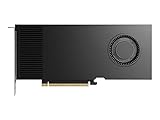
- Professional GPU with Blackwell Architecture
- Blackwell Architecture
- 24GB GDDR7 with PCIe 5.0 & Ray Tracing
- AI Workstation
How to evaluate RISC-V, Arm and x86 alternatives
The relevant question is not simply which instruction set is fastest. For an AI-server purchase or custom design, evaluate each candidate on the following dimensions:
- Customization: can the CPU include the extensions, core mix and memory features your workload requires?
- Interconnect: is the CPU-to-GPU or CPU-to-XPU link coherent, and are independently published bandwidth and latency figures available?
- Software maturity: are the operating system, compiler, CUDA or equivalent accelerator stack, libraries and management tools production-ready?
- Compatibility: can existing applications be ported without unacceptable changes to code, containers and deployment pipelines?
- Rack integration: are validated boards, firmware, networking, storage and service procedures available at the intended scale?
- Availability and supply: is the system a limited development platform, a qualification sample or a regularly orderable production server?
- Lock-in: which parts of the design are open, and which depend on one accelerator, interconnect or software vendor?
SiFive’s proposition is strongest where customization and an open CPU platform matter. A conventional Arm or x86 server may still be the lower-risk choice when mature software, broad vendor availability or existing operational tooling outweighs the value of a new CPU ecosystem.
Quick wins for a faster PC:
Repair Windows errors before they cause bigger problemsFix Now →Fix the driver behind crashes, sound loss and screen glitchesFind Drivers →Is a SiFive NVLink Fusion server available now?
Not as a broadly announced production product on the evidence available here. The BigSky SF-2U870 is a limited-quantity RISC-V development platform, and CUDA has been demonstrated on it with NVIDIA GPUs. SiFive describes NVLink Fusion integration as work for future platforms.
Organizations evaluating the technology should ask vendors for the exact platform status, NVLink generation and topology, supported GPU models, CUDA and driver versions, firmware requirements, software-support terms, delivery schedule and independently reproducible performance data. Those details determine whether a system is suitable for experimentation, qualification or production deployment.
SiFive’s position in the RISC-V ecosystem
SiFive reports that its IP has appeared in more than 500 designs and that more than 10 billion SiFive cores have shipped. Those are company-reported figures, but they indicate the scale of the supplier’s existing IP business. The NVLink Fusion effort extends that business toward tightly integrated AI and data-center systems rather than changing the status of every RISC-V server overnight.
Bottom line
SiFive’s NVLink Fusion move is significant because it puts customizable RISC-V CPUs on a path into NVIDIA’s high-bandwidth AI infrastructure. BigSky and the CUDA head-node demonstration show meaningful development progress. The decisive milestone is still a production SiFive platform with NVLink Fusion that customers can order, qualify and operate at rack scale.
Recommended Free Tools
Quick Recap
Product prices and availability are accurate as of the date/time indicated and are subject to change. Any price and availability information displayed on Amazon at the time of purchase will apply.

