
Free tools Windows power users keep installed
One-click scans. No signup required.
Emerging AI memory research follows two different paths: software that helps an AI agent retain and manage information between interactions, and physical memory technologies that may help AI hardware store or process data more efficiently. The first is about what an AI system remembers; the second is about the devices that support its computation. Neither path establishes a universal solution, and the reported software results apply to specific tasks and benchmarks.
What does “memory” mean in AI?
In an AI agent, memory is information the system keeps, organizes, updates, and later retrieves to support future tasks. It might include a user preference, a past decision, or an observation from a tool. That kind of memory is a software and information-management problem.
In AI hardware, memory refers to physical components that store data or support computation. Researchers are exploring whether new device designs could help with workloads such as model training and inference. These devices do not give an AI agent personal continuity by themselves.
The distinction matters: an agent can manage memories using conventional hardware, while a new hardware memory device does not determine which personal details an agent should retain or forget.
Recommended Free Tools
#1 Best Overall
![Arduino® UNO™ Q 2GB[ABX00162] - Hybrid Board, Qualcomm Dragonwing QRB2210 microprocessor (MPU) & STM32U585 Microcontroller(MCU), AI Vision, Voice, IoT, Robotics, Linux Debian OS, Wi-Fi 5, USB-C](https://m.media-amazon.com/images/I/51cl4xygwGL._SL160_.jpg)
- Dual-Brain Hybrid Power: Combines the Qualcomm Dragonwing QRB2210 MPU (Quad-core Arm Cortex-A53 @ 2.0 GHz CPU, Adreno GPU, AI acceleration) and the real-time, low-power STM32U585 MCU for advanced applications like object recognition, voice commands, and motion detection.
- AI & Linux Capabilities: Unlocks AI-powered vision and sound solutions; runs Linux Debian OS for coding in Python and supports the Arduino ecosystem with libraries and Sketches; quick start with Arduino App Lab.
- Advanced Features: Equipped with 2 GB LPDDR4 RAM, 16 GB eMMC built-in storage, ideal to develop in PC-connected mode, running the OS, Python scripts, and basic network services (SSH) without a demanding GUI or heavy multitasking; great for lightweight AI and memory-optimized TinyML applications, needing local storage for basic OS and core libraries. Dual-band Wi-Fi 5 (2.4/5 GHz), Bluetooth 5.1, and high-speed headers for vision, audio, and display peripherals.
- Seamless Expansion & Connectivity: Features the classic UNO form factor for shields compatibility, an 8x13 LED matrix, and a Qwiic connector for easy expansion with Modulino nodes; power and connect via the USB-C connector.
- Intended Use & Development: The perfect platform for prototyping robotics or IoT projects, empowering innovators with a unified development experience to mix Arduino Sketches, Python scripts, and containerized AI models in a single interface.
How are researchers trying to improve AI agents’ memory?
Agent-memory work addresses more than storage capacity. Researchers are studying which information to keep, how to represent it, when to revise or discard it, how to retrieve it for a task, and where to draw privacy boundaries.
Evaluating memory beyond conversation
AMA-Bench focuses on a gap in dialogue-centered evaluations: agents also act on states, observations, tool outputs, and sequences of actions. Its benchmark is designed to evaluate memory in those broader interaction trajectories. This makes it a different kind of evaluation from testing whether a model can recall a fact from a chat history; results from the two setups should not be treated as interchangeable.
Managing what gets kept, changed, or forgotten
Microsoft Research describes a cognitive-inspired approach with six mechanisms: sleep-phase consolidation, interference-based forgetting, engram maturation, reconsolidation when information is retrieved, entity knowledge graphs, and hybrid retrieval using multiple cues. The aim is to address problems that can arise when a system simply accumulates memories without managing them.
Rank #2
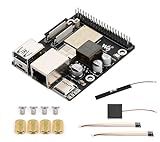
- High-Performance Dual-Core with Ample Memory--- Equipped with a 360MHz dual-core RISC-V processor, 32MB of onboard PSRAM, and 32MB of Flash memory, providing powerful processing capabilities and ample runtime for complex multimedia applications and edge computing.
- Powerful Multimedia Processing Center--- Integrated with a dedicated image processor (ISP), H.264 video encoder, and JPEG codec, perfectly supporting camera input and video processing, making it an ideal choice for developing smart displays, video surveillance, and other projects.
- Hardware-Level Security Protection--- Built-in digital signature, encryption accelerator, and key management unit, providing a one-stop hardware-level security solution from secure boot and data encryption to access control management, ensuring the security of your products and data.
- Full Connectivity Coverage: Wi-Fi 6, Bluetooth, PoE Power Supply--- Onboard with an ESP32-C6 chip, supporting the latest Wi-Fi 6 and Bluetooth 5.0; it also integrates an Ethernet port with PoE functionality, providing high-speed, flexible, and stable network connectivity, and can be powered directly via Ethernet cable, simplifying deployment.
- Rich interfaces and strong expandability--- It provides a MIPI camera/display interface, high-speed USB, SD card slot, microphone/speaker interface and a large number of programmable GPIOs, which greatly facilitates the expansion of external devices and meets the needs of various human-computer interaction and Internet of Things applications. Supports AI Speech Interaction: Allows access to online large model platforms such as ChatGPT, DeepSeek, Doubao, etc.
In Microsoft Research’s 2026 VSCode issue-tracking evaluation, the described workload contains 13,000 issues and 120,000 events. The project reports 97.2% retention precision and a 58% reduction in stored information; that reduction is 21.8 percentage points above its baseline in the same evaluation. It also reports a 13.3-percentage-point gain in preference recall at the S-tier scale of 50 sessions. These are results from that project’s evaluation, not general measures of AI memory performance.
Do these 3 things before closing this tab:
1Clear out junk files and repair common Windows errors2Fix the driver behind crashes, sound loss and screen glitches3Repair Windows errors before they cause bigger problemsOn a separate comparison at a 200,000-token context budget, Microsoft Research reports 70.1% pipeline accuracy versus 71.2% accuracy for raw retrieval. The page says their 95% confidence intervals overlap, so the figures do not establish that the pipeline is better than raw retrieval in that comparison.
Learning memory operations
Memory-R1 separates memory management from answering. Its Memory Manager learns to choose among ADD, UPDATE, DELETE, and NOOP operations; an Answer Agent then selects and reasons over relevant entries. The authors report using outcome-driven reinforcement learning with PPO and GRPO.
Rank #3

- ESP32-S3-AUDIO-Board adopts ESP32-S3R8 module with 32-bit LX7 dual-core processor, up to 240MHz main frequency. Supports 2.4GHz Wi-Fi (802.11 b/g/n) and Bluetooth 5 (LE), with onboard antenna
- Integrated 512KB Static RAM, 384KB ROM, 8MB PSRAM, and external 16MB Flash memory. Onboard TF card slot for storing audio files, etc.
- Onboard Dual microphone array with noise reduction and echo cancellation, suitable for accurate speech recognition and near/far-field wake-up. Onboard audio decoding chip, dual microphones and speaker header. Onboard 7x surround RGB LEDs, programmable for a variety of dynamic effects
- Onboard SPI LCD display interface (FPC connector / pin header), DVP camera interface (24pin connector), USB, I2C, and some I/O pins (compatible with display interface I/O pins). Onboard multiple reserved buttons and battery switch for customized function development
- Integrated PCF85063 RTC chip, supports power-off time retention for alarm, scheduled task, and wake-up functions. Built-in battery recharge management module, supports multiple power modes and low-power applications
Yan and co-authors report evaluation on LoCoMo, MSC, and LongMemEval, across model scales from 3B to 14B, using 152 training question-and-answer pairs. Their abstract summarizes the result this way: “With only 152 training QA pairs, Memory-R1 outperforms strong baselines and generalizes across diverse question types, three benchmarks (LoCoMo, MSC, LongMemEval), and multiple model scales (3B–14B).” This is the authors’ reported result for those benchmarks and scales, not evidence that one memory method leads across all tasks.
Organizing knowledge in graphs
PlugMem proposes an attachable, task-agnostic memory module that turns episodic memories into a compact, knowledge-centric graph. It distinguishes propositional knowledge—what is the case—from prescriptive knowledge—what to do. That structure is intended to make stored experience useful beyond simply replaying a prior conversation.
Separating conversational memory by time horizon
MemoryOS groups conversational information into short-, mid-, and long-term memory units. It uses separate modules for updating memory, retrieving it, and generating responses. This is one proposed organization for continuity across conversations, rather than a demonstrated standard for all AI agents.
Rank #4

- This kit includes the Orin NX Module with 16GB memory, no built-in storage module, provides up to 100 TOPS AI Performance.
- Comes with a Free 128 GB NVMe Solid State Drive, high-speed reading/writing, meet the needs of large AI project development.
- This kit also comes with a pre-installed AW-CB375NF wireless network card that supports Bluetooth 5.0 and dual-band WIFI, with two additional PCB antennas, for providing high-speed and reliable wireless network connection and Bluetooth communication.
- Based on Jetson Orin NX Module, with JETSON-IO-BASE-B base board, providing rich peripheral interfaces such as M.2, HDMI, USB, etc., which is more convenient for users to realize the product performance.
- For reference only, the actual appearance of the Solid State Drive may be different
Setting a privacy boundary
The Agent-Memory Protocol paper proposes three deterministic operations: “redact at rest, pack for purpose, and hydrate on return.” The paper says the protocol is intended to keep personal identifiers within the user boundary. That is the paper’s proposal and claim; it should not be read as an independently verified privacy guarantee.
How do the agent-memory approaches differ?
The systems below address different parts of the memory problem, so their benchmark results are not directly comparable. In particular, a system evaluated on conversational recall may not be tested on the states, actions, observations, and tool outputs emphasized by AMA-Bench.
| Approach | What it emphasizes | Reported evaluation or evidence |
|---|---|---|
| AMA-Bench | Evaluating memory across agent interaction trajectories, not only dialogue | A benchmark contribution; no score is stated here |
| Microsoft Research cognitive-inspired management | Consolidation, forgetting, retrieval, and knowledge organization | VSCode issue-tracking evaluation: 13,000 issues and 120,000 events; named-project metrics described above |
| Memory-R1 | Learned add, update, delete, and no-op decisions, paired with answer-time selection and reasoning | 152 training QA pairs; evaluated on LoCoMo, MSC, and LongMemEval at 3B–14B model scales |
| PlugMem | Compact graph representation of episodic, propositional, and prescriptive knowledge | A proposed task-agnostic module; no score is stated here |
| MemoryOS | Short-, mid-, and long-term conversational memory with separate update and retrieval modules | A proposed hierarchical system; no score is stated here |
| Agent-Memory Protocol | Privacy-oriented handling of personal identifiers across memory operations | A proposed protocol; its privacy claim is not an independent guarantee |
What new physical memory technologies are being explored for AI?
Hardware research examines alternatives for AI computation, including compute-in-memory approaches that seek to bring computation closer to where data is stored. A 2025 technical review discusses resistive RAM (ReRAM), phase-change memory (PCM), electrochemical RAM (ECRAM), and memtransistors in connection with compute-in-memory for model training and inference.
Best Value

- LuckFox Pico is a mini Linux development board based on the RV1103 chip, designed to provide developers with a simple and efficient development platform; Supports multiple interfaces, including MIPI CSI, GPIO, UART, SPI, I2C, USB, etc., for quick development and debugging
- Processor: Cortex A7@1.2GHz + RISC-V; Neural Network Processor (NPU): 0.5 TOPS, supports int4, int8, int16; Image Processor (ISP): Input 4M @ 30fps (Max)
- Memory: 64MB DDR2; USB: USB 2.0 Host/Device; Camera interface: MIPI CSI 2-lane; GPIO: 25 GPIO pins; Network port: 10/100M Ethernet controller and embedded PHY; Default storage medium: SPI NAND FL ASH (128MB)
- Built in Micro's self-developed 4th generation NPU, with high computational accuracy and support for mixed quantization of int4, in8, and int16. Among them, int8 has a computing power of 0.5 TOPS and int4 has a computing power of up to 1.0 TOPS
- Built in self-developed 3rd generation ISP3.2, supports 4 million pixels, and supports various image enhancement and correction algorithms such as HDR, WDR, and multi-level denoising
A separate review of accelerator buffer memory discusses embedded DRAM (eDRAM), ferroelectric memory, spin-transfer torque MRAM (STT-MRAM), and spin-orbit torque MRAM (SOT-MRAM) as candidates beyond conventional SRAM. These are candidates in distinct research directions, not interchangeable devices or established replacements for current memory.
| Candidate technologies | Research context described | What the evidence supports |
|---|---|---|
| ReRAM, PCM, ECRAM, memtransistors | Compute-in-memory for model training and inference, in a 2025 review | They are technologies under study; the review summary does not establish broad deployment or a winning device |
| eDRAM, ferroelectric memory, STT-MRAM, SOT-MRAM | Accelerator buffer memory, in a separate review | They are candidates beyond conventional SRAM; the review summary does not establish them as replacements |
The available descriptions do not provide a common, comparable account of each candidate’s volatility, capacity, speed, energy use, or manufacturing readiness. Those details should not be inferred from the technology names or combined into a single ranking.
What would it take for emerging hardware memory to reach wider use?
Technical promise is only one part of adoption. In an industry Q&A, the Storage Networking Industry Association (SNIA) emphasizes manufacturability, yield, and volume as relevant to commercial success, and cautions that “no single new memory technology is guaranteed to win.” That is an industry perspective, not a quantified comparison of the candidates.
Accordingly, the existence of research on a device does not show that it is broadly deployed in AI accelerators, nor that it will replace conventional memory. The cited material establishes research interest, but does not establish industry-wide adoption, cost savings, energy savings, or a market-size figure.
The Tool Desk
Outbyte Driver Updater FREEFix the driver behind crashes, sound loss and screen glitchesFind Drivers →Outbyte PC Repair FREERepair Windows errors before they cause bigger problemsFix Now →Is persistent AI memory already appearing in consumer services?
In September 2026, Google DeepMind described an update to Private AI Compute intended to enable persistent AI memory across devices. This is an official statement of product and research direction. It does not, by itself, establish broad availability or provide a neutral comparison with the agent-memory approaches above.
The sources described here do not identify a specific consumer product that readers need to buy to benefit from these research directions. The software work concerns how systems manage information, while the hardware work concerns components and architectures that may support computation.
Quick Recap
How should readers assess a new AI memory claim?
- Identify the layer. Is the claim about an agent retaining information, or a physical device storing or processing data?
- Check the task. For software, look for what the system stores and whether the evaluation covers dialogue, longer interaction trajectories, tool use, or user preferences.
- Inspect the memory policy. Find out how information is added, revised, retrieved, forgotten, and protected.
- Keep benchmark context attached to scores. Note the dataset, metric, model scale, context budget, and whether the comparison supports a meaningful difference.
- For hardware, identify the role and maturity. Distinguish a research candidate or device-level concept from a deployed component, and look for evidence about integration, manufacturability, yield, and volume.
Product prices and availability are accurate as of the date/time indicated and are subject to change. Any price and availability information displayed on Amazon at the time of purchase will apply.

