
iTechGuides is reader-supported. When you buy through links on our site, we may earn an affiliate commission. As an Amazon Associate I earn from qualifying purchases. Learn more
Start with Qwen3.8-27B if you want the newer model and its stated coding, multimodal, research, and agentic capabilities—but do not assume it will be faster or better for your tasks. Qwen lists Qwen3.5-27B as released on February 24, 2026, and Qwen3.8-27B as available on August 14, 2026. Its model card describes Qwen3.8 as built on the Qwen3.5 architectural foundation. Available sources do not establish a matched benchmark winner between the two, so the practical choice depends on your hardware, inference stack, and the work you need the model to do.
What is the difference between Qwen3.8-27B and Qwen3.5-27B?
The clearest established differences are release timing and Qwen’s stated focus for Qwen3.8—not a proven across-the-board performance gap. Qwen describes Qwen3.8-27B as a 27-billion-parameter dense model with a vision encoder, intended for image and video understanding as well as coding, professional work, research, and long-horizon agent tasks. Those are claims from Qwen’s official model card, not independent head-to-head results. Qwen3.8-27B model card
Qwen says Qwen3.8 is built on the Qwen3.5 architectural foundation. That does not mean the two checkpoints produce identical results, nor does it prove that Qwen3.8 is better for every prompt. The available sources do not provide a controlled Qwen3.5-27B versus Qwen3.8-27B comparison using the same hardware, quantization, inference settings, and evaluation tasks.
Which model should you run?
Choose Qwen3.8-27B if you want the newer stated capabilities
Qwen3.8 is the one to investigate first if you want Qwen’s latest stated work on coding, multimodal understanding, research, or long-running agent tasks. The card also documents controls for reasoning behavior: thinking is on by default, can be disabled per request, and reasoning depth can be adjusted with reasoning_effort; preserve_thinking retains reasoning context from historical messages. These controls may matter when you configure a compatible client or serving workflow. Qwen3.8-27B model card
#1 Best Overall

- EVOLUTION AMD RYZEN AI MAX+ 395 MINI PC - GMKtec EVO-X2 is the next evolution in AI mini PC Ryzen Strix Halo series. Thanks to AMD Simultaneous Multithreading (SMT) the core-count is effectively doubled, to 32 threads. Ryzen AI Max+ 395 has 64 MB of L3 cache and can boost up to 5.1 GHz, depending on the workload. The Ryzen AI Max+ 395 is currently rated as the "most powerful x86 APU" on the market for AI computing.
- AI NPU with XDNA 2 ARCHITECTURE - Powered by 16 “Zen 5” CPU cores, 50+ peak AI TOPS XDNA 2 NPU and a truly massive integrated GPU driven by 40 AMD RDNA 3.5 CUs, the Ryzen AI MAX+ 395 is a transformative upgrade and delivers a significant performance boost over the competition. The Ryzen AI Max+ 395 excels in consumer AI workloads like the llama.cpp-powered application: LM Studio. Shaping up to be the must-have app for client LLM workloads, LM Studio allows users to locally run the latest language model without any technical knowledge required and unleash their creativity and productivity.
- AMD RADEON 8090S iGPU GAMING PC - The AMD Radeon RX 8060S offers all 40 CUs with up to 2.9 GHz graphics clock and uses the new RDNA 3.5 architecture. The powerful iGPU is positioned between an RTX 4060 and 4070 laptop GPU and therefore enables gaming in FHD at maximum details in most demanding games. The 8060S can also utilize the full 128GB pool, which is perfect for running LLMs such as Deepseek 70B Q8, which runs comfortably on this machine.
- EIGHT CHANNEL LPDDR5X - LPDDR5X is a new ground breaking memory small form factor installed on-board. With blazing speeds up to to 8000MT/s, it runs 1.5x faster than the DDR5 SODIMMs; 90% better performance over DDR5 SODIMMs in video conferencing and photo editing; 30% better performance in productivity apps; 12% better performance in digital content workloads.
- QUAD SCREEN 8K DISPLAY SUPPORT - EVO-X2 AI Mini PC support 4-screen 4K/8K output via HDMI 2.1 (8K@60Hz), DisplayPort 1.4 (4K@60Hz), and dual USB 4 40Gbps Transfer speed (supporting PD3.0/DP1.4/DATA). Ideal for gaming, video editing, and multitasking, it provides expansive and crisp multi-display support.
Stay with Qwen3.5-27B if it already fits your workflow
If Qwen3.5-27B is already installed, supported by your backend, and gives you the quality and speed you need, the release date alone is not a reason to switch. Keep the working checkpoint unless you have a specific reason to test Qwen3.8—such as needing a capability Qwen now emphasizes, or finding a serving path that better fits your setup.
Run your own comparison when the choice matters
For a decision based on output quality, compare the exact checkpoints on representative prompts from your real workload. Keep the hardware, prompt, context, quantization class, sampling and reasoning settings, and backend as consistent as possible. Record both answer quality and practical behavior, including latency, throughput, memory use, and failures. This is more informative for your setup than treating a model-card capability description as proof of a universal win.
Rank #2

- Built for Local AI Development: AMD Ryzen AI Halo is designed for local AI development and inference, featuring 128GB unified memory and support for up to 200B parameter models to build and run intensive AI workloads locally.
- 128GB Unified Memory: Features 128GB LPDDR5x unified memory at 8000 MT/s with 256 GB/s memory bandwidth, providing a shared memory pool across the CPU, GPU, and NPU to support larger AI models.
- AMD Ryzen AI Max+ 395 Processor: Features 16 cores, 32 threads, and Zen 5 architecture, paired with AMD Radeon 8060S integrated graphics featuring 40 RDNA 3.5 compute units and an AMD XDNA 2 NPU with up to 50 TOPS.
- Linux AI Developer Platform: Purpose-built for Linux-based AI development with full AMD ROCm software support and preloaded tools, models, and workflows optimized for local AI development.
- Compact, Connected Design: Includes a 2TB M.2 SSD, 10GbE LAN, Wi-Fi 7, Bluetooth 5.4, USB-C connectivity, and HDMI 2.1b.
Can your computer run Qwen3.8-27B locally?
Qwen3.8-27B is a dense model with substantial memory and compute demands. AMD says its discussed systems need roughly 24 GB of variable graphics memory or VRAM to run comfortably, and describes a Radeon AI PRO R9700 with 32 GB and Ryzen AI Max+ systems as supported paths. Treat that figure as AMD’s guidance for the systems in its article, not a universal minimum for every computer or configuration. Quantization, context length, workload, backend, and memory offload can change what is practical. AMD’s Qwen3.8 local-running guidance
Recommended Free Tools
Before downloading a quantized variant, check whether its memory footprint leaves room for the context length and runtime overhead you need. A model that loads is not necessarily comfortable to use: limited memory can force offloading or constrain context, and those trade-offs may affect responsiveness. Do not treat the vendor’s approximate guidance as a promise of a particular speed on other hardware.
Rank #3

- EVOLUTION AMD RYZEN AI MAX+ 395 MINI PC - GMKtec EVO-X2 is the next evolution in AI mini PC Ryzen Strix Halo series. Thanks to AMD Simultaneous Multithreading (SMT) the core-count is effectively doubled, to 32 threads. Ryzen AI Max+ 395 has 64 MB of L3 cache and can boost up to 5.1 GHz, depending on the workload. The Ryzen AI Max+ 395 is currently rated as the "most powerful x86 APU" on the market for AI computing.
- AI NPU with XDNA 2 ARCHITECTURE - Powered by 16 “Zen 5” CPU cores, 50+ peak AI TOPS XDNA 2 NPU and a truly massive integrated GPU driven by 40 AMD RDNA 3.5 CUs, the Ryzen AI MAX+ 395 is a transformative upgrade and delivers a significant performance boost over the competition. The Ryzen AI Max+ 395 excels in consumer AI workloads like the llama.cpp-powered application: LM Studio. Shaping up to be the must-have app for client LLM workloads, LM Studio allows users to locally run the latest language model without any technical knowledge required and unleash their creativity and productivity.
- AMD RADEON 8090S iGPU GAMING PC - The AMD Radeon RX 8060S offers all 40 CUs with up to 2.9 GHz graphics clock and uses the new RDNA 3.5 architecture. The powerful iGPU is positioned between an RTX 4060 and 4070 laptop GPU and therefore enables gaming in FHD at maximum details in most demanding games. The 8060S can also utilize the full 64GB pool, which is perfect for running LLMs such as Deepseek 32B, which runs comfortably on this machine.
- EIGHT CHANNEL LPDDR5X - LPDDR5X is a new ground breaking memory small form factor installed on-board. With blazing speeds up to to 8000MT/s, it runs 1.5x faster than the DDR5 SODIMMs; 90% better performance over DDR5 SODIMMs in video conferencing and photo editing; 30% better performance in productivity apps; 4% better performance in digital content workloads.
- QUAD SCREEN 8K DISPLAY SUPPORT - EVO-X2 AI Mini PC support 4-screen 4K/8K output via HDMI 2.1 (8K@60Hz), DisplayPort 1.4 (4K@60Hz), and dual USB 4 40Gbps Transfer speed (supporting PD3.0/DP1.4/DATA). Ideal for gaming, video editing, and multitasking, it provides expansive and crisp multi-display support.
What local software supports these models?
Qwen’s repository lists local-use paths including Transformers, SGLang, vLLM, TokenSpeed, llama.cpp, and MLX. The Qwen3.8 model card confirms compatibility with Transformers, vLLM, SGLang, and TokenSpeed. Support is model- and format-specific: Qwen’s llama.cpp and MLX notes describe Qwen3.5-series support and point to GGUF and MLX variants, while its Unsloth section points to a Qwen3.8 quantization guide. Check the current documentation and the exact checkpoint or conversion you plan to use before choosing a backend. QwenLM Qwen3.8 repository Qwen3.8-27B model card
AMD separately documents a Qwen3.8-27B path using LM Studio on supported AMD systems. Its instructions apply to the hardware and software path described, not to every computer. AMD’s LM Studio instructions
Rank #4
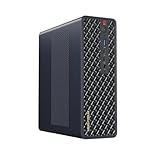
- 【Leading AI Mini Workstation】MINISFORUM AI MS-S1 Max Workstation comes with AMD Ryzen AI Max+ 395 processor, which uses AMD's latest generation Zen 5 architecture. It has 16 Cores and 32 Threads, the boost clock is up to 5.1GHz. The overall processor performance is up to 126 TOPS, and the NPU performance reaches up to 50 TOPS. AMD Ryzen AI enables improved productivity, advanced collaboration, and improved efficiency.
- 【AMD Radeon 8060S Graphics 】The MS-S1 Max Mini PC equipped with AMD Radeon 8060S Graphics which built on the new generation of RDNA 3.5 architecture AMD graphics, it brings ultra-high frame rate experiences and advanced content creation features anywhere and delivers staggering performance. It can handle all your computing and multimedia tasks efficiently.
- 【Five 8K Video Output】This MS-S1 Max Workstation comes with five video outputs, 1x HDMI (8K@60Hz), 2x USB4(40Gbps,Alt DP2.0,PD out 15W) and 2x USB4 V2(80Gbps,Alt DP2.0,PD out 15W) Outputs, which support multiple monitors display at the same time and provide a larger and wider filed of view and improve your work efficiency. It is used in fields that require high-performance computing and graphics processing, including digital signage and securities trading, as well as work that uses CAD, such as engineering design, scientific calculations, animation production, and post-production for movies and television
- 【 Fast and Stable Wire & Wireless Speed】It comes with Two 10G Lan Ports for wired connection and and Wi-Fi 7 / BT5.4 for wireless connection, which increased the network speed greatly and expand its functions and improved performance of computer to a large extent and allows you to use more networks such as software routers (OpenWRT / DD-WRT / Tomato etc.), firewalls, NAT, network isolation etc.
- 【Large Storage & Flexible Expandability】This Workstation equipped with 64GB LPDDR5-8000MHz + 2TB M.2 2280 PCIe4.0 SSD. There is another PCIe4.0 SSD slot available for up to 8TB, these SSD slots are compatible with RAID0 and RAID1, you can store movies, videos, photos, important files easily. What’s more, it also comes with 1x standard PCIex16 slot(PCIe4.0x4) inside.
What do the published local speed figures show?
AMD reports preliminary, vendor-measured token-generation throughput for two specific systems. The results are not a direct comparison with Qwen3.5-27B and should not be generalized to different hardware or configurations.
Do these 3 things before closing this tab:
1Repair Windows errors before they cause bigger problems2Fix the driver behind crashes, sound loss and screen glitches3Clear out junk files and repair common Windows errors| System | AMD-reported throughput | Published test context |
|---|---|---|
| AMD Ryzen AI Max+ 395 | Up to 24.5 tokens per second | AMD’s 2026 preliminary Windows test using llama.cpp with Vulkan and MTP=4; average token-generation throughput across three or more runs. |
| Single AMD Radeon AI PRO R9700 | Up to 51.8 tokens per second | AMD’s 2026 preliminary Windows test using llama.cpp with Vulkan and MTP=2; average token-generation throughput across three or more runs. |
AMD says optimization work was ongoing when it published the figures. These measurements illustrate what AMD reported for those particular setups; they do not show how Qwen3.8 compares with Qwen3.5, or what another system will deliver. AMD’s performance figures and test context
AMD-specific LM Studio settings
For the AMD hardware route covered in its guide, AMD recommends enabling MTP and setting four draft tokens on Ryzen AI Max+ or two on Radeon AI PRO R9700. It also instructs users to uncheck “Try mmap” in advanced model load settings. These are AMD’s specific instructions for the described setup; do not assume they are optimal or relevant for other hardware and backends. AMD’s LM Studio configuration guidance
A practical decision checklist
- Task: Decide whether Qwen3.8’s stated coding, image/video, research, or agentic focus addresses something you actually do.
- Workflow: Confirm that your inference framework supports the exact model and format you intend to run; compatibility can vary by route and evolve over time.
- Memory: Check the chosen precision or quantization, context length, and runtime overhead against the memory available on your system.
- Evidence: If quality is the deciding factor, test both checkpoints under comparable settings on prompts representative of your work rather than inferring a winner from release order.
Sources and scope
Qwen’s repository establishes the release dates and describes local-use routes; its Qwen3.8 card supplies the architecture, capability, reasoning-control, and compatibility descriptions. AMD’s 2026 article supplies vendor guidance on selected AMD hardware and its preliminary performance measurements. These sources do not establish a matched independent benchmark comparison between the two checkpoints. QwenLM repository Qwen3.8-27B model card AMD local-running article
Quick Recap
Product prices and availability are accurate as of the date/time indicated and are subject to change. Any price and availability information displayed on Amazon at the time of purchase will apply.

