
Quantum sensors are not automatically more sensitive than conventional instruments. They use quantum properties—such as atomic energy levels, spin, superconductivity, or states of light—to measure quantities including magnetic fields, gravity, acceleration, rotation, and time. Which sensor is useful depends on the signal, environment, and practical constraints, not just the word “quantum.”
What makes a quantum sensor quantum?
A quantum sensor uses a system whose behavior depends on quantum physics as the basis for measurement. Depending on the instrument, that system might be atoms with discrete energy levels, electron or nuclear spins, superconducting circuits, or quantum states of light. The measured quantity changes the system or its response; the instrument reads that change to infer the quantity.

The label covers a family of technologies, not one standard design. Atomic clocks and MRI are familiar examples that rely on quantum physics. Other approaches use atomic vapor, nitrogen-vacancy (NV) centers in diamond, superconducting quantum interference devices (SQUIDs), Rydberg atoms, or atom interferometers. These instruments do not all measure the same thing or serve the same conditions.
How sensitive are quantum sensors?
There is no single sensitivity figure for “quantum sensors” as a class. Sensitivity means how small a change in a specified quantity a setup can distinguish under specified conditions. A meaningful figure needs its measurand, sensor configuration, averaging interval or measurement bandwidth, and operating environment. Without those details, two quoted values may not be comparable.
PC Slower Than It Used to Be?
A free scan shows the junk files, broken settings and background clutter dragging Windows down - then fixes them in one click.Free scan · Windows 10 & 11Outdated Drivers Are Slowing You Down
One free scan finds every outdated or missing driver and matches the right update for your exact hardware.Free scan · exact hardware match#1 Best Overall

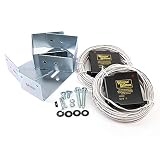
- Wayne Dalton Wired Photoelectric Safety Sensors.
- For Torsion iDrive models: 3651-372, 370-372.
- For Quantum/Classicdrive models 3012, 3014, 3016, 3018, 3212, 3213, 3214, 3312, 3313, 3314, 3316, 3412, 3414, 3512, 3514.
- For DoorMaster models: 3660-372, 3661-372, 3662-372, 3760-372, 3751-372.
- Kit includes sensors with wire mounting brackets, fasteners, and installation instructions.
Sensitivity is also not the same as accuracy or spatial resolution. A sensor may detect a small change yet have calibration bias or drift; it may measure a field precisely at one location without resolving two nearby sources. Performance comparisons should identify the task and consider these properties separately.
For very weak magnetic fields, NIST identifies atomic and SQUID magnetometers as tools of choice. NIST also notes that the best NV-center magnetometers have not yet reached their sensitivity for very weak fields, while NV systems have other advantages, including high-frequency sensing and nanoscale imaging. This is a task-specific comparison, not a ranking of every sensor against every conventional instrument.
Rank #2
What limits quantum sensor sensitivity?
Limits come from both fluctuations intrinsic to the measurement and disturbances introduced by the device or its surroundings. Their relative importance varies with the sensor and measurement setup; there is no universal noise budget for quantum sensors.
Quantum noise
Quantum systems can exhibit fundamental fluctuations, including projection-noise or shot-noise contributions. Spin squeezing is one approach being developed to reduce a quantum-noise contribution: it redistributes uncertainty between complementary quantities so the measured quantity can have lower uncertainty. NIST has reported proof-of-principle spin-squeezing work for clocks, with possible relevance to other sensors. Squeezing does not eliminate all noise, and implementing it brings its own constraints.
Do these 3 things before closing this tab:
1Repair Windows errors before they cause bigger problems2Scan for outdated or missing drivers - takes under a minute3Clear out junk files and repair common Windows errorsEnvironmental and engineering noise
Unwanted fields, temperature or pressure changes, vibration, imperfect materials, optical or microwave readout, and device instability can all matter in particular setups. The U.S. Department of Energy’s 2024 QIS Roadmap highlights the sensitivity of fragile quantum states to perturbations and the need for stable devices and careful materials and device engineering. Which disturbances dominate depends on the instrument and measurement.
How do the main quantum-sensing approaches compare?
| Approach | What it can measure or where it helps | Practical context |
|---|---|---|
| Atomic vapor magnetometer | Uses atomic spins to measure magnetic fields; atomic vapor is one of the atom-based electromagnetic-sensing modalities covered by NIST. | Performance depends on design and application; the reviewed sources do not establish one specification that applies across designs. |
| SQUID magnetometer | NIST identifies SQUIDs as a tool of choice for very weak magnetic fields. | Superconductivity requires very low temperatures, adding equipment and operational demands. |
| NV-center diamond magnetometer | Can support high-frequency magnetic sensing and nanoscale magnetic imaging. NIST describes research applications involving rocks, microelectronic devices, and biomedical work. | Diamond can be robust across broad temperature and pressure conditions. The best NV magnetometers have not yet matched atomic and SQUID magnetometers for very weak fields; an NIST electrical-readout device is described as a prototype. |
| Rydberg-atom RF sensor | A Rydberg-atom approach to electromagnetic-field sensing. | The cited review establishes it as a modality, not a consumer product or a universal performance advantage. |
| Atomic clock or atom interferometer | Clocks can sense gravitational potential through differences in clock rates; atom interferometers use falling atoms to measure gravity and acceleration. | Wider geodesy and autonomous-navigation capabilities are prospective or developing, rather than routine deployments established by the cited sources. |
A 2025 review by Dmitri Budker, James Shaffer, and John Kitching, “Atom-Based Quantum Sensing of Electromagnetic Fields,” describes atomic vapor, NV-center, and Rydberg-atom modalities across electromagnetic sensing from DC to THz frequencies and spatial scales from nanoscale to meter scale. That is the scope of the reviewed modalities; it does not mean any single instrument covers that entire frequency and spatial range.
Rank #4

- One set contains 37 different sensor modules that give you a comprehensive understanding of the basics of Arduino and sensors.
- A complete set of the most common and practical electronic components of the Arduino is the perfect choice for electronics enthusiasts.
- Arduino enthusiasts can easily control and use these modules.
- Including temperature sensors, water level sensors, pressure sensors,,infrared receiver modules, etc., to meet your different needs.
- Whether you are learning Arduino or other controllers, sensors are a must, because we have to control the data, such as photoresistors, temperature sensors, infrared receiver modules, etc. are often used. This time, we put the sensors that most learners need in a suit, so that everyone can get 37 sensors at a time, which is convenient for everyone to use and learn.
What are quantum sensors used for, and how mature are the applications?
Magnetic sensing and imaging
Atomic and SQUID magnetometers are used where very weak magnetic fields matter. NV-center diamonds support nanoscale magnetic imaging, including research on magnetic rocks and microelectronic devices, as well as biomedical research. The best choice depends on field strength, frequency, spatial scale, and environmental conditions.
Navigation research
NIST describes research testing NV-center magnetometers for navigation by comparing measured magnetic fields associated with Earth’s crust against magnetic maps. Inertial sensors can provide complementary information. This is a research direction, not evidence that quantum magnetometers broadly replace GPS today.
Quick wins for a faster PC:
Clear out junk files and repair common Windows errorsFree Scan →Scan for outdated or missing drivers - takes under a minuteDriver Scan →Best Value
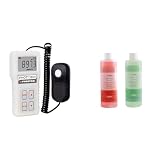
- Product 1: ACCURATE and COST EFFECTIVE: The Phantom PHOTOBIO Advanced Quantum PAR Meter provides measurement for any light source used in horticultural applications.
- Product 1: MEASURES BROAD SPECTRUM: The Advanced Quantum PAR meter is designed to measure PAR (Photosynthetically Active Radiation) flux in wavelengths ranging from 400 to 700nm.
- Product 1: MAXIMIZE CROP YIELDS: There is a positive proportional relationship between the number of photons absorbed in 400 to 700nm band and the rate of photosynthesis.
- Product 1: COMPACT and COMPLETE main unit, remote sensor, two connection cables (short-coiled & 12’ long-straight), AAA batteries and protective carrying case.
- Product 2: Reported values are accurate to +/- 0.01 pH at 25 °C and are traceable to NIST Standard Reference Materials (SRMs).
Gravity and geodesy
Atomic clocks can sense gravitational potential because clocks run at different rates at different potentials. Atom-interferometer gravimeters measure gravity’s effect on falling atoms. NIST describes broader deployment for geodesy as a prospective application, not routine use established by the cited sources.
Specialist commercial instruments
NIST reports that chip-scale atomic magnetometers have been commercialized for specialist uses including magnetic anomaly detection, nuclear magnetic resonance, and biomagnetics. That establishes a commercial category, not a particular price, retail channel, or guarantee that a given instrument suits a reader’s task.
Independent reader supportYour contribution helps us test, update, and keep practical guides available for everyone.How should you choose or compare a quantum sensor?
Start with the measurement, not the technology label. For each candidate instrument, ask for comparable information on:
- Measurand and signal: Is it measuring a magnetic or electric field, gravity, acceleration, rotation, or time? What signal frequency matters?
- Sensitivity conditions: What sensitivity is achieved for the relevant configuration and averaging time or bandwidth?
- Resolution and range: Can it distinguish sources at the required spatial scale, and can it handle the expected signal range?
- Operating environment: What temperature, pressure, field, vibration, or other constraints apply?
- System requirements: What size, power, calibration, and readout complexity are acceptable?
- Maturity: Is the capability a research result, prototype, specialist commercial instrument, or established deployment for this specific use?
Ask for measurements under conditions that resemble the intended use. A headline sensitivity alone cannot show whether an instrument will be accurate, stable, spatially resolving, or practical in that setting.
The Tool Desk
Outbyte Driver Updater FREEFix the driver behind crashes, sound loss and screen glitchesFind Drivers →Outbyte PC Repair FREEClear out junk files and repair common Windows errorsFree Scan →Quick Recap
Product prices and availability are accurate as of the date/time indicated and are subject to change. Any price and availability information displayed on Amazon at the time of purchase will apply.

