
Free tools Windows power users keep installed
One-click scans. No signup required.
Pulse-wave DDoS attacks send short, intense bursts of traffic separated by quieter intervals. In an “appliance first, cloud second” setup, a burst that saturates the network link can interfere with the on-premises appliance’s ability to trigger cloud mitigation and share attack details. That is a documented failure mode—not proof that every hybrid DDoS service is vulnerable. Later research, including ACC-Turbo, explores ways to identify and suppress bursts faster, but its results are research evaluations rather than a general measure of commercial protection.
What is a pulse-wave DDoS attack?
A distributed denial-of-service (DDoS) attack overwhelms a target or its network with traffic from multiple sources. A pulse-wave attack does this in repeated bursts: traffic rises sharply, falls away, then surges again. The quiet interval can make an attack harder for defenses that expect sustained traffic, rely on narrow signatures, or need time to recognize an event and activate a response. Attack vectors may also change between pulses.
In an August 2017 report, SecurityWeek relayed observations from Imperva Incapsula describing attacks that peaked almost immediately and dropped shortly afterward, unlike attacks that gradually ramp up as botnets are mobilized. The vendor said the cycle repeated at regular intervals; switching targets was offered as a possible reason for the quieter periods. These are historical observations from that vendor, not a description of what attacks typically look like today. SecurityWeek’s 2017 report
In that same account, Imperva Incapsula reported peaks of up to 350 Gbps, pulses roughly every ten minutes, and attacks lasting at least an hour and sometimes hours or days. Those figures apply to the vendor’s observations reported in 2017; they should not be treated as current typical attack statistics.
#1 Best Overall
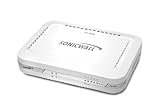
- Firewall Protection: Remote Access Authentication, Content Filtering, Malware Protection, URL Filtering, Web Content Filtering, Deep Inspection Firewall, Reassembly-free Deep Packet Inspection, and
- Firewall Protection (continued): Gateway Antivirus, Anti-spyware, Denial of Service (DoS), Distributed Denial of Service (DDoS), Egress Filtering, Cookies Blocking, Dead Peer Detection
- Encryption Standard: DES, 3DES, AES (142-bit), AES (128-bit), AES (256-bit), SHA-1, MD5 Intrusion Prevention, NAT, PAT, IPSec NAT Traversal, 5 Network (RJ-45) Ports, Fast Ethernet, 10/100Base-TX
- Virtualization: 8000 x Maximum UTM/DPI Connections, 8000 x Maximum Connections, 1000 x New Connections/Sec, 1 x SonicPoints Supported, 5 x Site-to-Site VPN Tunnels, 5 x VLANS
- USB Port, AC Adapter (Power Source) 12 V DC, Management Port, 32 MB Flash Memory, 256 MB Standard Memory, Secure Digital (SD) Card , Height: 1.4", Width: 7.5", Depth: 5.6
Why can pulse-wave attacks disrupt hybrid DDoS mitigation?
Hybrid DDoS mitigation can combine local detection with cloud scrubbing. In the appliance-first, cloud-second design described in the 2017 report, an on-premises appliance detects overload and communicates attack information to a cloud mitigation platform. That sequence depends on a functioning path between the affected network, the appliance, and the cloud service.
- A burst saturates the access link. If traffic fills the network pipe, legitimate traffic and the appliance’s signaling may be unable to get through.
- Cloud escalation is delayed or obstructed. The appliance may not activate the cloud scrubber or send it the information needed to begin filtering.
- Verification and resampling add time. The 2017 account said that even after cloud mitigation starts, verification and a fresh traffic sample can delay filtering.
- Another burst arrives before recovery is complete. If the quiet interval is shorter than the time needed to restore service and make mitigation effective, the next pulse can cause another outage.
Igal Zeifman, then director of marketing at Imperva Incapsula, described the risk this way: “For the pulse duration, the entire network shuts down completely. By the time it recovers, another pulse shuts it down again, ad nauseam. If at some point the cloud is reconfigured to automatically activate itself at the sign of trouble, the scrubbing process is still significantly delayed because of the verification process,” SecurityWeek, August 16, 2017.
Rank #2

- Comprehensive Hardware and Service Package: Includes FortiGate-120G appliance with 1 year of FortiCare Premium and FortiGuard Unified Threat Protection (UTP).
- Unified Threat Protection (UTP) Bundle: Protects against sophisticated web and DNS-based threats with advanced filtering and security features including ATP, DNS filtering, URL filtering, video filtering, and anti-botnet services.
- Enhanced Web Security: Offers high-level web security suitable for varied enterprise environments needing strong protective measures against online threats.
- Extended Support and Service: FortiCare Premium provides dependable technical support ensuring seamless operation and efficient issue resolution.
- Optimal for Diverse Deployment: Ideal for organizations with complex network environments looking for comprehensive security solutions.
That scenario identifies a weakness in a particular activation and communication path. It does not establish that every hybrid service will fail: designs differ, and the cited account is not a controlled comparison of current providers.
What did later measurement find?
A 2025 study by Daniel Kopp, “DDoS on Repeat: Measuring Pulse-Wave DDoS in the Wild,” examined flow-level traffic collected over four months at one major Internet exchange point (IXP). The University of Kassel’s June 4, 2025 summary says the study identified more than 10,000 DDoS events, of which 27% exhibited pulse-wave characteristics. University of Kassel’s study summary
Rank #3

- No Additional Cost: You pay nothing for repairs – parts, labor, and shipping included.
- Coverage: Plan starts on the date of purchase. Malfunctions covered after the manufacturer's warranty. Power surges covered from day one. Plan includes food loss reimbursement up to $250 per approved claim for refrigerators & freezers and laundry services reimbursement up to $25 per approved claim for washers & dryers that are out for service for more than seven (7) consecutive days.
- Easy Claims Process: File a claim anytime online or by phone. Most claims approved within minutes. If we can’t repair it, we’ll send you an Amazon e-gift card for the purchase price of your covered product or replace it.
- Product Eligibility: Plan must be purchased with a product or within 30 days of the product purchase. Pre-existing conditions are not covered.
- Terms & Details: More information about this protection plan is available within the “Product guides and documents” section. Simply click “User Guide” for more info. Terms & Conditions will be available in Your Orders on Amazon. Asurion will also email your plan confirmation with Terms & Conditions to the address associated with your Amazon account within 24 hours of purchase.
The result shows that pulse-wave patterns appeared in a substantial share of the events in that particular sample. It is not a global prevalence estimate: the data came from one IXP over a defined four-month period.
How are researchers approaching faster defenses?
ACC-Turbo: in-network detection and scheduling
ACC-Turbo is a research defense presented at ACM SIGCOMM 2022 by Albert Gran Alcoz, Martin Strohmeier, Vincent Lenders, and Laurent Vanbever. It revisits aggregate-based congestion control by adding online clustering and programmable packet scheduling. The authors report a complete P4 implementation, real-time identification at line rate, per-packet rate limiting, unsupervised identification of attack vectors, and evaluation on existing Intel Tofino hardware. Their publication abstract says: “We fully implement ACC-Turbo in P4 and evaluate it on a wide range of attack scenarios.” ETH Zürich Networked Systems Group publication
Rank #4
- No Additional Cost: You pay nothing for repairs – parts, labor, and shipping included.
- Coverage: Plan starts on the date of purchase. Malfunctions covered after the manufacturer's warranty. Power surges covered from day one. Plan includes food loss reimbursement up to $250 per approved claim for refrigerators & freezers and laundry services reimbursement up to $25 per approved claim for washers & dryers that are out for service for more than seven (7) consecutive days.
- Easy Claims Process: File a claim anytime online or by phone. Most claims approved within minutes. If we can’t repair it, we’ll send you an Amazon e-gift card for the purchase price of your covered product or replace it.
- Product Eligibility: Plan must be purchased with a product or within 30 days of the product purchase. Pre-existing conditions are not covered.
- Terms & Details: More information about this protection plan is available within the “Product guides and documents” section. Simply click “User Guide” for more info. Terms & Conditions will be available in Your Orders on Amazon. Asurion will also email your plan confirmation with Terms & Conditions to the address associated with your Amazon account within 24 hours of purchase.
In an October 2022 explainer, ETH Zürich described the design as always-on: it clusters packets online to infer which traffic aggregates are congesting the network, then uses scheduling to deprioritize suspicious traffic rather than dropping it by default. The explainer reports mitigation in under one second. It also discusses limitations of some existing approaches, including narrow preconfigured signatures, reaction times of seconds to minutes, threshold settings that may be misconfigured, and the risk that drastic mitigation can harm benign traffic after a misclassification. These are the research group’s descriptions of the system and the problems it addresses, not an independent production-service benchmark. ETH Zürich’s ACC-Turbo explainer
ACC-Turbo’s reported capabilities demonstrate a research direction; they do not establish that the system is generally deployed as a commercial service. Its evaluation on Tofino hardware is not a recommendation for consumer or ordinary office networking equipment.
Best Value
- No Additional Cost: You pay nothing for repairs – parts, labor, and shipping included.
- Coverage: Plan starts on the date of purchase. Malfunctions covered after the manufacturer's warranty. Power surges covered from day one. Plan includes food loss reimbursement up to $250 per approved claim for refrigerators & freezers and laundry services reimbursement up to $25 per approved claim for washers & dryers that are out for service for more than seven (7) consecutive days.
- Easy Claims Process: File a claim anytime online or by phone. Most claims approved within minutes. If we can’t repair it, we’ll send you an Amazon e-gift card for the purchase price of your covered product or replace it.
- Product Eligibility: Plan must be purchased with a product or within 30 days of the product purchase. Pre-existing conditions are not covered.
- Terms & Details: More information about this protection plan is available within the “Product guides and documents” section. Simply click “User Guide” for more info. Terms & Conditions will be available in Your Orders on Amazon. Asurion will also email your plan confirmation with Terms & Conditions to the address associated with your Amazon account within 24 hours of purchase.
DPWS: studying bursts from multiple network vantage points
The Distributed Pulse-Wave Simulator (DPWS), described by the Sensing Group in 2026, is an open-source research simulator. It models multi-autonomous-system (AS) topologies and generates synchronized packet captures at several ASes, giving researchers correlated views of distributed bursts. Its purpose is to support investigation of burst detection and attribution from different network vantage points; it is simulation infrastructure, not an operational DDoS defense product. Sensing Group’s DPWS page
Independent reader supportYour contribution helps us test, update, and keep practical guides available for everyone.What should network operators evaluate?
For an organization considering managed or cloud DDoS protection, the key question is not simply whether a provider offers “hybrid” mitigation. Evaluate how the design behaves when the access link is already congested and whether the response can take effect before the next burst.
- Time to effective mitigation: Ask how long it takes from the first signal to traffic being filtered, including detection, escalation, verification, and traffic diversion.
- Always-on or triggered: Determine whether protection analyzes traffic continuously or waits for a threshold, appliance trigger, or escalation to an external service.
- Detection breadth and detail: Ask how the system handles changing attack vectors and whether it identifies problematic traffic at a useful level of granularity.
- Effect on legitimate traffic: Find out what happens when traffic is misclassified and whether the mitigation can prioritize suspicious traffic without broadly dropping traffic.
- Deployment and control: Confirm what equipment and network changes are required, which party controls activation, and how the mitigation path works if the local link is saturated.
The cited sources do not provide a controlled comparison of commercial services. Operators should therefore assess these questions against their own architecture and the service’s documented behavior rather than infer a winner from a research prototype or a single historical failure report.
Quick Recap
Product prices and availability are accurate as of the date/time indicated and are subject to change. Any price and availability information displayed on Amazon at the time of purchase will apply.
What’s actually slowing this PC down?
Pick the symptom - the matching free tool is one click away.

