Showing 969–976 of 1786 results
-
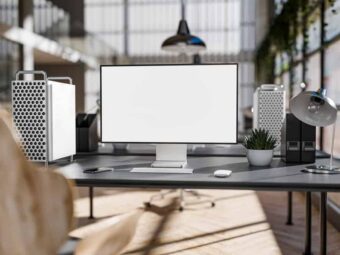
Lenovo ThinkStation P620
- Processor: Up to 64-core AMD Ryzen Threadripper PRO 5995WX, 2.70 GHz, 256 MB Cache
- Memory: Up to 1 TB DDR4 3200 MHz, 8 RDIMM slots
- Storage: Up to 20 TB 3.5″ 7200 RPM SATA HDD (5 x 4 TB), or up to 18 TB M.2 PCIe SSD (9 x 2 TB)
- Graphics: Up to NVIDIA Quadro GV100, or up to NVIDIA Quadro RTX 8000
-

Lenovo ThinkVision M14
- Dimensions (W x H x D): 323.4 x 209 x 96.5 mm
- Dimensions (W x H x D) [with stand]: 323.4 x 220 x 96.5 mm
- Weight: N/A
- Weight [with stand]: 570 g
- Display Type: IPS (In-Plane Switching)
- Display Features: 14″, FHD (1920 x 1080), 60 Hz
-

Lenovo V130-15IGM
- Processor: Up to 4-core Intel Pentium Silver N5000, 1.10 GHz, 4 MB Cache
- Memory: Up to 8 GB DDR4 2400 MHz
- Storage: Up to 1 TB 2.5″ SATA HDD, or up to 256 GB 2.5″ SATA SSD
- Graphics: Intel UHD Graphics 605
- Display: 15.6”, HD (1366 x 768), or FHD (1920 x 1080)
-

Lenovo V14 ADA
- Processor: Up 2-core AMD Ryzen 3 3250U, 2.60 GHz, 4 MB Cache
- Memory: Up to 8 GB DDR4-2400, or up to 12 GB DDR4-2400 (4 GB Onboard + 8 GB)
- Storage: Up to 1 TB 2.5″ SATA HDD, or up to 512 GB M.2 PCIe NVMe SSD
- Graphics: AMD Radeon Graphics
- Display: 14.0″, HD (1366 x 768), or FHD (1920 x 1080)
-

Lenovo V15 IIL
- Processor: Up to 4-core Intel Core i7-1065G7, 1.30 GHz, 8 MB Cache
- Memory: Up to 12 GB DDR4 (4 GB soldered + 8 GB SO-DIMM)
- Storage: Up to 512 GB M.2 PCIe SSD, or up to 2 TB HDD
- Graphics: Intel Iris Plus Graphics, or NVIDIA GeForce MX330
- Display: 15.6″, HD (1366 x 768), or FHD (1920 x 1080)
-

Lenovo V330-15IKB
- Processor: Up to 4-core Intel Core i7-8550U, 1.80 GHz, 8 MB Cache
- Memory: Up to 20 GB DDR4 (4 GB onboard + 16 GB DDR4 SO-DIMM)
- Storage: Up to 1 TB SATA 7200 RPM, or up to 2 TB SATA 5400 RPM HDD, or up to 512 GB M.2 SSD + 16 GB Intel Optane Memory (Optional)
- Graphics: Intel UHD Graphics 620, or AMD Radeon 530, 2 GB GDDR5
- Display: 15.6”, HD (1366 x 768), or FHD (1920 x 1080)
-

Lenovo X1 Nano 13 Inch
- Processor: Up to 4-core Intel Core i7-1180G7, 2.20 GHz, 12 MB Cache
- Memory: Up to 16 GB LPDDR4X (Onboard)
- Storage: Up to 1TB PCIe SSD
- Graphics: Intel Iris Xe Graphics
- Display: 13.0”, 2K (2160 x 1350)
-

Lenovo Y700
- Processor: 4-core Intel Core i7-6700HQ, 2.60 GHz, 6 MB Cache
- Memory: 16 GB 2133 MHz DDR4
- Storage: 1 TB 5400 RPM HDD + 512 GB PCIe SSD
- Graphics: NVIDIA GeForce GTX 960M, 4GB
- Display: 15.6”, FHD (1920 x 1080)
very nice explanation with images. I followed your methods and it’s very helpful. Many people wants that use two numbers on same phone. But they don’t know about that. I will share your blog with my groups. Thanks and keep posting.
Glad the guide was helpful. Thank you so much!
Thanks for the solutions. 1st one worked well for me. (Private Window)
Glad you were able to fix the problem!
Victor
Thank you so much for your explanation
I think in Step#5 the fourth screenshot, the ip address of the DHCP server should be entered which in subnet 10.0.0.0/8
Hi,
Thanks for your comment. You are right. I thought my statement “Confirm that the IP address of DHCP server is in the Server address list” should suffice. I have amended the screenshot to reflect the suggested changes. The screenshot now has the IP address of the DHCP server – 10.0.0.2
Thanks again for pointing this out.
Victor
I installed a SSD and cloned my old HHD to it. I want to make my SSD the boot drive and my old HHD a storage drive. My SSD is installed on the mother board of my Dell XPS 8930 computer. Can anyone help me resolve this problem.
Hi Ralph,
When you said you “cloned” the old HHD to the SSD drive” do you mean you cloned the Operating System (OS) files from the old HDD to the SSD and and you’re trying to now boot from the cloned OS files in the SSD?
Another thing I like to clarify: you said “My SSD is installed on the mother board..”. How is the old HDD connected to your computer?
Also, when you boot to your computer’s BIOS, can you see the SSD drive?
Once I receive answers to these 3 questions, I will be able to tell you how to boot from your SSD.
Victor
This is an incredibly assumptive and anecdotal article at best. Assuming Microsoft’s system files are malware because they bloat the machine is a big assumption. You haven’t been able to explain at all why it happens even though you mention all this research you did, and didn’t give guidance to anything substantial either. It took me 5 minutes of research to find people that solved their problems with this file and you didn’t even suggest that either.
Hi Brock,
Thank you for taking the time to leave a comment. I take time to research my articles and ensure that I only share information I believe to be accurate. I can assure my readers that I am not just a tech writer, I worked in the tech industry (Specifically, Microsoft technologies) for over 18 years. So, my articles are hands-on and not just theoretical.
Having said that, I encourage feedback to allow my readers to share their view as well. The tech community is full of smart guys like yourself (indulgence not intended).
Will you be kind enough to clarify some of your statements. Once you provide additional clarifications I will verify them and If credible, I am happy to amend portions of the article.
Thanks again,
Victor