
Choose a portable power station if you want movable, plug-in backup for a few selected devices. Choose an installed home battery if you want backup integrated with selected household circuits and automatic operation when the grid fails. The deciding questions are which loads you need to run, for how long, and how you will recharge the system during a prolonged outage.
How portable power stations and home batteries differ
| Decision | Portable power station | Installed home battery |
|---|---|---|
| How power reaches your equipment | You plug selected devices into the station’s outlets. | The battery connects to household wiring and backs up the circuits included in its design. |
| Where you can use it | It can be moved, within its weight and output limits. | It is a fixed installation. |
| What happens during an outage | You connect and manage the devices you want to power. Household-circuit backup requires compatible transfer equipment. | With a properly configured system, the home disconnects from the grid and the battery turns on automatically, according to PG&E’s backup-power guidance. |
| Installation | Plug-in use may not require house wiring. Connecting the station to household circuits requires compatible equipment and professional electrical work. | Have the system installed by a qualified professional. |
| What determines size | Output must support the devices running at the same time; stored energy affects runtime. | Size it for the backed-up loads, household consumption, and the runtime you want. |
| Long-outage recharge | Plan for a compatible portable solar panel or another available charging source. | Solar may recharge the battery during an outage if the system is designed to operate that way. |
| Use beyond outages | Primarily portable stored power for selected loads. | Depending on the product, setup, utility, and program, it may support solar self-consumption, time-of-use energy shifting, or grid-support programs. |
Choose based on the loads you need to keep running
When a portable station is a better fit
- You want to move backup power between rooms or use it away from home.
- Your plan is to plug in a manageable set of devices rather than power household wiring.
- You can choose which devices to run and for how long, and have a practical way to recharge the station if the outage lasts.
When an installed battery is a better fit
- You want selected household circuits backed up, rather than managing each device at the station.
- You value automatic outage operation in a system configured for that purpose.
- You want a system that may also work with solar or household energy-management features, after confirming how the specific installation operates.
A home battery does not necessarily power every circuit. PG&E notes that systems are commonly set up for selected rooms and appliances; runtime depends on battery size, electricity use, and solar availability.
Size for power and runtime, not just a capacity label
Two measurements answer different questions. Power output, usually given in kilowatts (kW) or watts (W), determines which loads can run at once. Stored energy, usually given in kilowatt-hours (kWh) or watt-hours (Wh), helps determine how long they can run. List the actual devices or circuits you need before comparing specifications.
Rhode Island’s Office of Energy Resources gives 3–4 kW and 7–10 kWh as an example size for a home battery serving critical loads such as a refrigerator. The agency says whole-home or day-plus backup requires a larger system; its figures are contextual examples, not a universal recommendation. See its battery-storage guidance.
Do these 3 things before closing this tab:
1Fix the driver behind crashes, sound loss and screen glitches2Clear out junk files and repair common Windows errors3Scan for outdated or missing drivers - takes under a minute#1 Best Overall

- Ultra-Lightweight: At only 7.5 lbs, the Explorer 300 delivers a robust 292Wh capacity while remaining 17% lighter than the industry average. The sleek, integrated handle makes it effortless to carry on long hikes or pack with your camping gear, providing reliable off-grid power without adding bulk to your load.
- Versatile Power for 6 Devices: Equipped with 2 AC outlets, a 100W USB-C PD port, 2 USB-A ports, and a 120W car port. With a 300W rated output (600W peak surge), it easily handles laptops, drones, and cameras, while also serving as a dependable cpap battery for camping or a robust solar powered generator when paired with panels.
- Built to Last: Upgraded with premium LiFePO4 chemistry, this portable generator delivers over 4,000 charge cycles before reaching 70% capacity. This ensures more than 11 years of reliable service life, making it a sustainable and durable energy partner for a decade of exploration.
- Fast Solar Charging: Perfect for off-grid use, this solar powered generator pairs seamlessly with Jackery panels. Reach 80% capacity in approximately 2.8 hours with a 100W solar panel, or maintain your gear with a portable 40W panel (80% in 7.5 hours), making it an essential part of your hunting essentials.
- WHAT YOU GET: 1* Jackery Explorer 300 Portable Power Station, 1*AC adapter, 1* car charger cable, 1* user guide (𝐒𝐨𝐥𝐚𝐫 𝐏𝐚𝐧𝐞𝐥 𝐍𝐨𝐭 𝐈𝐧𝐜𝐥𝐮𝐝𝐞𝐝.)
Make a practical load list
- Identify essential equipment. Include appliances, lighting, communications, and any medical equipment that must remain powered. Note special heating or cooling needs.
- Check each load’s power requirement. Use the appliance label or product documentation. Consider which devices may operate simultaneously and whether the backup system can support them.
- Set a runtime goal. Decide how many hours or days you want those loads available. A larger battery can extend stored-energy runtime, but it does not solve the need to recharge during a long outage.
- Check the exact system configuration. For a home battery, confirm which circuits the installer will include. For a portable station, confirm that the outlets and output support the devices you plan to connect.
Understand the transfer-equipment and installation boundary
A portable station’s outlets are suitable for devices designed to plug into them. They do not automatically turn the station into whole-home backup. Connecting it to household circuits or hardwired loads requires compatible transfer equipment or a backup panel, as well as qualified electrical work. An electrician should confirm the equipment and installation for the specific station and home.
A fixed battery must be professionally installed and configured for the circuits it will serve. Before committing, ask the installer which loads are included, how outage operation works, and what happens if the battery is depleted. Rhode Island’s energy office advises discussing consumption patterns and solar pairing with installers and contacting at least three installers for a home-battery project.
Rank #2

- 【SLIM & POCKETABLE】This portable power bank is about the size of a smartphone (6.5×3.3×4 inches) and weighs only 2.54 pounds. It features an ergonomic soft handle for easy portability. It easily fits into a backpack for convenient portability. Pro Tip: Fully charge and discharge the battery twice initially for the best experience.(Solar panel and cable not included)
- 【DUAL INPUT/OUTPUT (AC + DC)】The portable power station comes with a 89.6Wh capacity LiFePO4 battery pack(not NCM) and 100W, features 7 output ports, including 2 AC sockets (100W),2 USB-C port (45W/15W), 2 USB-A port (18W/15W), and DC5521 ports (60W). The LED display can clearly show the working status and remaining power.(Please peel off the protective film on the screen after unboxing)
- 【Ultra Fast Charging】With unique fast charging technology,the portable generator can be charged from 0-80% just in 1.5hrs. The solar power bank power station has Four methods to charging: AC wall socket fast charging, USB-C DC two-way PD fast charging(AC and DC can be charged at the same time) ,car charging and solar panel charging.Fast charging solar power bank portable charger suitable for for emergency home backyard outdoor power outages off-grid camping essentials
- 【ULTRA-QUIET & EMERGENCY-READY POWER STATION】Experience silent, fanless operation perfect for sleeping, working, or camping, while the built-in 4-level LED flashlight (with steady/SOS modes) ensures emergency readiness. Its accidental-touch-proof design requires a long-press to activate, ideal for charging devices during outages or outdoor adventures without noise disruption.(Only suitable for powering devices within 100W).
- 【Long-Lasting & Safe LiFePO4 Battery】: 3500+ life cycles (far exceeding standard batteries). Durable LiFePO4 batteries last 3x longer than standard lithium batteries! Advanced BMS provides 12 safety protections, monitoring voltage, current & temperature. Powers your smartphone, laptop, mini-fridge, camera, and drone simultaneously.
Plan how to recharge through a long outage
Stored energy is only part of the plan. For a portable station, check whether compatible portable solar or another charging source is available and how the manufacturer says to use it. For a home battery paired with solar, confirm that the battery, inverter, and system setup allow solar charging while the grid is down; solar pairing alone does not establish outage charging. Rhode Island’s battery-storage guidance recommends confirming compatibility and outage behavior with installers and manufacturers.
For a multiday outage, plan around likely access to charging and the loads you are willing to prioritize. The Associated Press reported Mark Dyson, managing director at RMI, saying: “The standard designs for fuel tank capacity are no longer sufficient to deal with multiday outages, which we’re increasingly seeing due to extreme weather,” in a July 2026 report on backup power. The broader lesson applies to battery choices too: a plan that relies only on stored capacity may not meet needs during a prolonged outage.
The Tool Desk
Outbyte Driver Updater FREEScan for outdated or missing drivers - takes under a minuteDriver Scan →Outbyte PC Repair FREEClear out junk files and repair common Windows errorsFree Scan →Rank #3
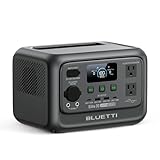
- [288Wh On-the-Go Power] - Only 9.4 lbs lightweight, carry it anywhere during storms! 288Wh capacity meets daily & outdoor needs—camping, road trips, beach visits, or home emergencies. Extend your smart green energy life to every corner of your ideal lifestyle with this compact entry-level power station.
- [600W Continuous & 1500W Surge Power] - Get a full 600W output—twice as much as others. When you need serious power, activate Power Lifting Mode for 1500W power (vs. the typical 600W). It runs everything from essential camping lights, speakers, and car fridges to critical devices like laptops and CPAP machines and even a small kettle or toaster—ideal for stormy days at home or outdoor trips.
- [50% Lower Power Consumption] - Upgraded UltraCell tech & smart cooling system cut power consumption by 50%. Enhances overall energy efficiency, extends device runtime. Excellent durability & environmental adaptability for extreme outdoor climates and long-term operation.(Standby power only 4.5W, DC 5W, AC 8W)
- [8 Charging Modes & 380W Fast Wall Charge] - Supports AC wall charge (380W/200W adjustable), solar, car charging, etc. 0-80% in 45 mins, 0-100% in 70 mins (battery-safe). Match PV60L solar panel for on-the-go recharging. Flexible charging solutions for city, wilderness, daily or emergency scenarios.
- [Reliable UPS] - Never lose data or stop your devices during winter storms/blackouts! 10ms ultra-fast UPS switch protects CPAP, laptops, routers—critical for home emergencies when power cuts suddenly.
Consider everyday energy features without assuming savings
Some installed batteries can be configured for backup reserve, time-of-use energy shifting, solar self-powered use, or utility grid-support programs. PG&E describes these modes in its home backup-power guidance. Whether they are available or financially beneficial depends on the product, setup, local utility tariff, and program terms; verify those details rather than assuming bill savings or incentives.
Independent reader supportYour contribution helps us test, update, and keep practical guides available for everyone.Choose and install backup power safely
- Follow the exact manufacturer instructions and do not exceed the backup source’s rated capacity.
- Use properly sized extension cords when needed.
- Never connect a generator to another power source, including utility lines.
- Use a qualified professional for fixed battery installation and any work connecting portable equipment to household circuits.
- Plan for medical equipment and other essential needs before choosing a system. The CDC reports that people experience about four hours of power loss per year on average, but disaster-related outages can last longer and can be life-threatening for people who rely on home medical equipment. See the CDC’s power-outage guidance.
EPA safety guidance for battery energy storage systems says battery fires can be difficult to extinguish, may reignite hours or days later, and can release harmful gases. That guidance concerns BESS installations and incident response; it is not a prediction of risk for any specific household battery product. It reinforces the importance of appropriate installation and emergency planning. See the EPA’s battery energy storage safety information.
Quick Recap
Best Value
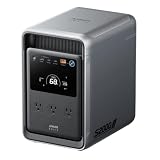
- 𝐔𝐩 𝐭𝐨 𝟑𝟓-𝐇𝐨𝐮𝐫 𝐅𝐫𝐢𝐝𝐠𝐞 𝐁𝐚𝐜𝐤𝐮𝐩: With 6W idle power draw and 10% higher efficiency, this power station runs 20% longer than other 2kWh systems, keeping your fridge powered for 35 hours.
- 𝟏𝟎,𝟎𝟎𝟎-𝐂𝐲𝐜𝐥𝐞 𝐋𝐅𝐏 𝐁𝐚𝐭𝐭𝐞𝐫𝐲: Powered by 314Ah LFP cells, S2000 has a 15-year lifespan, equivalent to 10,000 charge cycles.
- 𝐒𝐦𝐚𝐥𝐥𝐞𝐬𝐭 𝐚𝐧𝐝 𝐋𝐢𝐠𝐡𝐭𝐞𝐬𝐭 𝟐𝐤𝐖𝐡 𝐏𝐨𝐰𝐞𝐫 𝐒𝐭𝐚𝐭𝐢𝐨𝐧: 30% smaller and 25% lighter than the industry average, this power station measures just 8.2 × 11.1 × 12.7 in and weighs only 35.7 lbs.
- 𝐏𝐨𝐰𝐞𝐫𝐬 𝟗𝟗% 𝐨𝐟 𝐇𝐨𝐦𝐞 𝐄𝐬𝐬𝐞𝐧𝐭𝐢𝐚𝐥𝐬: 1,500W continuous output and 3,000W peak output keep nearly every essential appliance running. Actual runtime will vary depending on your refrigerator model, usage habits, and ambient temperature.
- 𝟔 𝐖𝐚𝐲𝐬 𝐭𝐨 𝐑𝐞𝐜𝐡𝐚𝐫𝐠𝐞: Supports up to 400W solar input. Power up via AC + solar, a wall outlet, a generator, solar panels, an alternator charger, or a car outlet—anytime, anywhere.
Rank #4

- Powerful yet Compact: Boasting a 1,500W AC output and a 3,000W surge peak, the Solar Generator 1000 V2 can power multiple appliances, including AC units, fridges, and electric pots. With a 1,070Wh capacity and a lightweight build of only 23.8 lbs, along with a foldable handle, it makes an excellent companion for outdoor camping, road trips, or emergencies.
- One Hour Fast Charging: Charge your Explorer 1000 v2 Portable Power Station from 0% to 100% battery level in just one hour with emergency charging activated via the Jackery App. It defaults to 1.7 hours for a full charge to optimize battery health. Engineered with advanced ChargeShield 2.0 technology, this power station charges safer, faster, and smarter.
- 10 Year Lifespan: The Explorer 1000 v2 portable power station is equipped with a durable LFP battery, maintaining over 70% of its original capacity even after 4,000 charge cycles, offering longevity exceeding 10 years.
- Tailored for Versatility: Featuring two USB-C ports, one USB-A port, one DC car port, and three pure sine wave AC ports, along with LED lights, the Solar Generator 1000 V2 is capable of charging multiple devices simultaneously, meeting power needs in various scenarios. PD 100W fast USB-C charging ensures a rapid charging speed, even without power adapters.
- Smart App Control: Effortlessly switch between different charging modes with Jackery’s App—including one hour emergency charging from 0 to 100%, 30 dB quiet overnight charging mode, and energy efficiency mode. Maximize the freedom to adjust the power station to meet your needs.
Use this checklist to make your decision
- Write down the essential devices or circuits you need during an outage.
- Decide how long you want them to run and which loads you can switch off.
- Compare output requirements as well as stored energy; do not choose by capacity alone.
- Choose a recharge method that can work during the outages you need to prepare for.
- Confirm circuit coverage, equipment compatibility, and outage behavior with the manufacturer or installer.
- If you choose a fixed system, discuss your consumption and solar plans with at least three installers.
Product prices and availability are accurate as of the date/time indicated and are subject to change. Any price and availability information displayed on Amazon at the time of purchase will apply.

