
Crashes, No Sound, or Screen Glitches?
Random freezes, missing sound and display glitches usually trace back to one bad driver. Find and replace yours safely.Free scan · under a minuteWindows Errors? Fix Them Before They Spread
Repair common Windows errors and clear accumulated junk for a smoother, more stable PC - no reinstall needed.Free scan · no reinstalliTechGuides is reader-supported. When you buy through links on our site, we may earn an affiliate commission. As an Amazon Associate I earn from qualifying purchases. Learn more
This PlayHT Review (2026) reaches a cautious verdict: PlayHT’s documented models could produce highly realistic, expressive AI speech, but the public PlayAI website now says, “We have shut down the service.” Legacy documentation remains online, yet it does not prove that new accounts, billing, generation, support, or API access still work.
That status issue matters more than a polished voice demo. PlayHT was historically relevant for narration, podcasts, e-learning, audiobooks, voice cloning, streaming text-to-speech, and conversational agents. However, anyone starting a new project in 2026 should treat PlayHT as an uncertain legacy platform rather than a normal, verified SaaS purchase.
Key takeaways
- The public PlayAI homepage currently displays a shutdown notice, but PlayHT developer documentation and model pages remain accessible.
- Surviving documentation describes PlayDialog, Play3.0-mini, streaming TTS, voice cloning, 36 languages, 48 kHz output, and up to 20,000 characters per streaming request; those are vendor-stated specifications, not independent benchmark results.
- Earlier 2026 third-party coverage reported plans from $39 per month, but those prices are historical signals rather than confirmed offers after the shutdown notice appeared.
- PlayHT could produce human-sounding speech, especially in short, well-prepared samples, but realism varied by voice, language, script, pronunciation, emotion, and passage length.
- Do not upload a valuable voice clone, build a new production API integration, or pay for a PlayHT plan until the company independently confirms operational access, terms, billing, support, and export continuity.
Is PlayHT still available in 2026?
PlayHT’s current availability cannot be responsibly treated as verified. The public PlayAI homepage displays the statement “We have shut down the service.” The same page still contains legacy descriptions of real-time voice intelligence, voice agents, text-to-speech, and deployment to websites, phones, and applications.
Quick wins for a faster PC:
Repair Windows errors before they cause bigger problemsFix Now →Scan for outdated or missing drivers - takes under a minuteDriver Scan →At the same time, the PlayHT documentation site remains accessible. The documentation still describes authentication, SDK installation, streaming speech, PlayDialog, Play3.0-mini, voice cloning, and API endpoints. Documentation surviving after a product shutdown is not proof that new signups, account dashboards, billing, audio generation, API credentials, or customer support remain operational.
Popular on Amazon
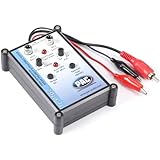
- Tone Generator and Speaker Polarity Tester
- Perfect for safely troubleshooting and testing audio systems
- Output range of 0-8 volts at a variable 13 to 10,000Hz tone
- 9V Speaker popper for visually testing speaker connection polarity
- Includes RCA and alligator clips for connection
The available evidence does not establish an exact shutdown date or whether every PlayHT or PlayAI endpoint has been disabled. The evidence does establish a conflict between the public product surface and the surviving technical documentation. That conflict is enough to make PlayHT unsuitable as an unverified dependency for a new production project.
What does the shutdown notice mean for buyers?
The shutdown notice creates several unresolved questions:
- Can a new customer create an account and generate audio?
- Can an existing customer access projects, voice clones, invoices, and previously generated files?
- Do old API keys still authenticate successfully?
- Are historical commercial-use rights still clear after account closure or a product transition?
- Is there a working support route for refunds, cancellation, export, or data deletion?
Those questions cannot be answered from legacy documentation alone. A technically valid-looking SDK, endpoint, or code example may simply be an archived product path. A developer should not interpret online documentation as an uptime promise, support commitment, or current purchasing invitation.
Free tools Windows power users keep installed
One-click scans. No signup required.
What was PlayHT?
PlayHT was a cloud text-to-speech and voice-cloning platform designed for creators, developers, educators, and businesses. Its reported use cases included AI narration, YouTube videos, podcasts, e-learning, audiobooks, accessibility tools, apps, IVR and telephony, and conversational voice agents.
Third-party coverage described a combination of a browser-based studio, a voice library, multilingual speech, voice cloning, and developer APIs. The product was therefore broader than a simple “paste text and download MP3” tool. A creator could use a studio workflow, while a developer could stream generated speech into an application or voice-agent system.
Those capabilities describe what PlayHT offered or documented historically. They should not be read as confirmation that the same workflows are available now.
Did PlayHT produce human-quality AI voices?
PlayHT could produce human-sounding speech, but “human-quality” was a use-case-dependent result rather than a universal guarantee. Short demonstrations could sound highly natural when the script was well written, the pronunciation was predictable, and the selected voice suited the material.
Real productions are more demanding. AI speech may reveal itself through incorrect pronunciation of names and acronyms, unnatural pauses, over-controlled emphasis, repeated intonation patterns, emotional flattening, or instability across long passages. A voice that sounds convincing for a 10-second sample may become less convincing during a 20-minute narration, a rapid dialogue, or a script containing technical vocabulary.
Third-party 2026 coverage generally positioned PlayHT as competitive but not consistently ahead of ElevenLabs in naturalness, prosody, emotional range, or cloning quality. The comparative PlayHT coverage and an independent 2026 review discussion are useful as reported comparisons, not as a substitute for a controlled test on your own scripts.
What affected PlayHT voice quality?
- Voice selection: Different voices had different strengths in warmth, pacing, accent, and emotional expression.
- Script preparation: Punctuation, sentence length, spelling, and phonetic workarounds affected delivery.
- Language and accent: Performance could vary substantially outside the voice’s strongest language or accent.
- Passage length: Long-form consistency was a more meaningful test than a short promotional sample.
- Context: Dialogue, emotion, interruptions, and conversational turn-taking required different capabilities from straightforward narration.
The correct evaluation question is not “Can PlayHT make one sentence sound human?” The useful question is “Can the selected voice deliver my complete script with acceptable pronunciation, pacing, emotion, consistency, licensing, and repeatability?”
Which PlayHT models and specifications were documented?
The surviving official model documentation describes two important model families: PlayDialog for expressive conversational speech and Play3.0-mini for fast multilingual text-to-speech. The specifications below are vendor-published documentation claims, not independent measurements.
| Model or capability | Documented purpose | Documented specification or behavior | How to interpret it in 2026 |
|---|---|---|---|
| PlayDialog | Expressive, contextual dialogue | Uses conversation history to influence prosody, intonation, emotion, and pacing; supports turn-based dialogue with multiple voices | Historically relevant for agents and dialogue, but current availability is unverified |
| Play3.0-mini | Fast multilingual TTS | Supports streaming and voice cloning; documentation states support for 36 languages | A documented capability, not proof of a currently working service |
| Play3.0-mini audio | Higher-quality streamed output | Documentation states native 48 kHz output by default | A vendor specification rather than an independent audio-quality test |
| Streaming request | Large real-time or batch-style text input | Documentation states a maximum of 20,000 characters per streaming request | One request limit does not establish total quota, throughput, or uptime |
| Streaming latency | Real-time applications | Documentation describes sub-200 ms streaming latency as a target or stated specification | Not an independent measurement or guarantee for a live endpoint |
The official model documentation should be cited whenever these figures are discussed. Claims such as 36 languages, 48 kHz, 20,000 characters, and sub-200 ms must not be presented as independent benchmark results.
How did the PlayHT API work?
The documented API workflow required a user ID and API key, optional SDK installation, client initialization, a request to a streaming text-to-speech endpoint, and saving or forwarding the returned audio stream. The workflow below is included to explain the historical developer experience, not to imply that the endpoint currently accepts requests.
The documented Node.js installation command was:
npm install playhtThe documented SDK pattern was:
import * as PlayHT from "playht";
import fs from "fs";

PlayHT.init({
  userId: "<YOUR_USER_ID>",
  apiKey: "<YOUR_API_KEY>",
});

async function streamAudio(text) {
  const stream = await PlayHT.stream(text, {
    voiceEngine: "PlayDialog",
  });

  stream.on("data", (chunk) => {
    fs.appendFileSync("output.mp3", chunk);
  });

  return stream;
}
The documented REST endpoint was:
POST https://api.play.ht/api/v2/tts/streamRequests used X-USER-ID and AUTHORIZATION headers. The official API quickstart contains the documented authentication and streaming workflow.
Also popular on Amazon

- Main Function: Specially used to adjust the speaker wiring of car audio system, only the correct wiring, when listening to music can to replay the sound, to have a harmonious and realistic feeling.
- Professional Equipment: effectively used to test speakers, for safe troubleshooting and testing of audio systems. Can be used for car audio speaker testing. Professionally manufactured and highly
- How to Use: Speaker wiring adjustment, after the audio system is installed, first put the test disk into the host and adjust the volume output to the right position. Then follow the steps below. Specially used to adjust the speaker wiring of the car audio system, only the correct wiring, when listening to music can the sound as it is.
- Phase Tester: ABS material, the battery type of phase meter is lithium battery, battery model. 6F22 (delivered without battery).
- Applicable to: The phasemeter can test all speakers of all cars, such as small tweeters, door speakers, subwoofers, etc.
Before using any old integration, test account authentication, a minimal request, streaming completion, error handling, file export, and billing behavior in a non-production environment. Do not put a legacy API directly behind a customer-facing application without confirming current support and service status.
What did PlayHT voice cloning offer?
PlayHT’s official quickstart claimed instant voice cloning from approximately 30 seconds of speech. That claim should be understood as a minimum or approximate source-audio requirement described by the vendor, not a promise of maximum fidelity for every voice, language, emotional style, or use case.
Voice-clone quality depends on the source recording’s microphone quality, room noise, pronunciation, speaking range, emotional variation, and consistency. A clone may reproduce vocal identity without reproducing the original speaker’s full acting ability. A clone that works for calm narration may perform poorly for shouting, whispering, singing, unusual names, rapid dialogue, or code-switching.
Anyone evaluating a clone should test the exact production scripts and languages. The test should include names, acronyms, numbers, difficult pronunciations, emotional lines, long passages, and corrections that are likely to occur after publication.
Should you upload a voice to PlayHT now?
Do not upload a valuable or irreplaceable voice recording until current operation, data handling, deletion, consent, and export procedures are confirmed. A shutdown or platform transition can leave a user with rendered audio but no ability to regenerate it, retrieve clone data, reproduce proprietary voice settings, or obtain support.
For any voice-cloning project, retain written consent, identify who owns the voice, preserve the applicable terms, document the permitted uses, and keep local copies of generated assets. Voice cloning should never be used for non-consensual impersonation, fraud, harassment, political manipulation, or content that falsely suggests a real person endorsed something.
The PlayAI safety guidance describes consent-based cloning and lists prohibited uses including non-consensual impersonation, fraud, harassment, and political manipulation. Those principles remain important regardless of which vendor is selected. Legal requirements can also vary by country, state, intended audience, and whether the voice resembles a real person.
What were PlayHT’s reported prices?
Earlier 2026 third-party coverage reported paid plans beginning at approximately $39 per month, but those figures are not confirmed current purchase options. The source was checked in May 2026, while the public PlayAI website now displays a shutdown notice. Treat the figures as historical context only.
| Historical plan | Reported monthly price | Reported annual effective monthly price | Reported positioning | Current buying status |
|---|---|---|---|---|
| Free | $0 | $0 | 12,500 characters monthly; attribution; non-commercial | Not confirmed |
| Creator | $39 | $31.20 | Character-based allowance, cloning, API, commercial license | Not confirmed |
| Professional | $39 | $29.25 | Word-based allowance, premium voices, API | Not confirmed |
| Premium | $99 | $74.25 | “Unlimited” positioning with a reported fair-use cap | Not confirmed |
| Team | $198 | $148.50 | Team features and administration | Not confirmed |
| Enterprise | Custom | Custom | SSO, support, SLA, and custom limits | Not confirmed |
The May 2026 third-party pricing report is the source for these historical figures. The figures should not be used to justify a purchase on August 18, 2026, because the official product surface no longer provides a reliable current offer.
What did “unlimited” mean?
A third-party report said the historical Premium plan’s “unlimited” positioning was subject to a 2.5-million-character monthly fair-use cap. That was a plan-specific, third-party report checked in May 2026, not a currently confirmed offer.
The official rate-limit documentation also described plan-based API limits and HTTP 429 responses when requests exceeded those limits. The PlayHT rate-limit documentation matters because a headline allowance does not necessarily mean unlimited parallel generation, unlimited throughput, unlimited request length, or unlimited commercial use.
When comparing any “unlimited” voice service, check fair-use rules, rate limits, maximum text length, queueing, concurrency, API quotas, attribution, commercial rights, and whether the provider can continue delivering the same voice tomorrow.
What were PlayHT’s main risks?
Product and continuity risks
- The service may no longer accept new users even though documentation remains online.
- An existing dashboard may disappear while generated files, invoices, or clone settings remain inaccessible.
- API credentials may stop working or old SDKs may point to unsupported endpoints.
- Support, cancellation, refund, deletion, and export routes may be unavailable.
- A proprietary voice ID may not be reproducible in another provider.
- A previously generated file may remain usable while future corrections or re-renders become impossible.
Audio and production risks
- Names, acronyms, URLs, technical terms, and numbers may be pronounced incorrectly.
- Long passages may develop robotic pacing, voice drift, or repeated intonation.
- Emotion may flatten or become inconsistent between generations.
- Accents, non-English languages, and code-switched passages may perform worse than English demos.
- Dialogue may sound less convincing when turn-taking, interruptions, or conversational context are required.
- Punctuation and sentence boundaries may create audible artifacts or unnatural pauses.
Commercial and legal risks
Generated-audio rights, voice-cloning consent, script ownership, music and sound-effect rights, likeness rights, publicity rights, and synthetic-media disclosure are separate issues. A paid plan’s commercial-use permission does not automatically grant permission to clone another person’s voice, use copyrighted source material, or impersonate a public figure.
Do these 3 things before closing this tab:
1Clear out junk files and repair common Windows errors2Fix the driver behind crashes, sound loss and screen glitches3Repair Windows errors before they cause bigger problemsBecause PlayHT’s current terms and continuity are uncertain, retain written consent, the applicable plan terms, invoices, project files, exported audio, and records identifying the voice owner. Do not assume that historical commercial rights or future regeneration remain available after a shutdown.
Also popular on Amazon

- Polarity Tester: Phase Meter is used to check whether the positive and negative wiring of the speaker is correct, and to troubleshoot and test the audio system
- Compatibility: Speaker Polarity Tester can test all speakers in all cars, such as small tweeters, door speakers, subwoofers, etc
- Test CD: CD includes 4 signal segments, Section 1: left channel noise signal; Section 2: Right channel noise signal; Sections 3 & 4: Phase test signals
- Usage: Put CD into the car CD player, play 1 or 2 section, and check if the left/right channel connection is correct. Play section 3 or 4, the speaker will generate a fixed frequency signal, bring the front end of the tester close to the speaker, and then press the test button
- Usage: Green light flashes 3 times, red light flashes once indicating the speaker output positive phase (correctly connected); Red light flashes 3 times, green light flashes once indicating negative phase (reverse connection). Yellow light on indicates low battery (Including battery)
Which alternative is best after PlayHT?
The best replacement depends on whether the project prioritizes expressive narration, browser-based production, accessibility, simple document narration, custom voice work, or enterprise infrastructure. No alternative is automatically best across all of those categories.
| Alternative | Best fit | Main advantage | Main trade-off | Official starting point |
|---|---|---|---|---|
| ElevenLabs | Expressive narration, realism, and voice cloning | Quality-first creator workflow and strong reported prosody | High-volume cost and licensing require careful review | ElevenLabs pricing |
| Murf AI | Presentations, e-learning, and marketing voiceovers | Browser-based studio and production workflow | Less suitable for minimal, latency-sensitive API deployments | Murf AI |
| Speechify | Accessibility, listening, education, and creator narration | Reader-oriented and creator-oriented use cases | Deep developer controls and agent infrastructure are not its primary fit | Speechify |
| Narakeet | Simple narration, presentations, and document-to-audio work | Straightforward narration workflow with per-minute pricing signals in third-party coverage | Less suited to premium emotional acting or complex dialogue | Narakeet |
| Resemble AI | Branded voices, voice conversion, gaming, and custom applications | Custom voice and conversational application focus | Less simple for casual low-cost narration | Resemble AI |
| Amazon Polly | AWS-integrated applications and scalable APIs | Enterprise cloud-account and infrastructure integration | Usually requires more engineering than a creator studio | Amazon Polly |
| Google Cloud Text-to-Speech | Cloud-native multilingual applications | Enterprise procurement and application integration | Not primarily a creator-focused voiceover studio | Google Cloud Text-to-Speech |
| Microsoft Azure AI Speech | Microsoft-centered enterprise deployments | Enterprise speech infrastructure and compliance-led procurement | More configuration than a quick creator workflow | Azure AI Speech |
Which alternative should creators choose?
Choose ElevenLabs when maximum realism, expressive narration, or voice cloning is the top priority. Choose Murf AI when the work is presentation- or e-learning-led and a browser studio is more useful than a bare API. Choose Speechify for listening, accessibility, education, and creator narration. Choose Narakeet for straightforward document, presentation, or instructional narration.
Which alternative should developers choose?
Choose Amazon Polly, Google Cloud Text-to-Speech, or Microsoft Azure AI Speech when enterprise account management, cloud integration, regional deployment, or procurement continuity matters more than an actor-like studio experience. Consider Resemble AI when a branded voice, voice conversion, gaming workflow, or custom conversational application is central to the project.
Recommended Free Tools
How should you test a PlayHT replacement?
Use the same standardized script with every vendor instead of rating one polished demo. The test should include the actual content and delivery conditions of the project.
- Generate a normal paragraph.
- Generate text containing dates, currency, percentages, URLs, acronyms, product names, and technical terminology.
- Test an ambiguous pronunciation and a proper name.
- Test a short emotional line.
- Generate a long-form passage rather than only a short sample.
- Test a two-speaker dialogue if the project needs conversational audio.
- Test the required multilingual or code-switched passage.
- Test the exact telephony, application, or agent response used in production.
Score pronunciation accuracy, naturalness, pause placement, emotional control, voice consistency, time to first audio, total generation time, failure and retry behavior, cost at actual monthly volume, commercial rights, data retention, deletion, and export options.
For an API, also test authentication, streaming completion, HTTP errors, rate limits, concurrency, retries, observability, and whether a failed request can be safely repeated without producing duplicate charges or inconsistent output. For a voice clone, test the exact language, script, emotional range, and correction workflow required by the final project.
Who should and should not use PlayHT in 2026?
| Reader situation | Recommendation | Reason |
|---|---|---|
| Existing user with a working account | Use only after verifying generation and export | Existing access may differ from new-account availability, and continuity remains uncertain |
| New creator starting narration | Choose an operating alternative | A new project should not depend on an apparently shut-down service |
| Developer planning a production API | Avoid PlayHT unless directly confirmed | Legacy documentation does not establish endpoint reliability, support, or an SLA |
| User planning to upload a valuable voice | Do not upload until operation and data policies are confirmed | Clone retrieval, deletion, regeneration, and migration are unresolved |
| Business requiring contractual uptime | Use a vendor with verified enterprise terms | Continuity, support, billing, and service-level commitments matter more than a demo |
| Researcher evaluating historical technology | Use the surviving documentation as historical evidence | Documented models and code examples remain useful without proving current service operation |
Final verdict: is PlayHT worth it?
PlayHT’s historical voice quality was competitive, but PlayHT is not a responsible new purchase recommendation in 2026 unless operational status is independently confirmed. The public PlayAI site says the service has shut down, while legacy documentation continues to describe capable models and APIs. That contradiction makes continuity, support, billing, licensing, and migration more important than historical realism.
What’s actually slowing this PC down?
Pick the symptom - the matching free tool is one click away.
If an existing account still works, download important audio, scripts, settings, invoices, consent records, and other project data immediately. If you are starting a new narration, cloning, agent, or API project, evaluate an operating alternative using your real scripts and commercial requirements. A slightly less impressive voice from a dependable provider is usually safer than a remarkable voice that cannot be regenerated, supported, or legally documented.
Frequently Asked Questions
Can I still sign up for PlayHT in 2026?
New PlayHT signup availability is not verified. The public PlayAI website displays a shutdown notice, while legacy PlayHT documentation remains online; documentation alone does not prove that new accounts, billing, generation, or support work.
Was PlayHT better than ElevenLabs?
PlayHT was not broadly established as better than ElevenLabs across every dimension. Third-party 2026 comparisons generally treated ElevenLabs as stronger for naturalness, prosody, emotional range, and cloning, while PlayHT remained historically competitive for expressive speech, streaming, and multilingual use cases.
Did PlayHT really offer unlimited text-to-speech?
A third-party May 2026 report described PlayHT’s historical Premium plan as “unlimited” but subject to a reported 2.5-million-character monthly fair-use cap. The figure is historical and should not be treated as a current offer after the shutdown notice.
The Tool Desk
Outbyte Driver Updater FREEFix the driver behind crashes, sound loss and screen glitchesFind Drivers →Outbyte PC Repair FREEClear out junk files and repair common Windows errorsFree Scan →Is PlayHT voice cloning safe to use?
Voice cloning is safe only when the speaker has given documented permission and the provider’s data, deletion, licensing, and abuse-prevention terms are clear. Do not upload a valuable voice clone to PlayHT until current operation and data-handling procedures are confirmed.
The Bottom Line
Bottom line: PlayHT may have delivered human-sounding AI voices, but the public service status now outweighs its historical capabilities. Treat PlayHT as a legacy or uncertain platform, preserve any existing assets, and choose a verified alternative for new production work.


dTmwyrzsEEMNqOPdRaQrFmm