
The Tool Desk
Outbyte PC Repair FREEClear out junk files and repair common Windows errorsFree Scan →Outbyte Driver Updater FREEScan for outdated or missing drivers - takes under a minuteDriver Scan →iTechGuides is reader-supported. When you buy through links on our site, we may earn an affiliate commission. As an Amazon Associate I earn from qualifying purchases. Learn more
If you suspect a pipeline leak or spill, leave the area on foot and call 911 from a safe location. Don’t investigate, touch the product, operate valves, or use a phone while you’re still in the suspected hazard area. Warning signs vary by product, so a missing odor or other familiar clue does not rule out a release.
How can you recognize a pipeline leak or spill?
A leak may produce visual, audible, or odor-related clues. None is required for a leak to be possible. The U.S. Pipeline and Hazardous Materials Safety Administration (PHMSA) lists these possible visual signs in its guidance, “Pipeline Leak Recognition and What to Do,” updated May 25, 2017:
- Liquid pooling, an oily sheen on water, or continuous bubbling in a wet or flooded area.
- Discolored or unusually dry soil or vegetation.
- Vaporous fog, blowing dirt near a pipeline, or flames coming from the ground or apparently burning aboveground.
- A hissing sound, which may be quiet or as loud as a roar depending on the leak.
- An unusual petroleum or gas odor.
Don’t rely on smell alone
Odor depends on the product and pipeline system. Transmission and gathering natural gas is odorless, though it may have a hydrocarbon smell; gas distributed to customers is odorized. Highly volatile liquids can be colorless and odorless, while commercial odorants are added to many such products. Treat other suspicious signs seriously even if you smell nothing.
What a home gas detector can—and can’t—tell you
PHMSA suggests that people living near pipelines discuss home gas detectors with their pipeline company. A detector is not a way to check an outdoor suspected release, identify every product a pipeline may carry, or replace leaving the area and calling 911.
#1 Best Overall

- 【512Hz Transmitter Signal Support】: Equipped with a 512Hz transmitter signal and receiver, this robot enables precise location tracking in underground pipelines. Effortlessly detect and locate pipeline positions with enhanced accuracy.
- 【High-Definition Low-Light Cameras】: Equipped with front and rear 2-megapixel cameras, this robot delivers high-definition visuals even in low-light conditions. Capture clear and detailed images during your inspections.The front camera is mounted on a Pan-Tilt mechanism, offering a 360-degree horizontal rotation and ±90-degree vertical adjustment. Customize the camera's position and height to ensure optimal viewing angles.
- 【Convenient Wire Winding】: The all-metal winch comes with an automatic wire winding function, making cable management effortless. Additionally, the automatic meter count function allows you to track the vehicle's driving distance, which can be displayed synchronously and captured in screenshots.Equipped with a special tensile, scratch, and corrosion-resistant cable, ensuring longevity and reliable performance even in challenging environments.
- 【Versatile Motor-Driven Wheels,Special Shaped Non-Skid Tires】: Powered by four motor-driven wheels,adjust the driving speed among three levels - high, medium, and low - to match the requirements of your inspection tasks.The sewer camera robot's specialized non-skid tires offer excellent traction and stability. Navigate wet and slippery surfaces with confidence, ensuring efficient inspections.
- 【User-Friendly Interface,Capture Moments】: The sewer camera robot provide a tablet with pre-installed operating software for seamless operation. The intuitive interface ensures simple navigation and easy control during your inspections.DVR function, allowing you to document findings and record the inspection process for future reference.
What should you do if you suspect a release?
- Leave immediately on foot. Don’t try to find the leak or walk into a vapor cloud. If you can do so without delaying your exit, turn off gas appliances; otherwise leave them alone.
- Move away from the suspected hazard. Try to stay upwind if possible, and get clear before using a phone.
- Call 911 from a safe location. Give the location and describe what you observed. Don’t delay the call to investigate or estimate the release.
- Notify the pipeline company or local emergency response number if you know it. Emergency responders can help identify and contact the operator.
- Wait for trained responders. Don’t touch escaping gas or liquid, operate pipeline valves, start a vehicle or electrical equipment nearby, create flames or sparks, drive through a vapor cloud, or try to extinguish a natural-gas fire.
PHMSA’s instruction not to use a telephone or cell phone in the affected area is consistent with calling 911 after you have left it. Do not remain in a suspected hazard area to make the call.
Who should you call to report a pipeline spill?
For an immediate danger, call 911 first from safety. PHMSA also directs the public to report a witnessed oil spill or hazardous-material discharge to the National Response Center (NRC) at 1-800-424-8802. The U.S. Environmental Protection Agency (EPA) says the NRC is staffed around the clock. You can also notify the pipeline company or a local emergency number if known. Do not postpone an emergency call to collect every detail.
Rank #2

- [Simple Operation] The PQ125B water leak detectors for home utilizes a factory-developed UI interaction system. Its touchscreen displays each functional module clearly with operational guidance and error pop-ups, enabling even inexperienced users to easily detect leak points. For professional leak detection personnel, it proves an invaluable asset.
- [Precise Localization] The water leak detector has two leak detection modes.Users can quickly scan large areas to identify leak locations via GENERAL DETECTION MODE.In LOCATION MODE, signals from sixteen points are captured and retained in the screen's data collection box. By comparing signal strengths, the exact leak point is pinpointed.
- [High-Precision Sensors] The PQ125B water leaks detector features RC-S3 ACOUSTIC CHAMBER RESONANCE SENSOR&Listening rod,Specifically designed for leak detection in outdoor and industrial settings。RC-S3 Sensor based on monitoring changes in the reflection and superposition (reverberation) patterns of sound waves inside the chamber, it captures sound wave signals conducted through the ground. offering high sensitivity to minor vibrations
- [Original Manufacturer] The PQ125B water leaks detector is independently developed and manufactured by PQWT—Hunan Puqi Geologic Exploration Equipment Institute. As a precision instrument manufacturer collaborating with multiple universities, we have specialized in pipeline leak detection for 19 years, possessing mature production lines and a robust R&D team.
- [Warranty and Languages] The main unit comes with a two-year warranty and lifetime maintenance. Available in 12 languages: English, Turkish, Italian, French, Spanish, Arabic, Russian, Korean, German, Portuguese, Polish, Vietnamese.
What information helps a report?
Share what you know, not what you would have to approach the hazard to find out. EPA’s “What Information is Needed When Reporting an Oil Spill or Hazardous Substance Release?”, updated August 26, 2026, lists details such as:
Recommended Free Tools
- Your name and contact information, if you can provide them.
- The location and time of the incident, and any identifying information about the responsible party.
- The apparent source or cause, material, and estimated amount, if known.
- Whether land or water is affected, and any hazards, injuries, weather conditions, or evacuations.
- Other agencies already notified.
Which agency handles a water or inland release?
As a general guide, EPA identifies its regional office as the alternative reporting route for inland areas and inland waters. For coastal waters, the Great Lakes, ports and harbors, and the Mississippi River, it identifies the Coast Guard Marine Safety Office. Either agency relays reports to the NRC. The incident’s location and current direction from responders govern; these routes do not replace calling 911 when people may be in immediate danger.
Rank #3
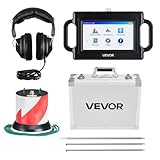
- Accurate Detection: VEVOR pipe water leak detector features 1Hz–5000Hz wide frequency range and up to 6.6FT (2m) underground detection depth, effectively filtering out interference signals and accurately capturing the vibration frequencies caused by water leakage
- Pinpoint Pipeline Leaks: Equipped with a sensitive sensor, 3 listening rods, and a noise-canceling headphones, this pipeline water leakage detector efficiently captures leakage sound signals. Flexibly adapt to metal or non-metal pipes, hard or soft soil, ensuring accurate leak detection
- User-friendly for All Users: Support spectrum and filtering analysis. Filtering analysis provides 8 function menus — professionals can select the corresponding frequency from the 24 fixed frequencies, and non-professionals can select the corresponding pipe material (metal or non-metal) and surface soil (hard or soft)
- Intuitive Operation: The 7-inch color LCD touchscreen clearly displays detection data, allowing easy parameter setting and adjustments. It also features a live recording function for convenient data tracking and leak detection
- Longer Runtime: Powered by a 7000mAh 3.65V high-capacity battery, the plumbing water leak detection locator supports up to 8 hours of continuous use. It also comes with an 8GB SD card for data storage and a durable carrying case for convenient transport
What happens after a leak or spill is reported?
The company and local responders act first
PHMSA says the pipeline company dispatches trained personnel after notification to isolate the emergency, minimize the amount released, and assist public and safety officials. EPA describes the initial response as involving the responsible company and its response contractors, local fire and police, and other local emergency personnel. State agencies may support or take over if local capacity is exceeded.
Members of the public should leave isolation and cleanup to trained responders. Do not try to shut down a pipeline or manage the release yourself.
Rank #4
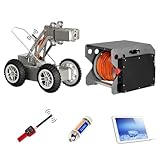
- 【512Hz Transmitter Signal precise positioning】The inspection robot is equipped with a 512 HZ transmitter signal and receiver,capable of precise positioning and tracking in underground pipelines or confined crawl space
- 【Four-wheel motor drive(4WD), adapted to any terrain】The sewer camera robot is driven by four motors driving wheels, and the high, medium, and low speeds can be selected. Specially designed shaped anti-skid tires provide excellent traction and stability, adapt to any terrain and slippery scene, ductwork, and hard-to-reach locationsfor crawl space inspection
- 【dual camera 360⁰ high-definition shooting, automatic recording】Switchable front and rear 200W high-definition dual cameras, adjustable height of 200-370mm, horizontal 360⁰ and vertical 180⁰ rotation. Equipped with automatic meter counting and DVR function. Front 6 lights, back 2 lights, can be adjusted to capture clear and detailed images even in low light environments during the inspection
- 【User friendly interface, easy to operate】The inspection robot provides a pre installed operating software tablet, intuitive interface ensures simple navigation and control. The all metal winch has automatic winding function, making cable management easy
- 【All metal body and anti-corrosion cable, durable and long-lasting】Anti oxidation and corrosion-resistant body, IP68 waterproof, equipped with special stretch, corrosion-resistant cables to ensure longevity and reliable performance, even in challenging environments. Suitable for various engineering and industrial devices to use pipe inspection robots to detect cracks, foreign objects, and sewage inside pipe, ensuring the normal operation and safety of pipelines
Federal coordination may follow
After a report, the NRC notifies a pre-designated EPA or Coast Guard On-Scene Coordinator based on the location. The coordinator evaluates whether the response is adequate and whether federal involvement is appropriate. According to EPA’s “Responding to an Incident,” updated February 20, 2026, the coordinator may take command if the responsible party is unknown or uncooperative, the incident exceeds company, local, or state capacity, or an oil spill poses a substantial threat to public health or welfare. Federal support can include technical specialists and additional contractors; federal command does not automatically follow every report.
Do pipeline reporting deadlines mean the public should wait?
No. Operator reporting rules are not waiting periods or instructions for witnesses. Call 911 from safety when there is an immediate hazard, and report a witnessed oil spill or hazardous-material discharge to the NRC as directed by PHMSA.
Best Value
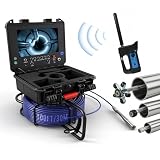
- 【Product Highlights】Holdwell S borescope camera with light 512Hz transmitter and locator(included) for precise fault detection. The built-in screen features a real-time distance counter that automatically tracks and displays measurements as you work.Perfect for plumbers, maintenance techs, home inspectors, contractors, and homeowners
- 【9-inch IPS】The borescope pipe lnspection camera combines a high-sensitivity camera probe with a large 9-inch monitor, allowing you to easily spot issues deep inside walls or pipes. It comes with a 32GB TF card pre-installed, so you can start capturing 1080P HD photos and recording crisp, clear video footage right out of the box.
- 【4500mAh Battery Capacity】Featuring a 4500mAh lithium battery, it effortlessly supports 8 hours of continuous operation. Equipped with 12 adjustable-brightness LEDs, articulating borescope camera excels in dark drainage pipes, ensuring high-quality images and videos in complex environments. With a 145-degree viewing angle, it delivers clear, unobstructed coverage.
- 【Versatile Compatibility for Pipe Size】 The 0.2-inch (5mm) flexible cable paired with a 0.9-inch (23mm) ultra-flexible camera head easily navigates narrow pipes and crevices. Equipped with a pipe pulley (for pipes 30mm and larger) and a roller guide (for pipes 90mm and larger), it ensures efficient and flexible inspection across all pipe diameters.
- 【Built to Last】Engineered for the toughest jobs, this pipeline camera features a scratch-resistant sapphire lens and an IP68 waterproof rating, ensuring it can handle rough impacts and extreme temperatures (from -4°F to 140°F) inside pipes without missing a beat. The flexible spring-coiled joint and semi-rigid fiberglass cable smoothly navigate tight bends without kinking or tangling, reducing wear and tear for long-lasting performance.
PHMSA’s Incident Reporting page, current September 23, 2026, describes operator duties for reportable pipeline incidents. The intervals below apply to operators when a release meets the relevant regulatory requirements—not to a member of the public deciding whether to report a suspected leak.
| Operator requirement | PHMSA’s stated interval | Scope and qualification |
|---|---|---|
| Notify the NRC by phone | Within 1 hour | For a hazardous-material release that meets the applicable reporting threshold. |
| Update the NRC | Within 48 hours | For a reportable pipeline incident. |
| Submit a relevant PHMSA report | Within 30 days | For a reportable pipeline incident. |
PHMSA lists a gas-pipeline incident property-damage threshold of $153,600, effective July 1, 2026; the previous threshold was $149,700. It lists a $50,000 property-damage threshold for hazardous-liquid pipeline accidents under 49 CFR §195.50. These are regulatory thresholds, not a measure of whether a leak is dangerous, and their application depends on pipeline type and regulation. They do not limit a good-faith public report.
Separate spill-reporting rules can apply to responsible parties
EPA’s “When are You Required to Report an Oil Spill and Hazardous Substance Release?”, updated February 20, 2026, describes federal reporting triggers for responsible parties. For oil discharged to navigable waters or adjoining shorelines, triggers include violating water-quality standards, causing a visible sheen or discoloration, or depositing sludge or emulsion. A hazardous-substance release can trigger federal reporting when it reaches or exceeds the applicable reportable quantity, subject to exemptions. States may have separate requirements. These legal tests are not a reason for a witness to delay an emergency report.
How do pipeline incidents get documented?
PHMSA’s incident data system collects details including when and where an event occurred, injuries or fatalities, the commodity, failure cause, and evacuation procedures. The agency says it uses these reports to identify trends, plan inspections, and assess risk. Its listed high-level cause categories include corrosion, excavation damage, incorrect operation, equipment failure, material or weld failure, natural-force damage, and outside-force damage. They are categories, not evidence that one cause is most common in a particular incident.
Quick Recap
Product prices and availability are accurate as of the date/time indicated and are subject to change. Any price and availability information displayed on Amazon at the time of purchase will apply.

