
Quick wins for a faster PC:
Clear out junk files and repair common Windows errorsFree Scan →Fix the driver behind crashes, sound loss and screen glitchesFind Drivers →Peak-season support works best when staffing, policies, channels, automation, and returns are planned around your store’s own demand—not a generic staffing ratio or a promise to be everywhere. Start with historical ticket patterns, prepare agents and customer-facing answers before promotions begin, publish service expectations you can meet, and build backup capacity for the work that still needs a person.
Build the operating plan around your store’s demand
Use your own support history to estimate when customers will need help, what they will ask, and which channels they will use. Shopify’s 2025 holiday customer-service article attributes to Influx an average 79% increase in ecommerce support tickets in the first week of December. That is an industry benchmark reported by Shopify, not a forecast for an individual store. Your past sales events, products, geography, promotions, and delivery promises are better guides to your coverage plan.
Review volume by day, hour, and channel
- Compare daily ticket volume across previous peak periods and year over year; include the weeks before and after the sales event if those periods created their own service pressure.
- Break demand down by time of day and channel. A daily total can conceal a short interval when chat, phone, or social messages overwhelm the available team.
- Identify recurring pressure points, such as a promotion launch, order cutoff, carrier handoff, or a product that generates setup questions.
- Use those patterns to schedule shifts and designate backup coverage. Assigning ticket blocks and using backup agents for calls and voicemails is one approach described by Shopify, not a universal staffing formula.
There is no single staffing ratio established here for all ecommerce teams. The right coverage depends on your own workload, channel mix, service hours, and the skills needed to resolve the incoming cases.
Set a baseline and watch service indicators
Record normal-period performance before the rush so you can see whether peak operations are slipping. Shopify describes three useful indicators: customer satisfaction score (CSAT), commonly expressed on a 0–100% scale; customer effort score (CES), which asks how easy it was to resolve an issue; and first response time (FRT), the elapsed time before an agent first responds. Compare them with your own baseline and use material changes as a prompt to adjust coverage or processes. The cited guidance does not establish a universal target threshold.
The Tool Desk
Outbyte Driver Updater FREEScan for outdated or missing drivers - takes under a minuteDriver Scan →Outbyte PC Repair FREEClear out junk files and repair common Windows errorsFree Scan →#1 Best Overall

- THERMAL SHIPPING LABEL PRINTER: Compatible with Windows, macOS, and Linux, and can be used with ZPL software. Ethernet capability: Supports router speeds under 1ghz. See user manual for proper driver installation.
- PRINT QUALITY: Optimized for performance with a top print speed of 6-inch-per-second and 203 DPI for sharp, high-quality text and graphics. Perfect for printing shipping labels for personal, small business, as well as ecommerce use.
- DIRECT THERMAL PRINTER: Applies heat directly onto the label material, eliminating the need for ink ribbons and toners. Perform a print test during setup to ensure print visibility. NOT Bluetooth-capable.
- 4x6 THERMAL LABEL PRINTER: Can be used with fanfold labels or label rolls. Supports media widths of 0.78" to 4.6" with a max printing width of 4.25", thickness of 0.06mm to 0.25mm, a label roll outer diameter of 4.75", and a core diameter of 1" to 3".
- PACKAGING CONTENTS: Printer, starter labels, label holder, USB flash drive, USB cable, power cord, and power adapter. Ethernet cable and USB-C cable/adapter are sold separately.
Prepare the team, policies, and answers before promotions
Agents should not have to hunt for the current shipping promise or improvise a return decision while queues are growing. Refresh product and policy knowledge before the campaign, then keep the reference material current as inventory, promotions, delivery windows, and holiday hours change.
Create a practical playbook
- Summarize shipping windows, cutoff dates, tracking steps, delivery exceptions, and what agents may promise.
- Make return eligibility, deadlines, item condition, costs, refund timing, exchanges, and store-credit rules easy to locate.
- Document product use and troubleshooting, warranty or after-sales support, and the escalation path for safety or complex product issues.
- Write guidance for frustrated customers, including when an agent can resolve a case directly and when a manager or specialist must decide.
- Link post-purchase messages to relevant product instructions so customers can solve basic setup questions without opening a ticket.
Shopify’s 2021 back-office guidance recommends making return rules accessible through places such as policy pages, FAQs, order emails, and product pages. Treat the principle as durable operational advice; verify any platform-specific function against current product documentation before relying on it.
Keep knowledge usable under pressure
Use short, searchable answers with clear ownership, not a policy document that only one experienced agent can interpret. Assign someone to update notices when stock, delivery commitments, or store hours change, and tell agents where the current version lives. Draft replies for recurring and difficult situations ahead of time, then review them for accuracy and a human tone. Prepared messages are starting points: the agent should still check the order and tailor the response.
Rank #2

- 【High‑Quality, Energy‑Efficient Thermal Printing】The NULLTONEX shipping label printer uses direct thermal technology, eliminating the need for ink or toner and reducing maintenance and replacement costs. It delivers crisp 203 DPI resolution for sharp barcodes, text, and addresses that scan easily, with print speeds up to 150mm/s (72 labels per minute). Ideal for high‑volume small business shipping, it minimizes downtime during peak hours and boosts operational efficiency.
- 【Bluetooth & USB Dual Connectivity】 Connect seamlessly to your phone, laptop or PC via Bluetooth or USB. Download the free "FlashLabel Pro" app for quick Bluetooth pairing to create and print labels wirelessly. Also, simply use the USB cable to connect directly to your laptop for a steadier, interference‑free office workflow
- 【User‑Friendly Operation】 Easy setup and a dedicated FlashLabel Pro app offer 1,800+ customizable templates, 300+ fonts, and multiple editing tools for everything from daily home organization to express waybill printing. Offline capability allows local storage of templates and designs, so you can start printing immediately without waiting for cloud downloads – perfect for busy small businesses
- 【Wide Compatibility with Popular Shipping Platforms】 Works seamlessly with major shipping carriers and e‑commerce platforms including Amazon, Shopify, Etsy, USPS, UPS, FedEx, and DHL. Supports standard 4"×6" shipping labels as well as other sizes from 1.57" to 4.3" wide – ideal for shipping labels, barcode labels, mailing labels, and more.(Note: prints in black & white only)
- 【Durable, Compact & Ready to Use】 Featuring a special matte finish with reinforced coating and a space‑saving design that fits neatly on any desk. Built‑in printhead overheat protection ensures stable long‑run performance. The package includes the thermal printer, power cord, USB cable, and 25 sheets of 4"×6" thermal labels – everything you need to start efficient printing right out of the box
Choose channels you can cover reliably
Customers may prefer website chat, email, phone, or social messaging, but maintaining every channel is not automatically better. Select channels based on audience preference and historical demand, then staff them well enough to honor the response expectations you publish. Make contact routes visible on your site, in order communications, and on social profiles.
| Support approach | Useful when | Operational trade-off |
|---|---|---|
| Website live chat | Customers need quick help while browsing or placing an order, and the team can cover the published hours. | Requires timely coverage during stated hours; unattended chat can create an expectation the team cannot meet. |
| Email or ticket queue | Cases need order history, documentation, or a considered reply, and customers can wait for the stated response window. | Queues can accumulate during a spike; triage, ownership, and realistic response estimates matter. |
| Phone and voicemail | Customers need a conversation or the store’s audience routinely uses calls. | Calls consume live agent time; define who answers and who returns missed calls or voicemails. |
| Social messaging | Customers already contact the brand through its social profiles and the team can monitor those accounts. | Messages need clear ownership and escalation into the same order-support workflow as other channels. |
| Self-service | The question is repetitive and a current policy page, FAQ, order-status flow, or product guide can answer it. | Outdated or incomplete content can mislead customers; provide a clear route to an agent for exceptions. |
These are operating trade-offs, not a universal channel ranking. Shopify describes a brand that told customers it aimed to reply within 24 to 48 hours on weekdays and was not staffed around the clock. That is an example of transparent expectation-setting, not a recommended service level for every shop. State the hours and response window your team can actually meet; do not imply round-the-clock availability unless you provide it.
Route work to the people who can resolve it
Routing should reduce avoidable handoffs without hiding urgent or complicated issues in a general queue. Shopify recommends considering skill- or language-based routing for businesses with varied product lines or international audiences. Build rules around the expertise your tickets require and the coverage you actually have.
Rank #3

- Wireless Bluetooth Connectivity for Flexible Use: The RONGTA RP425 Bluetooth thermal shipping label printer is fully compatible with iOS and Android phones/tablets. Simply download the "RONGTA" App from the App Store or Google Play, connect via Bluetooth through the App, and start printing instantly
- Automatic Label Identification: Rongta shipping label printer automatically detects, grabs, and feeds labels, eliminating manual adjustment hassle. It supports all direct thermal labels with a width range of 0.98" to 4.37", covering common sizes such as 4x6" shipping labels, 2x2" circular labels, 2x1" barcode labels, and 1x1" QR code labels
- Easy Installation for Multiple Systems: The Windows and Mac driver software is available on Rongta official website for easy setup. Compatible with Windows 7 and newer, Mac OS 10.11 and newer, and Chrome OS
- Compact and Portable Design: The Rongta thermal label printer features a space-saving compact build with dimensions of 10.2 x 7.4 x 5.3 inches, making it easy to store anywhere on your desk, in a drawer, or during travel
- High-Speed Printing Performance: Features fast printing speed of up to 150 mm/s with 203dpi resolution and thermal printing method, ensuring efficient label production for warehouses, offices, and on-the-go use
- Separate routine order-status and policy questions from product troubleshooting, payment problems, delivery exceptions, and sensitive complaints.
- Route by product knowledge, language, or issue type where the team has distinct expertise.
- Give each queue an owner and a backup. Define who takes over when the primary agent is unavailable or a queue exceeds its planned capacity.
- Make escalation criteria explicit—for example, when a promised delivery date is at risk or a customer requests an exception outside agent authority.
- Review misrouted and reopened cases during the season. A routing rule that looks tidy on paper can create extra transfers if the categories do not match how customers describe their problems.
Automate routine questions and keep human help available
Self-service and automation can reduce repetitive contacts, but they should not be treated as substitutes for trained agents on complex cases. Shopify’s 2025 holiday checklist names Shopify Inbox for live chat and Shopify Magic for AI-generated answers to repetitive questions. These are vendor examples; the cited guidance does not establish that generated answers are accurate or suitable for every retailer’s configuration.
Start with high-frequency, bounded questions
Useful candidates include delivery timing, return steps, promotion-code instructions, address-change rules, and shipping destinations. Shopify lists those among common holiday support questions. Make the underlying answer authoritative and current before placing it in an automated reply or knowledge base.
What’s actually slowing this PC down?
Pick the symptom - the matching free tool is one click away.
- Gather the most frequent questions from prior peak periods and ordinary weeks.
- Write a concise, approved answer for each, with the relevant policy or order-status route.
- Test the answer against real variations, including exceptions such as an order already handed to a carrier or an item excluded from a promotion.
- Provide an obvious way to reach a person when the automated answer does not fit.
- Review customer feedback and unresolved contacts, and pause or correct automation when it gives confusing or outdated guidance.
For order-specific issues, do not let a generic response imply that an order was checked if it was not. Keep trained agents available for exceptions, judgment calls, and situations where a customer’s circumstances do not fit the standard flow.
Rank #4
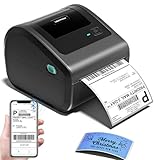
- [Incredible Compact Thermal Printer] - Brilliant design! The D450BT shipping label printer’s ingenious built-in compartment holds internal roll paper (up to 250 4x6 labels) and rear-loaded folded paper—saving you the cost of extra holders. At just 7.2x6.3x5.3 inches, this thermal label printer uses half the space vs. other thermal shipping label printer, freeing up your desk to keep daily tasks organized and clutter-free
- [Embrace Wireless Printing via Bluetooth] - The D450BT bluetooth shipping label printer boasts reliable Bluetooth, pairing instantly with Android/iOS, Windows/macOS/Linux, and ChromeOS. Print labels wherever you are—total freedom! This label printer also supports USB for all major systems, making shipping label printing super simple and hassle-free for your busy schedule
- [Strong Helper for Commercial and Home Use] - This label printer 4x6 handles 1-4.6 inch widths, perfect for shipping, mailing, barcode labels and more. Whether for package shipping, product labeling, logistics, warehouse management, organization or pricing, this thermal label printer 4x6 acts as your versatile assistant, replacing the need for multiple devices
- [More Cost-Effective & Time-Saving Option] - Smart thermal printing means the 4x6 thermal label printer needs zero ink/toner—just thermal labels. Loaded with the latest AF chip and Japanese thermal print head, it produces 203DPI clarity, 72 labels/min speed, and auto-alignment to stop paper waste, helping your business grow fast and profitably
- [Widely Platform Compatibility] - The D450BT usps label printer integrates with USPS, UPS, eBay, FedEx, Amazon, Shopify, Etsy, PayPal, Poshmark and more. Great for online small business package shipping—start strong with this reliable desktop label printer and scale your sales without any tech headaches
Communicate disruptions before customers have to ask
Prepare for foreseeable problems such as stockouts, carrier delays, lost packages, or third-party service outages. Shopify’s earlier process guidance recommends identifying likely failure scenarios from experience, drafting replies in advance, and proactively updating affected customers. The value is practical: customers receive relevant information sooner, and agents spend less time writing the same urgent explanation from scratch.
- List the disruptions most likely to affect this season’s products, carriers, and systems.
- For each, decide who confirms the issue, which customers are affected, what can be promised, and where updates will appear.
- Prepare a clear message with known facts, the next step, and when customers should expect another update.
- Use the appropriate customer contact route and avoid claiming a package is lost or a date is guaranteed unless the available information supports that statement.
- Update the message when circumstances change and ensure support agents can see the same information customers received.
Make holiday returns part of the service plan
Returns can generate a substantial post-purchase workload. Shopify’s 2025 holiday strategy article attributes to the National Retail Federation an estimate that 17% of holiday merchandise would ultimately be returned. It is a seasonal estimate reported by Shopify, not a return-rate forecast for a particular store or product category.
Set the rules customers need to know
State which purchases qualify, the return deadline, acceptable condition, how to start, who pays return shipping, and how refunds or exchanges are handled. Explain any holiday-specific timing in plain language and keep the same policy aligned across product pages, help content, order emails, and agent references.
Do these 3 things before closing this tab:
1Clear out junk files and repair common Windows errors2Scan for outdated or missing drivers - takes under a minute3Repair Windows errors before they cause bigger problemsBest Value

- Go Wireless by Bluetooth: Download the "NELKO"app to print via Bluetooth on your Nelko Bluetooth thermal label printer for iOS and Android. Printing shipping labels has never been easier. Windows 7 or later computers can also print via Bluetooth. For Mac users with M1 or M2 CPUs, install the app and connect to the printer via Bluetooth. Note: All devices cannot be directly connected to Bluetooth and need to be used through the app
- Print via USB: For Windows (7 and later), Mac OS,Chrome OS, you can connect the desktop label printer via USB cable. Note that Mac OS only works with USB connection, you can not print via Bluetooth
- Good Helper for Cost Saving: Advanced thermal direct technology is adopted to achieve the printing speed of 150 mm/s, up to 72 sheets 4x6 labels/min. High speed brings high efficiency and helps your business grow faster! 203 DPI makes printing clearer. No ink, no toner, only thermal labels needed. Both fanfold labels and roll labels could be used. Label size: labels width ranges from 1.54" to 4.1"(40-104 mm), such as 4x6, 3x2, 3x1, 2x1 thermal labels and so on
- Strong Platform Compatibility: This bluetooth shipping label printer can work with virtually all platforms, including Amazon, Ebay, Shopify, USPS, UPS, Esty, PayPal, Poshmark,etc.(Note: Please remember to save the logistics label as a PDF on the logistics platform, then upload it to the editor APP "NELKO" for printing
- Suitable for Commercial and Home Use: Printer driver, instruction videos and problem shooting videos are provided in U-Disk for better setting. Nelko PL70E label printer is much smaller than traditional printers and only requires a small piece of space to achieve printing. Very suitable for printing shipping labels, mailing labels, price labels, barcode labels, name tags and all kinds of small category labels
Plan the work behind the policy
- Decide who receives returned items and how they are inspected, recorded, and routed.
- Plan how eligible items move back to inventory and how damaged or non-resalable items are handled.
- Clarify when customers can choose an exchange or store credit and who can approve exceptions.
- Set expectations for refund processing and communicate delays if intake volume affects timing.
- Apply fraud controls consistently without making legitimate customers struggle to find the process.
Shopify’s 2021 operations guidance also points to assigning staff and space for receiving and processing returns. The appropriate setup depends on the store’s products and fulfillment operation; the essential point is to plan return intake and processing as well as the customer-facing policy.
Protect team capacity through the rush
Peak volume is a sustained operating condition, not a reason to plan for agents to work without recovery time. Shopify’s examples include backup coverage, breaks, manager check-ins, and brief daily touchpoints. Adapt those practices to the team’s workload and applicable employment rules.
- Schedule backup coverage for absences, breaks, and the channels most likely to spike.
- Use short daily touchpoints to share known delivery or inventory issues, clarify priorities, and surface blocked cases.
- Check in with agents individually when workload or difficult interactions are accumulating.
- Track CSAT, CES, and first response time against the store’s ordinary baseline, and investigate changes rather than chasing an unsupported universal target.
- When demand exceeds planned capacity, make a deliberate adjustment: shift trained backup staff, narrow channel hours transparently, or revise response estimates customers can see.
A practical pre-peak checklist
- Review daily, hourly, seasonal, and channel-level ticket patterns; identify known pressure points.
- Set a coverage plan with primary owners, backups, escalation paths, and realistic service hours.
- Refresh agent guidance for products, shipping, returns, promotions, and after-sales issues.
- Update public policies, FAQs, order communications, and contact details to match current promises.
- Prepare and test self-service answers for repetitive questions, with a route to a person for exceptions.
- Draft customer updates for foreseeable delays, stock problems, and service interruptions.
- Allocate return intake and processing capacity, then explain return terms consistently.
- Record baseline service indicators and schedule manager touchpoints, breaks, and recovery coverage.
Frequently Asked Questions
What should an ecommerce support FAQ cover during the holidays?
At minimum, answer the customer questions Shopify identifies as common: “How long until my order is here?”, “How can I return my order?”, “Where should I enter the promo code?”, “Can I change the delivery address for my order?”, and “Do you ship to [country]?” Tailor each answer to the store’s actual policies and order workflow.
Should a small store add seasonal support staff?
The cited guidance supports considering seasonal help when the store’s capacity forecast justifies it, but it does not prescribe a headcount or ratio. Compare projected demand with the coverage your existing team can reliably provide, including backup for breaks and absences.
Quick Recap
Product prices and availability are accurate as of the date/time indicated and are subject to change. Any price and availability information displayed on Amazon at the time of purchase will apply.

