
PCIe 7.0 moved one step closer to completion in January 2025, when PCI-SIG made version 0.7 available for member review. The standard is no longer merely approaching release: PCI-SIG released version 1.0 to members on June 11, 2025. Its headline 4× comparison is against PCIe 5.0; compared with PCIe 6.x, PCIe 7.0 doubles the raw data rate. Neither figure means a typical PC will see four times the application performance.
What does PCIe 7.0’s 4× bandwidth claim mean?
PCI-SIG specifies PCIe 7.0 at 128 GT/s (gigatransfers per second) raw bit rate, twice PCIe 6.x’s 64 GT/s. The 4× figure compares PCIe 7.0 with PCIe 5.0 across two generations. These are signaling-rate comparisons, not a promise that applications or devices will transfer data four times faster.
For a sixteen-lane (x16) connection, PCI-SIG gives a maximum bandwidth of 512 GB/s bidirectionally. “Bidirectionally” means the aggregate figure covers traffic in both directions; it is not 512 GB/s in each direction. PCI-SIG’s figures describe the interface’s capacity, not application throughput.
| Comparison | PCI-SIG figure | What it describes |
|---|---|---|
| PCIe 7.0 | 128 GT/s | Raw bit rate specified by PCI-SIG in 2025. |
| PCIe 6.x | 64 GT/s | Raw bit rate cited by PCI-SIG in 2025; PCIe 7.0 is 2× this rate. |
| PCIe 7.0 x16 | 512 GB/s | Maximum bidirectional bandwidth specified by PCI-SIG in 2025. |
How does PCIe 7.0 reach its data rate?
PCIe 7.0 uses PAM4, or Pulse Amplitude Modulation with four signal levels. PCI-SIG’s specification goals include improved power efficiency, channel parameters and reach, low latency, high reliability, and backward compatibility with previous PCIe generations. These are design aims and specification features, not independently verified results from shipping PCIe 7.0 products.
#1 Best Overall

- PCIe 4.0 Performance: Delivers up to 7,100 MB/s read and 6,000 MB/s write speeds for quicker game load times, bootups, and smooth multitasking
- Spacious 1TB SSD: Provides space for AAA games, apps, and media with standard Gen4 NVMe performance for casual gamers and home users
- Broad Compatibility: Works seamlessly with laptops, desktops, and select gaming consoles including ROG Ally X, Lenovo Legion Go, and AYANEO Kun. Also backward compatible with PCIe Gen3 systems for flexible upgrades
- Better Productivity: Up to 2x faster than previous Gen3 generation. Improve performance for real world tasks like booting Windows, starting applications like Adobe Photoshop and Illustrator, and working in applications like Microsoft Excel and PowerPoint
- Trusted Micron Quality: Built with advanced G8 NAND and thermal control for reliable Gen4 performance trusted by gamers and home users
Backward compatibility also does not guarantee that every combination of a new device and an older system will work without appropriate platform support.
How did PCIe 7.0 progress from draft to release?
- June 21, 2022: PCI-SIG announced PCIe 7.0 development and targeted release to members in 2025.
- January 16, 2025: Version 0.7 became available for member review. This is the milestone behind the original “one step closer” framing. PCI-SIG President and Chairperson Al Yanes said the version incorporated member feedback on version 0.5 and brought the specification closer to its planned 2025 release.
- March 18, 2025: Version 0.9, described by PCI-SIG as the final draft, became available for member review; the group said it remained on track to publish the full specification later that year.
- June 11, 2025: PCI-SIG released version 1.0 to members, making the specification final.
Who is PCIe 7.0 aimed at?
PCI-SIG identifies hyperscale data centers, high-performance computing, automotive, military and aerospace, AI and machine learning, 800G Ethernet, cloud, and quantum computing as relevant or emerging application areas. These are target markets, not evidence that products in those fields have already deployed the standard. The practical significance is a higher interconnect ceiling for data-intensive system designs, rather than an immediate upgrade for ordinary desktop PCs.
Rank #2

- HUGE SPEED BOOST: Get random read/write speeds that are 40%/55% faster than 980 PRO; Experience up to 1400K/1550K IOPS, while sequential read/write speeds up to 7,450/6,900 MB/s reach near the max performance of PCIe 4.0*
- BREAKTHROUGH POWER EFFICIENCY: Use less power and get more performance; Enjoy up to 50% improved performance per watt over 980 PRO, plus optimal power efficiency with max PCIe 4.0 performance**
- SMART THERMAL CONTROL: Samsung's own nickel-coated controller delivers effective thermal control; With its slim size, 990 PRO is a perfect fit for desktops and laptops that meet the PCI-SIG D8 standard***
- THE CHAMPION MAKER: Up to 65% improvement in random performance enables faster loads for an ultimate gaming experience on PS5 and DirectStorage PC games****
- SAMSUNG MAGICIAN SOFTWARE: Get the most out of your SSD with Samsung Magician's advanced yet intuitive optimization tools; Monitor drive health, protect valuable data, and receive important updates for your 990 PRO
When might PCIe 7.0 products appear?
PCI-SIG’s FAQ gives a general timeline of 12–18 months after a final specification release before products become available. That is a broad expectation, not a promised launch date or confirmation of a particular vendor, device, consumer product, or performance result. The public sources cited here do not establish that PCIe 7.0 products are shipping.
For buyers, the published specification alone is not a reason to wait for a specific product or expect a near-term PC performance gain. A sound purchase recommendation would require an identified product and evidence about its platform support and real-world performance.
What’s actually slowing this PC down?
Pick the symptom - the matching free tool is one click away.
Quick Recap
Rank #4
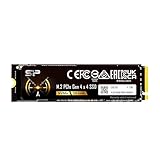
- PCIe Gen 4x4 interface with read speeds up to 7,000MB/s and write speeds up to 6,000MB/s
- NVMe 1.4 support allows for higher performance, lower latency, and lower power consumption
- Available in massive storage capacity options ranging from 1TB to 4TB
- TBW: 300
- Backed by a 5-year limited warranty or up to 300 TBW, whichever comes first. Please note that the warranty covers standard consumer/business use and is voided if the drive’s total written data exceeds its rated TBW limit.
Rank #3
- PCIe 4.0 Performance: Delivers up to 7,100 MB/s read and 6,000 MB/s write speeds for quicker game load times, bootups, and smooth multitasking
- Spacious 2TB SSD: Provides space for AAA games, apps, and media with standard Gen4 NVMe performance for casual gamers and home users
- Broad Compatibility: Works seamlessly with laptops, desktops, and select gaming consoles including ROG Ally X, Lenovo Legion Go, and AYANEO Kun. Also backward compatible with PCIe Gen3 systems for flexible upgrades
- Better Productivity: Up to 2x faster than previous Gen3 generation. Improve performance for real world tasks like booting Windows, starting applications like Adobe Photoshop and Illustrator, and working in applications like Microsoft Excel and PowerPoint
- Trusted Micron Quality: Built with advanced G8 NAND and thermal control for reliable Gen4 performance trusted by gamers and home users
Official sources
- PCI-SIG’s June 2022 PCIe 7.0 development announcement.
- PCI-SIG’s January 2025 version 0.7 announcement.
- PCI-SIG’s March 2025 version 0.9 announcement.
- PCI-SIG’s June 2025 version 1.0 release announcement.
- PCI-SIG FAQ.
Product prices and availability are accurate as of the date/time indicated and are subject to change. Any price and availability information displayed on Amazon at the time of purchase will apply.

