
Free tools Windows power users keep installed
One-click scans. No signup required.
A database migration can run into an unexpected licensing constraint: the rights attached to a product and hosting arrangement may matter more than the virtual CPU count a team sees on its VM. In a first-person account on DEV Community, Serguey Shinder describes discovering a licensing shortfall ten weeks into a migration. The database, cloud provider, agreement and shortfall amount are not identified, so the story is a cautionary case—not a universal rule about how database cores are counted.
What happened in the migration
Shinder says a consultant asked which licensing terms the team was relying on after the migration had been underway for ten weeks. The team then received a quotation identifying a shortfall; the account does not disclose its amount or provide independent confirmation of the calculation.



Shinder reports three responses: reduce 31 database instances to nine, move production to hosts whose core count was fixed in the contract, and move two workloads to a different database engine. The account does not name that engine, explain the workloads, or provide a cost comparison, so it does not establish which change saved money or by how much.
“In our own data centre the architecture decided the licence cost. In a rented one, the licence decides the architecture.”
The Tool Desk
Outbyte Driver Updater FREEScan for outdated or missing drivers - takes under a minuteDriver Scan →Outbyte PC Repair FREERepair Windows errors before they cause bigger problemsFix Now →Special offer. See more information about Outbyte and uninstall instructions. Please review EULA and Privacy policy.#1 Best Overall
That is Shinder’s personal takeaway, not a statement of licensing policy for every database. The product and contract are unnamed, and the account does not specify exactly how its post-2019 portability issue was interpreted.
Does a cloud database licence count VM cores or host cores?
There is no reliable general answer. The count depends on the product, edition, licence entitlement, acquisition date, agreement and hosting model. A VM’s visible vCPU allocation does not, by itself, establish what must be licensed; nor can the host’s physical-core count be assumed to apply to every service or product.
Rank #2
For example, Microsoft says some server products, including SQL Server, may qualify for License Mobility through Software Assurance. Its guidance says, “Active Software Assurance is required on all licenses for eligible products.” Eligibility must be checked against current Product Terms, and deployment through an Authorized Mobility Partner requires a verification form. Microsoft also specifies that VMs running on shared hardware must be dedicated to a single customer. These are Microsoft requirements, not evidence about the unnamed product in Shinder’s account. See Microsoft’s License Mobility guidance.
Oracle illustrates why one vendor’s method should not be generalized to another. Its cloud licensing policy dated December 1, 2021 addresses specified AWS EC2/RDS and Azure environments, counts maximum available vCPUs using stated ratios, and says its Core Factor Table does not apply in those environments. Oracle labels the document educational, non-contractual and subject to change; check current policy and the governing agreement before relying on it. The migration account does not identify Oracle as its vendor. See Oracle’s cloud licensing policy.
Do these 3 things before closing this tab:
1Scan for outdated or missing drivers - takes under a minute2Clear out junk files and repair common Windows errors3Fix the driver behind crashes, sound loss and screen glitchesWhy product, date and hosting model change the answer
Product entitlement and acquisition date
Microsoft’s rules show how materially rights can depend on when and how a licence was acquired. Its FAQ says the updated Listed Provider outsourcing policy took effect on October 1, 2019. For SQL Server licences acquired on or after that date, use on Listed Providers’ dedicated hosted cloud services requires Software Assurance or equivalent subscription rights and License Mobility, unless the customer uses a licence-included route. It describes pre-date perpetual licences under the Product Terms in effect when they were acquired. It also says unlimited virtualization rights do not apply to post-date SQL Server licences on those hosted services. Consult the applicable terms rather than treating this summary as a substitute for them. See Microsoft’s Listed Provider FAQ.
Shared VM, dedicated host or licence-included service
Cloud providers can offer different licensing routes with different counting and eligibility conditions. AWS documents both Bring Your Own License (BYOL) and licence-included SQL Server options on EC2. It says requirements depend on instance type, SQL Server version and licensing model. Active Software Assurance can enable License Mobility to shared-tenant EC2; certain deployments without Software Assurance on EC2 Dedicated Hosts require qualifying pre-October 1, 2019 licences or true-ups under an earlier active Enterprise Enrollment. AWS also provides Dedicated Host physical-core counts for calculations. Confirm the live terms for the actual instance and agreement. See AWS SQL Server licensing guidance.
Rank #4
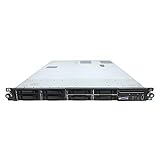
- HP ProLiant DL360 G7 8B Server
- 2x X5650 2.66GHz 12-Cores Total
- 32GB RAM / 8x 146GB 10K 2.5in SAS Hard Drives
- P410 w/ 512MB
Production versus development and test
Different workloads may have different eligible editions or licensing routes. AWS documents SQL Server Developer edition for non-production development and test use. That does not prove Shinder’s development or test instances could have used it: the account does not describe their purpose or licensing entitlements.
Independent reader supportYour contribution helps us test, update, and keep practical guides available for everyone.Use a licensing review as part of migration design
A licensing review is most useful before architecture and migration choices become expensive to reverse. Build it around the exact deployment rather than a generic “cores per VM” assumption:
What’s actually slowing this PC down?
Pick the symptom - the matching free tool is one click away.
- Identify the rights. Record the database product and edition, acquisition date, licence or subscription type, Software Assurance status, and the Product Terms or contract that applies.
- Describe the hosting arrangement. Distinguish shared virtual machines, dedicated hosts and licence-included services. Establish whether the applicable terms require vCPU, physical-core or another count.
- Separate workloads by purpose. Inventory production, development and test instances, then verify whether their usage qualifies for different editions or rights.
- Compare viable architectures. Evaluate consolidation, dedicated placement and alternative database engines against functional, operational, performance and migration needs—not licensing cost alone.
- Validate before committing. Confirm eligibility and current terms with the vendor, reseller or a qualified licensing adviser using the organization’s actual agreement. Microsoft specifically instructs customers to confirm eligibility and active Software Assurance coverage.
Shinder’s account shows the potential architectural consequences of finding a mismatch late. It does not establish the shortfall’s amount, the savings from the changes, or a licensing rule that another organization can safely reuse.
Quick Recap
Product prices and availability are accurate as of the date/time indicated and are subject to change. Any price and availability information displayed on Amazon at the time of purchase will apply.

