
What changed in open hardware’s first decade, and what did the community learn? The 2020 Open Hardware Summit marked ten years since the first Summit, and the Open Source Hardware Association (OSHWA) used the milestone to take stock—not to declare open hardware the right choice for every project, but to capture shared experience, identify where it works well, and name challenges still ahead.
What the tenth-anniversary retrospective set out to do
OSHWA’s 2020 Open Source Hardware Weather Report was designed as a snapshot of community understanding ten years after the first Open Hardware Summit. The organizers had planned an in-person workshop, but when the Summit moved online, the report became a series of interviews instead. OSHWA said it would distill lessons, consider where open hardware is a viable development approach—and where it may not be the strongest one—and surface unresolved challenges and opportunities. OSHWA’s announcement of the Weather Report describes it as a record of collective understanding, not a universal formula.


That distinction matters: open hardware is a development approach, not a guarantee of success. The retrospective’s value lies in showing a range of community experience. As participation grows, so does the need for welcoming ways for newcomers to find one another, learn the norms, and communicate across a more varied community.
How the ecosystem and its institutions evolved
The decade’s milestones show both community activity and practical institutional learning. They are useful indicators, but none alone measures the movement’s full size or success.
The Tool Desk
Outbyte PC Repair FREEClear out junk files and repair common Windows errorsFree Scan →Outbyte Driver Updater FREEScan for outdated or missing drivers - takes under a minuteDriver Scan →#1 Best Overall
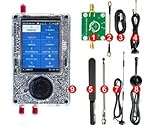
- What's included 1x PortaPack H4M (Rev10 + PortaPack H4M) 1x MicroUSB Cable 1x 20dB 50MHz - 6GHz LNA 1x SMA Male/Male Cable 1x 2.4/5/5.8GHz Blade Antenna 1x GSM/3G/4G Antenna 1x 40MHz - 6GHz Telescopic Antenna 1x 700MHz - 2700MHz Antenna
- Complete Development Kit – The PortaPack H4M+ with R10C (Mayhem Edition) is a versatile open-source hardware platform for electronics learning, research, and engineering projects. Perfect for labs, classrooms, and DIY enthusiasts.
- Wide Operating Range – Covers 1 MHz – 6 GHz with adjustable sample rates from 2 Msps to 20 Msps (quadrature). Provides stable and flexible performance for testing and experimentation.
- High-Definition Display & Intuitive Controls – Features a 3.2-inch 240×320 matte LCD touchscreen with clear visuals. Includes direction keys, a 360° rotating wheel, and quick selection button for smooth operation.
- Rich Accessories Included – Comes with a transparent shell, built-in speaker and rechargeable battery, multiple antennas, amplifier, and connection cables, offering a ready-to-use setup for hands-on development.
| Year | Milestone | What it indicates |
|---|---|---|
| 2010 | The first Open Hardware Summit, later described as an annual gathering for talks, connection, and an archived record of the community. | A recurring venue helped the community meet and preserve knowledge. OSHWA’s 2021 State of Open Source Hardware report identifies the first Summit as the movement’s starting reference point. |
| 2016 | OSHWA launched its open hardware certification program. | The program lets creators confirm compliance with the community’s open hardware definition and gave OSHWA a way to track international growth. The 2021 report describes the program’s role. |
| Late 2017 | OSHWA began work on version 2 of its certification website following community feedback. | The work aimed to consolidate accumulated guidance on creating open hardware and make licensing help clearer. OSHWA collaborated with NYU Law’s Technology Law and Policy Clinic on content. OSHWA’s account of the certification website update explains the goals. |
| 2020 | The tenth-anniversary Summit went virtual, and the Weather Report shifted from a planned workshop to interviews. | The format changed, but the effort to take stock and connect participants continued. OSHWA’s announcement documents the report format. |
| 2021 | OSHWA and NYU Law’s Engelberg Center published a graphic state report drawing on certification data, the Summit, and the annual community survey. | Combining different evidence sources gives a broader picture than any one measure, while still leaving the full diversity of the ecosystem beyond what a single report can capture. The report announcement describes its scope. |
What the 2021 survey says about how people used open hardware
OSHWA’s 2021 report offers a dated survey snapshot of reported uses. Respondents could select multiple answers, so the percentages are not mutually exclusive and should not be added together. They describe the surveyed community at that time, not all makers or today’s participants.
| Reported use | Survey response |
|---|---|
| Used open hardware as building blocks for personal or hobby projects | 58.1% of respondents |
| Used open hardware to learn about hardware | 49.1% of respondents |
| Used open hardware as building blocks for professional or work projects | 42.6% of respondents |
| Used other people’s open hardware designs to study the design | 56.0% of respondents |
| Used other people’s designs to understand a product’s functionality | 54.5% of respondents |
All figures are from the Open Source Hardware Association’s 2021 survey as reported in its State of Open Source Hardware report. They show why design openness can matter in different settings: learning, hobby building, professional work, and examining how a product works. They do not evaluate the quality of any particular design’s documentation.
Rank #2

- 【Practical Design & Accessories】 Comes with a transparent protective shell, speaker and built-in battery, antenna, amplifier, and cable, ensuring a complete and ready-to-use setup for development and experimentation.
- 【Comprehensive Development Kit】 The PortaPack H4M+ HackRF R10C & Mayhem Edition is an advanced open-source hardware platform designed for electronic learning, testing, and research. Ideal for developers, educators, and DIY engineers.
- 【Clear Display & Easy Control】 Features a 3.2-inch 240×320 matte LCD touchscreen with bright colors and smooth navigation. Includes direction keys, a 360° rotating control wheel, and a quick selection button for precise operation.
- 【Practical Design & Accessories】 Comes with a transparent protective shell, speaker and built-in battery, antenna, amplifier, and cable, ensuring a complete and ready-to-use setup for development and experimentation.
- 【Built-In Applications & Learning Tools】 Includes multiple built-in tools for visualization, testing, GPS simulation, and data decoding — perfect for hands-on education, classroom demonstrations, and advanced DIY projects.
Where open development fits—and what can make reuse harder
The Weather Report’s framing suggests a practical way to judge fit: consider what the project needs to make possible for others, and whether the team can support that openness responsibly. The 2020 retrospective explicitly left room for cases where open hardware is not the strongest development approach; it did not offer a single test that settles every case.
Documentation and reuse
People reported using others’ designs to study them and understand their functionality. For a design to support those uses—and adaptation or modification—its materials need to communicate enough for someone beyond the original creator to follow. The survey shows that people pursue these forms of reuse, but it does not establish a documentation standard or assess individual projects.
Free tools Windows power users keep installed
One-click scans. No signup required.
Licensing clarity
Making design files available is not the same as making their permitted uses easy to understand. OSHWA’s work on version 2 of its certification site followed feedback asking for consolidated guidance and better licensing help. That institutional response points to a durable lesson: creators and users benefit when licensing information is accessible and understandable.
Community access
A larger community can offer more connections and experience, but growth also makes it more important to help newcomers find a place to ask questions and meet others. OSHWA identified welcoming routes into communication as an ongoing challenge rather than assuming that community growth automatically makes participation easy.
Rank #4
Reach and representation
OSHWA reported in 2021 that its certification program had certified hardware from more than 45 countries on every continent except Antarctica. This is a historical count as described in that report, not a current total. Certification data, survey answers, and Summit participation each reveal different parts of the ecosystem; none is a complete census.
Independent reader supportYour contribution helps us test, update, and keep practical guides available for everyone.The 2020 virtual Summit showed that community infrastructure matters
The anniversary program was broad enough to make the movement’s range visible. It included talks on certification and Open Hardware Month, how open hardware had grown, CERN’s first ten years, and a panel titled “A decade backward and a decade forward,” moderated by Ayah Bdeir with Nadya Peek, Glenn Samala, Lenore M. Edman, Carl Richell, and Christina Cyr. Other sessions addressed reclaimed-plastic 3D printing, flood-warning designs, a social robot, and direct air carbon capture. The official 2020 Summit schedule is evidence of breadth, not proof that all projects share the same needs or obstacles.
Best Value

- Arduino Programming, Open Source: miniArm is built on the Atmega328 platform and is compatible with Arduino programming. The programs for miniArm are open-source, and learning tutorials and secondary development examples are available, making it easier for you to develop your robotic hand.
- High-Performance Hardware, Support Sensor Expansion: miniArm is equipped with a 6-channel knob controller, Bluetooth module, high-precision digital servos, and other high-performance hardware. Moreover, it provides multiple expansion ports for sensor integration, including ESP32 Cam, accelerometer, touch sensor, glowy ultrasonic sensor, etc., empowering users to engage in secondary development for sonic ranging and pose control capabilities.
- Versatile Control Options: miniArm supports app control, and users can utilize knob potentiometers for real-time knob control and offline action editing.
- Spark Your Creativity with miniArm: Expand the capabilities of miniArm with various sensors and unlock endless possibilities for your project.
- Starter Kit NO Glowing ultrasonic sensor, Touch sensor, Acceleration sensor, ESP32Cam Module.
Moving online also required organizers to think about access and conversation, not just broadcast. Michael Weinberg’s account describes using YouTube with StreamYard for talks and Discord for discussion and Q&A. The community space included channels for COVID-19 solutions, announcements, badge hacking, and virtual-conference tips. Organizers ran speaker rehearsals; Weinberg said the event went fairly smoothly, with a few brief audio glitches. These are historical choices for that event, not a recommendation of particular services today. Weinberg’s account of moving the Summit online records the approach.
What the decade’s lessons do—and do not—establish
The strongest conclusions are practical rather than absolute: people used open hardware to learn, build for personal and professional purposes, and inspect others’ designs; institutions adapted guidance in response to community feedback; and large gatherings depended on ways for people to connect as well as watch. The evidence also has clear boundaries. The Weather Report reflects interviews and discussion around 2020, while the survey and certification figures are from 2021. Together they illuminate the movement’s first decade, but they do not provide a current 2026 census or a single measure of its overall success.
Quick Recap
Product prices and availability are accurate as of the date/time indicated and are subject to change. Any price and availability information displayed on Amazon at the time of purchase will apply.

