
Neither open-world nor linear games are inherently better. Open-world games tend to let you choose where to go and what to do; linear games tend to guide you through a more controlled sequence. The better fit depends on whether you want self-directed discovery or focused momentum—and on how much time you want to spend deciding what comes next.
What “open-world” and “linear” mean
These labels describe broad structures, not quality levels. An open world generally gives you latitude to travel and take on optional activities in an order you choose. A linear game generally leads you along a more deliberate sequence of events or areas. Many games mix the two: a clear main story can coexist with optional missions, side paths, or exploration.
| # | Preview | Product | Price | |
|---|---|---|---|---|
| 1 |
|
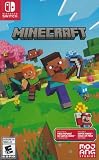
Minecraft - Nintendo Switch | $29.83 | Buy on Amazon |
| 2 |

|
Super Smash Bros. Ultimate - US Version | $52.99 | Buy on Amazon |
| 3 |

|
Mario Kart™ World (Nintendo Switch 2) | $79.00 | Buy on Amazon |
| 4 |

|
Super Mario Galaxy™ + Super Mario Galaxy™ 2 | $64.99 | Buy on Amazon |
| 5 |

|
The Legend of Zelda™: Ocarina of Time | Buy on Amazon |
Chrono Trigger offers an example of choice within a largely linear narrative. Victoria Earl’s analysis describes optional story sections, visible encounters players can avoid, and New Game+ as ways the game lets players depart from its initial critical path. That makes “linear” a matter of degree, not a synonym for having no agency. Read Earl’s analysis of Chrono Trigger.
How the structures differ in practice
| What to compare | Open-world tendency | Linear tendency |
|---|---|---|
| Route and activity | You often choose where to travel and which optional activities to pursue. | The game more often determines the next area or story beat, though branches and optional detours may still exist. |
| Story pacing | Exploration and side activities can interrupt or spread out the main story. | A controlled sequence can support deliberate pacing and a more continuous authored story. |
| Choices to manage | More optional activities may mean more decisions about what to do and when. | Fewer competing activities can make the next step easier to identify. |
| Navigation | Guidance varies; a large environment does not automatically mean a conventional map or fast travel. | Progression may make direction clearer, but objective guidance still varies by game. |
| Session feel | Can suit a session built around wandering, discovery, or choosing a side activity. | Can suit a session built around following the story or completing a curated sequence. |
Choose open-world if you want freedom to set the agenda
An open world may suit you if you enjoy picking your own destination, following a curiosity, and letting optional activities shape a session. The trade-off is decision overhead: when there are many places to go or tasks to track, you may need to spend more attention choosing what matters to you.
#1 Best Overall
- Minecraft is a game about placing blocks and going on adventures
- Explore randomly generated worlds and build amazing things from the simplest of homes to the grandest of castles
- Play in creative mode with unlimited resources or mine deep into the world in survival mode, crafting weapons and armor to fend off the dangerous mobs
- Play on the go in handheld or tabletop modes
- Includes Super Mario Mash-Up, Natural Texture Pack, Biome Settlers Skin Pack, Battle & Beasts Skin Pack, Campfire Tales Skin Pack; Compatible with Nintendo Switch only
Do not assume every open world uses the same navigation conventions. Matt Nava, Giant Squid’s founder and creative director, explained that The Pathless was designed without fast travel or a traditional map; it uses a spirit mask and environmental vantage points to help players navigate. That is one game’s deliberate design, not a rule for the genre. Nava’s account of The Pathless.
Choose linear if you want guided momentum
A more linear game may be a better fit when you would rather follow a clear progression than repeatedly choose among activities. Its more controlled sequence can help keep attention on the next encounter or story beat. But linear does not mean choice-free: optional areas, alternate routes, or narrative decisions can appear within a directed structure, as Chrono Trigger illustrates.
Rank #2
- New stages and fighters are joined by the combined rosters of every past Super Smash Bros. Game
- Challenge others anytime, anywhere, whether you're on the couch or on the go
- Play any way you want—locally, online, in TV mode, Tabletop mode, Handheld mode, or even with GameCube Controllers
- Fight faster and smarter with new and returning techniques, like the perfect shield and directional air dodge
- Face off in 2-4 player battles, or play against the computer
There is also a storytelling trade-off when a game supports many routes or playable characters. Ubisoft’s account of Watch Dogs: Legion describes how its Play-As-Anyone system required dialogue variants and authored non-player characters to anchor the story. Narrative designer Brendan Hennessy said, “We didn’t have a static script – we had a dynamic script with 20 different variations.” That is a production challenge specific to that system, not evidence that open-world stories are inherently weaker. Ubisoft’s account of Watch Dogs: Legion’s narrative design.
Consider navigation and guidance, not just map size
If you dislike losing track of goals, look at how a game communicates objectives before judging it by its world structure. Xbox Accessibility Guideline 109 recommends that players be able to review goals and progress. It notes that objective tracking can reduce the need to remember tasks, particularly when guidance or storylines are complex. Clear tracking can matter in a large environment as well as in a more directed game. Read Xbox Accessibility Guideline 109.
PC Slower Than It Used to Be?
A free scan shows the junk files, broken settings and background clutter dragging Windows down - then fixes them in one click.Free scan · Windows 10 & 11Outdated Drivers Are Slowing You Down
One free scan finds every outdated or missing driver and matches the right update for your exact hardware.Free scan · exact hardware matchRank #3
- Race from one course to another through interconnected paths that span the world
- Traverse mountains, forests, cities, and more—with shifting weather patterns and a day/night cycle
- Ride on rails, jump off walls, skim across water, and more as you race for the finish line
- Take on the adrenaline-packed Knockout Tour—a fierce 24-driver elimination mode
- Explore courses at your own pace and wander the world to discover fun surprises in Free Roam
Settings can also change how much guidance a game provides. EA’s Dragon Age: The Veilguard accessibility overview describes customizable difficulty and exploration presets that adjust on-screen wayfinding and object highlighting. If a game otherwise appeals to you, check whether its settings let you tune those elements to your preference. See EA’s Dragon Age: The Veilguard accessibility overview.
Independent reader supportYour contribution helps us test, update, and keep practical guides available for everyone.A quick way to choose your next game
- Pick the session you want. For wandering and self-directed discovery, lean open-world. For a clearer sequence and focused story progress, lean linear.
- Decide how much choice feels enjoyable. If choosing among numerous activities feels like work, a more directed game may fit better. If choosing is part of the fun, the extra options may be a plus.
- Check the game’s actual guidance. Look for objective tracking, map conventions, and exploration settings rather than assuming every game in a category works the same way.
- Look for hybrids. If you want a strong main path but still enjoy detours, seek a game that combines guided progression with optional content.
There is no established player-preference statistic here that shows one structure is more popular. The useful question is personal: for this session, do you want to choose your own direction or have the game guide you forward?
Quick Recap
Best Value
- Become the Hero of Time and save Hyrule from darkness
- Venture into dungeons, solve puzzles, and travel across time in two different eras to restore balance to the land
- A classic tale, reborn for the Nintendo Switch 2 system, featuring voiced cutscenes, expanded dialogue, symphonic orchestral music, visuals built from the ground up for Nintendo Switch 2, and more
- Play Link’s in-game ocarina by humming or singing into the Nintendo Switch 2 system microphone
Rank #4
- Journey through space in two Super Mario adventures, now improved for the Nintendo Switch system!
- Travel the stars with enhanced resolution, improved UI, and additional content
- Learn more about the Lumas from additional Storybook chapters, groove to a bit of additional music
- Get additional Health and fall recovery in Assist Mode
- Join Rosalina and the Lumas to restore the Comet Observatory and rescue Princess Peach in Super Mario Galaxy.
Product prices and availability are accurate as of the date/time indicated and are subject to change. Any price and availability information displayed on Amazon at the time of purchase will apply.

