
Do these 3 things before closing this tab:
1Fix the driver behind crashes, sound loss and screen glitches2Repair Windows errors before they cause bigger problems3Scan for outdated or missing drivers - takes under a minuteChoose a hosted AI API when you want managed infrastructure and a quick start without running model servers. Choose an open-weight model you operate when deployment control, customization, or sustained high-volume use justifies the compute and operational work. You can also combine them: use specialized, customized open models for suitable tasks and hosted models for work that benefits from their broader capabilities.
There is no universal cost or capability winner. The right choice depends on the specific model, workload, data requirements, and your ability to operate the system.
What is the difference between open-weight models and hosted APIs?
An open-weight model makes its trained weights available for others to download and, depending on its license and tooling, adapt or run. “Open-weight” does not necessarily mean the training data, full source code, or every supporting component is open. Check the specific model’s license and use policy before building on it.
With self-hosting, you choose where the model runs—on local equipment, private cloud, or infrastructure operated by a partner—and take responsibility for serving it. With a hosted API, you send requests to a provider that manages model serving, scaling, and updates. The provider controls the underlying model and infrastructure; your customization options depend on the service.
The Tool Desk
Outbyte PC Repair FREERepair Windows errors before they cause bigger problemsFix Now →Outbyte Driver Updater FREEScan for outdated or missing drivers - takes under a minuteDriver Scan →#1 Best Overall

- Built for Local AI Development: AMD Ryzen AI Halo is designed for local AI development and inference, featuring 128GB unified memory and support for up to 200B parameter models to build and run intensive AI workloads locally.
- 128GB Unified Memory: Features 128GB LPDDR5x unified memory at 8000 MT/s with 256 GB/s memory bandwidth, providing a shared memory pool across the CPU, GPU, and NPU to support larger AI models.
- AMD Ryzen AI Max+ 395 Processor: Features 16 cores, 32 threads, and Zen 5 architecture, paired with AMD Radeon 8060S integrated graphics featuring 40 RDNA 3.5 compute units and an AMD XDNA 2 NPU with up to 50 TOPS.
- Linux AI Developer Platform: Purpose-built for Linux-based AI development with full AMD ROCm software support and preloaded tools, models, and workflows optimized for local AI development.
- Compact, Connected Design: Includes a 2TB M.2 SSD, 10GbE LAN, Wi-Fi 7, Bluetooth 5.4, USB-C connectivity, and HDMI 2.1b.
How do the options compare?
| Decision area | Open-weight model you operate | Hosted AI API |
|---|---|---|
| Infrastructure | You select and manage local, private-cloud, or partner infrastructure. You also handle serving and operations. | The provider manages model serving, scaling, and updates. |
| Data handling | Self-hosting can keep inference on infrastructure you control, but you remain responsible for security and governance. A hosting partner changes the data path. | Requests go to the provider. Review current retention, residency, and feature-specific terms. |
| Cost | Weights may be free to download; compute, storage, hosting, engineering, and maintenance are not. Economics depend on workload and utilization. | Usage-based billing makes it easy to start, but spend depends on request volume, model, and token mix. |
| Customization | License and tooling permitting, you may adapt or fine-tune the model and choose how to deploy it. | Prompting and supported configuration may be enough, but the provider controls the underlying model and infrastructure. |
| Capability and operations | You select a model for the task and plan for evaluation, safeguards, updates, availability, and support. | Hosted products may provide managed access to newer models and integrated features, subject to provider-specific terms and constraints. |
| Security and safety | You secure the deployment and add appropriate safeguards. Released weights can be modified by downstream users. | The provider manages some system-level protections, but you still need to assess provider controls and application risks. |
These are general tendencies, not guarantees. Compare the particular model and service on the task you intend to run.
When should you choose a hosted API?
A hosted API is a practical starting point if you need model access without building and maintaining serving infrastructure. It can also suit variable or modest demand, where paying for requests is preferable to keeping GPU capacity available. Usage-based pricing does not by itself guarantee a lower total cost; it makes the initial commitment and billing structure different.
- Choose a hosted service when managed serving and updates matter more than control over infrastructure.
- Consider it when you need to begin quickly or do not have people to operate model infrastructure.
- Check the provider’s current data terms, supported features, availability, and model capabilities for your intended use.
When does self-hosting an open-weight model make sense?
Self-hosting is worth evaluating when you need to control where inference runs, want to customize a model within its license, or have sustained usage that can keep infrastructure productively occupied. It also makes you responsible for the system around the model: provisioning, serving, monitoring, security, evaluation, updates, and recovery when something fails.
Rank #2
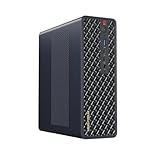
- 【Leading AI Mini Workstation】MINISFORUM AI MS-S1 Max Workstation comes with AMD Ryzen AI Max+ 395 processor, which uses AMD's latest generation Zen 5 architecture. It has 16 Cores and 32 Threads, the boost clock is up to 5.1GHz. The overall processor performance is up to 126 TOPS, and the NPU performance reaches up to 50 TOPS. AMD Ryzen AI enables improved productivity, advanced collaboration, and improved efficiency.
- 【AMD Radeon 8060S Graphics 】The MS-S1 Max Mini PC equipped with AMD Radeon 8060S Graphics which built on the new generation of RDNA 3.5 architecture AMD graphics, it brings ultra-high frame rate experiences and advanced content creation features anywhere and delivers staggering performance. It can handle all your computing and multimedia tasks efficiently.
- 【Five 8K Video Output】This MS-S1 Max Workstation comes with five video outputs, 1x HDMI (8K@60Hz), 2x USB4(40Gbps,Alt DP2.0,PD out 15W) and 2x USB4 V2(80Gbps,Alt DP2.0,PD out 15W) Outputs, which support multiple monitors display at the same time and provide a larger and wider filed of view and improve your work efficiency. It is used in fields that require high-performance computing and graphics processing, including digital signage and securities trading, as well as work that uses CAD, such as engineering design, scientific calculations, animation production, and post-production for movies and television
- 【 Fast and Stable Wire & Wireless Speed】It comes with Two 10G Lan Ports for wired connection and and Wi-Fi 7 / BT5.4 for wireless connection, which increased the network speed greatly and expand its functions and improved performance of computer to a large extent and allows you to use more networks such as software routers (OpenWRT / DD-WRT / Tomato etc.), firewalls, NAT, network isolation etc.
- 【Large Storage & Flexible Expandability】This Workstation equipped with 64GB LPDDR5-8000MHz + 2TB M.2 2280 PCIe4.0 SSD. There is another PCIe4.0 SSD slot available for up to 8TB, these SSD slots are compatible with RAID0 and RAID1, you can store movies, videos, photos, important files easily. What’s more, it also comes with 1x standard PCIex16 slot(PCIe4.0x4) inside.
- Choose this path if deployment control or model adaptation is a requirement, not merely a preference.
- Estimate the complete operating workload, including engineering and maintenance, rather than counting only the model download or GPU.
- Verify that the model fits the hardware and software you can operate, and that its license permits your planned use.
A local or private deployment is not automatically secure simply because requests do not go to a model provider. Access controls, infrastructure security, monitoring, and application safeguards remain your responsibility.
How should you compare costs?
There is no fixed token-volume threshold at which self-hosting always wins. Compare total costs for a measured workload, including model and token mix, hardware or rental, storage, utilization, engineering, maintenance, and the API prices you would otherwise pay. Low utilization, bursty demand, a more expensive operating team, or changes in model efficiency can shift the result. Renting GPU capacity is another option between buying equipment and using a fully managed API; include rental and additional infrastructure charges in the comparison.
An OECD 2026 report models pay-as-you-go API costs against private GPU hosting under specified assumptions. It places its small-workload category below 100 million tokens per month and says self-hosting did not show economic benefits for that category. Its narrative considers 1 billion tokens per month as a medium scenario, 10 billion as large, and 50 billion as very large. For one modeled example, it estimates USD 8,000 per month for 1 billion tokens using representative Gemini 3.1 pricing. These are modeled scenarios, not a forecast for an individual organization. Read the OECD report.
Rank #3
- Built for Local AI Development: AMD Ryzen AI Halo is designed for local AI development and inference, featuring 128GB unified memory and support for up to 200B parameter models to build and run intensive AI workloads locally.
- 128GB Unified Memory: Features 128GB LPDDR5x unified memory at 8000 MT/s with 256 GB/s memory bandwidth, providing a shared memory pool across the CPU, GPU, and NPU to support larger AI models.
- AMD Ryzen AI Max+ 395 Processor: Features 16 cores, 32 threads, and Zen 5 architecture, paired with AMD Radeon 8060S integrated graphics featuring 40 RDNA 3.5 compute units and an AMD XDNA 2 NPU with up to 50 TOPS.
- Windows 11 Pro AI Developer Platform: Built for AI development on Windows 11 Pro with AMD ROCm software support and access to tools, models, and workflows for local AI development.
- Compact, Connected Design: Includes a 2TB M.2 SSD, 10GbE LAN, Wi-Fi 7, Bluetooth 5.4, USB-C connectivity, and HDMI 2.1b.
The report’s break-even table labels its medium case as 500 million tokens per month and reports 30.4 months; its large case is labeled 5 billion tokens per month and reports 1.8 months; the 50-billion-token-per-month case reports 1.0 month. Those table labels differ from the token volumes used for the medium and large scenarios in the report’s narrative, so treat them as the report labels them rather than merging the figures. The report also notes that GPU token capacity varies by model and efficiency and includes capital and operating costs in its private-hosting estimates.
OpenAI’s cost FAQ makes the same practical distinction: “Self-hosting may be cheaper in some cases, while our API Platform may be more efficient when factoring in hosting, maintenance, and upgrades.” The statement is not a universal pricing rule; compare your own workload and operating costs. See OpenAI’s open-weight model FAQ.
Free tools Windows power users keep installed
One-click scans. No signup required.
Size a self-hosting plan before buying hardware
Start with the model and the task, then estimate request volume, input and output tokens, concurrency, and the response-time target. Check model memory needs, throughput, power, and software compatibility against candidate hardware. A general “GPU for local AI inference” recommendation is not enough to establish that a particular card can serve your model at the required speed.
Rank #4

- Ultra-Compact & Portable: Weighing just 435 grams (15.3 oz) and measuring 2 cm (0.8 in.) thick, the palm-sized Khadas Mind Maker Kit integrates a high-performance CPU, high-speed LPDDR5X memory, a high-capacity SSD, a built-in battery, and an efficient cooling system into its ultra-slim body. It delivers uncompromising, consistent performance to handle heavy workloads with complete smoothness, so you can take this mini workstation anywhere you go.
- Purpose-Built for AI Development: Powered by the Intel Core Ultra 7 258V processor, this Mind Maker Kit delivers a total of 115 TOPS of AI computing power, including 47 TOPS from the Intel AI Boost NPU. It achieves outstanding efficiency for machine learning, deep learning, and other demanding AI workloads, while fully supporting mainstream AI software and deep learning frameworks. The pre-installed Intel AI PC Dev Kit enables a one-click OpenVINO setup.
- High-Performance Memory & Storage: Equipped with 32GB ultra-low-latency LPDDR5X memory and a 1TB PCIe 4.0 M.2 SSD for generous storage, the Mind Maker Kit enhances data transmission efficiency and guarantees seamless performance for demanding applications. With Intel Arc integrated graphics, it excels in intensive graphics and computing tasks.
- Full-Spec High-Speed I/O Interfaces: Equipped with 2× USB4 (40Gbps) ports, 1× HDMI 2.1 (48Gbps) output, and 2× USB3.2 Gen2 (10Gbps) ports, the Mind Maker Kit ensures ample expansion options to meet your diverse needs—whether for high-speed large-dataset transfers, 4K/8K high-definition video output, or device debugging in AI development scenarios.
- Exclusive Mind Link Expansion Interface: The innovative Mind Link interface allows the Mind Maker Kit to connect seamlessly with the Mind Graphics eGPU, helping developers greatly boost AI model training and optimization. * Note: the Mind Maker Kit is currently only compatible with the Mind Graphics eGPU and does not support the Mind Dock & Mind xPlay.
What do privacy and data controls mean in practice?
Where inference runs and what the relevant data terms say matter more than the simple label “open” or “API.” OpenAI says its gpt-oss models are designed to run on infrastructure users control, and that OpenAI does not receive data sent to self-hosted deployments unless users explicitly share it or use a managed hosting partner. That description applies to the self-hosted arrangement; a third-party host has its own terms. OpenAI’s gpt-oss FAQ.
For the OpenAI API, the current data-controls guide says API data is not used to train or improve models unless a customer opts in. It also describes abuse-monitoring logs and application state for some features: default abuse-monitoring logs are retained for up to 30 days, and eligible customers may use Zero Data Retention subject to limitations. Feature-specific storage, third-party tools, and regional-processing terms also matter. Do not infer that API content trains models by default, or that no data is retained. Review the current terms for the specific features and account. OpenAI API data controls.
Independent reader supportYour contribution helps us test, update, and keep practical guides available for everyone.Who is responsible for safety and reliability?
With a hosted API, the provider manages some system-level protections, but your application still needs appropriate controls and risk assessment. With self-hosting, more of the security, safeguards, evaluation, monitoring, and operational reliability work falls to you.
Best Value

- Ryzen Threadripper 9970X 4.0GHz (Up To 5.4GHz Turbo) 32 Core
- 128GB DDR5 ECC Reg (2x64GB)
- GeForce RTX PRO 6000 Blackwell Max Q Workstation Edition GPU 96GB
- 10G + 2.5G Networking + WiFi 7
- Onboard AQtion AQC113C 10GbE LAN
OpenAI’s gpt-oss model card warns: “Once they are released, determined attackers could fine-tune them to bypass safety refusals or directly optimize for harm without the possibility for OpenAI to implement additional mitigations or to revoke access.” For an organization operating open weights, that is a reason to plan safeguards and monitoring—not evidence that every deployment will be attacked. Read the gpt-oss model card, published August 5, 2025.
Could a hybrid approach be better?
Yes. Different tasks can have different needs: a specialized workflow may suit a customized open model, while a more complex general-purpose task may be better served by a hosted model. A routing layer can send each request to the option that meets its quality, cost, latency, and control requirements. It adds integration and evaluation work, so measure whether the split earns its complexity.
NVIDIA describes this as a common fit: “The best approach is often a mix: Use customized open models for specialized tasks and proprietary models where general-purpose capabilities are the right fit.” NVIDIA’s open-model glossary.
A practical decision checklist
- Define the workload. Measure request volume, token mix, concurrency, response-time needs, and task quality.
- Set data requirements. Decide where inference may run and assess retention, residency, feature storage, and any hosting partner’s terms.
- Test specific models and services. Evaluate output quality and safeguards on representative tasks; confirm licensing and API constraints.
- Build total-cost scenarios. Include API usage or GPU purchase/rental, storage, utilization, power, engineering, and maintenance.
- Choose an operating model. Account for support, updates, monitoring, availability, security, and recovery—not just initial setup.
- Reassess as usage changes. Workloads, prices, model efficiency, and provider terms can change the comparison.
If you want open-weight model choice without operating every serving component yourself, managed inference is another category to assess. Hugging Face documents routed inference providers and dedicated endpoints; verify current model availability, hosting geography, data terms, and partner status before relying on a service. Hugging Face Inference Providers pricing and billing.
Quick Recap
Product prices and availability are accurate as of the date/time indicated and are subject to change. Any price and availability information displayed on Amazon at the time of purchase will apply.

