
The Tool Desk
Outbyte PC Repair FREEClear out junk files and repair common Windows errorsFree Scan →Outbyte Driver Updater FREEFix the driver behind crashes, sound loss and screen glitchesFind Drivers →Open and disaggregated transport SDN uses software-defined control and open interfaces to coordinate network resources across technologies and equipment suppliers. ODTN is one specific initiative in this area, focused on optical data center interconnects; it is not another name for the broader transport SDN architecture.
What open and disaggregated transport SDN means
Transport networks carry traffic between sites using technologies such as IP/MPLS packet switching, optical transmission and microwave links. In a software-defined approach, controllers expose programmable interfaces for discovering, configuring and coordinating those resources instead of requiring every service operation to be handled separately in each device’s management system.
“Open” refers to the use of open interfaces, models and software. “Disaggregated” means that network functions can be assembled from equipment or software supplied by different vendors rather than being tied to one integrated product stack. Neither term guarantees that any device can work with any other device: compatibility depends on the interfaces, models, optics and network design involved.
The broader architecture described by the Telecom Infra Project (TIP) is hierarchical. Technology-specific controllers manage IP/MPLS, microwave and optical domains; a higher-level controller coordinates across them. OSS functions—such as service orchestration and inventory—can use controller APIs. The level of detail or abstraction exposed northbound depends on the use case and technology, rather than being one universal service model. See the TIP Open Transport SDN Architecture Whitepaper.
#1 Best Overall

- GIGABIT ETHERNET PORTS: Features 5 x 1.0Gbps Ethernet ports for high-speed connectivity. Auto-negotiating ports detect the optimal speed for connected devices and work with existing Cat5e or Cat6 Ethernet cables.
- PLUG-AND-PLAY UNMANAGED NETWORK SWITCH: Simple plug-and-play setup with no software to install or configuration required.
- FLEXIBLE MOUNTING OPTIONS: Compact metal design supports desktop or wall-mount placement for versatile installation.
- SILENT & ENERGY-EFFICIENT OPERATION: Fanless design ensures silent performance, while IEEE 802.3az Energy Efficient Ethernet reduces power consumption without compromising high-speed network performance.
- REGIONAL COMPATIBILITY: Made for use in U.S. & CA only
How ODTN differs from the broader architecture
The Open Disaggregated Transport Network (ODTN) is an ONF operator-led initiative for building data center interconnects (DCIs) from disaggregated optical equipment, open standards and open-source software. Its project description uses ONOS to discover optical components and control the network as a whole, with interfaces and models including TAPI and OpenConfig. Its stated progression starts with point-to-point DCI and moves toward meshed networks with ROADM capability. These are project aims, not a published measure of deployment scale or performance. The ONF ODTN project page describes the initiative.
| Approach | Scope | Control pattern | Example use |
|---|---|---|---|
| Open transport SDN architecture | Coordination across packet, optical and microwave transport domains | Technology-specific domain controllers coordinated by a higher-level controller, with APIs for OSS and orchestration | End-to-end service coordination across transport technologies |
| ODTN | Disaggregated optical DCI | ONOS-based discovery and network control using open interfaces and models | Point-to-point DCI, with a stated path toward meshed ROADM networks |
The table describes the architectures’ documented scope, not a claim that every implementation uses identical controller arrangements. TIP’s white paper covers the broader hierarchy; ONF’s ODTN materials describe the optical DCI project.
Rank #2

- 𝗢𝗻𝗲 𝗦𝘄𝗶𝘁𝗰𝗵 𝗠𝗮𝗱𝗲 𝘁𝗼 𝗘𝘅𝗽𝗮𝗻𝗱 𝗡𝗲𝘁𝘄𝗼𝗿𝗸: 5× 10/100/1000Mbps RJ45 Ports supporting Auto Negotiation and Auto MDI/MDIX.
- 𝗚𝗶𝗴𝗮𝗯𝗶𝘁 𝘁𝗵𝗮𝘁 𝗦𝗮𝘃𝗲𝘀 𝗘𝗻𝗲𝗿𝗴𝘆: Latest innovative energy-efficient technology greatly expands your network capacity with much less power consumption and helps save money.
- 𝗥𝗲𝗹𝗶𝗮𝗯𝗹𝗲 𝗮𝗻𝗱 𝗤𝘂𝗶𝗲𝘁: IEEE 802.3X flow control provides reliable data transfer and Fanless design ensures quiet operation.
- 𝗣𝗹𝘂𝗴 𝗮𝗻𝗱 𝗣𝗹𝗮𝘆: Easy setup with no software installation or configuration needed.
- 𝗔𝗱𝘃𝗮𝗻𝗰𝗲𝗱 𝗦𝗼𝗳𝘁𝘄𝗮𝗿𝗲 𝗙𝗲𝗮𝘁𝘂𝗿𝗲𝘀: Prioritize your traffic and guarantee high quality of video or voice data transmission with Port-based 802.1p/DSCP QoS and IGMP Snooping.
Disaggregation does not mean universal optical compatibility
ODTN’s documented design has an important practical constraint: each optical link uses a matched pair of transponders from one vendor. Different links in a network may use transponders from different vendors, and the line system may come from another supplier. That is disaggregation at the network level, but it is not proof that arbitrary transponders can be paired or that every combination will interoperate. The ONF explanation of optical transport disaggregation describes this distinction.
For an operator evaluating a design, the useful question is not simply whether equipment is “open.” Check which combinations of transponder, line system, router and controller are supported; which models and protocols are implemented; and whether the required discovery, telemetry and fault workflows work across those combinations. Optical reach and transponder pairing are design constraints, not details that an open API alone removes.
Free tools Windows power users keep installed
One-click scans. No signup required.
Rank #3
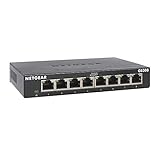
- GIGABIT ETHERNET PORTS: Features 8 x 1.0Gbps Ethernet ports for high-speed connectivity. Auto-negotiating ports detect the optimal speed for connected devices and work with existing Cat5e or Cat6 Ethernet cables.
- PLUG-AND-PLAY UNMANAGED NETWORK SWITCH: Simple plug-and-play setup with no software to install or configuration required.
- FLEXIBLE MOUNTING OPTIONS: Compact metal design supports desktop or wall-mount placement for versatile installation.
- SILENT & ENERGY-EFFICIENT OPERATION: Fanless design ensures silent performance, while IEEE 802.3az Energy Efficient Ethernet reduces power consumption without compromising high-speed network performance.
- REGIONAL COMPATIBILITY: Made for use in U.S. & CA only
What TAPI, OpenConfig and OpenROADM do
These names refer to related but distinct parts of an open transport environment; they are not interchangeable standards or labels.
- TAPI: ONF describes the Transport API as a RESTCONF/YANG interface between SDN controllers, orchestrators, traditional management systems and OSS solutions. ONF’s open-transport page also notes that the OTCC and OIMT portfolios merged into the Linux Foundation as ONMI; that governance context should not be confused with the role of the older ONF page as a current standards body. See ONF’s open transport page.
- OpenConfig: ONF’s 2018 ODTN announcement identifies OpenConfig as the base southbound model and API for communication with optical equipment. Southbound refers to the controller-to-network side. See the May 2, 2018 ODTN announcement.
- OpenROADM: ONF describes the multi-source agreement (MSA) as defining interoperability specifications and data models for optical devices, networks and services. It is part of work toward broader transponder compatibility, not evidence that every device combination interoperates. The same ONF announcement discusses OpenROADM.
- TIP OOPT and MUST: TIP’s Open Optical & Packet Transport (OOPT) work is associated with open transport architecture collaboration. ONF describes OOPT work covering open DWDM architectures and models and APIs for transponders, line systems and routers. These efforts contribute to the ecosystem; they do not by themselves establish an end-to-end implementation’s compatibility. See the TIP white paper and ONF’s ODTN announcement.
What to check when comparing transport SDN approaches
Compare the implementation against the operator’s intended services and operating model, not just the number of interfaces it claims to support. Useful evaluation areas include:
Rank #4

- 【One Switch Made to Expand Network】Features 5 RJ45 ports with 10/100/1000Mbps speeds, supporting Auto-Negotiation and Auto MDI/MDIX for hassle-free setup. Ideal for expanding your network, with 1 uplink (input) port and 4 output ports to split your Ethernet connection to multiple devices.
- 【Gigabit that Saves Energy】Latest innovative energy-efficient technology greatly expands your network capacity with much less power consumption and helps save money
- 【Reliable and Quiet】IEEE 802.3X flow control provides reliable data transfer and Fanless design ensures quiet operation
- 【Plug and Play】Easy setup with no software installation or configuration needed
- 【Ethernet Splitter】Connect to your router or modem for additional wired connections (laptop, gaming console, printer, etc)
- Technology and use cases: Does it cover the required packet, optical and microwave domains, or only optical DCI? Is the target point-to-point connectivity, meshed optical service, or cross-domain provisioning?
- Controller hierarchy: Which controller owns each domain, and how does the higher-level controller coordinate resource requests and state?
- Northbound abstractions: What service or resource view do OSS, orchestration and inventory receive? Does it expose the detail needed for the intended workflows?
- Southbound models and protocols: Which models are actually implemented on the equipment, and how are configuration, telemetry and device discovery handled?
- Optical constraints: What reach and transponder pairings are supported, and which vendor combinations have been verified for the proposed line system?
- Operations and lifecycle: How are faults surfaced, correlated and handled? What supports inventory synchronization, software changes and ongoing service management?
- Implementation status: Distinguish architecture documents, lab evaluations, vendor announcements and production deployments. Ask for deployment-specific evidence before comparing cost or performance.
What published examples establish—and what they do not
ONF’s May 2, 2018 announcement said China Unicom, Comcast, NTT Communications, Telefonica and TIM had committed to lab integration and evaluation. That is evidence of historical trial commitments, not confirmation of current production deployment. In the same announcement, Telefonica’s Juan-Carlos Garcia said, “Disaggregation is an essential requisite for the application of SDN to transport networks,” while Nokia Bell Labs’ Marina Thottan said open structured abstractions could accelerate automated end-to-end control. Those are attributed statements from the 2018 announcement, not measured outcomes.
A later physical example is NEC Phoenix. In a November 10, 2022 press release, NEC described Phoenix as a TIP-defined, white-box L0/L1 400G transponder. NEC said the solution combined its Network Operating System software based on Goldstone with Wistron’s Galileo Flex-T hardware, and supported transceivers compliant with OpenROADM and OIF specifications. The announcement documents a specialized carrier-network product at that date; it does not establish present availability or a consumer retail channel. See NEC’s Phoenix announcement.
Best Value

- 𝗘𝗶𝗴𝗵𝘁 𝟮.𝟱 𝗚𝗯𝗽𝘀 𝗣𝗼𝗿𝘁𝘀 𝗳𝗼𝗿 𝗦𝘂𝗽𝗲𝗿-𝗙𝗮𝘀𝘁 𝗖𝗼𝗻𝗻𝗲𝗰𝘁𝗶𝗼𝗻𝘀: 8× 2.5-Gigabit ports unlock the highest performance of your Multi-Gig bandwidth and devices, and provide up to 40 Gbps of switching capacity.
- 𝗔𝘂𝘁𝗼-𝗡𝗲𝗴𝗼𝘁𝗶𝗮𝘁𝗶𝗼𝗻: Auto-negotiation intelligently senses the link speeds and adjusts between 3-speeds (100Mb/1G/2.5G) for compatibility and optimal performance for all your devices, including 2.5G WiFi 6 AP, 2.5G NAS, 2.5G PCIe Adapter, 2.5G Server, gaming computer, 4K video, and more.
- 𝗜𝗱𝗲𝗮𝗹 𝗳𝗼𝗿 𝗩𝗮𝗿𝗶𝗼𝘂𝘀 𝗦𝗰𝗲𝗻𝗮𝗿𝗶𝗼𝘀: Built for LAN parties, home entertainment, small and home offices, and instant transfer for workstations.
- 𝗛𝗮𝘀𝘀𝗹𝗲-𝗙𝗿𝗲𝗲 𝗖𝗮𝗯𝗹𝗶𝗻𝗴: Instantly upgrade to 2.5 Gbps without the need to upgrade to Cat6 wiring, reducing wiring costs and hassle. *
- 𝗦𝗶𝗹𝗲𝗻𝘁 𝗢𝗽𝗲𝗿𝗮𝘁𝗶𝗼𝗻: Industry-leading fanless design ensures silent operation, ideal for any home or business.
The official materials cited here describe goals and architecture, but do not provide a sourced quantitative result for cost savings, provisioning time or operational-effort reduction. Such outcomes should be assessed from measurements for a specific operator, topology and implementation rather than inferred from the use of SDN or open interfaces.
Quick Recap
Product prices and availability are accurate as of the date/time indicated and are subject to change. Any price and availability information displayed on Amazon at the time of purchase will apply.

