
What’s actually slowing this PC down?
Pick the symptom - the matching free tool is one click away.
Omnichannel customer service connects support channels so a customer’s identity, interaction history, and unresolved case can carry over when they switch from email to chat, phone, social messaging, or another route. Simply offering several contact channels is multichannel support; continuity between them is what makes service omnichannel.
To build that continuity, connect the channels customers use to a shared service record, define how work is identified and routed, train agents to use the shared context, and test complete customer journeys before expanding. The aim is not to put every channel in one console, but to let the next person handling an issue see enough context to continue it.
How omnichannel customer service works
A customer contacts support through a channel such as email, voice, web chat, or social messaging. The service system links the request to the right customer and case, makes relevant history available to an agent or automation, and records what happened. If the issue remains unresolved, it stays actionable for follow-up. When the customer returns through another channel, the next interaction should continue from that context rather than require the customer to start over.
This does not require one monolithic database. It does require dependable data exchange and an agent-facing view that brings together the information needed for the current issue. Salesforce describes a CRM-and-API hub approach; Zendesk documents messaging history that can persist across sessions and devices. Those are examples of how continuity may be supported, not proof that every product or configuration behaves the same way.
PC Slower Than It Used to Be?
A free scan shows the junk files, broken settings and background clutter dragging Windows down - then fixes them in one click.Free scan · Windows 10 & 11Outdated Drivers Are Slowing You Down
One free scan finds every outdated or missing driver and matches the right update for your exact hardware.Free scan · exact hardware match#1 Best Overall
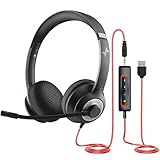
- ✅【Outstanding Noise cancelling Microphone】 The headphones with unidirectional boom 270°microphone that only picks up your voice and block out unwanted background noises. Also, you can wear it on the left or right ear as you like.
- ✅【All-Day Comfort for All Head Shape】 Eaglend always designed for all-day comfort using, there will be no restraint pressure, with the adjustable headbend fit adult and kids easily.The soft protein memory foam earpads is made of high-level breathable materials,ROHS certified materials prevent your ears from heat and sweat.
- ✅【Enhanced sound performance & 40mm audio driver】:Corded phone headset with built-in audio sound card, Eaglend sound lab tested thousands of times for your daily conversation/music/movie/gaming, bringing you extra clear and bass for pleasant experience.
- ✅【USB/3.5mm Connection】 The headphone is designed for multiple use, 3.5mm audio cable with USB In-line audio volume control (cord length 5+4 feet),with mic mute &indicators /speaker mute.Compatible with PC/Tablet/Mac/iOS/laptop /Android phone and other devices."
- ✅【Global warranty &multi-purpose】24 months warranty by eaglend. Great ideal for online courses, Skype chat, call center, Webinars Presentations, Office, Business, Rosetta Stone, Dragon Speaking, Conference Calls and more.
During design, decide how the service identifies customers, handles duplicate records, assigns ownership of customer data, retains interaction history, and controls access. These choices determine whether a shared view is useful and reliable.
Omnichannel vs. multichannel support
| Model | What the customer can do | What happens to context |
|---|---|---|
| Multichannel | Contact support through more than one channel. | Channels may operate separately, so a customer switching channels may need to repeat information. |
| Omnichannel | Use the channels the business supports, including switching between them. | Identity, interaction history, and case context are connected so another agent or channel can continue the work. |
A shared agent console alone does not establish omnichannel continuity. Test whether identity and history survive a channel change, whether the next agent can use them, and whether an unresolved issue remains assigned and actionable.
Which channels should you connect?
Choose channels based on customer use, the kind of help required, and the team’s ability to staff and support them. A channel list is a design decision, not a checklist to complete: adding routes without connected records and workable queues can increase complexity without improving continuity.
| Channel | Useful for | Continuity considerations |
|---|---|---|
| Email and web forms | Asynchronous requests and issues that benefit from a written record. | Track replies and status in a ticket or case so follow-up does not become an isolated message. |
| Voice and voicemail | Live conversation, complex explanations, and customers who prefer speaking with an agent. | Where supported and configured, associate calls and voicemail with the same ticket workflow used for other requests. |
| SMS or text | Short exchanges and updates. | Make incoming messages available in the service workflow and preserve their relationship to the customer and issue. |
| Web or mobile messaging and live chat | Embedded contact, live help, and asynchronous conversations that can continue later. | Check whether history persists across sessions and devices; Zendesk documents this behavior for its messaging setup. |
| Social messaging | Customers who contact the business through social platforms. | Incoming messages can enter a ticket flow when the relevant integration and configuration support them. |
| Help center and knowledge base | Self-service for common questions, with a route to submit a request when an article is not enough. | Keep a clear transition from self-service to a person or case for issues that need individual attention. |
| Mobile SDK, APIs, and third-party integrations | Support inside an app or connections to channels and systems not available as built-in options. | These connections can require developer work and ongoing integration maintenance. |
Availability depends on the vendor, plan, account configuration, and sometimes a third-party integration. Zendesk distinguishes built-in channels from integrations and documents prerequisites and limitations for omnichannel routing. A vendor’s broad channel list should not be read as a promise that every option is included in every subscription or works identically.
The Tool Desk
Outbyte PC Repair FREEClear out junk files and repair common Windows errorsFree Scan →Outbyte Driver Updater FREEScan for outdated or missing drivers - takes under a minuteDriver Scan →How to connect support channels: a practical rollout
1. Map customer journeys and pain points
List the main reasons people contact support, where each journey begins, where customers switch channels, and where they lose context or wait for a resolution. Use actual channel-use data where available. Zendesk recommends monitoring channels and notes that preferences can vary with the issue and customer need.
Rank #2

- Digital Stereo Sound: Fine-tuned drivers provide enhanced digital audio for music, calls, meetings and more
- Rotating Noise Canceling Mic: Minimizes unwanted background noise for clear conversations; the rotating boom arm can be tucked out of the way when you’re not using it
- Handy In-line Controls: Simple in-line controls on the headset cable let you adjust the volume or mute calls without disruption
- Plug-and-Play USB Computer Headset: Simply plug the USB-A connector into your computer and you’re ready to talk or listen without the need to install software
- Padded Comfort: Comfortable headphones with adjustable headband features swivel-mounted, leatherette ear cushions for hours of comfort and is easy to clean
2. Define continuity and data requirements
Specify how the service will identify a customer, which prior interactions and records an agent needs, how an open case remains open, and which systems supply customer, order, billing, or knowledge information. Establish which system owns each important record and how it is kept in sync.
3. Prioritize channels you can support
Connect the channels customers use and the organization can staff consistently. Start with the journeys where context is most often lost or where a channel handoff is common. More channels do not create continuity unless identity, case records, and follow-up are connected.
4. Set routing and workload rules
Define queues, agent skills, availability, status, capacity, priority, and channel constraints. Decide what happens when no eligible agent is available and how urgent or aging work is handled. Check product-specific feature requirements and plan limits: routing behavior is not uniform across platforms.
5. Pilot one connected journey
Salesforce recommends starting with one or two key channels, testing them, and addressing problems before expanding. Test a real workflow end to end, including a channel change, duplicate identity, case ownership, escalation, and agent handoff. Confirm that the customer does not have to repeat information that is already in the record.
6. Train agents and standardize service
Train agents and managers to work from the shared record, follow consistent service policies, and explain handoffs to customers. Scripts can differ by channel while the underlying policy and the information passed between agents remain consistent.
Rank #3
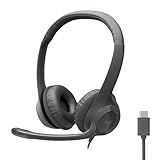
- Digital Stereo Sound: Fine-tuned drivers provide enhanced digital audio for calls, meetings, music, and more
- Rotating Noise-Canceling Mic: Minimizes unwanted background noise for clear conversations; the rotating boom arm can be tucked out of the way when not in use
- Handy Inline Controls: Simple inline controls on the headset cable let you adjust the volume or mute calls without disruption
- USB-C Plug-and-Play: Simply plug the USB-C cable into your computer, including MacBook Neo laptops, and you're ready to talk or listen without installing software.
- Padded Comfort: Comfortable USB C headphones with adjustable headband feature swivel-mounted, leatherette ear cushions for hours of comfort
7. Measure results across the journey
Salesforce suggests tracking first-contact resolution, average resolution time, and customer satisfaction (CSAT). Review these measures by channel and issue, as well as across handoffs, so a favorable overall average does not hide a journey that repeatedly breaks when customers switch channels.
How to evaluate an omnichannel service platform
Compare platforms against the operating model you need, rather than treating the number of supported channels as a measure of omnichannel quality.
Do these 3 things before closing this tab:
1Clear out junk files and repair common Windows errors2Scan for outdated or missing drivers - takes under a minute3Repair Windows errors before they cause bigger problems| Evaluation area | Questions to answer |
|---|---|
| Channel coverage | Are the needed channels supported in your geography and subscription? Are they built in or dependent on an integration? |
| Context continuity | Can an agent see previous interactions and continue a case after the customer changes channels? How long is history retained, and does it persist across sessions and devices? |
| Identity and records | How does the system match a request to the right customer and case? Which system owns customer details and other important records? |
| Routing and workload | Can work be routed by queue, skill, availability, status, priority, and capacity? What happens when an agent is ineligible or no one is available? |
| Integrations | Can the service platform connect to CRM, commerce, billing, knowledge, and other relevant systems? What development and maintenance will those links require? |
| Reporting | Can managers review resolution and customer-experience measures across channels and customer journeys? |
| Rollout and adoption | What migration, workflow changes, agent training, and staged tests are required? |
| Availability and constraints | Which subscription, account settings, or feature prerequisites apply? Zendesk’s routing documentation illustrates that eligibility and limitations can matter. |
Salesforce’s and Zendesk’s materials describe their own approaches; they do not establish a neutral ranking of service platforms. Compare official feature and licensing documentation for the specific configuration under consideration.
Independent reader supportYour contribution helps us test, update, and keep practical guides available for everyone.Common implementation risks
- Channel sprawl: New channels add work if the team cannot connect records, staff queues, and maintain consistent service. Expand in stages.
- False continuity: A unified console does not guarantee accurate identity matching, visible history, or clear case ownership. Test complete channel transitions.
- Routing overload: Capacity and status settings need to reflect actual agent work. Zendesk documents routing capacity rules as well as eligibility conditions and limitations.
- Uneven self-service: Knowledge articles can help customers find answers, but customers still need an appropriate route to human help for issues that require it.
- Plan and configuration differences: Channel and routing features vary by vendor, subscription, and account setup. Check the applicable official product documentation.
- Unproven benefits: Vendor materials describe potential gains in efficiency and satisfaction, but a platform or channel expansion does not guarantee better results. Measure outcomes in your own service operation.
Salesforce’s March 2, 2026 omnichannel contact-center article says 85% of customers expect consistent interactions with businesses. Salesforce publishes the figure, but the source material inspected does not establish the survey sample or methodology, so it should be treated as a vendor-published research claim rather than a universal benchmark.
Frequently Asked Questions
What is omnichannel customer service?
It connects support channels around shared customer identity, interaction history, and case context so service can continue when a customer switches channels.
Rank #4

- Digital Stereo Sound: Fine-tuned drivers provide enhanced digital audio for music, calls, meetings and more
- Rotating Noise Canceling Mic: Minimizes unwanted background noise for clear conversations; the rotating boom arm can be tucked out of the way when you’re not using it
- Handy In-line Controls: Simple in-line controls on the headset cable let you adjust the volume or mute calls without disruption
- Plug-and-Play USB Computer Headset: Simply plug the USB-A connector into your computer and you’re ready to talk or listen without the need to install software
- Padded Comfort: Comfortable headphones with adjustable headband features swivel-mounted, leatherette ear cushions for hours of comfort and is easy to clean
What is the difference between omnichannel and multichannel customer service?
Multichannel support offers several ways to contact a business; omnichannel support connects those routes so the customer’s context and unresolved work can carry over.
Recommended Free Tools
How do you start connecting support channels?
Map the customer journeys and context gaps first, then define identity and data requirements, connect a small number of priority channels, establish routing rules, pilot a real journey, train staff, and measure results.
Does omnichannel customer service require one database?
No. The practical requirement is reliable data exchange and an agent-facing view that makes the relevant customer and case information available.
Which channels should a business connect first?
Start with channels customers actually use and the team can staff consistently, prioritizing journeys where customers often switch channels or repeat information.
How can a business tell whether its support is truly omnichannel?
Test a complete customer journey: confirm the same customer and case are recognized after a channel change, the next agent can see useful history, and unresolved work remains actionable.
Quick wins for a faster PC:
Clear out junk files and repair common Windows errorsFree Scan →Fix the driver behind crashes, sound loss and screen glitchesFind Drivers →Repair Windows errors before they cause bigger problemsFix Now →Quick Recap
Product prices and availability are accurate as of the date/time indicated and are subject to change. Any price and availability information displayed on Amazon at the time of purchase will apply.

