
Outdated Drivers Are Slowing You Down
One free scan finds every outdated or missing driver and matches the right update for your exact hardware.Free scan · exact hardware matchWindows Errors? Fix Them Before They Spread
Repair common Windows errors and clear accumulated junk for a smoother, more stable PC - no reinstall needed.Free scan · no reinstallNot on looks alone. I understand the appeal of NVIDIA’s Founders Edition (FE) cards, but I would choose one only if the exact model also fits my case, performs well in independent cooling and noise tests, and is priced and available on reasonable terms. Partner cards are not one uniform alternative: manufacturers use different designs and cooling solutions, so the right comparison is between specific models, not FE versus “aftermarket” as a whole.
Why an FE card can be the better-looking choice
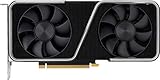
Founders Edition refers to NVIDIA’s own design for selected GeForce models. Its restrained shroud, shape, and finish can suit a build that does not need prominent lighting or an elaborate cooler. But “better-looking” is a matter of taste, not a measurable advantage. A TechRadar reviewer, for example, called the RTX 4070 Super FE “easily one of the sexiest graphics cards I’ve laid hands on in a long while.” That is one reviewer’s opinion, not proof of a universal preference. TechRadar’s RTX 4070 Super FE review also describes its black shroud and trim as sleek and notes that it is smaller than larger siblings.

Partner designs can be restrained too. ASUS ProArt GeForce RTX cards are one example to compare if you like a less showy look but want a partner-designed card. Their appearance, dimensions, cooling, and price still depend on the specific model; the product line alone does not establish that one is the better buy.
Why I would not make appearance the deciding factor
FE availability is selective
NVIDIA does not make a Founders Edition for every GPU tier. In its RTX 40-series announcement, the company described the RTX 4090 and RTX 4080 FE cards as limited production. That is a generation-specific statement, not a guarantee about current stock or availability for another generation. Check whether the exact GPU you want has an FE version and whether it is actually available in your region. NVIDIA’s RTX 40-series announcement
#1 Best Overall

- NVIDIA Blackwell Architecture The Ultimate Platform for Gamers and Creators Tensor Cores Max AI Performance with FP4 and DLSS 4 NVIDIA Reflex 2 with Frame Warp Full Ray Tracing with Neural Rendering
- VIDEO CARD
- NVIDIA
Partner cards are not a single design or performance class
Board partners build custom cards with their own shrouds and cooling solutions. A partner card may be larger, more decorative, or more subdued than an FE, and its thermals and noise cannot be inferred from its appearance. Compare reviews of the precise FE and partner models you are considering. NVIDIA’s historical description of dual fans as offering “better cooling capabilities and better acoustics in well-ventilated chassis” is a manufacturer claim about its own design, not an independent result that applies to every FE generation. NVIDIA’s historical Founders Edition description
Compact does not mean every FE is compact
Dimensions vary by model and generation. PCWorld reported that the RTX 5090 FE is a two-slot card and discussed smaller FE designs for the RTX 5070 and RTX 5080. Those are specific design examples, not evidence that all Founders Edition cards are small or that a two-slot card will fit every case. Check the card’s published dimensions and your case’s clearance before buying. PCWorld’s interview about NVIDIA’s RTX 5090 FE design
Rank #2
- 8GB GDDR6 256-bit Memory
- 7680 x 4320 Maximum Resolution
- PCIe 4.0
- Full Height, Dual Slot
- DisplayPort 1.4a, HDMI 2.1
How I would compare an FE with a partner card
- Confirm the exact GPU and card models. Match the same GPU generation and tier, then check that an FE version exists. Do not compare an FE from one tier with a partner card from another.
- Check case fit. Compare the card’s length and thickness or slot width against your case’s specifications. Also consider space for airflow around neighboring components; a card that technically fits can still make a cramped build harder to cool.
- Read independent cooling and acoustic tests. Look for testing of the exact cards, not just the GPU chip or a different model in the same product family. NVIDIA’s own design descriptions explain its claims but do not replace side-by-side independent testing.
- Verify power details. Check the exact card’s power requirements and connector, then confirm your power supply and cable arrangement are suitable.
- Compare the local price and stock. Check current listings where you live. An old MSRP or launch-era stock report does not tell you what a card costs or whether it is available now.
- Check regional support terms. Review the warranty and support conditions for the exact manufacturer and region before choosing between NVIDIA’s card and a partner model.
- Decide whether the visual difference is worth the trade-off. If the cards meet your fit, power, performance, and support needs, choose the design you prefer. If they do not, looks are not a reason to overlook the mismatch.
For broad guidance on these comparison factors, see TechPowerUp’s graphics-card reviews, but use model-specific results rather than treating a general comparison guide as a substitute for direct testing.
When I would buy a Founders Edition
I would consider an FE if I preferred its design, could buy the exact model at a sensible local price, and found that it fit my case and met my cooling, noise, power, and support needs. I would not rule one out because it is an NVIDIA design, or buy one just because its appearance appealed to me.
Do these 3 things before closing this tab:
1Scan for outdated or missing drivers - takes under a minute2Clear out junk files and repair common Windows errors3Fix the driver behind crashes, sound loss and screen glitchesRank #3

- Graphics Processing Unit (GPU)/Clock Speed: Powered by the NVIDIA GeForce RTX 4070 graphics processing unit (GPU) with a 2.48 GHz boost clock speed.
- On-board Memory: 12GB GDDR6X
- Interface Compatibility: PCI Express 4.0 and earlier PCI Express 3.0. Offers compatibility with a range of systems.
- Technologies: 5,888 NVIDIA CUDA Cores, 2.48 GHz Boost Clock, Dedicated Ray Tracing Cores, Dedicated Tensor Cores, NVIDIA DLSS, Game Ready and NVIDIA Studio Drivers, NVIDIA GeForce Experience, NVIDIA Broadcast, NVIDIA G-SYNC, NVIDIA GPU Boost, GDDR6X Graphics Memory, PCI Express Gen 4
- HDMI and Display Port outputs: Enable flexible connectivity
When I would choose a partner-designed card instead
I would look at a partner-designed GeForce RTX card if a specific model better matched my case, had more favorable independent cooling or acoustic results, or was easier to find at a suitable price. If I wanted a restrained alternative to the FE, I would compare an ASUS ProArt GeForce RTX card at the same GPU tier—but only after checking that model’s dimensions, test results, power requirements, local availability, and support terms.
Quick Recap
Best Value

- Item Package Dimension - 15.0L x 12.25W x 4.25H inches
- Item Package Weight - 6.0 Pounds
- Item Package Quantity - 1
- Product Type - VIDEO CARD
Rank #4
Product prices and availability are accurate as of the date/time indicated and are subject to change. Any price and availability information displayed on Amazon at the time of purchase will apply.

