
What’s actually slowing this PC down?
Pick the symptom - the matching free tool is one click away.
At CES 2025, Nvidia’s central physical-AI announcement was Cosmos, a developer platform for generating, finding, and evaluating training scenarios for robots and autonomous vehicles. It was infrastructure for building AI that can perceive and act in the physical world—not a launch of a finished consumer robot.
What Nvidia meant by “physical AI”
Nvidia CEO Jensen Huang described physical AI as systems that can “proceed, reason, plan and act” in the real world. The phrase is Nvidia’s framing for AI that must do more than produce text, images, or audio: it must interpret its surroundings and support actions in physical environments. At CES, the practical focus was on tools developers can use to train and test those systems.
That distinction matters. A platform for generating simulated training data does not, by itself, demonstrate that a robot or vehicle is safe, commercially ready, or operating autonomously in the real world.
What Nvidia announced at CES 2025
Cosmos: world models and data tools
Announced on January 6, 2025, Cosmos brings together generative world foundation models, tokenizers, guardrails, and an accelerated video-processing pipeline. Nvidia said the first wave of models was available to developers under its open model license. Huang said the goal was to “democratize physical AI and put general robotics in reach of every developer.” That describes Nvidia’s ambition, not proof that the platform makes robotics development simple or production-ready.
Free tools Windows power users keep installed
One-click scans. No signup required.
#1 Best Overall
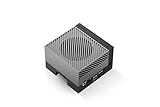
- The NVIDIA Jetson AGX Orin 64GB Developer Kit makes it easy to get started with Jetson Orin. Compact size, lots of connectors, and up to 275 TOPS of AI performance make this developer kit perfect for prototyping advanced AI-powered robots and other autonomous machines.
- The developer kit includes a Jetson AGX Orin 64GB module, and can emulate all the Jetson Orin modules. It supports multiple concurrent AI application pipelines with the NVIDIA Ampere GPU architecture, next-generation deep learning and vision accelerators, high-speed IO and fast memory bandwidth. Now you can develop solutions using your largest and most complex AI models to solve problems such as natural language understanding, 3D perception, and multi-sensor fusion.
- Jetson runs the NVIDIA AI software stack, and use-case specific application frameworks are available, including Isaac for robotics, DeepStream for vision AI, and Riva for conversational AI. You can save significant time with NVIDIA Omniverse Replicator for synthetic data generation (SDG), and by using NVIDIA TAO toolkit to fine-tune pretrained AI models from the NGC catalog.
- Jetson ecosystem partners offer additional AI and system software, developer tools, and custom software development. They can also help with cameras and other sensors, as well as carrier boards and design services for your product.
- With the computing capability of more than 8 Jetson AGX Xavier systems in a developer kit that integrates the latest NVIDIA GPU technology with the world’s most advanced deep learning software stack, you’ll have the flexibility to create tomorrow’s AI solution as well as today’s.
Nvidia described world foundation models as able to generate physics-based video and virtual world states using prompts and inputs such as text, images, video, robot sensor information, or motion data. In the proposed workflow, teams can search recorded video for useful situations, generate controlled scenarios, fine-tune models for an application, and evaluate them in simulation. Nvidia’s Cosmos announcement explains the platform and its components.
Omniverse blueprints and industrial AI
Nvidia also announced generative models and Omniverse blueprints for robotics, autonomous vehicles, vision AI, and digital twins. The blueprints included robot-fleet simulation for factories and warehouses, AV simulation, spatial streaming of digital twins, and real-time digital twins for computer-aided engineering. Omniverse provides tools to build and render 3D scenarios; Cosmos can help turn those scenarios into more training material.
Siemens announced Teamcenter Digital Reality Viewer, described as the first Siemens Xcelerator application powered by Omniverse libraries. Nvidia also named Accenture, Altair, Ansys, Cadence, Microsoft, Siemens, Foretellix, and Neural Concept among firms integrating or using Omniverse libraries. These announcements point to an industrial-software ecosystem rather than a consumer-facing product.
Other CES announcements in context
The keynote also featured GeForce RTX 50 Series GPUs, Project DIGITS, and a Toyota vehicle-development partnership using DRIVE AGX and DriveOS. They formed part of Nvidia’s wider CES presentation, but Nvidia’s announcements do not establish that each is a physical-AI product or a required purchase for Cosmos developers.
Rank #2

- AGX Orin 64GB Development Kit makes it easy to get started with AGX Orin. Its compact size, rich interfaces, and AI performance of up to 275 TOPS make it ideal for building advanced AI robots and other autonomous machine prototypes.
- The development kit includes AGX Orin 64GB module and can emulate all Orin modules. It utilizes the Ampere GPU architecture, next-generation deep learning and vision accelerators, high-speed I/O, and fast memory bandwidth. You can leverage the largest and most complex AI models to develop solutions for problems such as natural language understanding, 3D perception, and multi-sensor fusion.
- Jetson runs AI software and provides application frameworks for specific use cases, such as Isaac for robotics, DeepStream for visual AI, and Riva for conversational AI. Using Omniverse Replicator for Synthetic Data Generation (SDG) can save you significant time; while fine-tuning pre-trained AI models from the NGC catalog using the TAO toolkit can further enhance your results.
- Yahboom offers four kits for users to choose from. The AIlarge model voice module utilizes examples of AI large models and multimodal models; it provides 1TB/2TB SSDs with pre-flashed driver image files; and an 8MP USB industrial camera for image processing.
- It offers various online and offline mainstream AI large model development materials. The system is pre-configured with AI vision examples, ROS case studies, and AI large models. It supports offline/online deployment of large models for voice interaction, real-time video analysis, and visual positioning, helping you quickly get started with localized AI agent development.
How the tools fit different development tasks
| Tool or system | Role in Nvidia’s described approach | Development stage or task |
|---|---|---|
| Cosmos | World models and data tools for searching, generating, and curating scenarios | Training-data creation and model evaluation |
| Omniverse | Tools for composing and rendering 3D scenarios and digital twins | Simulation and synthetic-data generation |
| Isaac GR00T | Humanoid-robot learning workflows connecting demonstrations, simulation, and synthetic motion data | Humanoid training and simulation-to-real development |
| DGX, OVX, and AGX | Data-center training, simulation on OVX, and in-vehicle processing on AGX | Autonomous-vehicle development |
These are complementary parts of Nvidia’s described stack, not interchangeable consumer products. The fit depends on whether a team is building training data, simulating an environment, developing humanoid behaviors, or processing vehicle sensor data.
How Nvidia described training robots and vehicles
Humanoid robots: Isaac GR00T
Nvidia’s Isaac GR00T blueprint links human demonstrations with simulation and synthetic motion data. Its robotics overview says the GR00T-Teleop workflow can capture human actions in a digital twin using Apple Vision Pro. GR00T-Mimic expands demonstrations into synthetic motion data, while GR00T-Gen expands data through domain randomization and 3D upscaling. Nvidia positions Cosmos and Omniverse as tools for world generation and simulation-to-real development; the cited workflow does not establish that Vision Pro is necessary for Cosmos or robotics generally.
Autonomous vehicles: DGX, OVX, and AGX
For AV development, Nvidia described a three-computer arrangement: DGX systems train the AI stack in the data center, Omniverse on OVX systems supports simulation and synthetic-data generation, and an AGX computer processes sensor data in the vehicle. Cosmos adds data search, curation, and generated scenarios to that cycle. This is Nvidia’s account of a development architecture, not evidence that a particular vehicle is safe or ready for public roads.
Which companies were involved
Nvidia’s CES materials named companies at different stages of adoption, evaluation, or planned use. The distinctions are important: being named as an early adopter, evaluating a platform, or planning to use it does not mean a company has deployed a finished commercial system.
The Tool Desk
Outbyte PC Repair FREERepair Windows errors before they cause bigger problemsFix Now →Outbyte Driver Updater FREEScan for outdated or missing drivers - takes under a minuteDriver Scan →Rank #3

- 【Core Parameters】★AI Perf:34-67 TOPS ★GPU:512-core NVIDIA Ampere architecture GPU with 16 Tensor Cores ★CPU:6-core Arm Corte-A78AE v8.2 64-bit CPU 1.5MB L2 + 4MB L3 ★Memory:4GB 64-bit LPDDR5 51 GB/s ★Storage: external NVMe via M.2 Key M (NOTE:SUB Board No SD Card Slot)
- 【Empowered by Large Al Model, Enhanced Human-Computer Interaction】Jetson Orin Super leverages three AI models and incorporates an AI voice interaction module. This multimodal visual system matches the scene being described, enabling environmental awareness and AI visual gameplay. Combined with a large-scale voice module and camera, it enables speech-to-text, semantic analysis, natural conversation, and real-time video analysis, enabling advanced embodied AI applications.
- 【AI Upgrade】Jetson Orin Nano series modules are compact in size but can deliver up to 34-67 TOPS of AI performance, with power consumption ranging from 7 watts to 25 watts. Compared to the Jetson Nano B01, it offers up to 80 times the performance and sets a new standard for entry-level edge AI.
- 【Highly compatible carrier board】Yahboom's carrier board is fully compatible with orin nano module. Compared to carrier boards that use Jetson Nano on the market, the newly upgraded circuit supports 25W power mode, which enables larger and more complex neural networks and fully leverages the performance of the core module. The resources, size, and interfaces of the Yahboom carrier board are consistent with the official board, with the only difference addition of power switch button.
- 【Tutorial materials provided】The JETSON system based on Ubuntu 22.04 provides a complete desktop Linux environment with accelerated graphics, supporting NVIDI-ACUDA 12.6, TensorRT 10.7.0, cuDNN 9.6.0, OpenCV 4.10.0, etc. The performance on AI LLM, VLM and visual Transformer is significantly improved compared with the previous generation.
- Cosmos: Nvidia named 1X, Agile Robots, Agility, Figure AI, Foretellix, Uber, Waabi, and XPENG among early adopters in its announcement. The specific status varies across the broader group of companies discussed in Nvidia materials; Nvidia also named Fourier, Galbot, Hillbot, IntBot, Neura Robotics, Skild AI, and Virtual Incision in connection with physical-AI efforts, while some firms were described as evaluating Cosmos or planning to use it.
- Omniverse: Nvidia identified industrial-software firms integrating or using Omniverse libraries, including Accenture, Altair, Ansys, Cadence, Microsoft, Siemens, Foretellix, and Neural Concept. Siemens’ Teamcenter Digital Reality Viewer was the concrete application named at CES.
How to interpret Nvidia’s performance and scale claims
Nvidia published several striking figures at CES, but they should be read as vendor claims rather than independent benchmarks. The CES announcements do not provide an independent validation method for these comparisons.
| Nvidia’s claim | What it referred to | Qualification |
|---|---|---|
| 20 million hours of video processed and curated in 14 days, versus more than three years for a CPU-only pipeline | Blackwell-powered video-processing pipeline | Nvidia’s comparison; no independent benchmark method was provided in the CES release. |
| 8× more total compression and 12× faster processing | Comparison with “today’s leading tokenizers” | Nvidia’s claim; the release did not identify the comparator set. |
| 1,000 3D objects labeled in minutes rather than more than 40 hours manually | Edify SimReady | Nvidia’s estimate in its CES release. |
| 18 quadrillion tokens, including 2 million hours of autonomous-driving, robotics, drone, and synthetic data | Training data described for GR00T and Cosmos | Nvidia’s figure in its GR00T/Cosmos article; it is not an independent assessment of model performance. |
Huang also framed manufacturing and logistics as a $50 trillion opportunity. That number appeared in his quoted market framing in Nvidia’s CES materials, not as an independently sourced market study.
What the announcement does—and does not—show
Cosmos addresses a real development challenge: robots and autonomous vehicles need varied examples of conditions and events, and collecting every useful real-world scenario can be difficult. Nvidia’s proposed combination of recorded-data curation, generated scenarios, simulation, and model evaluation is intended to help developers build those examples more efficiently.
The CES materials establish what Nvidia announced, how it describes the workflow, and which partners it named. They do not independently verify the performance figures, show that every named company has deployed a finished system, or establish that Cosmos-generated training scenarios produce safe real-world robots or vehicles. The announcement is best understood as a developer-platform and ecosystem story, not evidence that physical AI has already reached broad commercial deployment.
Quick Recap
Product prices and availability are accurate as of the date/time indicated and are subject to change. Any price and availability information displayed on Amazon at the time of purchase will apply.

