
The Tool Desk
Outbyte PC Repair FREEClear out junk files and repair common Windows errorsFree Scan →Outbyte Driver Updater FREEScan for outdated or missing drivers - takes under a minuteDriver Scan →A neurocomputer is a system that performs neural-network computation. The term can refer to a network simulated in software on an ordinary computer or to dedicated hardware designed for neural computation. In either case, the system uses many simple, connected processing elements to turn inputs into outputs; it is inspired by the brain, but it is not a faithful simulation of biological neurons.
What is a neurocomputer?
A neural network is a collection of connected processing elements—often called artificial neurons—whose combined activity computes an output from an input. The word neurocomputer describes the system doing that work. It may be software running on a conventional computer, or a physical device built to carry out neural-network operations.


Neural networks are also known as artificial neural networks, connectionist models, and parallel distributed-processing models. These names point to different aspects of the idea: connections link the units, information is distributed across the network, and many operations can occur in parallel. “Neurocomputer” is a systems term, not a separate kind of intelligence.
Are neural networks modeled on the brain?
They borrow a simplified idea from biology: many connected units can collectively process information. Their units, connections, and learning rules are mathematical abstractions, however, not attempts to reproduce the detailed behavior of real brain cells. As Michael W. Roth of Johns Hopkins Applied Physics Laboratory puts it, “Neural networks do not attempt to simulate accurately real neurons.”
Recommended Free Tools
#1 Best Overall
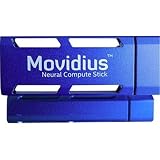
- Neural Network Accelerator in USB Stick Form Factor
- Real-time on-device inference; no cloud connectivity required
- No additional heat-sink, no fan, no cables, no additional power supply
- Prototype, tune, validate and deploy deep neural networks at the edge
The biological analogy is useful for understanding why a network has many connected elements and why its behavior depends on their collective activity. It should not be taken to mean that an artificial neuron works like a living neuron or that a neural network reproduces a brain.
How does a neural network compute and learn?
From input to output
A network’s topology defines which units send signals to which others. Each unit combines incoming values using connection weights and a bias, then applies an activation function to produce its output. The resulting signals pass through the network until it produces an output for the task.
The useful explanation is usually the behavior of the network as a whole, rather than any one unit in isolation: its output depends on the pattern of connections, parameter values, and activity across many units.
Learning changes the parameters
Training adjusts weights and related parameters according to a learning rule so the network produces useful outputs for its task. Learning may be supervised, unsupervised, or reinforcement-based; the regime describes how learning is organized, while the topology describes how the units are connected. They are separate choices.
Quick wins for a faster PC:
Scan for outdated or missing drivers - takes under a minuteDriver Scan →Clear out junk files and repair common Windows errorsFree Scan →Fix the driver behind crashes, sound loss and screen glitchesFind Drivers →Rank #3

- Raspberry Pi 5 with 8GB RAM: Model SC1112 featuring a quad-core ARM Cortex-A76 processor running at 2.4GHz. Enhanced Connectivity: Includes dual 4K micro HDMI ports, USB-C power input, and high-speed USB 3.0 ports. PCIe Expansion Support: FPC connector enables M.2 NVMe SSDs when using compatible adapters. Fast Storage Options: Works with microSD cards for booting, or optional NVMe storage for advanced projects. Built for Projects & Learning: Ideal for programming, home labs, DIY electronics, automation, and Linux-based development.
In associative networks, recurrent connections can create attractor dynamics: activity moves toward a stable stored pattern. As a result, a network can retrieve a pattern from a noisy or incomplete cue, a behavior known as pattern completion.
What is the difference between a neural network and a neurocomputer?
A neural network is the computational model: its units, connections, parameters, and operations. A neurocomputer is the system that runs or implements that computation. The distinction is similar to the difference between a program or computational method and the machine executing it.
| System | What it means | Typical implementation |
|---|---|---|
| Neural network in software | A network model executed by a general-purpose computer or accelerator. | CPU, GPU, or another accelerator. |
| Dedicated neurocomputer | Hardware designed to implement neural computation, potentially with specialized parallel operations. | Digital, analog, or mixed-signal circuitry. |
Dedicated designs may reduce data movement or improve energy efficiency for selected workloads, but those potential advantages depend on the architecture and task. “Neurocomputer” does not imply one standard design or a guaranteed performance benefit.
Do neurocomputers exist as hardware?
Yes. Dedicated neural-computation hardware has been designed in digital, analog, and mixed-signal forms. Hardware surveys also distinguish general-purpose processors, digital signal processors (DSPs), and custom digital systems. Some designs target particular network families, including multilayer perceptrons, Hopfield networks, and Kohonen networks.
What’s actually slowing this PC down?
Pick the symptom - the matching free tool is one click away.
Best Value

- 12.3 MP Sony IMX500 Intelligent Vision Sensor with a powerful neural network accelerator
- Integrated low-power inference engine
- Integrated RP2040 for neural network and firmware management
- Pre-loaded with MobileNet machine vision model
- Sensor modes: 4056×3040 at 10fps, 2028×1520 at 30fps
These implementations are not interchangeable: a design optimized for one architecture or workload may not suit another. A 2010 review describes the commercial viability of dedicated artificial-neural-network hardware as limited and notes that theory does not cover the full range of possible architectures. There is no single established speed or energy figure that can fairly represent all neurocomputers.
Independent reader supportYour contribution helps us test, update, and keep practical guides available for everyone.How do neural-network architectures differ?
Architecture shapes the kind of computation a network naturally performs. These broad comparisons are about typical uses, not strict limits on what a model can be applied to.
| Architecture | Connection pattern or behavior | Natural fit |
|---|---|---|
| Feedforward | Signals progress through the network without recurrent feedback. | Mappings from static inputs, such as vectors, to outputs. |
| Convolutional | Uses convolutional structure to process spatial data. | Images and other spatial inputs. |
| Recurrent, including LSTM | Uses temporal state or recurrent connections to represent sequence dependence. | Sequences and time-dependent signals. |
| Hopfield and related associative networks | Recurrent connections support attractor-based retrieval and pattern completion. | Retrieving stored patterns from noisy or partial cues. |
To compare two networks, separate the questions: what learning regime do they use; how are their units connected; what data structure do they handle; what hardware runs them; and what behavior matters, such as direct input-to-output mapping, sequence state, or retrieval from incomplete input? A network family does not, by itself, determine whether the implementation is software or dedicated hardware.
How did the field develop?
- 1943: Warren McCulloch and Walter Pitts proposed a mathematical model of a neuron. It abstracted neuron function and did not include learning.
- 1949: Donald Hebb described a biologically motivated learning rule, an early unsupervised-learning idea.
- 1957: Frank Rosenblatt introduced the perceptron, a single-layer network used as a linear binary classifier.
- 1980s: Connectionism and associative-memory research, including Hopfield and bidirectional associative-memory models, renewed interest in neural networks.
- Around 2006: A deep-learning resurgence began, followed by widespread use of deep feedforward, convolutional, deep-belief, autoencoder, and LSTM networks.
This history runs from mathematical abstractions of neurons to increasingly varied models and implementations. It does not describe a steady march toward hardware that behaves like a biological brain.
Which neural-network book should I start with?
Neural Networks: A Systematic Introduction by Raul Rojas (Springer, 1996) is a substantial textbook option for readers seeking a broad theoretical introduction to artificial neural networks. Google Books records it as 502 pages and describes it as suitable for university courses in neurocomputing. Because it was published in 1996, it is best treated as a foundation in neural-network theory, not a guide to the later deep-learning wave or current hardware products.
Quick Recap
Product prices and availability are accurate as of the date/time indicated and are subject to change. Any price and availability information displayed on Amazon at the time of purchase will apply.

