
There is no reliable way to say what failed first in a particular homelab without the operator’s notes, logs, or recollection. But when containers move into a WSL-based setup, the first trouble is often traceable to one of three boundaries: where files live, whether the WSL distribution stays running, or how traffic reaches the container. Which boundary matters depends on whether you run an engine inside Linux on WSL, Docker Desktop with WSL integration, or Podman’s managed WSL machine.
First identify what “containers in WSL” means
These arrangements use WSL differently, so a fix for one is not automatically a fix for another. Before diagnosing a failure, write down which runtime is involved and where it runs.
| Arrangement | Where the runtime runs | What to check first |
|---|---|---|
| Docker Engine installed inside a WSL Linux distribution | Inside that distribution | Whether the distro is running, how its services start, and whether the Engine is reachable from the clients you use. |
| Docker Desktop with WSL integration | Docker Desktop on Windows, integrated with selected WSL distributions | Docker Desktop’s WSL requirements, integration settings, and its documented networking behavior. |
| Podman’s Windows/WSL backend | In a Podman-managed WSL machine | Podman machine state, WSL networking, and any VPN interaction. |
Calling all three “WSL containers” can hide the key difference: the Windows application, Linux distribution, and container runtime may have separate startup and networking responsibilities.
Likely early failure: files are on the wrong side of the filesystem boundary
A move to WSL can change the path that a container sees even if the service configuration looks unchanged. Docker’s WSL 2 best-practices guidance says bind-mounted files perform better when they are in the Linux filesystem rather than the Windows filesystem. It also says Linux containers receive inotify events when the original files are stored in Linux. That matters for development services that watch files and reload automatically.
#1 Best Overall

- 【Great power in a small computer】Get fast performance from the Ryzen 5 3501U processor (2.1GHz-3.7GHz, 4 Cores 8 Threads) inside this mini pc, TDP 15W up to 25W. It's perfect for all your home office and business use, like daily computing, web browsing, and smooth media streaming. This small desktop computer handles everyday tasks easily and quietly.
- 【Work on many things at once with lots of storage】This mini PC comes with 16GB of fast DDR4 RAM (expandable up to 32GB), allowing you to smoothly run multiple programs, dozens of browser tabs, and large files all at once. It also features a spacious 512GB SSD that provides ample storage and delivers dramatically faster boot-ups, app launches, and file transfers compared to a traditional hard drive.
- 【See everything clearly on three 4K screens】Connect three monitors for more space to work or play. 1*Type-C 3.2 DP+DATA+PD and 2*HDMI ports on this mini pc support super sharp 4K Ultra HD video. It's great for doubling your work area for business or watching movies in high definition.
- 【Fast modern connections in a tiny box】Enjoy a better and more stable internet connection with the latest WiFi 6. Use Bluetooth 5.3 to connect wireless headphones, keyboards, and mice without wires. This small pc is very compact to save desk space and has extra USB ports (2*USB3.2, 2*USB 2.0, 1*Type-C 3.2 DP+DATA+PD, 1*Type-C 2.0, 2*HDMI 4K60Hz) for your printer, webcam, or other computer accessories.
- 【Ready to use, saves space, and runs quiet】This mini desktop computer comes with the OS 11 Pro operating system pre-installed, so you can set it up and start using it immediately. Its compact, small form factor not only saves valuable desk space but also operates very quietly, ensuring it won't distract you whether you're working, studying, or streaming media.
What the symptom can look like
- Slow builds, scans, or application startup when a bind mount points into a Windows-mounted path.
- Changes appear on disk but a watcher inside the Linux container does not notice them, so automatic reload stops working.
- Persistent data or configuration behaves differently after its location changes.
These are candidates, not proof of what happened in any one homelab. Compare the actual bind-mount source paths before and after the move. If the workload relies on Linux file watching, keep the working files in the distribution’s Linux filesystem and test the watcher there. Treat persistent data separately: moving it may involve permissions, ownership, and service-specific migration requirements, not just a path edit.
Another common boundary: a service starts, but WSL does not stay alive
Recent WSL versions support systemd. Microsoft’s documented systemd enablement procedure requires WSL 0.67.6 or newer; it involves enabling systemd in /etc/wsl.conf and restarting the distribution. Systemd can manage services inside a running distro, but Microsoft explicitly notes that systemd services do not keep the WSL instance alive by themselves.
That distinction separates two different failure reports: “the container service did not start” and “the distribution stopped running, so the service became unavailable.” A successful service start at login does not establish that the distro will remain available after Windows shuts down, restarts, or otherwise stops the instance. For a homelab that expects services to be continuously reachable, verify both the service’s startup and the host’s handling of the distribution’s lifecycle. Do not treat systemd alone as an unattended-uptime guarantee.
Rank #2
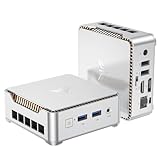
- 【Ryzen 5 3500U Processor】KAMRUI Essenx E2 Mini PC is equipped with AMD Ryzen 5 3500U (4-cores/8-threads, up to 3.7GHz) with integrated Radeon Vega 8 Graphics(1200MHz, 8 Core). The 3500U CPU operates at a base frequency of 2.1 GHz and a Boost frequency of 3.7 GHz. This DDR supports upgradable up to 32GB, SSD supports up to 2TB.(NOT INCLUED), KAMRUI E2 3500U Mini PC is ideal for light office work and home entertainment. KAMRUI E2 3500U is more than 35% more powerful and smoother in operation than the Intel N150, 33% faster than Intel N95, 28% performance boost over Intel i3-10110U, and 42% stronger processing power than AMD Ryzen 3 3200U.
- 【16GB DDR4 & 256GB SSD】The KAMRUI E2 mini computers is equipped with 16GB DDR4(Expandable up to 32GB) for faster multitasking and smooth application switching. 256GB M.2 SSD ensures fast startup times,fast file transfers and plenty of storage space,eliminating slow loading times and ensuring fast responsiveness.Storage space can RAM supports up to 32 GB, SSD supports up to 2TB (Not included)make file storage easier.
- 【4K Dual Display & USB 3.2 Type-A Port】KAMRUI E2 3500U mini desktop pc is equipped with an HDMI 2.0+DP 1.4 interfaces for faster transmission, Support Dual 4K@60Hz Display, E2 mini desktop computers is ideal for visual home entertainment, home office, conference rooms, etc. USB3.2 Gen1 Type-A Port×2 with a transfer speed of up to 5Gbps (10 times faster than USB 2.0) for efficient data transfer. The RJ45 1000M Gigabit Ethernet Port ensures a stable network connection.
- 【WiFi+Bluetooth stable connection】The Kamrui E2 micro pc have reliable and stable wireless connection, open websites in seconds, watch movies without buffering and download files smoothly, connect your monitor from WiFi or Ethernet, use a wireless keyboard and mouse through bluetooth, which will be powerful workstation for you.
- 【Versatile Ports】This KAMRUI E2 Small pc is equipped with HDMI 2.0×1(4K@60Hz)、DP1.4×1(4K@60Hz)、Gigabit Ethernet Port (RJ45, 10/100/1000Mbps) ×1、USB3.2 Gen1 Type-A Port×2(5Gbps)、USB2.0 Type-A Port×2、3.5mm Audio Jack ×1、DC In ×1、Power Button ×1
Networking failures depend on runtime, mode, and traffic path
“The container has no network” is too broad to diagnose. Pin down whether the failure is inbound port publishing, host-to-WSL access, container-to-host access, DNS, or outbound connectivity. Record whether the system uses NAT or mirrored networking and whether a VPN was connected when the problem occurred.
Docker Desktop: check the documented mirrored-networking case
Microsoft’s WSL troubleshooting guidance documents a specific Docker Desktop problem: containers with published ports may fail to be created in mirrored networking when using the default namespace. Microsoft lists host networking and an ignored-ports setting among the workarounds. This is a configuration-specific Docker Desktop case, not a general remedy for every engine running under WSL. Confirm that the runtime and networking mode match the documented situation before trying a workaround.
Podman: check WSL networking and VPN behavior
Podman’s Windows/WSL backend normally uses standard WSL networking. Its documentation describes user-mode networking as an option that may help when some VPN configurations drop traffic from VM network interfaces. Podman Desktop also documents VPN-related name-resolution or network-access problems and loopback-forwarding issues associated with older WSL versions. If connectivity changes only when a VPN is active, test that condition explicitly and use Podman’s own guidance rather than assuming Docker Desktop’s settings apply.
Rank #3

- 【Responsive Quad-Core Productivity】 Powered by the AMD Ryzen 3 5300U processor (4 Cores/8 Threads, up to 3.8GHz), the BOSGAME E5 delivers stable and efficient processing for your daily workflows. It is perfectly optimized to run standard business software, manage large spreadsheets, and handle online classes smoothly. Please note: This budget-friendly PC excels at daily office productivity and network server applications, but is not designed for demanding professional 3D rendering or intensive 3A gaming.
- 【Expandable Memory & Dual NVMe Storage】 Equipped with 16GB DDR4 memory and a fast 512GB M.2 2280 NVMe PCIe 3.0 SSD out of the box, ensuring quick boot times and fluid application loading. Designed for future flexibility, the system features dual SODIMM slots supporting memory upgrades up to 64GB, along with an additional empty M.2 2280 NVMe PCIe 3.0 slot for seamless dual-drive expansion without removing your original system drive.
- 【Dual 2.5G LAN & Pro-Level Networking】 Featuring two ultra-fast 2.5GbE RJ45 LAN ports (Realtek RTL8125) and built-in Wi-Fi 5, this micro computer is a powerhouse for advanced network environments. It serves as the perfect hardware foundation for IT enthusiasts and professionals looking to build a secure home server, deploy a pfSense/OPNsense firewall appliance, configure a high-speed NAS, or run stable virtual machines.
- 【True Triple 4K Display Productivity】 Maximize your screen real estate and eliminate constant window switching. Integrated AMD Radeon Graphics easily drive up to three independent 4K@60Hz monitors via 1x HDMI 2.0, 1x DisplayPort, and 1x Full-Function Type-C port. This versatile multi-screen setup is the ultimate solution for side-by-side document editing, financial stock tracking, or home entertainment.
- 【Full-Function Type-C & Quiet Efficiency】 Streamline your workspace with the front-facing full-function USB Type-C port, supporting high-speed data transfer, 4K display output, and Power Delivery (PD 3.0). Engineered with an optimized cooling fan and copper heat pipes, the E5 operates at whisper-quiet noise levels. Its ultra-compact footprint easily replaces bulky traditional computer towers, pre-installed with a clean system.
Separate the path before changing settings
- Inbound service access: Is the port published, and can a client on the Windows host reach it?
- Host-to-WSL access: Can Windows reach the service through the current WSL networking mode?
- Outbound access: Can the container reach an external IP address? If so, test name resolution separately.
- VPN-dependent access: Does the failure start only while the VPN is connected, and does it affect DNS, outbound traffic, or inbound forwarding?
Changing networking modes without identifying the failing path can obscure the cause or create a different exposure. Keep a note of the original mode and the result of each test.
Independent reader supportYour contribution helps us test, update, and keep practical guides available for everyone.Check versions without mixing up requirements
Version recommendations are runtime-specific. Docker recommends WSL 2.1.5 or newer, ideally the latest WSL, for Docker Desktop’s WSL 2 setup. That is not a universal minimum for Docker Engine installed directly inside a Linux distribution, nor does it define Podman’s requirements. Microsoft’s WSL 0.67.6 minimum applies to the documented systemd enablement procedure.
Recommended Free Tools
Record the WSL version and the version of the actual runtime or desktop application alongside the symptom. Updating may resolve a version-specific issue, but the version number by itself does not identify whether a failure is in file access, service lifecycle, or networking.
A practical order for diagnosing a failed migration
- Name the architecture. Record whether the setup is Docker Engine inside a distro, Docker Desktop with WSL integration, or Podman’s managed WSL machine.
- Capture the failing symptom. Note what is unavailable, when it began, and the relevant service or runtime error. Distinguish a stopped service from a stopped WSL distribution.
- Inspect file locations. Check bind-mount sources and whether watched files or service data moved between Linux and Windows-mounted paths.
- Check lifecycle behavior. Verify systemd configuration if applicable, then separately confirm that the distro is still running when the service is expected to be reachable.
- Trace the network path. Test port publishing, host-to-WSL access, outbound connectivity, DNS, and VPN-on versus VPN-off behavior as separate questions.
- Match the remedy to the runtime. Use Docker Desktop guidance for Docker Desktop, Podman guidance for Podman, and distro-specific service configuration for an engine installed inside Linux.
This sequence does not establish a universal “first failure.” It narrows the cause without treating distinct WSL architectures as interchangeable.
Quick Recap
Product prices and availability are accurate as of the date/time indicated and are subject to change. Any price and availability information displayed on Amazon at the time of purchase will apply.

