
iTechGuides is reader-supported. When you buy through links on our site, we may earn an affiliate commission. As an Amazon Associate I earn from qualifying purchases. Learn more
Microsoft’s Maia 200 is a custom AI accelerator deployed inside Azure data centers, not a chip announced for retail sale or customer installation. Microsoft says the inference-focused processor is deployed in the Azure US Central region near Des Moines, Iowa, with US West 3 near Phoenix, Arizona, next. It is intended to generate AI tokens for services such as Microsoft Foundry and Microsoft 365 Copilot.
What Microsoft Maia 200 is
Maia 200 is Microsoft-designed silicon for AI inference—the processing required to run trained models and generate responses. Microsoft describes it as part of a heterogeneous AI infrastructure strategy, in which different processors are selected for different workloads rather than relying on one accelerator for everything.
Scott Guthrie, Microsoft’s executive vice president for Cloud + AI, characterized Maia 200 as “a breakthrough inference accelerator engineered to dramatically improve the economics of AI token generation.” That is Microsoft’s product description, not an independent performance assessment.
Free tools Windows power users keep installed
One-click scans. No signup required.
Where Maia 200 is available
Current deployment
Microsoft reported Maia 200 deployed in Azure’s US Central region near Des Moines, Iowa, on January 26, 2026.
#1 Best Overall

- ✅Powered by 26 Tera-Operations Per Second (TOPS) Hailo-8 AI Processor. 2.5W typical power consumption
- ✅Scalable, enabling simultaneous processing of multi-streams & multi-models
- ✅Enabling real-time, low latency and high-efficiency AI inferencing on the edge devices
- ✅Supports TensorFlow, TensorFlow Lite, ONNX, Keras, Pytorch frameworks
- ✅Supports Linux and Windows. Supports the temperature range of -40°C to 85°C
Next announced region
Microsoft identified Azure US West 3 near Phoenix, Arizona, as the next region. The announcement did not provide a launch date for that region or a schedule for additional deployments.
What “available” means here
The announcement concerns Microsoft’s deployment of Maia 200 in its own Azure infrastructure. It does not announce a retail sales channel, a physical server option, or a way for customers to buy and operate the chip directly. Customers may ultimately consume capacity through Azure services, but the announcement does not specify which Maia-backed virtual machines, APIs, regions, pricing, quotas, or service-level options will be offered.
What workloads Maia 200 is designed to run
- Model inference: generating outputs and tokens from supported AI models.
- Microsoft Foundry: Microsoft says Maia 200 will serve multiple models, including GPT-5.2 models in Foundry.
- Microsoft 365 Copilot: Microsoft lists Copilot among the services expected to use the accelerator.
- Superintelligence research: Microsoft says its Superintelligence team will use Maia 200 for synthetic-data generation and reinforcement learning.
These statements identify intended Microsoft workloads; they do not establish that every model, tenant, API, or Azure region will run on Maia 200.
Published Maia 200 specifications
The following figures are specifications Microsoft published for Maia 200. They are vendor-reported values, not independent benchmark results.
Rank #2
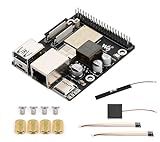
- High-Performance Dual-Core with Ample Memory--- Equipped with a 360MHz dual-core RISC-V processor, 32MB of onboard PSRAM, and 32MB of Flash memory, providing powerful processing capabilities and ample runtime for complex multimedia applications and edge computing.
- Powerful Multimedia Processing Center--- Integrated with a dedicated image processor (ISP), H.264 video encoder, and JPEG codec, perfectly supporting camera input and video processing, making it an ideal choice for developing smart displays, video surveillance, and other projects.
- Hardware-Level Security Protection--- Built-in digital signature, encryption accelerator, and key management unit, providing a one-stop hardware-level security solution from secure boot and data encryption to access control management, ensuring the security of your products and data.
- Full Connectivity Coverage: Wi-Fi 6, Bluetooth, PoE Power Supply--- Onboard with an ESP32-C6 chip, supporting the latest Wi-Fi 6 and Bluetooth 5.0; it also integrates an Ethernet port with PoE functionality, providing high-speed, flexible, and stable network connectivity, and can be powered directly via Ethernet cable, simplifying deployment.
- Rich interfaces and strong expandability--- It provides a MIPI camera/display interface, high-speed USB, SD card slot, microphone/speaker interface and a large number of programmable GPIOs, which greatly facilitates the expansion of external devices and meets the needs of various human-computer interaction and Internet of Things applications. Supports AI Speech Interaction: Allows access to online large model platforms such as ChatGPT, DeepSeek, Doubao, etc.
| Specification | Microsoft’s reported figure | How to interpret it |
|---|---|---|
| Transistor count | More than 140 billion | Scale of the accelerator’s silicon design |
| High-bandwidth memory | 216 GB HBM3e | On-package memory capacity for model weights and working data |
| Memory bandwidth | 7 TB/s | Peak HBM3e bandwidth reported by Microsoft |
| On-chip SRAM | 272 MB | Fast local storage on the accelerator |
| FP4 performance | More than 10 petaFLOPS | Reported peak performance at 4-bit floating-point precision |
| FP8 performance | More than 5 petaFLOPS | Reported peak performance at 8-bit floating-point precision |
| SoC TDP | 750 W | Thermal design power for the system-on-chip, not a complete server’s total power draw |
Peak petaFLOPS figures do not predict the response speed or cost of a particular model. Real results depend on model architecture, quantization, batch size, sequence length, software kernels, networking, and how much of the workload is distributed across accelerators.
How Maia 200 scales across accelerators
Microsoft describes an Ethernet-based, two-tier scale-up network. Each accelerator has 2.8 TB/s of bidirectional dedicated scale-up bandwidth, and collective operations can span clusters of up to 6,144 accelerators.
That architecture is aimed at serving large models and high request volumes. The published cluster limit is an architectural capability, not a promise that every Azure customer can request a 6,144-accelerator allocation.
PC Slower Than It Used to Be?
A free scan shows the junk files, broken settings and background clutter dragging Windows down - then fixes them in one click.Free scan · Windows 10 & 11Crashes, No Sound, or Screen Glitches?
Random freezes, missing sound and display glitches usually trace back to one bad driver. Find and replace yours safely.Free scan · under a minuteMicrosoft’s performance claims and their limits
Microsoft reports that Maia 200 delivers 30% better performance per dollar than the latest-generation hardware in its fleet and three times the FP4 performance of third-generation Amazon Trainium. Both are Microsoft’s own comparisons. The announcement does not provide an independent benchmark, a customer workload test, pricing details, or enough methodology to treat either figure as a universal advantage.
Rank #3

- Powered by 26 Tera-Operations Per Second (TOPS) Hailo-8 AI Processor.
- 2.5W typical power consumption
- Enabling real-time low latency and high-efficiency AI inferencing on the edge devices
- Supports TensorFlow TensorFlow Lite, ONNX, Keras, Pytorch frameworks
- Supports Linux and Windows.
For a meaningful accelerator comparison, evaluate the same model and precision under the same latency, throughput, batch-size, memory, networking, power, software, and regional-price conditions. A chip that leads on one inference configuration may not lead on training, another model, or a different service constraint.
What developers can access through the Maia SDK
Microsoft announced a preview of the Maia SDK for developers, AI startups, and academics exploring early optimization. The announced components include:
- PyTorch integration
- The Triton compiler
- Optimized kernels
- Low-level NPL programming
- A simulator
- A cost calculator
The announcement does not explain complete eligibility rules, quotas, supported Azure regions, commercial terms, or whether SDK access includes production Maia hardware. Treat the preview as a developer pathway for testing and optimization, not as evidence of general-purpose hardware access.
How Maia 200 fits Microsoft’s custom-silicon strategy
Microsoft’s November 15, 2023 Ignite overview introduced Azure Maia as a Microsoft-designed accelerator for cloud training and inference, including workloads associated with OpenAI models, Bing, GitHub Copilot, and ChatGPT. That overview also described Azure Cobalt for general-purpose computing and Azure offerings based on third-party accelerator hardware.
Rank #4

- High-Performance AI Processing: The MX3 is designed to handle the most demanding AI computer vision workloads, delivering exceptional performance and efficiency.
- Flexible Integration: The MX3 can be easily integrated into your existing systems via its M.2 M-key form factor and support for Linux operating systems.
- Energy Efficient: The MX3 is designed to provide high performance while minimizing power consumption.
- Comprehensive Software Development Kit (SDK): The MX3 is supported by a comprehensive SDK that simplifies development and deployment.
- Hardware compatability: The MX3 is compatible with the PCI-SIG M.2 M-key 2280 Specification. It can be used with the Raspberry Pi 5 with a M-key 2280 HAT.
Maia 200 extends that strategy toward specialized inference capacity while preserving a mix of Microsoft-designed and partner hardware. The earlier overview provides historical context, but it does not establish that Maia 200 is sold as a customer-installable product.
What Azure customers should do now
- Define the workload: identify the model, precision, latency target, throughput, context length, and memory requirement.
- Check service availability: look for an explicit Maia-backed Azure service, region, quota, and pricing announcement rather than assuming that a nearby Azure region exposes the chip.
- Use the SDK preview if eligible: profile kernels and model code with the announced PyTorch, Triton, simulator, and cost-calculator tools.
- Benchmark alternatives: compare measured results with the accelerator options actually available for your subscription and region.
- Plan for portability: keep model code, serving layers, and deployment automation able to target other supported accelerators if Maia capacity or regional coverage is limited.
Maia 200 versus buying an accelerator
Nothing in Microsoft’s January 26, 2026 announcement establishes customer hardware sales, server-board availability, third-party system support, or a direct purchase route. The announced offering is Microsoft’s datacenter deployment plus a software-development-kit preview. Organizations that require hardware they can own, install, or operate independently should not treat Maia 200 as an announced retail product.
What remains unannounced
- Customer-facing Maia 200 instance names or VM types
- Azure prices, reservation terms, quotas, and capacity guarantees
- A timetable for regions beyond US Central and US West 3
- Independent benchmark results
- Direct hardware purchase or shipment options
- Complete Maia SDK preview eligibility and production-support terms
The Bottom Line
Maia 200 is Microsoft’s in-house inference accelerator, already deployed in Azure US Central and planned for US West 3. Azure customers should view it as underlying Microsoft cloud infrastructure—not hardware they can currently buy—and wait for explicit service, region, pricing, and access details before planning around it.
Quick Recap
Product prices and availability are accurate as of the date/time indicated and are subject to change. Any price and availability information displayed on Amazon at the time of purchase will apply.

