
Recommended Free Tools
iTechGuides is reader-supported. When you buy through links on our site, we may earn an affiliate commission. As an Amazon Associate I earn from qualifying purchases. Learn more
High Fabric utilization is not proof that requests are being throttled, and throttling is not proof that a report or job is inefficient. Check the Capacity Metrics app for throttling events, identify the operations driving demand, and then choose among optimization, scaling up, or distributing workloads across capacities. Smoothing spreads the accounting for compute over time; it does not make a slow operation run faster.
Understand utilization, smoothing, and throttling
Fabric accounts for compute in capacity units (CUs). Microsoft’s Capacity Metrics app represents activity in 30-second timepoints, with 2,880 timepoints across 24 hours. Because work is smoothed across time, a timepoint can show usage above 100% without proving that a request was delayed or rejected. Confirm throttling using the app’s throttling charts and system events, rather than treating utilization alone as the diagnosis.
Interactive operations are smoothed over a minimum of five minutes and up to 64 minutes, depending on CU consumption. Background operations are smoothed over 24 hours. Smoothing spreads consumption against capacity limits; it does not change execution time or correct inefficient item design. As Microsoft puts it, “Smoothing doesn’t change performance, it just spreads the accounting for consumed compute over a longer period, so that a larger SKU isn’t needed to handle the peak compute.” Microsoft Learn explains the throttling and smoothing policy, and its capacity optimization guidance covers performance and sizing.
PC Slower Than It Used to Be?
A free scan shows the junk files, broken settings and background clutter dragging Windows down - then fixes them in one click.Free scan · Windows 10 & 11Outdated Drivers Are Slowing You Down
One free scan finds every outdated or missing driver and matches the right update for your exact hardware.Free scan · exact hardware matchWhat happens when a capacity is overloaded?
Microsoft documents a staged policy, but says the policy may change and that behavior can vary with workload. Treat these figures as the documented policy, not a guarantee that every workload will behave identically.
#1 Best Overall
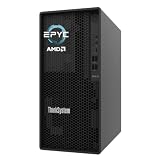
- Powerful AMD EPYC Performance – Powered by AMD EPYC 4244P processor with up to 6 cores, delivering exceptional performance for virtualization, business applications, databases, and growing workloads.
- Memory – Supports DDR5 ECC UDIMM memory for higher bandwidth, improved efficiency, and automatic error correction to help maximize system reliability and reduce data corruption. This build comes with 16GB DDR5 RAM.
- Scalability and Flexibility – Tower servers are designed for easy upgrades and expansion, making them an ideal choice for development teams and growing businesses. They provide a dedicated environment for software development, testing, and deployment. This server is sold without an operating system, allowing you to select and install the OS and software that best fit your specific needs during setup.
- Designed for Small Business and Remote Offices – Quiet tower design with enterprise-grade reliability makes it ideal for file sharing, collaboration, backup, virtualization, and office applications without requiring a dedicated server room.
- Easy to Manage – Features multiple networking options and room for future upgrades, helping protect your investment as your business grows. This server is designed to run 24 hours a day, 7 days a week.
| Stage | Documented behavior |
|---|---|
| Future-capacity overage protection | 10 minutes of protection against overage before throttling stages apply. |
| Interactive delay | After that protection, new interactive operations can be delayed by 20 seconds. |
| Interactive rejection | At the next-hour limit, new interactive operations can be rejected. |
| All-request rejection | At the next-24-hour limit, all new requests can be rejected. |
The stages describe capacity policy, not a diagnosis for any one slow report. Check the timepoint details and system events to determine whether throttling occurred, then trace contributing operations to a workspace and item. A slow query or job may instead reflect its design, even when the capacity is not throttling it.
Diagnose the source before changing capacity
- Open Capacity Metrics. Review the Compute page, throttling charts, system events, and individual timepoint details. Look for delays or rejections rather than inferring them from a utilization percentage alone.
- Find the contributors. Identify the workspace, item, and operation associated with the load. Determine whether demand is steady, bursty, driven by concurrency, linked to inefficient design, or affected by carryforward usage.
- Match the remedy to the cause. Item-level inefficiency calls for optimization; a sustained need for more compute may call for a larger SKU; workload separation may call for another capacity. Capacity needs depend on operation design and concurrency, so a SKU change alone may not fix a poorly designed item.
For scale, Microsoft’s worked example says a one-CU-hour background operation on F2 contributes approximately 2.1% to each timepoint. That is an illustration of smoothing, not a universal per-job impact: actual effects depend on the operation and applicable capacity policy.
Rank #2

- HPE ProLiant ML30 G10 Plus Tower Server, perfect for small businesses and remote offices
- Xeon E-2314 4-Core 2.8GHz 8MB CPU, Turbo up to 4.5GHz
- Memory: 64GB (4 x 16GB) DDR4 PC4-25600 3200MHz Unbuffered Memory
- Hard Drive: 4TB (4 x 1TB) SATA III 6Gb/s SSD for Ultra-Fast Storage
- Hard drives and memory upgrades included separately, not installed, installation required.
Choose between optimizing, scaling up, and scaling out
| Option | Best fit | Trade-off |
|---|---|---|
| Optimize items | High-compute reports, queries, or jobs whose design can be improved. | Requires engineering work; can reduce compute demand without simply buying more headroom. |
| Scale up | A workload needs additional compute and a larger capacity is the simplest way to provide it. | Adds capacity cost; does not create workload or administrative separation. |
| Scale out | Work needs distribution across capacities, distinct administration boundaries, or isolation for priority workloads. | Requires moving and governing work across more than one capacity. |
Before expanding, tune expensive items and consider workload-specific controls such as query timeouts, row limits, or Spark settings where appropriate. If measured demand still exceeds available compute, select a SKU increase for straightforward headroom or another capacity when separation is itself a requirement. Microsoft’s capacity optimization guidance discusses these approaches.
Quick wins for a faster PC:
Fix the driver behind crashes, sound loss and screen glitchesFind Drivers →Clear out junk files and repair common Windows errorsFree Scan →Use surge protection with a background-work plan
Surge protection limits background compute to reduce the chance that background activity delays or rejects interactive work. Its trade-off is that background jobs can themselves be rejected. It is a control for competing workloads, not a substitute for optimizing items or sizing capacity appropriately.
Rank #3

- Processor Manufacturer: Intel
- Processor Type: Xeon
- Processor Model: 6315P
- Processor Core: Quad-core (4 Core)
- Processor Speed: 2.80 GHz
Decide how rejected background jobs will be detected and handled before enabling protection. Where mission-critical content requires predictable isolation, consider correctly sized dedicated capacity rather than relying solely on a shared capacity’s protection controls.
Govern shared capacity as demand grows
A larger SKU does not resolve unclear ownership, competing priorities, or unplanned growth. For decentralized self-service, define who is responsible for tenant-level and capacity-level decisions, and establish an equivalent center of excellence or governance group to make shared use understandable and enforceable.
Rank #4
- HPE ProLiant ML30 G10 Plus Tower Server, perfect for small businesses and remote offices
- Xeon E-2314 4-Core 2.8GHz 8MB CPU, Turbo up to 4.5GHz
- Memory: 32GB (2 x 16GB) DDR4 PC4-25600 3200MHz Unbuffered Memory
- Hard Drive: 8TB (4 x 2TB) SATA III 6Gb/s SSD for Ultra-Fast Storage
- Hard drives installation required
- Publish fair-use rules and explain what happens when a team repeatedly overloads shared resources.
- Assign administrator and workload responsibilities, and train users to build with capacity impact in mind.
- Report usage by team or workload; use showback or chargeback where it helps make consumption visible.
- Review top consumers, utilization, throttling and rejection events, and underused capacity on a regular schedule.
- Plan how workspaces will be distributed if one shared capacity cannot meet all needs.
In centralized enterprise environments, connect monitoring and scaling decisions to service-level expectations. Review growth trends and optimize before expanding; scale proactively before contention becomes sustained. A separate capacity may better serve a critical workload or administrative boundary than simply increasing the shared capacity. Microsoft’s capacity planning guide describes growth and governance practices.
What’s actually slowing this PC down?
Pick the symptom - the matching free tool is one click away.
Plan capacity using measured usage
When future demand is uncertain, Microsoft recommends measuring real usage with a trial or pay-as-you-go F SKU before committing to reserved capacity. Start small and increase as observed needs require. This makes sizing a decision grounded in actual workload patterns rather than an assumed peak or an isolated utilization figure.
Best Value

- This Certified Refurbished product is tested and certified to look and work like new. The refurbishing process includes functionality testing, basic cleaning, inspection, and repackaging. The product ships with all relevant accessories, a minimum 90-day warranty, and may arrive in a generic box. Only select sellers who maintain a high performance bar may offer Certified Refurbished products on Amazon.com.
- Powerful Quad-Core Performance: Intel Core i5-6500T Processor (2.5GHz base, up to 3.1GHz Turbo) delivers smooth multitasking for office work, browsing, and light creative tasks. 16GB DDR4 RAM ensures fast responsiveness when running multiple applications simultaneously.
- Blazing-Fast NVMe SSD Storage: 256GB NVMe SSD provides 5x faster speeds than HDDs for quick boot-ups, app launches, and file transfers. Expandable storage options (supports additional 2.5" HDD/SSD) to meet growing needs.
- Ultra-Compact Design with Pro Connectivity: Micro Form Factor (7.1×7.1×1.4 inches) saves desk space while packing full desktop power. Rich ports: HDMI, DisplayPort, 6x USB 3.0, RJ-45 + dual-display support (up to 4K resolution).
- Enterprise-Ready with WiFi & Win 11 Pro: Wi-Fi & Bluetooth enabled for cable-free workspace setup. Genuine Windows 11 Pro (64-bit) includes BitLocker encryption and remote desktop capabilities. Dell Certified Refurbished – rigorously tested, cleaned, and backed by 90-day warranty.
If throttling is already occurring, Microsoft documents a temporary SKU increase and pause/resume as recovery options for F SKUs. Pause/resume can affect content availability and billing; check the current policy and billing terms before using either option. Consult the latest throttling documentation because service behavior can change.
Quick Recap
Product prices and availability are accurate as of the date/time indicated and are subject to change. Any price and availability information displayed on Amazon at the time of purchase will apply.

