
iTechGuides is reader-supported. When you buy through links on our site, we may earn an affiliate commission. As an Amazon Associate I earn from qualifying purchases. Learn more
Spirit LM combines text and speech inputs and outputs in one 7-billion-parameter language-model stream, rather than treating speech only as transcription before an LLM. Meta released Spirit LM on October 18, 2024, with Base and Expressive variants, downloadable code, gated weights, and a license limited to noncommercial research use.
That last condition is the most important practical qualification. Meta describes Spirit LM as an open-source multimodal language model, but the FAIR Noncommercial Research License restricts the research materials and their outputs or results to noncommercial research purposes. Spirit LM is therefore an interesting research release—not a commercially permissive voice model or a hosted replacement for production speech APIs.
Key takeaways
- Spirit LM is a 7-billion-parameter model based on Llama 2 that can process and generate text, speech, or interleaved combinations of both.
- Spirit LM represents speech as discrete units produced by speech-tokenization components; the model is not an ordinary raw-waveform audio chatbot.
- Spirit LM Base emphasizes phonetic and semantic content, while Spirit LM Expressive adds pitch and style representations to model delivery characteristics.
- Meta released Spirit LM on October 18, 2024, with code in the facebookresearch/spiritlm repository, but model checkpoints require an access request and approval.
- The FAIR Noncommercial Research License prohibits commercial use of the research materials and their outputs or results, making Spirit LM unsuitable for direct commercial deployment without separate authorization.
What is Spirit LM?
Spirit LM is Meta’s multimodal language model for mixing speech and text within a shared language-model sequence. The model can accept text, speech, or a combination of the two, and it can generate text, speech, or an interleaved sequence. Meta announced and released Spirit LM on October 18, 2024, as its first model designed around this type of speech-text interaction; the official announcement describes the model’s modalities and two released variants.
The important idea is not simply that Spirit LM has both a speech input path and a speech output path. Spirit LM is trained to continue sequences in which text and speech representations can switch at word boundaries. A sequence might contain written words, spoken words represented by speech units, and more written words in the same context.
Popular on Amazon
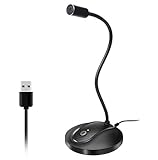
- 360 Degree Position Adjustable Gooseneck Design --Plug and play USB microphone Pick up the sound from 360-degree with high sensitivity, in the best possible location for sound to your PC gaming, dragon voice dictation, and talk to Cortana
- Mute Button & LED Indicator --One-click to mute/unmute your microphone for pc, Build-in LED indicator tells you the working status at any time
- Intelligent Noise-Canceling Tech --Premium omnidirectional condenser microphone with noise-canceling technology can pick up your clear voice and reduce background noise and echo
- USB Plug&Play(1.8/6ft USB Cable) -- No driver required. Just need to plug & play for the microphone to start recording, well compatible with Windows(7, 8, 10 and 11) and macOS. (NOT compatible with Xbox/Raspberry Pi/Android)
- Solid Construction--Adopting premium metal pipe and heavy-duty ABS stand to make sure that you will be satisfied with our computer mic quality
[Text] The cat [Speech] <speech units> [Text] sat on the matThe example is conceptual rather than a user-facing prompt syntax. The speech section represents spoken content, while the text sections use ordinary language-model tokens. The model learns relationships across those modality boundaries instead of requiring every interaction to pass through a permanently separate speech-recognition and speech-synthesis stage.
Why did Meta build Spirit LM?
Spirit LM addresses a limitation of the conventional automatic speech recognition, text LLM, and text-to-speech cascade: transcription can remove information about how something was said. A traditional voice system typically follows this path:
- Automatic speech recognition converts a speaker’s audio into text.
- A text language model interprets the transcription and generates a response.
- Text-to-speech converts the response back into audio.
The cascade can preserve the words while losing intonation, pitch, speaking style, emotional delivery, and other expressive characteristics. Meta’s stated motivation is to model speech and text together so that those characteristics can remain available to the language model and the output decoder; the Meta announcement explains the expressive-information problem behind Spirit LM.
Spirit LM is designed to preserve expressive information, but the model should not be described as solving emotion recognition, tone understanding, or natural conversation in every situation. Expressive speech representations introduce their own complexity, and the research paper reports that Spirit LM Expressive can perform worse than Base on some lexical, grammatical, and semantic tasks.
How does Spirit LM work?
Spirit LM uses a pretrained Llama 2 7B language model that was continuously trained with text and speech tokens. Text enters the system as subword BPE tokens. Speech is first converted into discrete units by speech encoders or tokenizers, and generated units are converted back into audio by a decoder. The Spirit LM research paper describes the model architecture, training procedure, and speech representations.
speech → speech tokenizer → speech units ┐
                                          ├→ shared language model → text or speech decoder
text   → BPE tokenizer → text tokens     ┘
Special modality markers, including [Text] and [Speech], indicate which kind of representation follows. Training examples can switch from speech to text or from text to speech at word boundaries. The shared model then learns to predict the next representation in the sequence, rather than treating speech as an isolated preprocessing or postprocessing task.
This design makes Spirit LM multimodal in its input and output behavior, but it does not mean that the Llama 2 transformer directly consumes raw waveform samples as ordinary language-model tokens. The released system depends on speech tokenizers, model checkpoints, and speech-decoding components. That distinction matters when comparing Spirit LM with newer real-time audio systems or with a conventional ASR and TTS pipeline.
What’s actually slowing this PC down?
Pick the symptom - the matching free tool is one click away.
What does “interleaved” mean?
“Interleaved” means that text tokens and speech-unit tokens can occur in the same sequence and that the model can continue the sequence across a modality change. A conventional pipeline usually completes speech recognition before the text LLM starts, whereas Spirit LM is trained on examples in which speech and text representations are mixed at word boundaries.
Interleaving can support a spoken input followed by a written response, a written prompt followed by speech, speech-to-speech generation, or a sequence that changes modality several times. Interleaving is the central research contribution; merely attaching an audio encoder to a text-only LLM would not establish the same capability.
What is the difference between Spirit LM Base and Expressive?
Spirit LM Base and Spirit LM Expressive share the same general speech-text language-model concept, but Expressive adds representations for pitch and style. Base is the simpler choice when linguistic content and speech semantics matter most; Expressive is intended for cases where delivery and emotional character are part of the output.
| Feature | Spirit LM Base | Spirit LM Expressive |
|---|---|---|
| Main focus | Speech semantics and linguistic content | Speech semantics plus expressive delivery |
| Speech representation | Phonetic or semantic units, including HuBERT-derived units described in the paper | Phonetic or semantic units plus pitch and style representations |
| Expressive tone | Less explicitly modeled | Designed to preserve qualities such as excitement, anger, or surprise |
| Representation complexity | Simpler speech representation | Additional pitch and style units increase sequence complexity |
| Reported trade-off | Can outperform Expressive on some lexical, grammatical, and semantic speech tasks | Can improve expressive capabilities but degrade some content-focused results |
The additional expressive tokens are not a universal upgrade. According to the Spirit LM paper, Expressive improves some expressive capabilities while sometimes reducing lexical, grammatical, or semantic performance compared with Base. Developers should evaluate both variants against their own prompts and audio rather than assuming that Expressive is always the better checkpoint.
The Tool Desk
Outbyte Driver Updater FREEFix the driver behind crashes, sound loss and screen glitchesFind Drivers →Outbyte PC Repair FREERepair Windows errors before they cause bigger problemsFix Now →Also popular on Amazon

- HIGH SENSITIVITY for CLEAR CALL - This portable USB microphone adpots a 6*10mm high sensitivity condensor microphone to capture clear voice, the audio signal processed by multi levels of audio gain amplifier and advanced ADC module, it provides crystal clear voice, reliable compatibility and noise cancelling. It's able to capture voice in 10ft distance clearly -it's very small, but powerful. Plug it into the computer, you'll experience better con-call immediately.
- PLUG-and-PLAY - The USB 2.0 interface is widely compatible with the most computer devices (Windows, Mac, Raspberry Pi, Linux, Chromebook & etc ) and softwares (Google Meetings, Zoom, Team, Skype & etc). Just plug it into the USB port and done. No extra driver or settings are required.
- COMPACT & PORTABLE - Like a flash disk, you can put it in the pocket with ease. Carry it with your laptop, and plug it in when you need it. No more tangled cords or bulky bases hogging your desk space, This mic is on a mission to keep your workspace sleek and organized.
- IDEAL REPLACEMENT - If you are looking for a quality microphone for work at home, online conferencing, online class, live streaming and webinar, this is a great choice. It's not a recording studio grade microphone, but the sound quality is better than most of laptop built-in microphones, and it's completely enough to meet your general demand.
- WHAT YOU GET - Packed in a metal carrying box, and comes with 12 months waranty. For any concern, you can send us messages and we will respond in 24 hours.
What can Spirit LM do?
Meta and the research paper report demonstrations or evaluations covering several combinations of speech and text:
| Capability | What it means | Important qualification |
|---|---|---|
| Speech to text | Speech representations can be converted into written language or used for language-model tasks. | Research results do not make Spirit LM a universal replacement for dedicated ASR. |
| Text to speech | Text prompts can produce speech-unit sequences that are decoded into audio. | Output quality depends on the checkpoint, decoding settings, tokenizer, and decoder. |
| Speech to speech | Spoken input can lead to spoken output without requiring every exchange to be represented only as text. | The release is a research system, not evidence of a production real-time voice service. |
| Text-only generation | The underlying language model can continue text sequences. | Spirit LM’s distinctive value is cross-modal behavior, not simply text generation. |
| Speech classification | Speech can be used for classification tasks, including intent or sentiment-oriented evaluations. | Accuracy varies by task and benchmark. |
| Cross-modal few-shot learning | Examples involving one modality can help prompt a task involving another modality. | Few-shot research demonstrations should not be treated as guaranteed application performance. |
These capabilities show why Spirit LM is important to researchers studying unified speech-text modeling. They do not establish that Spirit LM is a drop-in replacement for Whisper, GPT-4o, commercial speech APIs, or a mature voice-assistant stack. The paper specifically reports that a Whisper-plus-Llama cascade outperformed Spirit LM by a substantial margin on some clean automatic speech recognition benchmarks.
What do Spirit LM’s benchmarks show?
Meta’s research paper reports useful results, but the figures are research-evaluation results rather than independent production benchmarks or current rankings against every newer speech model.
| Evaluation | Reported result | How to interpret it |
|---|---|---|
| LibriSpeech clean ASR | Best Base model reported 21.9 WER | WER is a word-error metric; the result belongs to the paper’s specific dataset, prompting method, and evaluation setup. |
| TTS evaluation | 45.5 CER reported | CER is a character-error metric and is not directly interchangeable with WER. |
| Speech-intent classification | Up to 79% accuracy | The paper compares this with an 89% topline in the cited evaluation; the result is task- and setup-specific. |
| Cross-modal few-shot tasks | Spirit LM demonstrated few-shot cross-modal capabilities | The demonstrations support the research claim but do not guarantee production reliability. |
According to Meta’s 2024 Spirit LM paper, the reported best Base result on LibriSpeech clean was 21.9 WER, the reported TTS evaluation result was 45.5 CER, and speech-intent classification reached up to 79% accuracy against an 89% topline in the cited evaluation. WER and CER measure different error types, so the two figures should not be compared as if they were the same metric.
Benchmark conditions also matter. Clean speech results may not predict performance with background noise, interruptions, accents, overlapping speakers, long conversations, or production microphones. The available evidence does not establish a universal latency target, production throughput, or superiority over current commercial multimodal systems.
How can developers download and run Spirit LM?
Developers can experiment with Spirit LM through Meta’s repository, but “available on GitHub” does not mean that the model runs with one command. The process requires checkpoint approval, repository setup, speech assets, and a compatible Python, PyTorch, and Transformers environment.
- Submit a request for the model artifacts through Meta’s Spirit LM download page.
- Wait for approval and the download links sent by email.
- Clone the official Spirit LM repository.
- Install the documented environment and evaluation dependencies.
- Place the downloaded checkpoints and related speech assets in a local directory.
- Set
SPIRITLM_CHECKPOINTS_DIRto that directory before running the examples.
The repository documents either a Conda environment followed by editable installation or a direct editable installation:
conda env create -f env.yml
pip install -e '.[eval]'
The direct installation path is:
pip install -e '.[eval]'Optional development dependencies can be installed with:
Recommended Free Tools
pip install -e '.[dev]'After downloading and unpacking the artifacts, configure the checkpoint location:
export SPIRITLM_CHECKPOINTS_DIR=/path/to/checkpointsThe checkpoint layout includes spirit-lm-base-7b, spirit-lm-expressive-7b, HuBERT speech-tokenizer files, HiFi-GAN decoder files, and style- and pitch-related components for Expressive. The checkpoint instructions describe the required artifacts and directory arrangement.
How do you load a Spirit LM checkpoint?
The model README shows a Python loader for either released 7B variant:
Also popular on Amazon
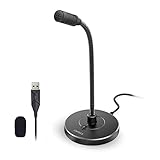
- 【Crystal Clear Audio Quality】Our Omnidirectional pattern condenser microphone accurately captures your voice, making it perfect for dictation, online classrooms, and more.
- 【Active Noise-Cancelling】Come in CMTECK CCS2.0 SMART CHIP with Omnidirectional Polar Pattern, which can effectively block the background noise. The pop filter prevents plosives from overloading the microphone, ensuring only your voice is heard.7
- 【Convenient Mute Button with LED Indicator】You can quickly mute/un-mute the microphone with the Mute Button and the built-in LED light lets you know the working status(Greenlight: Connected; Red light: Mute mode).
- 【Easy to use】 No drivers needed, just plug and record without external power supply, directly connect the microphone to a USB compatible device, well compatible with Windows(7, 8 and 10), Mac OS and PS4 (NOT compatible with Raspberry Pi/Linux/Android)
- 【Mini size with Adjustable Gooseneck】Adopted flexible and adjustable gooseneck metal pipe, easily adjust position 360 degrees to suit user comfort. The compact and stable base maximizes your desktop space.
from spiritlm.model.spiritlm_model import Spiritlm

spirit_lm = Spiritlm("spirit-lm-base-7b")
# or:
spirit_lm = Spiritlm("spirit-lm-expressive-7b")
The repository’s generation examples use temperature=0.9, top_p=0.95, max_new_tokens=50, and do_sample=True for text generation, with a larger max_new_tokens value for speech generation. Those values are documented examples, not guaranteed production defaults. Sampling settings affect output variability, and speech generation generally requires more output tokens than a short text response; the official model README contains the example calls.
PC Slower Than It Used to Be?
A free scan shows the junk files, broken settings and background clutter dragging Windows down - then fixes them in one click.Free scan · Windows 10 & 11Outdated Drivers Are Slowing You Down
One free scan finds every outdated or missing driver and matches the right update for your exact hardware.Free scan · exact hardware matchHow does Spirit LM tokenize speech?
Spirit LM’s speech-tokenizer documentation provides separate constructors for Base and Expressive:
from spiritlm.speech_tokenizer import spiritlm_base, spiritlm_expressive

tokenizer = spiritlm_base()
# tokenizer = spiritlm_expressive()
The tokenizer README documents encoding audio into HuBERT-style units and decoding units back into audio at a 16-kHz sample rate in its example. The complete runtime therefore includes more than the central 7B language-model weights; tokenizer and decoder assets are operationally necessary for speech input and output.
Is Spirit LM really open source?
Spirit LM has publicly available code and Meta describes it as open source, but Spirit LM is not commercially permissive under the license supplied with the release. The weights require an access request and approval, and the FAIR Noncommercial Research License limits use of the research materials and their outputs or results to noncommercial research purposes.
For commercial readers, the most accurate description is “a research release with available code and gated model weights,” not simply “an open-source voice model.” Do not assume that a company can place Spirit LM behind a paid application, use generated audio in a commercial product, or build a revenue-generating service on top of the release without resolving the license terms.
Quick wins for a faster PC:
Clear out junk files and repair common Windows errorsFree Scan →Fix the driver behind crashes, sound loss and screen glitchesFind Drivers →Repair Windows errors before they cause bigger problemsFix Now →The official Spirit LM license page also sets out acceptable-use and prohibited-use requirements, including restrictions related to unlawful activity, harassment, discrimination, and unauthorized professional practice. The license materials state that Meta has no obligation to provide support services and may modify the license. Teams should have counsel review the current terms before relying on Spirit LM for any research or distribution plan.
| Question | Practical answer |
|---|---|
| Is the code public? | Yes. Meta publishes the code, inference examples, evaluation material, and documentation in the official repository. |
| Are the weights instantly downloadable? | No. Users must request the artifacts and receive approval and download links. |
| Can a company commercially deploy Spirit LM under the published license? | No. The cited FAIR license restricts the research materials and their outputs or results to noncommercial research use. |
| Is Spirit LM equivalent to an unrestricted open-weight model? | No. The access process and noncommercial license make that description misleading for business use. |
Is Spirit LM a production voice assistant or API?
No. The available release evidence describes Spirit LM as a research model and does not establish a consumer application, public hosted API, service-level agreement, or commercial cloud endpoint from Meta.
The release should not be assumed to provide streaming inference, interruption handling, turn detection, telephony integration, guaranteed latency, uptime commitments, enterprise support, or mature safety tuning. The repository’s examples demonstrate local model and tokenizer usage, not a complete production voice-assistant platform.
Hardware requirements also need careful qualification. Spirit LM is a 7B-parameter system plus speech encoders, tokenizers, and decoders, but the inspected materials do not establish a universal minimum GPU, RAM requirement, latency target, or production hardware profile. Actual requirements depend on precision, runtime, speech assets, and whether Base or Expressive is used.
Free tools Windows power users keep installed
One-click scans. No signup required.
When is Spirit LM a good fit?
Spirit LM is a strong research candidate when the goal is to investigate unified speech-text modeling rather than to ship a turnkey voice product.
- Academic research: studying language models that predict across speech and text representations.
- Cross-modal prompting: testing few-shot tasks that move between written and spoken inputs or outputs.
- Local experimentation: examining speech-token streams and decoder behavior on locally controlled data.
- Expressive-speech research: exploring pitch, style, sentiment, and delivery representations.
- Noncommercial education: teaching or prototyping within the limits of the current research license.
When should a team avoid Spirit LM?
Spirit LM is a poor fit when a team needs commercial deployment, a supported hosted API, guaranteed latency, enterprise support, permissive weights, or a mature safety-tuned conversational system.
Also popular on Amazon

- Omnidirectional Microphone - It is not a Speaker or Speakerphone, it is a condenser microphone. The microphone has an omnidirectional pickup pattern with a pickup distance of 11.5 ft, making it easy to capture the most subtle sounds from 360° directions and transmit the sound more loud and clear. Participants can hear each other without raising their voices.
- Made for Conferences - This microphone is perfect for small or medium meetings over an internet network by using Skype/GoToMeeting/WebEx/Hangouts/Fuze/VoIP/Zoom and other softwares. You can also use it for court reports, seminars, remote training, business negotiations, video chats, etc.
- Plug & Play, No Drivers Required - The microphone is compatible with all operating systems - both Windows and macOS. You just need to plug the microphone to start recording. If there is no response after inserting the mic, please go to the microphone setting of your computer and select the mic as the INPUT device.
- Convenient Mute Button - Quickly mute/unmute your microphone. The built-in blue indicator light for checking whether the USB microphone is working.
- Well Designed Cable - The microphone is constructed of sturdy and metal material and the base is fitted with an anti-slip mat which keeps it stable on desktop during use. It is small, convenient and does not require much space when in use. Connected with a 1.8m nylon shielded wire, it effectively eliminates signal interferences to achieve the best recording results.
- Commercial applications: the published license is noncommercial.
- Simple browser demos: checkpoint requests, local dependencies, and speech assets make the release more involved than a hosted API.
- Production ASR: the paper reports that a Whisper-plus-Llama cascade outperformed Spirit LM by a large margin on some clean ASR benchmarks.
- Real-time voice products: the inspected sources do not verify streaming behavior, interruption handling, latency, or uptime.
- Enterprise deployment: Meta does not provide an indicated support obligation for the research materials.
- High-risk user-facing systems: the model requires application-level testing, safety controls, and red-teaming.
What safety risks should developers consider?
Spirit LM can generate harmful content, and the paper recommends red-teaming and safety instruction-tuning for user-facing applications. Speech adds risks beyond ordinary text generation because generated audio can be persuasive, difficult to audit, and associated with a person’s identity.
- Voice impersonation: generated speech may be used to imitate a speaker without authorization.
- Misleading delivery: expressive tone can make false or manipulative content sound more credible.
- Accent and dialect bias: tokenization and evaluation may not represent all speakers equally.
- Semantic drift: the spoken and written forms can differ in meaning or contain transcription errors.
- Expressive loss: speech tokenization may discard details even when the system is designed to preserve them.
- Auditability: reviewing generated audio is more difficult than scanning text logs.
- License mismatch: downstream datasets, speaker recordings, and application components may carry separate consent and usage requirements.
Any user-facing deployment would need consent controls, abuse monitoring, content moderation, speaker-identity safeguards, and testing across accents, dialects, noise conditions, and emotional speaking styles. Those are engineering and governance requirements, not capabilities guaranteed by the model checkpoint.
Do these 3 things before closing this tab:
1Scan for outdated or missing drivers - takes under a minute2Repair Windows errors before they cause bigger problems3Fix the driver behind crashes, sound loss and screen glitchesWhat are the alternatives for commercial teams?
Commercial teams should first decide whether they need a unified research model or a supported voice service. A hosted voice product can reduce infrastructure work, while a local model can provide more control over the inference stack; Spirit LM’s published noncommercial license prevents treating the released checkpoint as a straightforward commercial option.
| Option | Potential fit | Potential mismatch | Evidence to verify before selection |
|---|---|---|---|
| OpenAI Realtime/API voice tooling | Hosted multimodal or voice interaction without operating a local 7B model. | Not suitable for teams requiring fully local inference, unrestricted weights, or no usage-based API dependency. | Current pricing, data handling, latency, supported modalities, and commercial terms. |
| ElevenLabs | Production text-to-speech, expressive voices, and voice-oriented APIs. | Not a substitute for a unified downloadable speech-text research model or fully self-hosted inference. | Current pricing, voice rights and consent controls, API limits, languages, and data policies. |
| Hume AI | Emotionally expressive conversational voice applications. | Not aimed at researchers who require downloadable weights and complete control of local inference. | Current pricing, deployment model, supported languages, privacy terms, and integration limits. |
| Separate ASR, LLM, and TTS components | Teams can select specialized systems for recognition, reasoning, and synthesis. | The cascade can lose expressive information and requires more orchestration. | Commercial licenses, streaming support, latency, language coverage, privacy, fine-tuning, and support commitments. |
Current vendor pricing and a complete licensing comparison were not verified in the Spirit LM research materials. Buyers should check the linked official product pages and current terms rather than relying on historical prices or assuming that a hosted service offers the same control as downloadable weights.
What does Spirit LM mean for open multimodal model development?
Spirit LM’s significance is architectural and research-oriented. The release demonstrates a way to train a Llama 2-based language model on a shared sequence containing text and discrete speech representations, including expressive information in the Expressive variant.
The approach also makes the trade-offs visible. A unified sequence can support cross-modal few-shot behavior and speech-to-speech experiments, but speech tokenization, longer sequences, decoder dependencies, benchmark limitations, and license restrictions complicate practical deployment. Expressive representations may improve delivery while making content-focused tasks harder.
For researchers, Spirit LM offers released code, model artifacts, tokenizer examples, and a concrete foundation for studying speech-text interleaving. For commercial decision-makers, the release is better treated as a reference point and research tool than as an immediately deployable alternative to a production voice stack.
Frequently Asked Questions
Can Spirit LM be used commercially?
No. Spirit LM is released under Meta’s FAIR Noncommercial Research License, which restricts the research materials and their outputs or results to noncommercial research purposes. A commercial team should obtain separate legal clearance or choose a commercially licensed alternative.
Does Spirit LM process raw audio directly?
Spirit LM does not appear to feed raw waveform audio directly into the language model as ordinary LLM tokens. The released system uses speech tokenizers and discrete speech units, with decoder components converting generated units back into audio.
What is the difference between Spirit LM Base and Expressive?
Spirit LM Base focuses on phonetic and semantic speech content, while Spirit LM Expressive adds pitch and style representations intended to preserve qualities such as excitement, anger, or surprise. The paper reports that Expressive can lose some lexical, grammatical, and semantic performance compared with Base.
What’s actually slowing this PC down?
Pick the symptom - the matching free tool is one click away.
Are Spirit LM’s model weights freely downloadable?
No. Developers must request the model artifacts through Meta’s download page, receive approval, and obtain download links by email. The repository also requires the downloaded checkpoints and speech assets to be configured locally.
The Bottom Line
Bottom line: Spirit LM is a meaningful research release because speech and text can be interleaved in one Llama 2-based 7B language-model stream. Spirit LM Base and Expressive support different trade-offs between linguistic content and expressive delivery. However, Spirit LM is not a hosted voice product, not a turnkey real-time assistant, and not commercially deployable under the published FAIR Noncommercial Research License. Use Spirit LM for eligible research and experimentation; use a separately licensed, supported stack for a commercial product.

