
A desktop GPU is usually faster than a laptop GPU with the same model name, but there is no reliable percentage that applies to every pair. The gap depends on the specific laptop GPU and its power limit, cooling, resolution, game or workload, and whether the system is limited by its CPU. Compare complete configurations and results for the work you actually do—not just the GPU badge.
Why the same GPU name does not mean the same performance
A desktop graphics card has more room for power delivery and cooling than a GPU fitted inside a laptop. Laptop manufacturers must work within a particular chassis, so two laptops carrying the same GPU name can also perform differently from each other. RTINGS notes that “the same GPU can perform very differently depending on the power draw and the laptop’s cooling capacity.” Its laptop graphics methodology, updated November 7, 2025, describes controlled test conditions and the influence of power and cooling: RTINGS’ laptop graphics methodology.
For laptop GPUs, check the exact model and its listed subsystem power range. NVIDIA lists a range of 95–150 W for the GeForce RTX 5090 Laptop GPU and 80–150 W for the RTX 5080 Laptop GPU on its GeForce laptop comparison page. Those are ranges, not a claim that every laptop uses the maximum; the full laptop SKU and its configuration matter.
How large can the performance gap be?
One useful example is TechSpot’s 2023 comparison of a desktop GeForce RTX 4090 with a GeForce RTX 4090 Laptop GPU configured at 150 W. Across its 20-game test suite, the desktop system averaged a 21% lead at 1080p, 36% at 1440p, and 56% at 4K. The laptop was tested with an external display connected directly to the GPU. These results describe those reviewed configurations and games, not a general conversion factor for laptop and desktop GPUs: TechSpot’s RTX 4090 laptop-versus-desktop comparison.
What’s actually slowing this PC down?
Pick the symptom - the matching free tool is one click away.
#1 Best Overall

- Powered by NVIDIA GeForce GT 610, 40nm chipset process with 523MHz core frequency, integrated with 2048MB DDR3 memory and 64-bit bus width
- Compatible with windows 11 system, no need to download driver manually
- HDMI / VGA 2 ports output available. HDMI Max Resolution-2560x1600, VGA Max Resolution-2048x1536
- Support DirectX 11, OpenCL, CUDA, DirectCompute 5.0
- Original half height bracket matches with the low profile brackets make the Glorto GeForce GT 610 graphics card fit well with all PC tower, small form factor and HTPC(except micro form factor)
A separate system-level example shows how substantial the difference can be in a particular test set. In its August 2025 comparison, Tom’s Guide reported that an Acer Predator Helios 18 AI with an RTX 5080 Laptop GPU delivered just over half the rendering performance of an Acer Predator Orion 7000 with a desktop RTX 5080 in the graphics tests. The article states maximum GPU power figures of 175 W for the laptop and 360 W for the desktop. Because those are two complete Acer systems rather than a controlled GPU-only comparison, treat the result as an illustration of those machines: Tom’s Guide’s Acer laptop and desktop comparison.
Why resolution and workload change the result
At lower resolutions, a game can become limited by the CPU or another part of the system before the GPU reaches its full potential. That can make a powerful desktop GPU appear closer to its laptop counterpart. At higher resolutions, graphics work tends to weigh more heavily, so the GPU difference can become more visible. TechSpot’s RTX 4090 comparison reflects this pattern: its measured desktop lead was smaller at 1080p and larger at 4K.
Rank #2

- Chipset: NVIDIA GeForce GT 1030
- Video Memory: 4GB DDR4
- Boost Clock: 1430 MHz
- Memory Interface: 64-bit
- Output: DisplayPort x 1 (v1.4a) / HDMI 2.0b x 1
Results also depend on what is being measured. A game, a rendering task, and a different set of graphics settings can place different demands on the GPU and the rest of the system. Compare benchmarks that match your intended games or applications, resolution, and settings. A result from one workload should not be assumed to predict another.
How to compare a laptop and desktop fairly
Use the following checks when weighing a specific laptop against a desktop. A GPU model name alone does not provide enough information to predict performance.
Rank #3
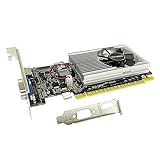
- The Geforce 210 is with a 589MHz core clock,up to 1066Mbps effective,perfect for working,video and photo editing,allows good fluency,which can effectively meet your needs.
- PCI Express 2.0 interface,offers compatibility with a range of systems. Also includes VGA and HDMI outputs for expanded connectivity,supports up to 2 monitors.Good for adding a simple low profile gpu to a small form factor pc.
- The computer graphics cards is small in size and saves more space,easy to install,plug and play,you can build a compact PC system easily for slim/ITX chassis.
- This low profile video card is good value option for entry level, if you just want basic upgrade graphics and daily simple work for your computer, or not be AAA gamer.(include low profile bracket)
- No external power supply and the all-solid-state capacitor keeps low power consumption and high performance,supports Windows 10/8/7/Vista/XP(not compatible with windows 11).
- Identify the exact GPU variant. Confirm whether it is a laptop GPU or a desktop graphics card, and record the full laptop SKU where applicable.
- Check the laptop GPU’s power configuration. Look for the stated GPU subsystem power or TGP; the range NVIDIA publishes does not reveal which point a particular laptop uses.
- Find comparable benchmarks. Prefer results for the same games or applications, resolution, and graphics settings. Note whether the comparison tests graphics cards or complete systems.
- Account for the rest of the system. CPU, cooling, performance mode, power source, and display routing can affect results. The external-display setup in TechSpot’s comparison is one example of a test detail worth checking.
- Match the choice to your use. A laptop’s central advantage is portability; a desktop tower generally offers more room for power and cooling. Decide whether mobility or graphics performance matters more for your situation.
What the evidence does—and does not—show
The reviewed comparisons show that desktop GPUs can lead substantially, but they do not establish a universal laptop-to-desktop percentage or a dependable equivalency chart. TechSpot’s figures come from one GPU generation and a specific review configuration; Tom’s Guide compared two complete Acer systems. NVIDIA’s power ranges are manufacturer specifications, not independent performance benchmarks. Product configurations and test results vary, so use current independent results for the exact systems you are considering.
Quick Recap
Product prices and availability are accurate as of the date/time indicated and are subject to change. Any price and availability information displayed on Amazon at the time of purchase will apply.

