
Recommended Free Tools
A three-day Ubuntu installation is a personal account, not evidence that Ubuntu installations usually take three days. When an installation stalls, the cause may sit in the layers around the operating system: the USB installer, the computer’s firmware boot selection, or the storage-controller configuration. The right next step depends on exactly where the process stopped.
First, identify where the installation stopped
“Ubuntu won’t install” can describe several different problems. Separate them before changing settings: a computer that will not boot the USB is a different case from an installer that starts but cannot see the internal drive, or a system that installs successfully but fails to start afterward.
- The USB does not appear or boot: check how the image was written and whether the computer was told to start from that USB.
- The installer starts but cannot see the hard drive: investigate storage mode, including Intel RST if the computer uses it.
- The installer reaches partitioning but fails: note the exact error and avoid changing storage or partition settings blindly.
- Installation finishes but startup or a driver fails: distinguish a boot-validation or driver-signing issue from an installation failure.
The headline does not identify the computer, Ubuntu release, error, or failed step, so it cannot establish which of these problems occurred. Ubuntu’s documentation does describe each of the first, second, and fourth kinds of issue as possibilities.
If the Ubuntu USB won’t boot
Confirm the installer was written to the intended drive
Ubuntu’s bootable USB guide explains how to write its image using tools for Linux, Windows, macOS, and multiple platforms. Writing an image erases data on the selected USB device. Confirm the target drive carefully and copy off anything you need before writing.
What’s actually slowing this PC down?
Pick the symptom - the matching free tool is one click away.
#1 Best Overall
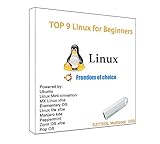
- 1. 9-in-1 Linux:32GB Bootable Linux USB Flash Drive for Ubuntu 24.04 LTS, Linux Mint cinnamon 22, MX Linux xfce 23, Elementary OS 8.0, Linux Lite xfce 7.0, Manjaro kde 24(Replaced by Fedora Workstation 43), Peppermint Debian 32bit (being replaced by MX Linux 32bit) for older PC, Pop OS 22, Zorin OS core xfce 17. The versions you received might be latest than above as we update them to latest/LTS when we think necessary.
- 2. Try or install:Before installing on your PC, you can try them one by one without touching your hard disks.
- 3. Easy to use: These distros are easy to use and built with beginners in mind. Most of them Come with a wide range of pre-bundled software that includes office productivity suite, Web browser, instant messaging, image editing, multimedia, and email. Ensure transition to Linux World without regrets for Windows users.
- 4. Support: Printed user guide on how to boot up and try or install Linux; please contact us for help if you have an issue. Please press "Enter" a couple of times if you see a black screen after selecting a Linux.
- 5. Compatibility: Except for MACs,Chromebooks and ARM-based devices, works with any brand's laptop and desktop PC, legacy BIOS or UEFI booting, Requires enabling USB boot in BIOS/UEFI configuration and disabling Secure Boot is necessary for UEFI boot mode. Packing: The bootable USB drive comes in a colored PET/CPP zipper bag with instructions on how to get started. The box pictured is not included.
After creating the USB, use the computer’s startup boot menu to select it. The key varies by computer; Ubuntu notes that it may be F12. If the USB is not listed, consult the computer maker’s instructions rather than assuming every machine uses the same firmware menu or setting.
Check boot mode only when the symptom fits
If the USB was created with Rufus and does not boot on a modern computer with legacy compatibility disabled, Ubuntu’s Ubuntu 26.04 USB guide suggests trying GPT and UEFI (non-CSM) in Rufus. This is conditional guidance for that combination of writer and boot setup, not a universal firmware recipe.
Rank #2

- ✅For beginners, refer image-7, its a video boot instruction, and image-6 is "boot menu Hot Key list"
- ✅16-IN-1, 64GB Bootable USB Drive 3.2 , Can Run Linux On USB Drive Without Install, All Latest versions.
- ✅Including Windows 11 64Bit & Linux Mint 22.3 (Cinnamon)、Kali 2026.02、Ubuntu 26.04、Zorin Pro 18、Tails 7.8.1、Debian 13.5.0、Garuda 2026.03、Fedora Workstation 44、Manjaro 25.06、Pop!_OS 22.04、Solus 2026.04、Archcraft 26.05、Neon 2026.06、Fossapup 9.5、Sparkylinux 8.3, All ISO has been Tested
- ✅Supported UEFI and Legacy, Compatibility any PC/Laptop, Any boot issue only needs to disable "Secure Boot"
Ubuntu’s current USB guide also warns that Ventoy 1.1.11, released in April 2026, has a known issue that prevents Ubuntu from installing correctly. That warning is specific to that version; it is not evidence that all Ventoy releases or USB writers have the same problem.
If the Ubuntu installer can’t see your hard drive
One possible explanation is Intel Rapid Storage Technology (RST) or a related RAID configuration. Ubuntu Desktop documentation says: “The Ubuntu installer can detect certain RAID configurations, but it might not be able to access the disks grouped in them.” The guidance appears on its Ubuntu 24.04 page, Intel RST during Ubuntu installation, last updated January 7, 2026.
Rank #3

- UBUNTU 24.04.3 LTS MEDIA - 16GB bootable USB with Ubuntu Desktop 24.04.3 LTS for compatible x86-64 PCs.
- LIVE OR INSTALL - On supported hardware, start the Ubuntu live environment to evaluate it or launch the installer.
- PLATFORM BOUNDARY - Not designed to boot Apple Silicon or other ARM-based computers. Confirm CPU architecture and USB-boot support before purchase.
- BOOT SETTINGS VARY - Boot-menu keys and UEFI settings differ by manufacturer; consult the computer maker's instructions if the USB is not listed.
- BACK UP BEFORE INSTALLING - Disk-partition and installation choices can erase files or operating systems. Disconnect nonessential drives and preserve the USB until it is no longer needed for installation or recovery.
If the expected disk is missing, check whether RST or RAID is enabled in the computer’s firmware and compare that setting with the computer maker’s documentation. The setting’s name and location differ among manufacturers. Ubuntu’s documented remedies for an affected disk include turning RST off in firmware or changing the storage controller to AHCI, but neither change should be treated as safe for every computer.
| Option | What it may change | Important risk or limit |
|---|---|---|
| Turn off RST in firmware | May make the target disks accessible to the installer in the documented RST case. | Ubuntu warns that breaking a RAID setup can make data inaccessible; firmware steps vary by computer maker. |
| Change the storage controller to AHCI | May address the documented disk-access issue. | Ubuntu warns that Windows may stop booting after an RST-to-AHCI change. The safe procedure depends on the existing Windows and storage configuration. |
Before changing either setting, identify whether the computer has an existing Windows installation or RAID array, and protect important data. If you need to keep Windows bootable or are unsure what the current storage mode does, stop and consult the computer maker’s guidance or a qualified technician before changing it. Ubuntu’s documentation does not establish that either remedy is safe for every dual-boot setup.
Rank #4

- Ubuntu Linux 24.04 LTS Features: Advanced Threat Protection: Enhanced security features to detect and prevent advanced threats, including malware, viruses, and ransomware.
- Encryption: Full-disk encryption to protect your data and privacy--Firewall: Configurable firewall to control incoming and outgoing network traffic--Secure Boot: Support for Secure Boot to ensure that your system boots securely.
- Faster Boot Times: Improved boot times to get you up and running quickly--Enhanced performance and responsiveness, with faster app loading and switching--Optimized Resource Usage: Efficient resource management to maximize system performance.
- Latest Software Packages: Includes the latest versions of popular software, including: LibreOffice, Firefox, Thunderbird, VLC media player.
- Wide Hardware Support: Compatible with a wide range of hardware configurations, including: UEFI and Secure Boot, USB 3.0, SATA and NVMe storage, Graphics cards from major manufacturers
If Ubuntu installs but Secure Boot or a driver becomes an issue
Secure Boot does not automatically prevent Ubuntu installation. Ubuntu’s Secure Boot documentation, last updated January 22, 2026, describes validation of boot components and kernel modules, as well as signed Ubuntu components.
A third-party kernel module, such as one needed by an optional driver, is a separate case. Ubuntu documents a Machine Owner Key (MOK) enrollment flow after installation for systems that need to load third-party modules under Secure Boot. A driver that does not load after installation is therefore not, by itself, proof that Secure Boot had to be disabled to install Ubuntu.
Why a long installation does not identify the cause
The installation process depends on more than Ubuntu’s installer: the image must be written to usable media, firmware must start that media, and the installer must be able to access the target storage. A failure at any of those boundaries can look like “Ubuntu won’t install,” even though the next diagnostic step differs in each case.
Ubuntu’s official guidance documents these specific failure paths, but it does not provide a cause for the three-day story in the headline. Nor do these sources establish a typical installation duration or failure rate. Without the computer model, Ubuntu release, error message, and point of failure, attributing that experience to Intel RST, Secure Boot, corrupted media, or any other single cause would be guesswork.
Quick Recap
Product prices and availability are accurate as of the date/time indicated and are subject to change. Any price and availability information displayed on Amazon at the time of purchase will apply.

