
Free tools Windows power users keep installed
One-click scans. No signup required.
Sometimes—especially when success in a controlled benchmark is presented as proof that reinforcement learning is ready for broad, reliable real-world use. RL has demonstrated real capabilities in tasks where objectives and environments can be clearly defined and tested. But live systems add costs and risks that a benchmark score alone cannot capture. The fair verdict is not that RL is a failure; it is that claims about deployment readiness often run ahead of the evidence.
What does it mean to call reinforcement learning “overhyped”?
“Overhyped” is a judgment, not a technical quantity measured by the sources available here. There is no established field-wide score for RL hype, nor a supported statistic showing what share of industrial deployments use RL or succeed. The useful question is narrower: do public claims distinguish what RL has demonstrated in a modeled or controlled environment from what it can safely and economically do in a changing live system?

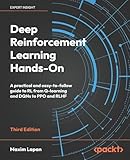


Reinforcement learning is a family of methods for learning sequential decisions through interaction and feedback, often represented as rewards. An agent chooses actions, observes what happens, and adjusts its behavior to improve the objective. That setup can be powerful when the task, feedback, and environment are well defined and repeated trials are feasible. A benchmark result establishes performance under that benchmark’s conditions; by itself, it does not establish reliable performance in unfamiliar settings. The 2019 paper on real-world RL challenges explains why those settings can differ substantially.
Where RL’s achievements are real—and what they prove
RL has produced striking results in controlled environments, including games and simulations. These are genuine demonstrations of capability: they show that methods can learn effective behavior under the rules, observations, reward definitions, and evaluation conditions of those tasks. They do not automatically show that the same approach will transfer safely, robustly, or affordably to a physical system or a different environment.
What’s actually slowing this PC down?
Pick the symptom - the matching free tool is one click away.
#1 Best Overall
This distinction is not a dismissal of benchmarks. Controlled tests make methods easier to compare and allow repeated experiments that may be impractical in the real world. The problem is treating the result as a broader guarantee than the test supports. A high average score, for example, may not reveal rare dangerous failures, sensitivity to changed conditions, or the cost of collecting the experience needed to reach that score.
Why a live system is harder than a benchmark
A simulated or otherwise controlled environment can make experimentation comparatively cheap: an unsuccessful action may cost little, and the evaluator can run many trials. In a live system, actions can consume resources, damage equipment, affect people, or violate operating limits. The environment may also be only partly observable, change over time, or be difficult to reproduce faithfully in a simulator.
The foundational 2019 challenge taxonomy identifies nine issues that can complicate real-world RL: learning from fixed offline logs; learning on a real system with limited samples; high-dimensional continuous states and actions; safety constraints; partial observability or nonstationarity; unclear, multi-objective, or risk-sensitive rewards; explainability; real-time inference; and delays in actuators, sensors, or rewards. Its authors write, “We present a set of nine unique challenges that must be addressed to productionize RL to real world problems.” Read the paper for the full taxonomy and discussion.
These are structural obstacles, not simply a sign that the field needs one more algorithm. In a 2026 tutorial survey, Ahmad, Vallès, and Idaghdour focus on sample inefficiency, nonstationarity, partial observability, and high dimensionality. The survey notes that some tasks may require millions of interactions; that is a description of a challenge in the literature, not a universal sample count or a field-wide average. The authors also discuss ways task structure and methods such as model-based approaches, robust MDP formulations, memory, and hierarchical abstractions may help.
Recommended Free Tools
Why average reward is not enough
A system’s average reward can hide the outcomes that matter most in deployment. If one method scores well on average but occasionally violates a safety limit, an operator needs to know that. Evaluation should make the objective and baseline explicit, then show the distribution of outcomes and the conditions under which the system was tested.
- Task result: report return or target performance against a clear objective and baseline.
- Data and cost: state the real-world interactions or demonstrations, training compute, elapsed time, and system costs required.
- Safety: measure the frequency and severity of constraint violations during both learning and operation.
- Robustness and transfer: test changed conditions, perturbations, new users or objects, and situations beyond the training environment.
- Risk distribution: show worst-case or risk-sensitive outcomes as well as averages.
- Operational fit: consider explainability for operators, inference latency, delays, and integration with existing controls.
The 2019 paper argues for evaluation beyond average episodic return, including safety violations, worst-case performance, robustness, multiple reward components, and explanations. A 2024 review of safe RL likewise treats safety and sample complexity as active research issues. It describes safe-RL algorithms as an early-stage area; that does not mean safe RL systems do not exist, but it does caution against treating safety as a solved add-on.
What the Google data-centre cooling result does—and does not—show
In a 2016 account, Google DeepMind reported that a machine-learning system reduced energy used for cooling at a Google data centre by up to 40 percent and reduced overall PUE overhead by 15 percent. The company described neural-network ensembles trained on historical readings from thousands of sensors, tested live, with predictive models used to check proposed actions against operating constraints. These are company-reported figures for that operation and comparison, not an independent estimate of typical performance.
Crucially, the account describes machine learning, not reinforcement learning. It is evidence that an industrial ML optimization system was used in a live data centre; it is not proof of RL’s industrial impact. See the Google DeepMind account.
How to judge a claim that RL is ready for deployment
When a claim moves from a benchmark to a real application, ask what the evidence actually covers. A persuasive deployment case should identify the environment and objective, explain how experience was collected, and show how the system performed under realistic variation—not only its best or average benchmark score.
- Is the result from simulation, a controlled test, or operation in a live system?
- Does the report identify the reward, constraints, and comparison baseline?
- How much interaction or demonstration data did the method require, and what did collecting it cost?
- Were safety violations and worst-case outcomes measured, or only average reward?
- Was performance tested under changes or perturbations outside the training conditions?
- Can operators understand, monitor, and integrate the system within its time and safety constraints?
If those details are missing, the achievement may still be meaningful, but the evidence supports a narrower claim than broad real-world readiness.
So, is reinforcement learning overhyped?
RL is overhyped when a result in a well-defined benchmark is presented as evidence of general, safe, economical deployment without showing transfer, operational cost, and failure risk. It is not overhyped merely because its strongest results come from controlled settings: those results demonstrate real capability, and favorable task structure can make RL useful. The sensible position is to credit what a method has shown in its tested environment and demand separate evidence for the harder claim that it works reliably in the world.
Quick Recap
Product prices and availability are accurate as of the date/time indicated and are subject to change. Any price and availability information displayed on Amazon at the time of purchase will apply.
Do these 3 things before closing this tab:
1Fix the driver behind crashes, sound loss and screen glitches2Repair Windows errors before they cause bigger problems3Scan for outdated or missing drivers - takes under a minute
