
Neither is always better. Open windows at night when outdoor air is cooler than indoors, reasonably dry and clean, and safe to let in. Use air conditioning when nights stay hot or humid, outdoor air is polluted, or an open window would be unsafe or uncomfortable. The right choice can change during the night as conditions change.
How to choose between open windows and air conditioning
Check the conditions that determine whether outdoor air will actually cool the room and whether you want that air indoors.
- Temperature: Window ventilation helps when it brings in cooler air. Keep windows closed when outdoor air is hotter than indoors; EPA heat guidance recommends closing them after night cooling as well. See EPA’s indoor exposure-reduction strategies and EPA’s power outage and indoor air quality guidance.
- Humidity: Humid outdoor air can add moisture indoors, making ventilation a poor choice when the room also needs dehumidification. Air conditioning can help by removing moisture. DOE says ventilation is not an effective cooling strategy in hot, humid climates; see DOE’s home-cooling guidance and DOE’s home-cooling infographic.
- Air quality: Smoke and other outdoor pollution can outweigh the cooling benefit. EPA advises keeping windows closed during wildfire smoke and airing out the home when the smoke clears. Its guidance on reducing indoor exposure covers this trade-off.
- Safety and comfort: Consider fall risks, whether the opening can be secured, rain, noise, allergies, and nearby pollution sources. CDC/NIOSH advises against opening windows when doing so creates a safety or health risk; see its guidance on improving air circulation. EPA also discusses security and other concerns in its power outage and indoor air quality guidance.
When opening windows at night works
Night ventilation, sometimes called night flushing, brings cooler outdoor air through the home and cools its surfaces and thermal mass. DOE explains that it works best where nights are cool and breezy. Cross-ventilation or a safely secured fan can help move incoming air through the home; the approach depends on having suitable outdoor conditions, not simply leaving a window open. See DOE’s natural ventilation and cooling guidance and its home-cooling infographic.
Open windows for cooling only while outside air is cooler than the indoor air and acceptable to breathe. Close them once the home has cooled, if outdoor air becomes warmer, or if smoke, rain, noise, or another concern makes ventilation undesirable. EPA guidance on heat and smoke exposure gives these practical conditions.
What’s actually slowing this PC down?
Pick the symptom - the matching free tool is one click away.
#1 Best Overall
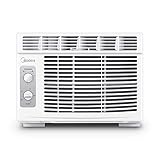
- PERFECT FOR SMALLER ROOMS - Midea's Affordable Window AC unit is perfect to help your room be as comfortable as possible. It can cool 150 sq. ft. with 7 temperature settings, 2 cooling/2 fan-only speeds, and 2-way air direction to give you the perfect amount of cooling every time.
- ENERGY EFFICIENT- Midea's 5,000 BTU window air conditioner has a Combined Energy Efficiency Rate (CEER) of 11.0 which helps reduce the energy costs to save you money throughout the year.
- QUIET & EASY TO USE - This window AC unit is quieter than a household refrigerator. It also features easy-to-use mechanical controls to quickly set the time, temperature, and mode and has a removable & reusable air filter.
- EASY INSTALLATION - Easily install in your home or apartment's existing window frame. Suitable for windows 23''-36'' wide and minimum 13'' high. All mounting accessories are included. A screwdriver is required (but not included) for installation. For some window frames, pilot holes are recommended before installing screws. Please see included instruction manual for further detail.
- WARRANTY: 1 Year Parts & Labor Warranty comes with each Midea product to ensure the quality of our brand to our customers. Our team is happy to help if any questions or issues arise and make sure to register your product on our website for even faster support in the future.
When air conditioning is the better choice
Use AC when outdoor nights remain hot or humid, when you cannot get a clean and safe opening, or when the room needs moisture removed as well as heat. In hot-humid climates, DOE says ventilation is not an effective cooling strategy. AC’s ability to reduce indoor moisture can also improve comfort; see DOE’s home-cooling guidance and DOE’s infographic.
Keep windows shut during wildfire smoke or other poor-air events and use appropriate filtration instead. EPA recommends airing out the home after smoke clears, when outdoor conditions permit. CDC/NIOSH also cautions against opening windows where doing so could create fall or health risks, including asthma symptoms. See EPA’s exposure-reduction guidance and CDC/NIOSH’s circulation guidance.
Rank #2

- BEST FOR SMALL ROOMS: Cools up to 150 sq ft efficiently with 5,000 BTU cooling power. Ideal for bedrooms, home offices, dorm rooms, workshops, and studio apartments. Compact 16.4" W x 13.4" D x 12.6" H design fits tight spaces.
- QUIET OPERATION - Quieter than many older window AC units, with 2 cooling modes (low 52 dBA for nighttime, high 56 dBA for rapid cooling) and 2 fan speeds for personalized comfort. Simple mechanical controls mean no annoying digital beeps.
- SIMPLE, RELIABLE MECHANICAL CONTROLS: Easy-to-use dials for temperature and fan speed—no Wi-Fi, apps or complex setup required. 10 temperature settings let you dial in your perfect comfort level. Auto restart after power outages.
- LOW MAINTENANCE & ENERGY SMART: No manual draining under normal conditions. Washable, reusable filter for easy care. Low 440W power draw helps reduce energy costs compared to older, inefficient units.
- EASY DIY INSTALLATION: Fixed chassis installs easily and fits double-hung windows 27.125"–36" wide and 13.375" high minimum. EZ Mount kit with foam insulation included. Backed by 1-year GE limited warranty for peace of mind.
Does opening windows save more energy?
It can reduce the need for mechanical cooling when outdoor air is suitable, but the benefit depends on temperature, humidity, airflow, and how long the home needs cooling. The guidance cited here does not establish a universal cost or percentage saving for an individual home, so a specific savings figure would not be reliable.
Quick Recap
Rank #3

- Effortless Cooling: Achieve optimal comfort with customizable temperature settings and two fan speeds; Effortless Temperature Control helps to maintain your preset temperatures for consistent comfort
- Easy Maintenance: Keep your air conditioner running efficiently with the easy-to-clean washable filter, designed to capture dust from the air for long-lasting performance
- Undisturbed Comfort: Experience a peaceful home environment with a quiet performance at 52 dBA – ideal for bedrooms or small spaces up to 150 sq. ft.
- Effortless Convenience: Benefit from the Auto Restart feature, which automatically restores the unit's previous settings once power is restored to the window air conditioner
- Hassle-Free Operation: The extra-long three-prong power cord eliminates the need for extension cords, while the adjustable side panels easily extend to best fit your window, ensuring a secure installation with optimal efficiency and airflow
A simple night-time routine
- Compare outdoor and indoor conditions. Consider humidity as well as temperature, and check whether outdoor air is clean enough to bring inside.
- If outside is cooler, reasonably dry, and clean, and the window can be opened safely and securely, use cross-ventilation or a safely secured fan to move air through the home.
- Close the windows once the indoor air has cooled, when outdoor air becomes warmer, or if smoke, rain, noise, or another concern arises.
- Use AC instead when outdoor conditions cannot cool the room comfortably, when moisture control is needed, or when opening a window is not safe.
Product prices and availability are accurate as of the date/time indicated and are subject to change. Any price and availability information displayed on Amazon at the time of purchase will apply.
Do these 3 things before closing this tab:
1Clear out junk files and repair common Windows errors2Scan for outdated or missing drivers - takes under a minute3Repair Windows errors before they cause bigger problems
