
Recommended Free Tools
For frequent gamers, often yes—if the exact TV and HDMI input support the resolution and refresh rate their games can use. For viewers who mostly watch films, streaming, news, and regular TV, 120Hz is usually a lower priority. The refresh rate alone does not make a set better: compare the price premium alongside contrast, brightness, HDR performance, and overall picture quality.
What does 120Hz mean on a TV?
Refresh rate is how many times per second a display updates. LG’s TV Buying Guide explains that a 120Hz TV refreshes the screen 120 times per second and says the smoother motion can be noticeable in fast gameplay, sports, racing, action, and first-person shooters. That is manufacturer guidance, not a guarantee that every viewer or source will show a visible improvement.
A 120Hz panel does not mean everything you watch is filmed or rendered at 120 frames per second. The source device, game, connection, and chosen resolution all affect the signal the TV can display. The panel’s native refresh rate and the signal supported by a particular HDMI input are separate checks.
Also, do not treat a label such as “Motion Rate” as proof of a native 120Hz panel. Manufacturers use branded motion-rate terms that can differ from direct panel refresh specifications. Look for an explicit native panel rate and confirm the supported input modes for the exact model.
#1 Best Overall

- 4K UltraHD Resolution: Experience incredible detail with 4X the resolution of 1080p Full HDTVs
- QLED (Quantum Dot Technology): Rich, vibrant colors covering nearly the entire DCI-P3 color space to bring images to lifeQLED – Quantum Dot Technology: Rich, vibrant colors covering nearly the entire DCI-P3 color space to bring images to life
- 120Hz Panel Refresh Rate: Watch action-packed movies, fast-paced video games, and live sports with an ultra-smooth viewing experience, free of motion blur
- TCL AIPQ Pro Processor: Powerful, advanced processor that intelligently optimizes the color, contrast, and clarity for an unrivaled 4K HDR experience
- Dolby Atmos Audio: Advanced spatial audio processing can be found in movies, TV shows, and video games
Who benefits most from a 120Hz TV?
Frequent gamers
A 120Hz TV can make a difference if you play games that offer frame rates above 60 fps and your console or PC can output the desired mode at your chosen resolution. RTINGS says a TV with a 120Hz-or-higher refresh rate is needed to take full advantage of compatible high-frame-rate console games. Whether a game offers that mode, and what resolution it uses, varies by title and settings.
For PS5, Xbox, or PC gaming, check the game, source device, TV input, and any desired features such as variable refresh rate (VRR). Do not assume every game runs at 120 fps or that every TV marketed as 120Hz accepts a 4K/120Hz signal.
Rank #2

- MINI LED PROCESSOR 4K: Our advanced processor delivers brighter highlights and deeper blacks,* bringing every detail to life with stunning clarity
- PURE COLOR SPECTRUM: delivers one billion true-to-life colors, powered by advanced color technology and MiniLED precision. Enjoy rich reds, deep blues, and vibrant greens, making every scene leap off the screen with breathtaking realism.
- MINI LED HDR: Experience HDR picture quality with brighter highlights and deeper blacks than traditional HDR TVs.* Enjoy vibrant colors and lifelike details as this technology enhances brightness and contrast, making every image stand out with remarkable depth and realism.
- ENDLESS FREE CONTENT: Watch 2,700+ free streaming options, including 750+ subscription-free channels on Samsung TV Plus. Enjoy news, sports, movies, kids' shows and reality TV — all without a subscription. Discover endless entertainment with new content added regularly, tailored to your mood and interests.*
- SUPREME MINI LED DIMMING: delivers deep contrast and bright highlights for a truly superb picture.*
Sports and other fast motion
Fast-moving images may look smoother on a 120Hz set, but the result depends on the TV’s motion handling and the source material. LG identifies sports as a possible use case; the refresh-rate number by itself does not establish how well a particular TV handles motion.
Mostly films and streaming
If most of what you watch arrives at 24, 30, or 60 fps, the extra refresh capacity may matter less than the TV’s overall picture quality and price. A good 60Hz TV can be the more sensible buy when the higher-rate model costs more but does not add picture or gaming benefits you will use.
Rank #3

- 4K UltraHD Resolution: Experience incredible detail with 4X the resolution of 1080p Full HDTVs
- QLED (Quantum Dot Technology): Rich, vibrant colors covering nearly the entire DCI-P3 color space to bring images to lifeQLED – Quantum Dot Technology: Rich, vibrant colors covering nearly the entire DCI-P3 color space to bring images to life
- 144Hz Panel Refresh Rate: Watch action-packed movies, fast-paced video games, and live sports with an ultra-smooth viewing experience, free of motion blur
- TCL AIPQ Pro Processor: Powerful, advanced processor that intelligently optimizes the color, contrast, and clarity for an unrivaled 4K HDR experience
- Dolby Atmos Audio: Advanced spatial audio processing can be found in movies, TV shows, and video games.
How to compare a 120Hz TV with a 60Hz alternative
Treat refresh rate as one specification, not a complete quality rating. Compare the factors that determine whether the feature will work for your setup and whether the price difference makes sense:
- Native panel rate: Look for an explicit native 120Hz (or higher) specification. Motion-processing brand labels are not a substitute.
- HDMI input support: Check which specific port supports your target resolution and refresh rate. Sony’s model-specific tables for features such as 4K120 and VRR illustrate why support must be checked by model and input, not inferred from a general label.
- Gaming features: Verify VRR and other features you want on the exact TV and the input you plan to use.
- Source and connection: Confirm that your console or PC and the games you play support the desired mode. Samsung says 4K at 120Hz requires a compatible HDMI 2.1 cable and a compatible source device.
- Picture quality and price: Compare contrast, brightness, HDR performance, viewing conditions, and the actual price difference. There is no universal dollar premium that makes 120Hz worthwhile for every size, model, or market.
Buying checklist: verify the exact TV and setup
- Identify the exact model number, screen size, and region. Specifications can differ across sizes and markets.
- Confirm the native panel refresh rate in the technical specifications; do not rely on a motion-rate marketing name.
- Check the manufacturer’s support information for the HDMI port you will use. Confirm 4K/120Hz support if that is your target, and check VRR if you want it.
- Check that your console or PC, the game, and your chosen resolution support a higher-frame-rate mode.
- Compare the current price and complete picture quality against a suitable 60Hz set. Pay extra only if the supported use case is meaningful to you.
Sources and scope
LG’s statements about refresh-rate definition and fast-motion use cases come from its TV Buying Guide. RTINGS’ guidance on compatible high-frame-rate games and branded motion-rate terminology is from its article updated February 26, 2026. Sony publishes model-specific support tables for HDMI 2.1-related features, while Samsung’s guidance on 4K/120Hz calls for a compatible cable and source. These sources describe capabilities and buying checks; they do not establish a universal visible improvement or price premium for every TV.
Quick Recap
Rank #4
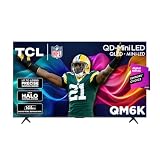
- TCL QM6K QD-MINI LED TV SERIES - AFFORDABLE PREMIUM PERFORMANCE FOR SPORTS, GAMING & STREAMING. Experience superior contrast, rich color, and ultra-smooth motion with TCL’s QD-Mini LED technology. Designed to outperform traditional QLED and OLED TVs, the QM6K is the best TV for every moment—whether you're streaming, gaming, or watching the big game.
- QD-MINI LED. IT’S MINI LED PLUS QLED COLOR - BREATHTAKING BRIGHTNESS AND COLOR IN ANY LIGHT. Combines ultra-precise Mini LEDs with Quantum Dot technology for incredible brightness, bold contrast, and over a billion vibrant colors.
- TCL HALO CONTROL SYSTEM - BETTER BLACKS. SHARPER DETAIL. NO BLOOMING. Advanced local dimming eliminates haloing, enhances shadow detail, and improves picture accuracy—so dark scenes look deeper, and bright scenes stay crisp.
- DOLBY VISION, HDR10+, HDR10 & HLG - STUNNING HDR IN EVERY FORMAT. Enjoy 4K content the way it was meant to be seen. Dynamic HDR support delivers exceptional color, contrast, and detail across all major formats.
- 144HZ NATIVE REFRESH RATE + MOTION RATE 480 - SMOOTH, FAST ACTION—PERFECT FOR LIVE SPORTS. Watch fast-paced action with incredible clarity and minimal motion blur—making this one of the best TVs for sports.
- RTINGS: What Is Refresh Rate? 60Hz vs 120Hz
- LG USA: TV for Gaming | LG TV Buying Guide
- Sony USA: Which TV models support features that are specified in the HDMI 2.1 standard?
- Samsung Sweden: Varför välja en 120 Hz TV?
- TCL Singapore: How is the picture motion quality for C825 and C728?
Product prices and availability are accurate as of the date/time indicated and are subject to change. Any price and availability information displayed on Amazon at the time of purchase will apply.

