
Neither IR nor Wi-Fi is always better. A phone’s IR blaster is a good fit for an IR-controlled appliance when the phone has the right hardware and can be aimed at the appliance’s receiver. Wi-Fi control is a better fit when the appliance supports a compatible app or network remote. If the phone lacks IR but the appliance uses it, a Wi-Fi-connected IR hub can bridge the two.
How phone IR and Wi-Fi remotes work
Phone IR blaster
An IR blaster sends infrared pulses from the phone to an appliance’s IR receiver, much like a conventional remote. The phone needs an actual IR emitter, an app or code set that supports the appliance, and a usable path to the receiver. TCL and HONOR describe using phone infrared features with supported appliances such as TVs, air conditioners, and set-top boxes; their instructions involve choosing an appliance type or brand and aiming the phone toward the device. TCL advises pointing the back of the phone toward the appliance and adjusting the angle if response is poor.
Wi-Fi control
A Wi-Fi remote sends commands through an app or supported network-control platform rather than by aiming the phone at an IR receiver. For example, Google documents a Google TV app remote for Google TV and Android TV that can navigate, control playback, turn the TV on or off, change volume, activate Google Assistant, and enter text. In that documented setup, the phone and TV must be connected to the same Wi-Fi network. Those functions and requirements are specific to Google’s supported setup, not a guarantee that every smart TV or appliance works with the same app.
Wi-Fi IR hub
A Wi-Fi IR hub receives commands from a phone app over the network and then emits IR toward the appliance. This can be useful if the phone has no IR emitter. The hub still needs to support the appliance’s IR commands and be positioned so its signal can reach the appliance. SwitchBot says its Hub Mini controls appliances through IR and cannot control appliances whose remotes use RF or Bluetooth.
Do these 3 things before closing this tab:
1Scan for outdated or missing drivers - takes under a minute2Clear out junk files and repair common Windows errors3Fix the driver behind crashes, sound loss and screen glitches#1 Best Overall
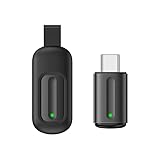
- Compatible with more devices: Effortlessly control TVs, Set Top Boxes, Air Conditioners, Projectors, Ott-Boxes, DVDs, Amplifiers, SLRs, Fans, IR Switches, Water Hoters, Electric Heaters, Air Cleaners, Robot Vacuums and Blinds with OCRUSTAR All in One Remote Control.
- Compatible with more brands: OCRUSTAR Universal Remote Control Adapter compatible with Samsung, Vizio, Roku, Sony, Sharp, Samsung, Panasonic, TCL, RCA, Hisense, Toshiba, Fhilips, LG and more.
- OCRUSTAR IR Remote Control Convenience: ✅The type-c plug compatible with IOS and Android system✅, Manage your home devices from your smartphone with the Ocrustar Remote App, bringing ease and efficiency to your fingertips.
- Portable & Stylish: On-the-go control in style! The OCRUSTAR mobile phone universal remote control featuring a key ring and silicone case, universal remote control can be placed in a silicone case for portability and protection.
- What you'll get: 1* universal remote adapter, 1* user's guider, 1* key ring, 1* silicone case
Which option fits your setup?
| Your situation | Best starting point | What to check |
|---|---|---|
| Your phone has an IR emitter, and the appliance is IR-controlled | Phone IR | Confirm the app supports the appliance brand or model, then aim the emitter toward its receiver. |
| Your appliance supports a phone app or network remote | Wi-Fi app | Check which app and network setup the appliance requires. Google’s documented Google TV remote, for example, requires the phone and TV to be on the same Wi-Fi network. |
| Your phone has no IR emitter, but the appliance uses IR | Wi-Fi IR hub | Confirm the hub supports the appliance and its IR commands, and that the hub can send IR to the appliance. |
| The appliance uses RF or Bluetooth | A compatible RF/Bluetooth remote or manufacturer app | An IR emitter or IR-only hub cannot send the appliance’s different control protocol. |
What matters most when choosing
- Appliance protocol: Check whether the appliance accepts IR, Wi-Fi app control, RF, or Bluetooth. These methods are not interchangeable.
- Phone hardware: An IR remote app cannot add an IR emitter to a phone that does not have one. Check the phone specifications rather than assuming it includes IR.
- Aiming and placement: IR depends on getting a signal from the emitter to the appliance receiver. Wi-Fi app control avoids aiming the phone at that receiver, but an IR hub still has to send IR to the appliance.
- Network and app support: Wi-Fi control requires a compatible device and app. Requirements vary; Google’s cited TV remote setup specifies the same Wi-Fi network, and does not establish that every Wi-Fi remote works away from home.
- Available controls: Compare what the supported app offers with the controls you need. App features vary by platform and appliance.
- Extra hardware: A hub is an additional device to set up when the phone lacks IR but the appliance accepts it.
How to check compatibility before choosing
- Identify the appliance’s control method. Check its manual or the specifications for the original remote. If the remote uses RF or Bluetooth, an IR-only solution will not work.
- Check the phone for an IR emitter. If it has one, confirm that a remote app supports the appliance’s brand or model. If it does not, move on to a supported Wi-Fi app or an IR hub for an IR appliance.
- Check the appliance’s app and network requirements. Use the manufacturer’s instructions for the exact app and setup; do not assume that a device described as “smart” supports any phone remote.
- Test IR aiming or hub placement. Point the phone emitter, or the hub’s IR emitter, toward the appliance receiver. If commands do not register, adjust the angle and verify the appliance and code support.
Does IR or Wi-Fi respond faster or more reliably?
The sources cited here do not provide a controlled head-to-head measurement of response speed, latency, or reliability. The more useful distinction is compatibility and setup: IR needs a compatible IR path to the receiver, while Wi-Fi depends on supported app control and the required network connection. Choose based on the appliance’s protocol and the controls available for your specific phone and device, rather than assuming one method is categorically faster or more dependable.
Quick Recap
Best Value

- STABLE CONTROL: Type C IR remote control provides stable control with remarkable anti interference performance and distance up to 15m.
- Performance: This Smartphone IR Remote Controller offers a stable and infrared that seamlessly pairs with your home appliances. Control your devices with ease and straight from your phone, improving your home's overall convenience and smart functionality.
- PLUG AND PLAY: Smartphone remote controller is plug and play, your smartphone will become an all in one smart home control center.
- STABLE CONTROL: Type C IR remote control provides stable control with remarkable anti interference performance and distance up to 15m.
- STABLE CONTROL: Type C Smartphone IR remote control provides stable control with remarkable anti interference performance and distance up to 15m.
Rank #4

- Crafted from aluminum, this pocket sized features a high performances IR module and detachable chain for on the go convenience
- Small and small size appearance makes it portable. Can hanging on your chain and take it away
- Transforms your Type C smartphone into a universally remote controller, seamlessly controlling TVs, air conditioners, and appliances via a powerful app with 8-15m signals penetration through wall and glass
- Ideal for technology enthusiasts needing a small size, platform to replace remote controls for devices across home theaters, smarthomes, and office setups
- operate appliances from any corner of your living room, bedroom, or workspaces while maintaining precise temperature adjustments, channel switching, and device synchronization capabilities
Rank #3
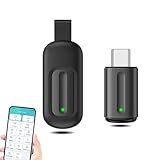
- EXQUISITE AND COMPACT: Phone IR remote control is 20% smaller in size than its predecessor, with a refined and compact appearance and CNC on the for a silky slippy and more comfortable touch.
- 30 DEGREE REMOTE CONTROL: Mini smartphone IR remote controller adopts the new fifth generation chip, which is faster without Bluetooth connection, allowing a longer transmitting distance and larger angle.
- EASY REMOTE CONTROL: IR phone controller adapter is an easy remote control for air conditioners, TV set top boxes, and projectors. You only need to download one APP on your cell phone and plug in the universal remote control.
- PREVENT LOSS: Smart IR remote control comes with a silicone cover and hanging to prevent loss, so you can use it anytime and anywhere in your living room, bedroom, office, conference room, etc. without looking for a remote control.
- ONE CONTROL: Mini smartphone IR remote control is compatible with mainstream infrared appliances on the market, such as TV boxes, fans, TVs, etc. can be controlled with a single click.
Rank #2
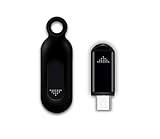
- This smart IR remote controller has stable and reliable IR signal, pairing to your household appliance easily. Steady transmission distance as long as 10m.
- Wide Compatible: with this device and smart phone APP, your phone will become a powerful remote control, great choice for Samsung, Vizio, Lg, Sony, Sharp, Roku, Apple TV and more
- Tiny and Convenient: Anti-Lost design, with key chain and silicone case, you could carry it anywhere do not worry it will be lost.Lightning work with Apple device, Type-C work with Android device
- Plug-and-play the smart IR remote controller to your mobile, scan and download App "uniTV Remote" to control. Your smartphone rightly change to a All-in-One Smart Home Control Hub. You get control of all your home applicance by a touch on App.
Product prices and availability are accurate as of the date/time indicated and are subject to change. Any price and availability information displayed on Amazon at the time of purchase will apply.

