
What’s actually slowing this PC down?
Pick the symptom - the matching free tool is one click away.
Intel’s 10nm process did not simply disappear when the company introduced new node names. Its enhanced 10nm technology became Intel 7, which remained in production even as Intel reported newer processes entering high-volume manufacturing. The names describe Intel’s process generations—not literal measurements of transistor dimensions—and performance figures Intel published for them are company estimates, not independent benchmark results.
What happened to Intel’s 10nm process?
Intel developed successive refinements to its 10nm process rather than making one change and moving on. A key step was 10nm SuperFin, which Intel introduced at its August 2020 Architecture Day as a set of improvements to transistors, capacitors, and interconnects.
10nm SuperFin changed more than the label
Intel described SuperFin as combining enhanced FinFET transistors, a Super MIM capacitor, and an improved interconnect metal stack. The company said the package delivered performance improvements comparable to a full-node transition and called it the largest single intranode enhancement in its history. Those descriptions are Intel’s characterization, not independent validation of the size of the gain.
10nm Enhanced SuperFin became Intel 7
In July 2021, Intel introduced a new process-node naming framework and said that 10nm Enhanced SuperFin would be called Intel 7. This was a renaming within an ongoing technology lineage, not evidence that the process suddenly acquired transistors measuring seven nanometers.
#1 Best Overall

- Next‑Gen Platform Support: Compatible with Intel 800 Series Chipset‑based motherboards with LGA1851 Socket enabling PCIe 5.0/4.0 and high‑speed DDR5 memory (up to 7200 MT/s).
- High‑Performance Core Configuration: Features up to 24 cores (8 P‑cores + 16 E‑cores) for demanding gaming and creator
- Ultra‑Fast Boost Clocks: Reaches up to 5.5 GHz max turbo frequency for top‑tier responsiveness and performance
- Built for Enthusiasts: Unlocked for performance tuning when paired with Intel Z‑series chipsets, making it ideal for overclockers and power users.
- Robust Power & Thermal Design: Engineered with 125W base power and 250W max turbo power to sustain high‑intensity
Intel said traditional nanometer-based process labels had stopped matching actual gate-length metrics in 1997. A node name is therefore a generation or branding label; it should not be read as a direct measurement of one physical transistor dimension or compared literally across manufacturers.
Is Intel 7 the same as 10nm?
Intel 7 is the name Intel gave to 10nm Enhanced SuperFin. It belongs to the 10nm lineage, but it is more precise to call it an enhanced revision than to treat “Intel 7” and every earlier Intel 10nm process as interchangeable names for an identical implementation. In particular, Intel had already distinguished 10nm SuperFin from 10nm Enhanced SuperFin.
Rank #2

- Game Without Compromise. Play harder and work smarter with Intel Core 14th Gen processors
- 20 cores (8 P-cores plus 12 E-cores) and 28 threads. Integrated Intel UHD Graphics 770 included
- Up to 5.6 GHz with Turbo Boost Max Technology 3.0 gives you smooth game play, high frame rates, and rapid responsiveness
- Compatible with Intel 600-series (with potential BIOS update) or 700-series chipset-based motherboards
- DDR4 and DDR5 platform support cuts your load times and gives you the space to run the most demanding games
Intel’s July 2021 fact sheet estimated that Intel 7 would deliver approximately 10% to 15% better performance per watt than Intel 10nm SuperFin. The same fact sheet estimated approximately 20% for Intel 4 versus Intel 7, and around 18% for Intel 3 versus Intel 4. Intel identified these as internal estimates and cautioned that results could vary; they are not independent, like-for-like test results.
| Process name | Relationship or change described by Intel | Intel’s published performance-per-watt estimate | Products or production status reported |
|---|---|---|---|
| 10nm SuperFin | Enhanced FinFETs, a Super MIM capacitor, and an improved interconnect metal stack. | Baseline for Intel’s later Intel 7 comparison; no standalone figure stated here. | Intel introduced it at Architecture Day in August 2020. |
| Intel 7 (formerly 10nm Enhanced SuperFin) | Refinement of 10nm Enhanced SuperFin under Intel’s naming framework. | Approximately 10% to 15% over Intel 10nm SuperFin, an Intel internal estimate published in 2021. | Intel’s 2025 Form 10-K says it continued to serve 13th and 14th Gen Core production. |
| Intel 4 | Next generation in Intel’s 2021 roadmap after Intel 7. | Approximately 20% over Intel 7, an Intel internal estimate published in 2021. | Intel reported first high-volume manufacturing in 2023 and use in Core Ultra Series 1. |
| Intel 3 | Next generation after Intel 4 in the 2021 roadmap. | Around 18% over Intel 4, an Intel internal estimate published in 2021. | Intel reported first high-volume manufacturing in 2024 and use in Xeon 6 Scalable. |
| Intel 18A | A later node in Intel’s roadmap; the cited materials do not provide a directly comparable performance-per-watt estimate against Intel 7. | Not stated in the cited Intel materials. | Intel reported high-volume manufacturing in late 2025 and said Panther Lake/Core Ultra Series 3 uses it. |
The percentages in the table compare adjacent generations as Intel framed them in 2021. They should not be added together or treated as guarantees for every chip: the fact sheet describes internal estimates, and realized results can depend on the product and its design.
Rank #3

- Get ultra-efficient with Intel Core Ultra desktop processors that improve both performance and efficiency so your PC can run cooler, quieter, and quicker.
- Core and Threads 24 cores (8 P-cores plus 16 E-cores) and 24 threads. Integrated Intel Graphics included
- Performance Hybrid Architecture Integrates two core microarchitectures, prioritizing and distributing workloads to optimize performance
- Performance Unlocked Up to 5.7 GHz unlocked. 40MB Cache
- Compatibility Compatible with Intel 800 series chipset-based motherboards
What replaced Intel 10nm?
There was no single immediate successor that ended Intel 7’s use. Intel’s roadmap placed Intel 4, Intel 3, Intel 20A, and Intel 18A beyond Intel 7. Intel’s later company-reported production status shows several generations coexisting: Intel 7 remained in use while Intel 4, Intel 3, and Intel 18A reached high-volume manufacturing.
What Intel forecast in 2021
In its July 2021 roadmap, Intel expected Intel 7 to appear in Alder Lake and Sapphire Rapids, Intel 4 in Meteor Lake and Granite Rapids, and Intel 3 products to begin manufacturing in the second half of 2023. It forecast an Intel 20A ramp in 2024 and Intel 18A development for early 2025. These were forecasts made in 2021; the announcement schedule alone does not establish that each milestone occurred on that timetable.
Rank #4
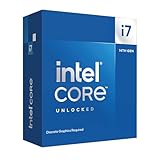
- Game Without Compromise. Play harder and work smarter with Intel Core 14th Gen processors
- 20 cores (8 P-cores plus 12 E-cores) and 28 threads. Discrete graphics required
- Up to 5.6 GHz with Turbo Boost Max Technology 3.0 gives you smooth game play, high frame rates, and rapid responsiveness
- Compatible with Intel 600-series (with potential BIOS update) or 700-series chipset-based motherboards
- DDR4 and DDR5 platform support cuts your load times and gives you the space to run the most demanding games
What Intel reported later
Intel’s 2025 Form 10-K provides a later company-reported snapshot. It says Intel 7 continued in production for 13th and 14th Gen Core processors; Intel 4 first reached high-volume manufacturing in 2023 and was used for Core Ultra Series 1; and Intel 3 first reached high-volume manufacturing in 2024 and was used for Xeon 6 Scalable. The filing also says Intel 18A reached high-volume manufacturing in late 2025 and that Panther Lake/Core Ultra Series 3 uses Intel 18A.
The same filing describes Intel 14A as in active development, while warning that Intel might pause or discontinue pursuing future nodes if it did not secure a significant external Intel 14A foundry customer. That is a conditional risk described by Intel, not confirmation that Intel has discontinued the node.
Free tools Windows power users keep installed
One-click scans. No signup required.
Best Value

- Game without compromise. Play harder and work smarter with Intel Core 14th Gen processors
- 24 cores (8 P-cores plus 16 E-cores) and 32 threads. Integrated Intel UHD Graphics 770 included
- Leading max clock speed of up to 6.0 GHz gives you smoother game play, higher frame rates, and rapid responsiveness
- Compatible with Intel 600-series (with potential BIOS update) or 700-series chipset-based motherboards
- DDR4 and DDR5 platform support cuts your load times and gives you the space to run the most demanding games
What Intel said about Panther Lake and Clearwater Forest
In an October 9, 2025 announcement, Intel called Panther Lake the first client SoC built on Intel 18A and said production was underway, with shipping expected later that year. It also previewed Xeon 6+ Clearwater Forest, an 18A server processor then expected in the first half of 2026. Those statements describe Intel’s announcement-date plans; they do not, by themselves, establish the products’ present availability.
Independent reader supportYour contribution helps us test, update, and keep practical guides available for everyone.Does “10th Gen Intel Core” mean a 10nm processor?
No. A generation label by itself does not identify a processor’s process. Intel lists 10th Gen Core Ice Lake models such as the i5-1035G1 and i5-1035G7, and separately identifies Comet Lake in its support materials. The 10th Gen name alone is therefore not enough to conclude that a particular chip belongs to the 10nm Ice Lake family.
For example, an Ice Lake laptop is a concrete consumer-product example from Intel’s 10nm era. When identifying a specific computer or processor, check the model and family rather than inferring the process from “10th Gen” alone.
What the process names and performance figures can—and cannot—tell you
Intel’s naming changes make more sense when process labels are treated as roadmap categories, not ruler measurements. SuperFin describes a bundle of technical refinements; Intel 7 is the later name for 10nm Enhanced SuperFin; and Intel 4 and Intel 3 mark subsequent generations. That terminology is useful for following Intel’s roadmap, but it does not establish that two companies’ similarly numbered nodes have equivalent transistor dimensions, density, yields, performance, or manufacturing cost.
Likewise, Intel’s performance-per-watt percentages offer the company’s estimates for adjacent process transitions, not proof of a universal gain across every product. The cited materials do not establish an independent, like-for-like comparison against competing foundry nodes for density, yield, performance, or cost.
Quick Recap
Product prices and availability are accurate as of the date/time indicated and are subject to change. Any price and availability information displayed on Amazon at the time of purchase will apply.

