
Intel’s cloud performance tool is Continuous Profiler, open-source software announced on March 11, 2024. It continuously samples CPU activity and combines profiler data in a unified flame graph, helping teams locate hot code paths and performance regressions in cloud-native services. Intel says it can be deployed across a Kubernetes cluster without code changes.
What is Intel Continuous Profiler?
Continuous Profiler is an open-source CPU profiling tool developed by Intel Granulate and contributed to the open-source community. It evolved from gProfiler and brings multiple sampling profilers into a single flame-graph view. It is software for investigating application performance, not a hardware-monitoring product.
Intel announced the tool on March 11, 2024. The announcement describes profiling as a way to help developers identify code bottlenecks and improve application efficiency. Intel Granulate general manager Asaf Ezra said the profiler helps businesses identify bottlenecks in their code and optimize applications.
How does it work?
Rather than requiring teams to manually instrument every suspected function, Continuous Profiler uses sampling profilers to observe where CPU time is spent. It presents the combined results as a flame graph, a visual representation intended to make CPU-heavy code paths easier to spot. Teams can use that view to investigate issues such as excessive garbage collection, deadlocks, and regressions.
Quick wins for a faster PC:
Scan for outdated or missing drivers - takes under a minuteDriver Scan →Repair Windows errors before they cause bigger problemsFix Now →Fix the driver behind crashes, sound loss and screen glitchesFind Drivers →#1 Best Overall

- Get ultra-efficient with Intel Core Ultra desktop processors that improve both performance and efficiency so your PC can run cooler, quieter, and quicker.
- Core and Threads 24 cores (8 P-cores plus 16 E-cores) and 24 threads. Integrated Intel Graphics included
- Performance Hybrid Architecture Integrates two core microarchitectures, prioritizing and distributing workloads to optimize performance
- Performance Unlocked Up to 5.7 GHz unlocked. 40MB Cache
- Compatibility Compatible with Intel 800 series chipset-based motherboards
The value of the graph is diagnostic: it points engineers toward code consuming CPU, which can help them investigate throughput limits, latency, and resource use. A profile is evidence about sampled CPU activity; by itself, it does not establish the root cause of every latency or service-health problem.
How does it work with Kubernetes?
Intel describes Kubernetes-aware filters that let an operator narrow an investigation across deployment, pod, node, and host levels, including across regions. This makes it possible to start with a service or deployment and focus on the relevant underlying workload or infrastructure without running a different profiler for each object.
Rank #2

- Game without compromise. Play harder and work smarter with Intel Core 14th Gen processors
- 24 cores (8 P-cores plus 16 E-cores) and 32 threads. Integrated Intel UHD Graphics 770 included
- Leading max clock speed of up to 6.0 GHz gives you smoother game play, higher frame rates, and rapid responsiveness
- Compatible with Intel 600-series (with potential BIOS update) or 700-series chipset-based motherboards
- DDR4 and DDR5 platform support cuts your load times and gives you the space to run the most demanding games
Intel says Continuous Profiler can be deployed cluster-wide within minutes and supports multiple programming languages. Those are Intel’s product claims; the announcement does not provide a detailed language matrix, deployment steps, or a measured setup benchmark.
Can you profile production containers without changing code?
According to Intel, Continuous Profiler does not require code changes and is designed for continuous use in cloud-native environments. That makes it relevant for production diagnosis: teams can look for CPU hot spots or changes in runtime behavior without adding instrumentation to each application first. Operators still need to deploy and configure the profiling software in their environment; “no code changes” does not mean “no setup.”
What’s actually slowing this PC down?
Pick the symptom - the matching free tool is one click away.
Rank #3
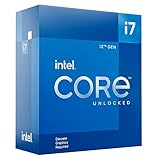
- Intel Core i7 3.60 GHz processor offers more cache space and the hyper-threading architecture delivers high performance for demanding applications with better onboard graphics and faster turbo boost
- The Socket LGA-1700 socket allows processor to be placed on the PCB without soldering
- 11 MB L2 and 25 MB L3 cache offers supreme performance for computation intensive apps
- Intel 7 Architecture enables improved performance per watt and micro architecture makes it power-efficient
Is Continuous Profiler free or paid?
Intel describes Continuous Profiler as open-source software. The announcement does not state a price or specify licensing terms, nor does it establish whether a hosted or commercially supported edition is available. The tool is also compatible with Intel Granulate’s continuous-optimization services, which are a separate broader offering; that compatibility does not by itself show that using the open-source profiler requires a paid service.
Independent reader supportYour contribution helps us test, update, and keep practical guides available for everyone.How does it fit with Intel’s other performance tools?
Intel’s software catalog also lists gProfiler, Intel PerfSpect, and Intel VTune Profiler as performance-related tools. Continuous Profiler is specifically presented as a cloud-native continuous profiling workflow built around sampling and a unified flame graph. The available announcement does not provide a feature-by-feature comparison with those other tools, so teams should compare their deployment model, supported workloads, analysis workflow, and licensing independently before choosing.
Quick Recap
Rank #4

- Next‑Gen Platform Support: Compatible with Intel 800 Series Chipset‑based motherboards with LGA1851 Socket enabling PCIe 5.0/4.0 and high‑speed DDR5 memory (up to 7200 MT/s).
- High‑Performance Core Configuration: Features up to 24 cores (8 P‑cores + 16 E‑cores) for demanding gaming and creator
- Ultra‑Fast Boost Clocks: Reaches up to 5.5 GHz max turbo frequency for top‑tier responsiveness and performance
- Built for Enthusiasts: Unlocked for performance tuning when paired with Intel Z‑series chipsets, making it ideal for overclockers and power users.
- Robust Power & Thermal Design: Engineered with 125W base power and 250W max turbo power to sustain high‑intensity
Product prices and availability are accurate as of the date/time indicated and are subject to change. Any price and availability information displayed on Amazon at the time of purchase will apply.

