
iTechGuides is reader-supported. When you buy through links on our site, we may earn an affiliate commission. As an Amazon Associate I earn from qualifying purchases. Learn more
The Intel Core i5-12400F is still a worthwhile budget gaming processor in 2026 when its total platform cost is low, especially with an inexpensive LGA1700 DDR4 motherboard and a discrete graphics card. Its six cores and 12 threads handle mainstream gaming and everyday work well, but the CPU has no integrated graphics and offers a limited upgrade path.
Intel launched the Core i5-12400F in Q1 2022 as part of its 12th-generation Alder Lake desktop lineup. The processor remains attractive because it delivers a capable six-core design without the price of a newer high-end platform. The catch is that the processor price alone does not determine its value: the motherboard, memory, cooler, graphics card, and future-upgrade plans matter just as much.
Key takeaways
- The Intel Core i5-12400F has six Performance cores, 12 threads, an advertised 4.40 GHz maximum turbo frequency, and a 65 W Processor Base Power rating.
- The “F” suffix means the processor has no integrated graphics, so a discrete graphics card is required for display output and normal desktop use.
- The processor supports either DDR4-3200 or DDR5-4800, but the motherboard must be designed for one memory type; DDR4 and DDR5 cannot be mixed.
- The i5-12400F is a sensible choice for ordinary 1080p and 1440p gaming when the CPU, motherboard, and memory cost less than a newer platform.
- The i5-12400F is a weaker choice for a new full-price build, heavy multithreaded workloads, integrated-graphics systems, and very high-refresh gaming with a powerful modern GPU.
Intel Core i5-12400F specifications
The Intel Core i5-12400F is a 12th-generation Alder Lake desktop processor manufactured on Intel 7. Intel lists six Performance cores, no Efficient cores, and 12 total threads. The CPU uses the FCLGA1700 socket and has a locked multiplier rather than the unlocked multiplier found on conventional K-series processors.
| Specification | Core i5-12400F |
|---|---|
| Generation | 12th-generation Intel Core |
| Architecture | Alder Lake |
| Manufacturing process | Intel 7 |
| Socket | FCLGA1700 |
| Performance cores | 6 |
| Efficient cores | 0 |
| Threads | 12 |
| Base frequency | 2.50 GHz |
| Maximum turbo frequency | 4.40 GHz |
| L2 cache | 7.5 MB |
| L3 cache | 18 MB Intel Smart Cache |
| Processor Base Power | 65 W |
| Maximum Turbo Power | 117 W |
| Maximum junction temperature | 100°C |
| Memory support | DDR4-3200 or DDR5-4800 |
| Maximum memory capacity | 128 GB |
| Memory channels | 2 |
| PCI Express | PCIe 5.0 and PCIe 4.0 |
| Maximum PCIe lanes | 20 |
| Integrated graphics | None |
| Instruction extensions | SSE4.1, SSE4.2, AVX2 |
| Virtualization | Intel VT-x and VT-d |
| Launch period | Q1 2022 |
These specifications come from Intel’s official Core i5-12400F specification page. Intel’s 65 W figure is the Processor Base Power rating, not a promise that the CPU can never consume more. Intel also lists 117 W Maximum Turbo Power, and some motherboards apply more permissive power settings.
#1 Best Overall

- Intel Core i5-12400F Desktop Processor 6 (6P plus0E) Cores Up to 4.4 GHz Turbo Frequency LGA1700 600 Series Chipset 65W Processor Base Power
- Item Package Dimension: 4.92L x 4.33W x 3.18H inches
- Item Package Weight - 0.99 Pounds
- Item Package Quantity - 1
- Product Type - COMPUTER PROCESSOR
What does the “F” mean on the Core i5-12400F?
The “F” suffix means the Core i5-12400F has no usable integrated graphics. A discrete graphics card is mandatory for a normal desktop system, and the motherboard’s HDMI or DisplayPort outputs will not produce an image from the Core i5-12400F alone.
The lack of an iGPU can reduce the purchase price when a gaming PC will always use a graphics card. It also removes several useful capabilities:
- There is no display fallback if the graphics card fails.
- There is no way to use the motherboard’s video outputs without installing a graphics card.
- The processor cannot provide Intel Quick Sync video acceleration through integrated graphics.
- Initial troubleshooting is more difficult because a working graphics card is required to obtain a picture.
- The processor is unsuitable for a compact office PC intended to run without a discrete GPU.
The standard Core i5-12400 is the more flexible alternative because it includes Intel UHD Graphics 730. The non-F model is worth considering when Quick Sync, emergency graphics, or temporary operation without a graphics card matters and the price premium is small. The Core i5-12400F is the better fit when a discrete GPU is guaranteed and the price difference is meaningful. Tom’s Hardware also identifies the missing iGPU, Quick Sync, and graphics fallback as the main practical trade-offs of the F model in its Core i5-12400 review.
Is the Intel Core i5-12400F still good for gaming?
Yes. The Intel Core i5-12400F remains suitable for mainstream 1080p gaming, balanced 1440p gaming, and ordinary high-refresh play when paired with an appropriately matched graphics card. The processor is no longer a universal high-end gaming recommendation, because a newer CPU can provide higher minimum frame rates in CPU-limited games and can better support a powerful modern GPU.
1080p gaming
At 1080p, the Core i5-12400F can be a strong match for entry-level, midrange, and some upper-midrange graphics cards. In games where the graphics card is the limiting component, the difference between the 12400F and a newer processor may be small. CPU-heavy simulation games, large multiplayer games, and esports titles running at very high frame rates are more likely to expose the age of the six-core Alder Lake design.
1440p gaming
At 1440p, the graphics card more often determines performance, which makes the Core i5-12400F easier to recommend. A balanced midrange or upper-midrange GPU can deliver a good experience without requiring a cutting-edge CPU. The CPU becomes more important when the target is an unusually high refresh rate, very low frame-time variance, or a high-end graphics card.
What do independent benchmarks show?
Historical independent testing remains useful for understanding the processor’s capability, but old benchmark charts should not be treated as a current ranking. In Tom’s Hardware’s test of the closely related Core i5-12400, the stock-DDR4 configuration reached 88% of the Core i9-12900K reference result in that test suite, while a tuned configuration reached 92%. Those are dated results from a specific test setup, not universal performance guarantees for every game, GPU, memory kit, or motherboard.
Tom’s Hardware notes that gaming results vary with memory, motherboard power settings, the game, and the test methodology. Intel also publishes a 2026 comparison involving the Core i5-12400F and Ryzen 7 8700G, but the Intel Performance Index results are vendor-run and use specific hardware and software: an Arc A580, 1920×1080 resolution, DDR4-3200 memory, Windows 11 23H2, and a particular motherboard and BIOS. Intel’s figures should therefore be read as a result under those conditions, not as an independent universal ranking.
Rank #2

- Game and multitask without compromise powered by Intel’s performance hybrid architecture on an unlocked processor.
- Discrete graphics required
- Compatible with Intel 600 series and 700 series chipset-based motherboards
- Intel and reg; Core and reg; i5 processor offers hyper-threading architecture that delivers high performance for demanding applications with improved onboard graphics and turbo boost
- The processor features Socket LGA-1700 socket for installation on the PCB
| Gaming target | How the 12400F fits | Main caveat |
|---|---|---|
| Budget 1080p | Good match for an entry-level or lower-midrange GPU | A very weak GPU will limit performance before the CPU does |
| Standard 1080p | Good for mainstream gaming with a balanced GPU | CPU-heavy games may favor newer processors |
| 1440p | Generally sensible with a midrange or upper-midrange GPU | GPU selection has a greater effect on frame rate |
| High-refresh esports | Capable, but newer CPUs may deliver higher minimums | Very high frame rates make CPU limits more visible |
| High-end GPU gaming | Usable, but not an ideal maximum-frame-rate pairing | The CPU can become the limiting component at 1080p |
How does the Core i5-12400F perform for productivity?
The Core i5-12400F is a capable everyday and moderate-productivity processor, but its six cores and 12 threads no longer place it in the high-end workstation category. Office applications, web browsing, multitasking, software development, light photo editing, moderate video editing, and everyday content creation are appropriate workloads.
The processor is less compelling for heavy CPU rendering, large software builds, professional video production, high-volume transcoding, or virtual machines that need many simultaneous cores. Newer processors may offer more cores, higher efficiency, stronger integrated features, or a newer platform for similar overall system cost.
Game streaming is possible, particularly when the graphics card provides suitable hardware encoding, but buyers should not choose the 12400F as a dedicated production or workstation CPU. The six-core design is best understood as a balanced gaming and general-purpose solution.
Outdated Drivers Are Slowing You Down
One free scan finds every outdated or missing driver and matches the right update for your exact hardware.Free scan · exact hardware matchWindows Errors? Fix Them Before They Spread
Repair common Windows errors and clear accumulated junk for a smoother, more stable PC - no reinstall needed.Free scan · no reinstallWhich motherboard does the i5-12400F need?
The Core i5-12400F requires an LGA1700 motherboard. Compatible 600-series options include H610, B660, H670, and Z690 boards; later LGA1700 boards such as B760 may also support the processor. Exact support depends on the board model and BIOS version, so check the motherboard manufacturer’s CPU-support list before purchase.
| Chipset or board class | When it makes sense | What to check |
|---|---|---|
| H610 | Basic stock-power budget build | VRM cooling, memory slots, M.2 storage, USB, expansion, and CPU support |
| B660 DDR4 | Often the best value for an inexpensive 12400F system | BIOS version, VRM quality, M.2 slots, networking, and rear USB |
| B660 DDR5 | Useful when DDR5 and the board are only slightly more expensive | Overall platform cost and whether DDR5 can be reused later |
| B760 | Sensible when priced close to B660 or offering better availability and connectivity | Exact CPU support and features; it is not automatically faster |
| Z690 or Z790 | Usually only if already owned or if specific connectivity is required | A locked 12400F rarely justifies the premium by itself |
Check the following before buying a board:
- Confirm the socket is LGA1700.
- Confirm the Core i5-12400F appears on the CPU-support list.
- Check the minimum BIOS version required.
- Choose a DDR4 or DDR5 board deliberately; the two memory types are not interchangeable.
- Inspect VRM heatsinks and sustained-power behavior, especially on H610 boards.
- Count the M.2 slots, PCIe slots, DIMM slots, USB ports, and networking features required by the build.
- Verify whether Wi-Fi and Bluetooth are included or require separate adapters.
A B660 board can be an excellent value, but an older board may require a BIOS update before it recognizes the processor. A B760 board may be easier to source and may offer newer connectivity, but it does not make the 12400F itself faster. Z-series boards add little practical value to a multiplier-locked CPU unless the buyer needs their extra features.
Should you use DDR4 or DDR5 with the 12400F?
The Core i5-12400F supports both DDR4 and DDR5, but each motherboard supports only one memory type. Intel’s official limits are DDR4-3200 or DDR5-4800, with two memory channels and up to 128 GB of memory.
| Memory choice | Best reason to choose it | Trade-off |
|---|---|---|
| DDR4 | Lowest total cost, especially with a B660 DDR4 board or existing memory | Less attractive for reusing the memory in a newer DDR5 platform |
| DDR5 | Small price premium or planned reuse in a future system | Can make the older LGA1700 platform less economical |
DDR4 is usually the logical choice for a value-focused 12400F build when the board and a matched memory kit are substantially cheaper. DDR5 can make sense when the price difference is small or when the memory will move into a later system. Paying a large DDR5 premium solely because DDR5 is newer generally weakens the 12400F’s value proposition.
Free tools Windows power users keep installed
One-click scans. No signup required.
Tom’s Hardware found DDR4 broadly competitive with DDR5 in its Core i5-12400 testing, while noting that individual games can vary. Use a matched dual-channel kit rather than relying on a single memory module, because single-channel operation can reduce performance.
Rank #3

- 10 cores (6 P-cores plus 4 E-cores) and 16 threads
- Performance hybrid architecture integrates two core microarchitectures, prioritizing and distributing workloads to optimize performance
- Up to 4.7 GHz unlocked. 20MB Cache
- Compatible with Intel 600-series (with potential BIOS update) and 700-series chipset-based motherboards
- PCIe 5.0 and 4.0 support. DDR4 and DDR5 Memory support. RM1 thermal solution included. Discrete graphics required.
Does the Core i5-12400F include a cooler?
A boxed retail Core i5-12400F may include Intel’s stock cooler, while a tray or OEM processor should not be assumed to include a cooler. Intel lists separate boxed and tray ordering codes, including boxed part number BX8071512400F, on its Core i5-12400F ordering page. Confirm the exact listing contents, warranty terms, and mounting hardware before ordering.
A basic stock cooler can be adequate at Intel-rated settings, particularly for ordinary gaming. An inexpensive LGA1700-compatible tower air cooler is a sensible upgrade if lower noise, lower temperatures, or sustained multithreaded workloads matter. A premium 240 mm, 280 mm, or 360 mm liquid cooler is generally excessive for a stock-power Core i5-12400F.
Cooling and sustained clock behavior can differ between motherboards. Some boards follow Intel’s power limits, while other boards use enhanced or effectively unrestricted settings. Tom’s Hardware measured higher power consumption when power limits were removed or raised, which explains why identical processors can show different temperatures and sustained performance in different systems.
Recommended Free Tools
How much power does the i5-12400F use?
Intel rates the Core i5-12400F at 65 W Processor Base Power and 117 W Maximum Turbo Power. The complete PC requires more power because the graphics card, motherboard, storage, fans, and USB devices also draw power.
Choose the power supply according to the graphics card manufacturer’s recommendation, the complete system configuration, and the PSU’s quality rather than assigning one universal wattage to every 12400F build. A graphics card with much higher power consumption can determine the required PSU size even though the processor itself is relatively modest.
When configuring a motherboard, distinguish Intel’s official power ratings from motherboard-enhanced settings. Higher sustained power limits can improve some multithreaded workloads, but they also increase heat and power use. The 12400F is not a conventional multiplier-overclocking CPU; memory tuning and motherboard power-limit adjustments are separate forms of configuration.
What graphics card should accompany the Core i5-12400F?
The appropriate graphics card depends on resolution, refresh rate, game type, and budget. The Core i5-12400F requires a discrete GPU, but it does not require a particular GPU model.
Quick wins for a faster PC:
Fix the driver behind crashes, sound loss and screen glitchesFind Drivers →Repair Windows errors before they cause bigger problemsFix Now →| Target | Balanced approach | Risk of a poor match |
|---|---|---|
| Basic 1080p | Entry-level or lower-midrange graphics card | Spending heavily on the CPU while using a very weak GPU limits gaming performance |
| Mainstream 1080p | Midrange GPU | Usually balanced, although CPU-heavy games can still vary |
| 1440p | Midrange or upper-midrange GPU | GPU cost and capability usually matter more than a small CPU difference |
| Competitive high-refresh | Fast GPU and carefully chosen game settings | The 12400F can limit frame rates and minimums in CPU-bound esports titles |
| High-end GPU | Consider a newer CPU for maximum 1080p frame rates | A powerful GPU can expose the 12400F’s lower CPU ceiling |
The practical rule is balance. A GPU much weaker than the 12400F leaves CPU capacity unused, while an extremely powerful GPU can expose CPU limits in high-refresh 1080p gaming. At 1440p, the GPU is more commonly the limiting part.
Rank #4
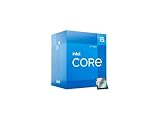
- Intel Core i5 2.50 GHz processor offers hyper-threading architecture that delivers high performance for demanding applications with improved onboard graphics and turbo boost
- The processor features Socket LGA-1700 socket for installation on the PCB
- Its 18 MB of L3 cache is good enough to carry routine data and process them in a flash giving you fast and smooth performance
- Built-in Intel UHD Graphics 730 controller for improved graphics and visual quality. Supports up to 4 monitors.
Is the LGA1700 upgrade path still useful?
LGA1700 can support later Intel desktop generations on compatible motherboards, but the upgrade path should not be treated as a major future-proofing advantage in 2026. A board may support a 13th- or 14th-generation processor after a BIOS update, but support depends on the exact model, BIOS, power delivery, and cooling.
A cheap entry-level motherboard may run a 12400F well but be a poor choice for a high-power Core i7 or Core i9 upgrade. Before buying, consult the motherboard manufacturer’s CPU-support page and inspect the board’s VRM cooling and supported processors. In some cases, replacing the LGA1700 CPU later will provide less value than moving to a newer platform.
The most sensible reason to choose LGA1700 is low total cost, not an assumption that the platform will support unlimited future upgrades. Existing LGA1700 owners have a stronger case because the motherboard and memory are already paid for.
What’s actually slowing this PC down?
Pick the symptom - the matching free tool is one click away.
How does the i5-12400F compare with alternatives?
| Alternative | Best fit | Why choose it instead | Important qualification |
|---|---|---|---|
| Core i5-12400 | System that may run without a GPU | Integrated graphics, Quick Sync, and display fallback | Worth the premium only when those features matter |
| Core i5-13400F or later LGA1700 CPU | Heavier productivity or CPU-demanding games | Potentially more cores and stronger multithreaded performance | Check the price gap, BIOS support, VRM, and cooling |
| Ryzen 5 5600 | Existing AM4 owner | Can reuse an AM4 board and DDR4 memory | A new AM4 build has a shorter platform path than AM5 |
| Ryzen 5 7600 | New DDR5/AM5 build | Newer platform and stronger long-term upgrade prospects | Motherboard and DDR5 costs may erase the advantage in a strict budget build |
| Ryzen 7 5700X3D-class processor | Existing AM4 gaming upgrade | Specialized gaming-focused upgrade path | Not necessarily the best choice for a new system |
| Newer Core Ultra or AMD AM5 processor | Fresh build with several future upgrades planned | Newer features and platform prospects | Complete-platform cost is often higher |
Do not compare only processor prices. Compare the CPU, motherboard, memory, cooler, required graphics card, and expected upgrade value. A cheap 12400F can stop being a bargain when an old LGA1700 motherboard and DDR4 kit cost nearly as much as a newer CPU, motherboard, and memory combination.
Independent reader supportYour contribution helps us test, update, and keep practical guides available for everyone.What should you check before buying?
- Calculate the complete platform cost. Add the CPU, motherboard, memory, cooler, and graphics card rather than comparing CPU prices alone.
- Confirm the motherboard socket and BIOS. The board must use LGA1700 and list the 12400F as supported.
- Choose DDR4 or DDR5 before buying the motherboard. Memory type is determined by the board and cannot be changed by a BIOS setting.
- Confirm a discrete GPU is included in the build. The 12400F cannot provide display output by itself.
- Check the package type. A boxed product and a tray product can differ in cooler inclusion, seller warranty, and return terms.
- Verify LGA1700 cooler hardware. Do not assume an older cooler includes the correct mounting bracket.
- Inspect used-market condition. Check for bent socket pins, missing mounting hardware, contact-frame modifications, a clear return policy, and a genuine model number.
- Compare the price with newer platforms. The 12400F is most attractive when its total system cost is clearly lower, not merely when its CPU sticker price is low.
Intel’s boxed and tray ordering information is available from the official Intel ordering page. Warranty terms depend on factors including whether the processor is boxed, tray, new, used, and sold through an authorized channel; Intel directs buyers to its official support and warranty entry point for the applicable information.
Who should buy the Intel Core i5-12400F?
Buy the Core i5-12400F when the processor is clearly discounted, an existing or inexpensive LGA1700 motherboard is available, DDR4 components are cheap, and gaming with a discrete graphics card is the main goal. The processor is particularly sensible for ordinary 1080p or 1440p gaming rather than maximum-refresh competitive gaming.
Existing LGA1700 owners have the strongest upgrade or replacement case because the motherboard and memory do not need to be purchased again. A new budget builder can also choose the 12400F when the CPU-plus-board-plus-memory bundle undercuts newer alternatives by a meaningful amount.
Who should skip the Core i5-12400F?
Skip the Core i5-12400F when the system must function without a discrete GPU, Quick Sync is important, the CPU price is close to newer processors, or a new motherboard and memory must be purchased at full price. Buyers seeking a long upgrade path should also compare the complete cost of a newer AM5 or current Intel platform.
Best Value
![Intel Core i5 [12th Gen] i5-12400F Hexa-core [6 Core] 2.50 GHz Processor - OEM Pack](https://m.media-amazon.com/images/I/41ujMDrnWxL._SL160_.jpg)
- Processor Core: Hexa-core (6 Core)
- Clock Speed: 2.50 GHz
- Overclocking Speed: 4.40 GHz
- L2 Cache: 7.50 MB
- L3 Cache: 18 MB
The 12400F is a poorer choice for heavy rendering, professional video production, high-volume transcoding, large software builds, many simultaneous virtual machines, or maximum frame rates from a high-end graphics card. Six cores and 12 threads remain useful, but the processor should not be described as universally future-proof.
What was the Core i5-12400F price?
Intel currently lists recommended customer pricing of $184 for the tray version and $194 for the boxed retail version. Intel’s recommended customer price is a reference figure, not a guaranteed US retail price. TechSpot listed approximately $169 on July 30, 2026, which is a dated market signal rather than a promise of current price or availability.
Because the Core i5-12400F launched in 2022, retail stock and pricing can change. Check the boxed-versus-tray designation, cooler inclusion, seller, warranty, condition, shipping, and return policy at the time of purchase. The correct buying threshold is not a permanent dollar amount: the Core i5-12400F becomes less attractive as its complete platform cost approaches that of a newer processor and platform.
Do these 3 things before closing this tab:
1Repair Windows errors before they cause bigger problems2Fix the driver behind crashes, sound loss and screen glitches3Clear out junk files and repair common Windows errorsFinal verdict
The Intel Core i5-12400F remains a good low-cost gaming CPU in 2026, but only under the right price and platform conditions. Six Performance cores, 12 threads, a 4.40 GHz maximum turbo frequency, and modest cooling requirements make it capable for mainstream gaming and everyday computing. The lack of integrated graphics is a hard requirement, not a minor specification detail.
Choose the 12400F when an inexpensive LGA1700 DDR4 setup or existing motherboard makes the total cost clearly lower than a newer platform. Choose something newer when building from scratch at near-full prices, planning major future upgrades, using a high-end GPU for high-refresh gaming, or running heavily multithreaded professional workloads.
Frequently Asked Questions
Can the Intel Core i5-12400F run without a graphics card?
No. The Intel Core i5-12400F has no integrated graphics, so a discrete graphics card is required for display output and normal desktop use. Motherboard HDMI and DisplayPort outputs will not produce an image from the processor alone.
Is the Core i5-12400F compatible with DDR5 memory?
Yes. The Core i5-12400F supports DDR5-4800 as well as DDR4-3200, but the motherboard determines the memory type. DDR4 and DDR5 are not interchangeable on the same motherboard.
The Tool Desk
Outbyte PC Repair FREEClear out junk files and repair common Windows errorsFree Scan →Outbyte Driver Updater FREEScan for outdated or missing drivers - takes under a minuteDriver Scan →Is the Core i5-12400F unlocked for overclocking?
No. The Core i5-12400F has a locked multiplier and is not intended for conventional multiplier overclocking. Some compatible motherboards support memory tuning or relaxed power limits, but those are separate from CPU multiplier overclocking.
Does every Core i5-12400F include a stock cooler?
No. A boxed retail package may include Intel’s stock cooler, while a tray or OEM processor should not be assumed to include one. Confirm the exact package contents and ensure that any aftermarket cooler includes LGA1700 mounting hardware.
Is the Core i5-12400F a good buy in 2026?
The Core i5-12400F is a good buy in 2026 when its CPU, motherboard, and memory cost is clearly below a newer platform and the computer will use a discrete graphics card. It is a weaker purchase when the complete system price is close to newer alternatives or when integrated graphics and a longer upgrade path matter.
The Bottom Line
Bottom line: Buy the Intel Core i5-12400F for a genuinely low-cost LGA1700 gaming build, especially when inexpensive DDR4 parts or an existing motherboard keep the total platform price down. Do not buy it solely because the processor is cheap: the required discrete GPU and aging platform can make a newer system the better investment.
Do these 3 things before closing this tab:
1Repair Windows errors before they cause bigger problems2Scan for outdated or missing drivers - takes under a minute3Clear out junk files and repair common Windows errorsQuick Recap
Product prices and availability are accurate as of the date/time indicated and are subject to change. Any price and availability information displayed on Amazon at the time of purchase will apply.

