
In HotHardware’s December 12, 2024 review, the Intel Arc B580 delivered a mixed, game-dependent showing: it narrowly won one synthetic test and led in some games, but fell behind in others and struggled in a Selaco test that required a renderer workaround. These are results from the review’s original test setup, not a current-driver retest.
What this review page tests
This is page 3 of HotHardware’s larger Intel Arc B580 review, by Marco Chiappetta and Zak Killian, published December 12, 2024. It covers 3DMark Steel Nomad, Speed Way and Time Spy, followed by DX11 and Vulkan game tests. The results below describe that review’s tested cards, settings and software; they should not be read as a guarantee for every system or today’s drivers.
How the B580 performed in 3DMark
HotHardware’s synthetic results were competitive, but the rankings differed by test. The review cautions that Arc has tended to perform particularly well in 3DMark, so these scores are not a substitute for game-by-game results.
- Steel Nomad: HotHardware describes this as a 4K raster test and reports a narrow B580 win.
- Speed Way: In this ray-tracing test, the B580 dropped several places in the rankings, though it beat Intel’s previous-generation cards in the comparison.
- Time Spy: The B580 beat the tested contenders except the Radeon RX 7700 XT.
DX11 and Vulkan game results
The game tests show why one benchmark result cannot establish how the B580 will perform across a library. HotHardware’s comparisons varied by game, API, resolution and rendering mode.
Free tools Windows power users keep installed
One-click scans. No signup required.
#1 Best Overall
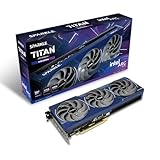
- OC Edition Boost Clock: 2760MHz
- TORN Cooling 2.0
- Metal Backplate
- Blue Breathing Light
- Graphic card sag bracket
- Final Fantasy XIV: Dawntrail: The B580 matched the Radeon RX 6750 XT in HotHardware’s benchmark.
- Warframe 1999: In the review’s 4K test using FSR, the B580 trailed the RTX 4060 Ti and a high-end Radeon card.
- Zenless Zone Zero: At native 4K, HotHardware reported a B580 win. Nvidia cards nevertheless had better frame-time consistency in this test.
- Palworld: The reviewers warned that changing creature and object spawns made results less repeatable between runs. Treat small differences cautiously.
Compatibility and frame pacing affect the picture
Selaco: a renderer workaround
Selaco defaulted to Vulkan and crashed on Arc in HotHardware’s test. The reviewers switched to OpenGL, and reported poor Arc performance with that workaround; they said they had reported the issue to Intel. The result therefore reflects both the game’s tested compatibility problem and the alternate renderer, not a straightforward comparison under the default Vulkan path.
Baldur’s Gate 3: average FPS is not the whole story
HotHardware recorded a 65.2 FPS average for the B580 in Baldur’s Gate 3, but also described frame-pacing issues. That average alone does not convey how smooth play felt in the review’s test.
Rank #2

- Next-Gen Intel Arc Graphics: Powered by Intel Arc A580 GPU with Intel Xe HPG microarchitecture, featuring 384 XMX engines for enhanced AI acceleration and content creation.
- High-Performance Memory: 8GB GDDR6 on a 256-bit interface running at 16 Gbps, delivering excellent bandwidth for 1440p gaming and creative workloads.
- Factory Overclocked: Engine clock set at 2000 MHz out of the box, providing optimized performance for smooth gameplay and multimedia tasks.
- Advanced Dual-Fan Cooling: Features a dual-fan design with striped axial fans and an ultra-fit heatpipe for efficient thermal management. 0dB Silent Cooling stops fans completely at low temperatures for silent operation.
- Durable Construction: Includes a stylish metal backplate for enhanced PCB rigidity and a premium aesthetic, backed by ASRock's Super Alloy components for long-term reliability.
Indiana Jones and the Great Circle: demanding even at 1080p
HotHardware described the game as demanding even at 1080p High. Within its tested group, the B580 showed the most consistent frame times. This is a review-specific observation, not a claim that it will be the smoothest card in every configuration.
How to interpret the comparisons
For a useful comparison, match more than the GPU names. Check the same game version, graphics API, resolution, settings, raster or ray-tracing mode, and upscaling option. Consider average frame rate alongside low-percentile performance or frame-time consistency, and compare power behavior and memory capacity where those matter to your system.
What’s actually slowing this PC down?
Pick the symptom - the matching free tool is one click away.
Rank #3

- Advanced Intel Arc Performance: Intel Arc B570 GPU with 10GB GDDR6 memory on 160-bit bus delivers excellent 1440p gaming and content creation performance
- Next-Gen Xe2-HPG Architecture: Features Intel Xe2-HPG architecture with Xe Matrix Extensions (XMX) for advanced AI acceleration and upscaling technology
- High Clock Speeds: GPU clock speed of 2600 MHz with 19 Gbps memory speed ensures smooth, responsive gaming experiences
- Intel XeSS 2 Technology: Supports Intel Xe Super Sampling 2 for enhanced performance and image quality through AI-powered upscaling
- Efficient Dual Fan Cooling: Dual striped axial fans with 0dB silent cooling technology provide optimal thermal performance during intense gaming sessions
An independent GamersNexus B580 review also found that relative performance changed across games and between 1080p, 1440p and 4K in its test suite; it discussed frame-time behavior and idle power as caveats. Its results should not be directly merged with HotHardware’s rankings: the reviews may differ in test benches, drivers, game versions and settings.
Independent reader supportYour contribution helps us test, update, and keep practical guides available for everyone.B580 specifications and launch context
Intel’s official Arc B580 specifications list a desktop Xe2 GPU with 20 Xe-cores, 20 ray-tracing units and 160 XMX engines. The reference specifications and launch details provide context for the review, but do not establish current retail pricing or results with current drivers.
| Specification or launch detail | Value |
|---|---|
| Memory | 12 GB GDDR6 |
| Memory interface and bandwidth | 192-bit; 456 GB/s |
| Graphics clock | 2670 MHz |
| Ray-tracing units and XMX engines | 20; 160 |
| Interface | PCIe 4.0 x8 |
| Total board power and connector | 190 W; one 8-pin power connector |
| Launch price and availability | Intel announced a $249 recommended price and December 13, 2024 availability; this is historical launch information, not a current street price. |
Intel’s December 3, 2024 launch announcement named Acer, ASRock, GUNNIR, ONIX, MAXSUN and Sparkle as board partners. It also described XeSS 2 as including Super Resolution, Frame Generation and Low Latency. Those are Intel’s product and launch statements, not independent validation of performance. Current street price, stock and driver behavior are not established by the December 2024 review or launch announcement.
Quick Recap
Product prices and availability are accurate as of the date/time indicated and are subject to change. Any price and availability information displayed on Amazon at the time of purchase will apply.
Do these 3 things before closing this tab:
1Scan for outdated or missing drivers - takes under a minute2Repair Windows errors before they cause bigger problems3Fix the driver behind crashes, sound loss and screen glitches
