
The Tool Desk
Outbyte PC Repair FREEClear out junk files and repair common Windows errorsFree Scan →Outbyte Driver Updater FREEScan for outdated or missing drivers - takes under a minuteDriver Scan →Ubuntu Desktop can do the work of a DIY network-attached storage (NAS) system: it can serve shared files, use ZFS for pooled storage, and run other applications on the same machine. That makes it appealing if you want one flexible computer and are comfortable administering it. It is not a universal replacement for a dedicated NAS appliance: Ubuntu’s documented capabilities do not establish that it is faster, more reliable, or easier to manage for everyone.
What Ubuntu Desktop brings to a NAS setup
A NAS is a computer that makes files available to other devices over a network. Ubuntu can provide that core function with Samba, which Ubuntu documents for sharing files with Windows clients. Samba setup includes configuring access and permissions; a share is not ready for safe use merely because it appears on the network. Ubuntu’s Samba guide covers installation and configuration.
Ubuntu Desktop also includes ZFS as an advanced disk setup option during installation. Ubuntu describes ZFS as supporting pooled volumes across multiple drives, snapshots, and data-repair features. These tools give an administrator options for organizing and checking storage, but they do not remove the need to understand the chosen layout or plan for data recovery. Ubuntu’s Desktop ZFS documentation describes the installer option.
Scrubs can detect problems, with repair dependent on layout
A ZFS scrub checks pool data against its checksums. Ubuntu’s documentation specifies automatic repair during a scrub for replicated devices, such as mirrors and RAIDZ. A scrub can identify errors, but the available repair depends on the pool’s redundancy; it is not a guarantee that every corrupted file can be fixed. Ubuntu’s zpool-scrub manual describes the check and its repair scope.
#1 Best Overall
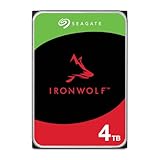
- IronWolf internal hard drives are the ideal solution for up to 8-bay, multi-user NAS environments craving powerhouse performance
- Store more and work faster with a NAS-optimized hard drive providing ultra-high capacity up to 16TB and cache of up to 256MB
- Purpose built for NAS enclosures, IronWolf delivers less wear and tear, little to no noise/vibration, no lags or down time, increased file-sharing performance, and much more
- Easily monitor the health of drives using the integrated IronWolf Health Management system and enjoy long-term reliability with 1M hours MTBF
- Three-year limited warranty protection plan included and three year Rescue Data Recovery Services included
Why choose Ubuntu over a dedicated NAS OS?
The case for Ubuntu is flexibility. A general-purpose desktop operating system can host file sharing alongside other software, and Ubuntu offers virtualization tools including QEMU and libvirt. Whether a particular machine can handle additional services depends on its CPU, memory, storage, and hardware—not just on the operating system. Ubuntu’s virtualization documentation describes its tooling.
A dedicated NAS product may instead appeal to someone who wants an appliance-oriented experience, guided storage workflows, and management interfaces focused on NAS tasks. Those are practical differences in approach, not proof that every dedicated product is limited or that Ubuntu is the better choice on every system.
Rank #2

- Store more, compute faster, and do it confidently with the proven reliability of BarraCuda internal hard drives
- Build a power house gaming computer or desktop setup with a variety of capacities and form factors
- The go to SATA hard drive solution for nearly every PC application from music to video to photo editing to PC gaming. Ax. Sustained transfer rate OD: 190MB/s
- Confidently rely on internal hard drive technology backed by 20 years of innovation
- Frustration Free Packaging - This is just an anti-static bag. No cables, no box.
| Consideration | Ubuntu Desktop as a DIY NAS | Dedicated NAS system |
|---|---|---|
| Setup and administration | You configure and maintain the file-sharing and storage setup yourself. | Often designed around NAS-specific setup and management workflows; details vary by product. |
| Mixing workloads | Can combine file serving with other software or virtualization, subject to the machine’s capacity. | Additional workloads and options depend on the product. |
| Storage management | Ubuntu documents Samba and ZFS features, but you are responsible for configuring them appropriately. | Storage tools and workflows depend on the system. |
| Updates and recovery | You take responsibility for maintaining the OS and planning recovery. | Update and recovery arrangements depend on the vendor and model. |
There is no named comparative benchmark or relevant statistic in the cited material showing Ubuntu Desktop outperforming dedicated NAS operating systems. Choose based on the administration experience and workload you want, rather than assuming a performance or reliability win.
What to plan before putting files on it
Restrict Samba access
Ubuntu’s guide includes a simple guest-access example, but it warns that this grants access to any client on the local network. That is not a safe default for private files. Use the guide’s separate access-control instructions to restrict who can connect, and configure permissions to match the data you are sharing.
Crashes, No Sound, or Screen Glitches?
Random freezes, missing sound and display glitches usually trace back to one bad driver. Find and replace yours safely.Free scan · under a minuteWindows Errors? Fix Them Before They Spread
Repair common Windows errors and clear accumulated junk for a smoother, more stable PC - no reinstall needed.Free scan · no reinstallRank #3

- IronWolf internal hard drives are the ideal solution for up to 8-bay, multi-user NAS environments craving powerhouse performance.date transfer rate:6.0 gigabits_per_second
- Store more and work faster with a NAS-optimized hard drive providing 8TB and cache of up to 256MB
- Purpose built for NAS enclosures, IronWolf delivers less wear and tear, little to no noise/vibration, no lags or down time, increased file-sharing performance, and much more
- Easily monitor the health of drives using the integrated IronWolf Health Management system and enjoy long-term reliability with 1M hours MTBF
- Three-year limited product warranty protection plan and three year Rescue Data Recovery Services included
Keep a separate backup and know how to restore it
ZFS snapshots and redundant pool layouts serve useful storage purposes, but neither is an independent backup. Ubuntu’s backup guidance recommends deciding what to protect, how often to back it up, where copies will live, and how to restore them. It also recommends considering off-site storage. A removable hard drive is one possible separate copy; Ubuntu also describes copying backups over a WAN to another location. Test the restoration method so that a copy is useful when you need it. Canonical’s Ubuntu documentation puts the reason plainly: “It’s important to back up your Ubuntu installation so you can recover quickly if you experience data loss.” Ubuntu’s backup guidance explains the planning questions.
Check the machine against the workload
File serving and extra applications compete for the same hardware resources. Before adding virtual machines or other services, consider the system’s CPU, RAM, available storage, and hardware compatibility. The available documentation establishes that Ubuntu has virtualization tooling, not that every desktop computer is suitable for every NAS workload.
Rank #4

- Available in capacities ranging from 2 to 22TB(1) | (1) 1GB = 1 billion bytes and 1TB = 1 trillion bytes. Actual user capacity may be less depending on operating environment.
- For RAID-optimized NAS systems with unlimited number of bays
- Rated for 550TB/yr workload rate(2) | (2) Annualized Workload Rate = TB transferred x (8760 / recorded power-on hours). The maximum rated workload is specified for operating at typical temperature of 40C. Workload Rate will vary depending on your hardware and software components and configurations.
- Designed to handle the demands of high-intensity 24x7 multi-user NAS environments
- Western Digital partners with a wide range of NAS system vendors for extensive testing to ensure compatibility with most NAS enclosures
Is Ubuntu Desktop the right NAS choice for you?
Ubuntu Desktop is a reasonable fit if you want a configurable system that can share files and do other jobs, and you are willing to manage Samba permissions, storage, updates, and backups yourself. A dedicated NAS may be a better fit if you value a guided, appliance-focused setup more than the freedom to build and maintain your own stack. The documented features make Ubuntu a capable option; they do not settle which approach is best for your hardware, risk tolerance, or comfort with administration.
Quick Recap
Product prices and availability are accurate as of the date/time indicated and are subject to change. Any price and availability information displayed on Amazon at the time of purchase will apply.
Quick wins for a faster PC:
Scan for outdated or missing drivers - takes under a minuteDriver Scan →Repair Windows errors before they cause bigger problemsFix Now →
