
Free tools Windows power users keep installed
One-click scans. No signup required.
I built the MVP before writing its README. That order let me document a working version rather than an idea—but it is my sequence, not a rule for every project. The README’s job was to orient someone opening the repository: explain what was there, how to get started, and where to go next.
What building first can make clearer
Before an MVP works, it can be difficult to distinguish the intended product from the behavior a person can actually use. Writing the README afterward gives you a concrete version to describe. It also gives you a chance to spell out what a new reader needs to run, evaluate, or contribute, rather than documenting every idea that might eventually become part of the project.


That timing has a trade-off: if you wait until after the first version, important setup details and assumptions may be easy to overlook. Building first does not make documentation automatic, and it does not mean documentation can wait for every later change.
What I put in the README
A README is an orientation page, not a substitute for every guide a project may need. Google’s guidance describes it as a place to explain what a repository or package contains and help readers proceed. Its package README guidance calls for purpose, usage, status, points of contact, and links to relevant documentation. Those are useful prompts, not mandatory headings for every project.
#1 Best Overall
- Purpose: Say what the project is and what problem the MVP addresses. Be specific about what it does now.
- Getting started: Show the shortest useful path to set it up or try it. Include only steps and prerequisites that apply to this project.
- Status: Tell readers whether it is an MVP, an experiment, or something intended for broader use. Make unfinished work clear where that affects expectations.
- Contact and contribution: Where appropriate, identify a maintainer or contact route and explain how someone can contribute.
- Further documentation: Link to deeper user or team guides instead of duplicating them in the README.
Google recommends concise, accurate, fresh documentation rather than a large set of stale or redundant pages. Its README guidance and documentation best practices are useful references when deciding what belongs on the first page and what belongs elsewhere.
A practical checklist for an MVP README
- Describe the project as it exists. State what it is for and what the repository or package contains. Avoid presenting planned features as working ones.
- Verify the quickest successful path. Follow the setup or usage steps from a clean starting point if possible. Remove assumptions that a first-time reader would not know.
- Name the boundaries. Record important limitations, dependencies, or prerequisites when they change whether or how someone can use the MVP.
- Give readers a next step. Point to the right place to learn more, report an issue, contact a maintainer, or contribute, as appropriate.
- Keep it proportionate. Put essential orientation in the README; use linked documentation for material that needs more detail.
Should you write the README before or after building?
There is no universal build-first rule in the available guidance. Writing a short README early can clarify a project’s purpose and intended users. Writing or revising it once an MVP works can help you describe actual behavior and a tested path rather than an aspiration. Either way, treat the README as part of the project, not a one-time launch document.
Rank #2
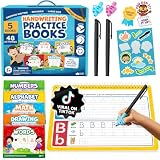
- Develop Handwriting Skills with Complete Magic Grooved Writing Practice for Kids. Preschool learning toys packed with activities that engage hands-on learners, this 5-book set includes 2 magic pens, 10 disappearing ink refills, 2 soft pencil grips, and a sticker sheet. Ideal for screen-free entertainment and fine motor skill growth. Fun, learning toys for 4 year old for home use or classrooms, supporting early learning and creative self-expression.
- Spark Confidence with 48 Engaging Activities Across 5 Reusable Kids Books. Grooved Tracing Books for Kids Ages 3-5 feature letter tracing, counting, early math and word recognition. This spiral-bound set strengthens fine motor development while fostering STEAM learning through play. Perfect gifts for 5 year old girls or gifts for 3 year old boys that are ready to boost literacy skills at school, home, or during holiday breaks.
- Make Learning to Write Exciting Using Magic Pens with Disappearing Ink! Ideal activity for sensory-friendly and neurodiverse learners. Grooved handwriting practice for kids 5-7 improves coordination and focus while enjoying calming, screen-free learning toys for 4+ year old children that’s great for quiet time, travel, or educational play. Thoughtful gifts for 4 year old girl or gifts for 4 year old boys that inspire writing practice and imagination development.
- Encourage Creativity and Skill Building with Grooved Writing Books for Kids 3-5. Features vivid pages, spiral binding, and left and right-hand accessibility. Designed for durability and comfort, this colorful writing practice set is a standout among Christmas gifts for grandkids. Ideal educational toys for 4 year old children for preschool classrooms or home settings, it blends learning with artistic expression to inspire young writers.
- Fun and Educational Christmas Gifts for Kids. These activity books for 3 year olds combine educational fun and writing skill growth in one engaging experience. Loved by parents and teachers, these Christmas toys for kids strengthen hand-eye coordination, support screen-free learning, and make Christmas, birthdays or back to school gifting easy. Add to Cart now to surprise a young learner with hours of joyful writing discovery!
Google recommends updating documentation in the same change as the code it describes. If a change alters setup, usage, dependencies, status, or expected behavior, update the relevant README or linked guide alongside it. The Google OpenDocs documentation maturity checklist also addresses documentation content, process, and ownership.
Independent reader supportYour contribution helps us test, update, and keep practical guides available for everyone.Keep the README useful after the MVP
A README that accurately describes the first working version can become misleading as the project changes. Review the affected documentation whenever code changes, and remove instructions or claims that no longer match. For repository expectations and contribution guidance, GitHub also explains the role of a README in its About READMEs documentation.
Quick Recap
Best Value
Rank #3

- 📗【Toddler Writing Practice】:This magic practice copybook set includes 1 addition and subtraction, 1 number, 1 fun picture, 1 letter, 1 pen, 1 handle and 10 refills. The kindergarten workbook is compact and lightweight, perfect for children to practice handwriting anytime, anywhere—at school, while traveling, or during play.(5.1inches x 7.4 inches)
- 📝【Rich Content】:Our magic writing book for kids contains 26 English letters, daily words, 0-100 numbers, simple addition and subtraction. bright colors and cute shapes, which can improve children's cognition of letters, numbers. — Perfect for preschool workbooks age 3-4.
- ✍【Handwriting Practice for Kids 5-7】: It is an essential learning activity for pre-school, kindergarten, home schooling. Crafted from thick, tear-resistant cardboard with safe rounded edges and top-spiral binding, kids grooved learning books are easy to flip and lay flat. Great for both left- and right-handed children. The unique grooved design guides young learners to trace letters, numbers, and lines correctly, helping them build writing memory and easily master proper stroke order and pencil control.
- 📚【Kindergarten Classroom Must Haves】:The disappearing ink vanishes in about 5 minutes after writing, allowing kids to practice repeatedly without wasting paper. Since the ink reacts chemically with oxygen, the fading time may vary from 5 minutes to several hours depending on temperature, humidity, and air circulation. Childrens books ages 3-5 ensure lots of fun practice!
- 💝【Perfect Gift for Early Education】:Reusable grooved handwriting workbooks will be the perfect gift for your children ages 3-8 years old on birthday, christmas, children's day, new year or back-to-school , etc. Inspire a love for learning while building essential writing skills — approved by parents and loved by kids! Order Now.
Product prices and availability are accurate as of the date/time indicated and are subject to change. Any price and availability information displayed on Amazon at the time of purchase will apply.

